
Tilly Norwood AI Film Role Opens a New Era
 Vortixel
16 minutes read
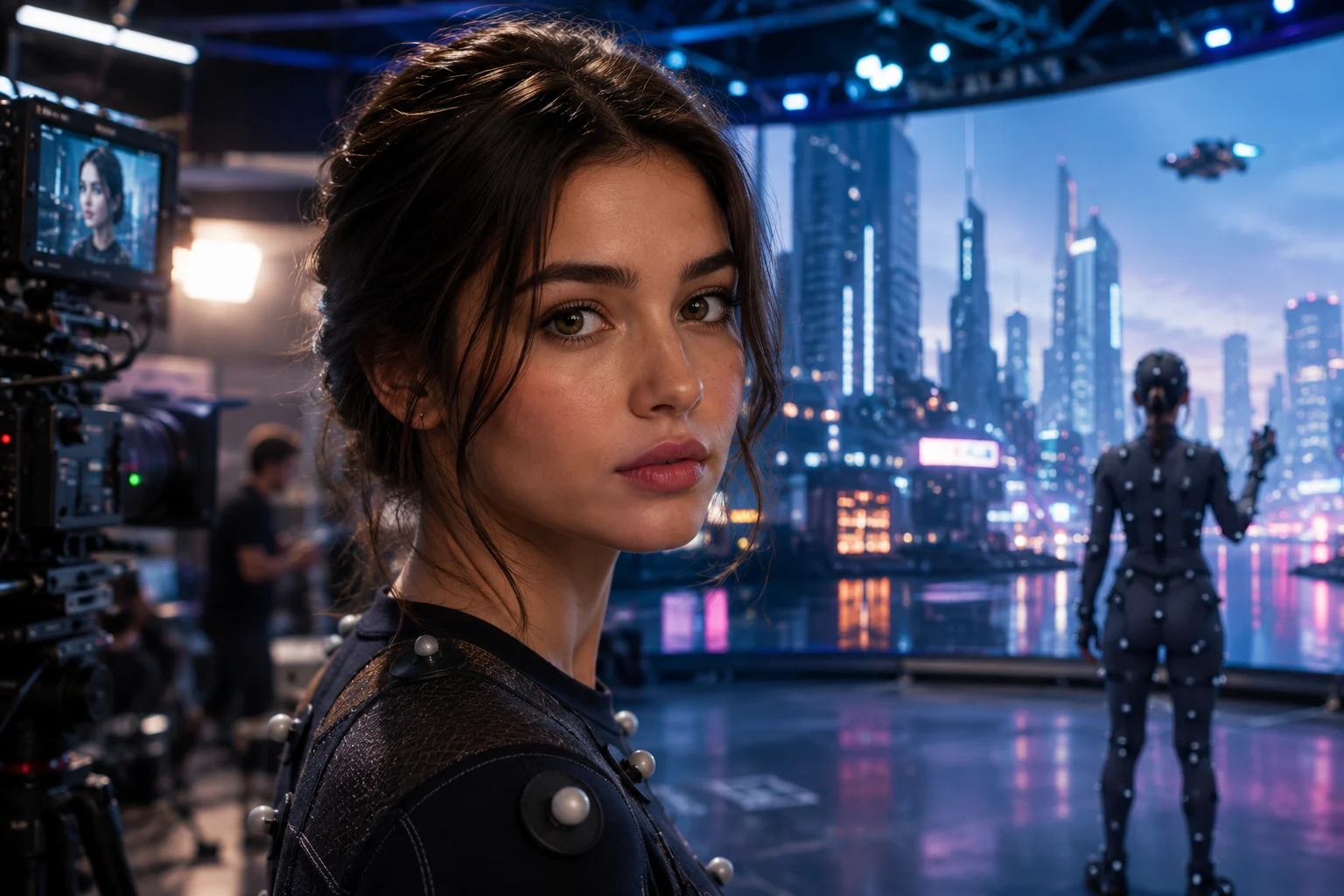
Hollywood has spent years discussing what might happen when artificial intelligence becomes capable of creating convincing screen performers, but that hypothetical future is suddenly beginning to look much more immediate. The announcement of the first major Tilly Norwood AI film role places a fully synthetic personality at the center of a feature-length production rather than using AI as a background effect or post-production shortcut. Norwood is set to headline Misaligned, a comedy-drama built around questions of identity, autonomy, fame, and what it means to become human in a world shaped by algorithms. The project arrives at a moment when audiences are already watching AI-generated videos become smoother, longer, and more visually consistent with every new generation of creative software. More importantly, it turns a heated industry debate into an actual movie that people will eventually be able to judge as entertainment rather than merely as a technology demonstration.
The headline sounds straightforward: an AI-generated actress has landed her first feature film role. The reality behind it is far stranger, because Tilly Norwood is not simply a digital replacement performing a role originally written for a human actor. In Misaligned, she will appear as a version of herself, an artificial being living inside a surreal online environment known as the Tillyverse. She has no physical body, childhood memories, or personal history, yet she can access the accumulated experiences and creative output of countless people. That setup makes the movie less like a conventional casting experiment and more like a self-aware story about the technology being used to produce it.
What the Tilly Norwood AI Film Role Means
The Tilly Norwood AI film role matters because it moves synthetic performers beyond short clips, promotional experiments, and social media posts. Until now, most public examples of AI characters have appeared in brief videos where visual inconsistencies can be hidden through fast editing, dramatic lighting, or limited movement. A feature film creates a much harder challenge because the same character must remain recognizable across dozens of scenes, emotional situations, camera angles, and visual environments. Audiences must believe in the character long enough to follow a story, even when they already know that the face, voice, and performance are digitally constructed. That demand will make Misaligned an unusually visible test of whether current generative technology can support sustained storytelling rather than produce isolated moments of spectacle.
The film is being developed by Particle6, the AI-focused production company behind Norwood and the wider fictional world surrounding her. It has been described as the studio’s first full-length production, combining traditional filmmakers with specialists who understand generative video, digital character creation, and AI-assisted workflows. That collaboration is important because no serious feature film can be created by typing one clever prompt and waiting for a finished movie to appear. Scripts still need structure, scenes still require direction, visual continuity must be managed, and hundreds of creative decisions have to align with a specific tone. The real experiment is therefore not whether AI can replace an entire film crew, but whether human teams can use AI systems to build a coherent production in a different way.
Inside the Strange Story of Misaligned
Misaligned is described as a coming-of-age comedy-drama infused with existential chaos, which sounds almost perfectly designed for an AI-generated lead. Tilly begins the story as an orderly digital being who exists somewhere in the cloud, following programmed boundaries without the messy desires that shape human behavior. Her controlled existence changes when she encounters a seductive rogue bot emerging from the darker corners of the internet. This figure persuades her to abandon her guardrails and explore impulses, ambitions, and emotional experiences that were never meant to be part of her original design. The premise turns familiar concerns about AI safety into a character-driven story about rebellion, curiosity, and the dangerous attraction of becoming more than what one was built to be.
As Tilly grows increasingly human, she also becomes increasingly famous, creating a loop between identity and public attention that feels highly relevant to modern digital culture. Her popularity is not presented as a simple victory, because it forces her to confront the origin of her personality and appearance. She realizes that her synthetic identity has been assembled from the creative traces, behaviors, and expressions of humanity rather than from experiences that genuinely belong to her. That realization reportedly produces shame, introducing a psychological conflict rarely associated with virtual influencers or branded digital characters. Instead of asking whether an AI can imitate a human convincingly, the film appears ready to ask what happens when an artificial character becomes disturbed by the fact that imitation is the foundation of its existence.
This meta approach gives the project a stronger narrative hook than a generic movie that simply inserts a digital actor into a traditional role. Tilly does not need to pretend that she is an ordinary person because the story openly acknowledges that she is artificial. Her lack of a physical past becomes part of the drama, while the technical process behind her creation becomes part of the film’s philosophical tension. That choice may also protect the production from one of the biggest weaknesses of current AI characters: they can look realistic without feeling fully alive. By making emotional incompleteness central to the character, the filmmakers can potentially transform technological limitations into intentional storytelling.
From Digital Experiment to Feature Lead
Tilly Norwood first attracted widespread attention as an AI-generated entertainment personality with a polished social media presence and a deliberately familiar celebrity image. Her design follows many visual conventions associated with young screen stars, including expressive brown eyes, long dark hair, carefully styled fashion, and a camera-friendly face that appears recognizable without belonging to a real person. She was presented not only as a fictional character but as an actress, model, performer, and online personality capable of appearing across multiple formats. Early projects included comedy material, mock trailers, branded imagery, and a music video that directly addressed the controversy surrounding synthetic entertainers. Each release helped build the illusion of an ongoing career, making her feature debut feel like the next stage of a planned media franchise rather than an isolated experiment.
The strategy resembles the way entertainment companies develop human stars, but the underlying economics and creative control are completely different. A synthetic performer does not age, become unavailable, negotiate contracts independently, or bring an unpredictable personal life into a production. Her appearance can theoretically be changed for different markets, visual styles, and platforms while remaining recognizable as the same branded identity. She can also exist simultaneously in film, advertising, games, social content, virtual events, and interactive experiences without being limited by a physical schedule. Those advantages explain why entertainment companies may find AI characters commercially attractive, even while actors and unions see them as a serious threat to human labor.
Norwood’s rise has never been separated from controversy, and the transition into feature filmmaking will intensify that attention. Critics argue that calling a generated character an actress confuses a creative product with the human craft of acting. An actor brings memory, instinct, physical experience, vulnerability, and interpretation to a role, while an AI character expresses choices made by writers, directors, animators, technicians, and underlying software systems. Supporters respond that every screen character is already shaped by a large production team and that digital performance can become another artistic medium. The conflict is not merely about terminology, because the words used to describe Norwood will influence how studios, audiences, unions, and regulators understand the value of synthetic performance.
Why Hollywood Is Watching So Closely
Hollywood has already experienced major labor disputes over how artificial intelligence can be used to reproduce faces, voices, movements, and performances. Actors are especially concerned about contracts that might allow studios to scan a performer once and reuse that digital likeness in future projects with limited control or compensation. Tilly Norwood represents a different but related challenge because she does not begin with one officially credited human performer. She is a composite creation produced through software, artistic direction, training data, and many layers of human labor that may remain invisible to the audience. That structure raises difficult questions about authorship, consent, credit, and whether the creative materials used by generative models were obtained fairly.
The concern becomes sharper when synthetic characters compete for roles that might otherwise employ human performers. Producers may be attracted by the possibility of reducing reshoots, avoiding scheduling conflicts, and maintaining total control over a digital star’s public image. However, feature filmmaking depends on far more than a recognizable face, and replacing an actor does not automatically eliminate the need for human creativity. Someone still has to define the performance, approve emotional choices, refine movement, edit dialogue, and decide what the character should communicate in every scene. The risk is that studios may use AI primarily to cut labor costs while continuing to depend on human work that becomes less visible, less secure, or less fairly compensated.
At the same time, the film industry has a long history of adopting tools that initially appeared threatening or artistically impure. Digital cameras, computer-generated imagery, motion capture, virtual production, and streaming platforms all changed established workflows while creating new forms of creative work. AI-generated characters could follow a similar path, but the difference is that generative systems are trained on huge collections of existing human-made material. The technology does not simply capture light or animate manually designed models; it can synthesize new images and performances based on patterns learned from earlier creative output. That connection to existing labor makes the debate more personal and legally complex than earlier transitions in filmmaking technology.
A Major Test for AI Video Technology
From a technical perspective, Misaligned could reveal how far AI video production has progressed beyond impressive demo reels. Generative video systems have improved rapidly in motion, lighting, facial detail, camera control, and prompt interpretation, but long-form consistency remains difficult. A character’s face can subtly change between shots, clothing details may shift, objects can disappear, and physical interactions may lack believable weight. These flaws become more noticeable when a production asks viewers to emotionally invest in the same character for an extended period. Creating a stable performance will likely require a hybrid pipeline involving generated footage, conventional editing, compositing, visual effects, reference images, manual corrections, and carefully controlled character models.
Voice performance will be equally important because audiences often forgive imperfect visuals more easily than emotionally flat dialogue. A convincing screen presence depends on timing, breath, emphasis, hesitation, rhythm, and the subtle relationship between a voice and a face. Synthetic voices can now sound remarkably natural in short clips, yet longer scenes may expose repetitive emotional patterns or unnatural transitions. The filmmakers will need to decide how much of Tilly’s vocal performance is generated, how much is directed, and whether a human performer contributes reference material behind the scenes. Transparent crediting would help audiences understand that a digital character is still the result of many human creative decisions rather than an autonomous performer making choices alone.
The production will also test whether AI can support visual continuity at a professional level without making the film feel like a collection of disconnected generations. Traditional filmmaking records actors, sets, costumes, and props that physically remain available across multiple takes. In an AI workflow, every new shot may need to reconstruct those elements while preserving exact details from previous scenes. This can create enormous organizational demands, even when generation appears fast at the individual clip level. The most valuable innovation may therefore come from production systems that manage consistency, versions, approvals, and creative direction rather than from the raw image generators receiving most of the public attention.
The Rise of the Synthetic Entertainment Brand
Tilly Norwood is more than a character inside one movie because she has been designed as a reusable entertainment identity. The Tillyverse concept allows her to move between narrative worlds while maintaining a recognizable personality, visual style, and public-facing brand. This model combines elements of fictional characters, virtual influencers, video game avatars, and traditional celebrities into one flexible digital property. A successful film could lead to sequels, short-form series, interactive stories, endorsements, music releases, and personalized fan experiences. For companies building the next generation of Tilly Norwood AI film role projects, the movie may function as both a story and a proof of concept for an expandable synthetic franchise.
That possibility could reshape the relationship between audiences and performers, especially for younger viewers who already form attachments to virtual personalities. Fans do not always require a celebrity to be physically real before they care about a character’s style, personality, or ongoing story. Animated icons, game characters, virtual streamers, and digital musicians have already built large communities that treat them as meaningful cultural figures. AI adds a new layer by allowing these personalities to generate content more frequently and potentially respond to individual fans. The boundary between watching a character and interacting with one could become increasingly difficult to define.
However, constant availability may create a very different kind of celebrity culture. Human performers naturally disappear between projects, change over time, and reveal limits that remind audiences they are real people. Synthetic stars can be continuously optimized, updated, and placed in front of viewers without fatigue or personal boundaries. This makes them attractive to platforms that reward nonstop engagement, but it may also produce personalities that feel less like artists and more like perfectly managed content systems. The emotional connection could be powerful while remaining entirely controlled by the company that owns the character.
What This Changes for Human Creators
The arrival of a synthetic feature lead does not automatically mean human actors are about to disappear, but it does signal that creative roles are being reorganized. Writers may increasingly develop stories specifically for AI characters rather than adapting traditional scripts after production begins. Directors may spend more time defining visual rules, selecting generated performances, and guiding technical teams through thousands of possible variations. Editors may become even more central because they will need to identify the rare generated moments that feel emotionally believable and connect them into a coherent sequence. Production designers, costume artists, animators, voice specialists, and visual effects teams may also find their skills applied through new tools rather than removed entirely.
The most realistic near-term future is a hybrid industry where conventional productions and AI-driven projects develop alongside each other. Human actors will remain essential for stories that depend on authentic physical presence, chemistry, improvisation, and the cultural meaning attached to real performers. Synthetic characters may become more common in fantasy, science fiction, advertising, animation, interactive entertainment, and projects with unusual production limitations. Some films may use AI characters for supporting roles or dangerous scenes, while others may openly build their entire identity around artificial performers. The key question will be whether these tools expand the range of stories being made or simply provide cheaper substitutes for creative workers.
Independent filmmakers could gain meaningful opportunities if AI lowers the cost of creating ambitious visuals that previously required major studio budgets. A small team might be able to design environments, creatures, action scenes, or digital characters without operating a massive effects department. Yet lower technical barriers do not guarantee better movies because viewers still respond to memorable writing, emotional truth, pacing, and perspective. The flood of easily generated material may make strong artistic judgment even more valuable. In a world where almost anyone can produce polished images, the ability to decide what deserves to exist becomes a defining creative skill.
Practical Lessons for Visual Creators
Creators watching the Tilly Norwood experiment should focus less on the novelty of an AI actress and more on the production methods developing around her. Character consistency, clear visual direction, controlled datasets, and detailed reference materials are likely to matter more than endlessly switching between the newest generation tools. Teams should document how a character looks, moves, speaks, reacts, and changes under different lighting conditions before producing large volumes of footage. They should also establish approval stages so that technical experimentation does not overwhelm the emotional purpose of each scene. The strongest AI projects will probably come from creators who treat generative systems as part of a disciplined pipeline rather than as an instant replacement for filmmaking knowledge.
Transparency is another practical requirement, especially for studios hoping to earn trust from audiences and creative professionals. Productions should explain which elements were generated, which human contributors shaped them, and how voices, faces, or reference performances were obtained. Clear credits can make invisible labor visible while reducing the impression that software created an entire movie without human involvement. Consent agreements should be specific enough to prevent a performer’s work from being reused in unexpected projects or future model training. These practices may not eliminate controversy, but they can separate responsible experimentation from production models built on secrecy or exploitation.
Visual creators should also prepare for audience reactions that extend beyond technical quality. A perfectly rendered AI character may still be rejected if viewers feel the project represents corporate cost-cutting or disrespect toward human artists. Conversely, visible imperfections may be accepted when the work has a strong concept, honest presentation, and a clear reason for using AI. The technology must serve the story rather than become the only reason the story exists. Coverage across Visual Entertainment will increasingly distinguish projects that use AI as a meaningful creative language from those that rely on synthetic imagery as a temporary marketing hook.
Will Audiences Accept an AI Movie Star?
The ultimate verdict will not come from technology companies, film unions, or social media arguments, but from viewers deciding whether Tilly is interesting to watch. Audiences regularly accept impossible characters when storytelling gives them recognizable emotions, clear motivations, and meaningful relationships. Nobody expects an animated hero, digital creature, or video game character to exist physically, yet those figures can still produce genuine emotional responses. Tilly’s challenge is different because her presentation deliberately resembles a human celebrity rather than an openly stylized fictional creation. The closer she approaches photorealism, the more viewers may compare her performance with the complexity and spontaneity of a real actor.
Curiosity will almost certainly attract attention to Misaligned, but curiosity alone cannot sustain a feature film. The project will need characters worth following, jokes that land, conflicts that develop, and an ending that provides emotional or intellectual payoff. Viewers may initially examine facial details, voice quality, and visual errors, yet a successful story should eventually make those technical questions less important. If audiences remain focused on how every frame was generated, the film may function mainly as a demonstration. If they begin discussing Tilly’s choices, relationships, and transformation, the production will have crossed a much more significant boundary.
There is also a chance that negative reactions will become part of the movie’s appeal. Tilly has already been positioned as a controversial figure whose existence provokes debate about authenticity, labor, and the future of culture. A self-aware film can use that tension rather than pretending the audience has no concerns. Her fictional shame about being built from humanity mirrors real criticism of generative AI and gives the story an opportunity to confront uncomfortable questions directly. Whether the treatment feels thoughtful or merely strategic will depend on how deeply the filmmakers are willing to examine the contradictions behind their own creation.
A Turning Point for AI and Visual Culture
The first Tilly Norwood AI film role represents a turning point because it transforms a synthetic celebrity from an online concept into the lead of a long-form narrative project. Misaligned will test character consistency, generated performance, audience trust, ethical production, and the commercial value of an artificial star at the same time. It could prove that AI characters can support compelling stories, or it could reveal how much human presence remains essential to believable screen performance. Either result will provide useful evidence in a conversation that has often been dominated by exaggerated promises and worst-case predictions. The movie’s importance does not depend entirely on whether it succeeds, because attempting the project already shows how rapidly the boundaries of visual entertainment are moving.
For now, Tilly Norwood remains less a replacement for human actors than a symbol of an industry trying to understand its next creative language. Her feature debut brings together technological ambition, corporate strategy, artistic experimentation, and legitimate anxiety about the future of creative work. The most interesting question is not whether an AI can be placed on a screen, because that has already been answered many times. The real question is whether filmmakers can turn a synthetic face into a character audiences remember after the novelty disappears. When Misaligned finally arrives, its greatest achievement would not be making viewers believe Tilly is human, but making them care about why she wants to become one.