

Meta Pocket Turns Prompts Into Playable AI Games
 Vortixel
20 minutes read
Vortixel
20 minutes read
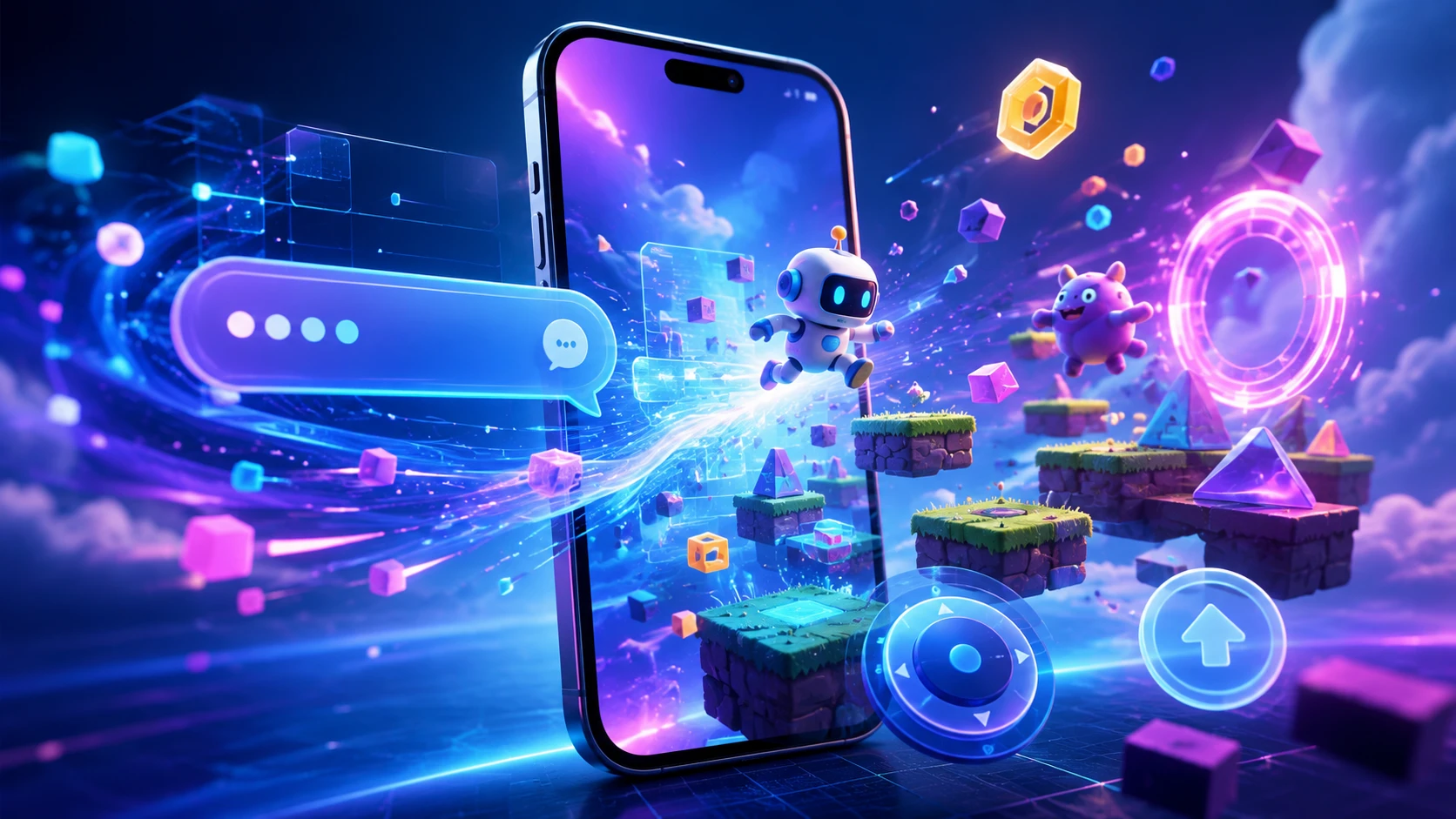
A blank text box may not look like the entrance to a game studio, but Meta wants to make it exactly that. With the quiet arrival of Meta Pocket, an idea typed in ordinary language can become a small interactive experience that reacts to taps, movement, images, sound, and even the world captured through a phone camera. The app is not asking users to learn a game engine, understand programming logic, or spend weeks polishing visual assets before anyone can play. Instead, it reduces the first stage of game creation to something much closer to posting a thought online. That shift may sound playful, but it could reshape how games, digital art, and social content are made.
Meta describes the creations inside Pocket as “gizmos,” a deliberately casual name for interactive, AI-generated experiences. A gizmo might be a tiny puzzle, a visual toy, a reaction game, a digital instrument, or something that does not fit neatly into any existing category. Users describe what they want, allow the system to generate it, and then share the result through a discovery feed where other people can play or remix it. The process turns creation into a social action rather than a private production cycle. In that sense, Pocket feels less like a traditional game-development tool and more like a new type of interactive social network.
The launch matters because Meta is not simply placing another generative AI feature inside an existing app. Pocket appears to be a standalone experiment built around the idea that interactive media can become as easy to produce as images, captions, or short videos. The app arrived with limited availability and without the kind of major presentation normally associated with a Meta product launch. That low-key introduction suggests the company may still be testing how people use the format, what they create, and whether a feed of playable objects can hold attention. Even at this early stage, however, Pocket offers a clear preview of where consumer creativity may be heading.
What Is Meta Pocket?
Meta Pocket is an experimental AI-powered platform for creating, sharing, and discovering small interactive experiences from text prompts. Rather than uploading a finished video or designing a conventional mobile game, a user begins by describing an idea in natural language. The system then interprets that description and produces a playable object designed for a phone screen. These experiences can respond to touch, device movement, images, music, sound effects, and camera input. Some may also use AI reasoning to react dynamically instead of following only a fixed sequence of actions.
The simplest way to understand Pocket is to imagine a short-form video feed where every post can be touched, moved, tested, or changed. A traditional social post is something users watch, read, or listen to, but a gizmo asks them to participate. One creation could transform a flower into a virtual brush that paints across the screen. Another might challenge players to tilt their phones to guide an object through a maze. A third could use the camera to place an interactive character inside the user’s surroundings.
Pocket also emphasizes remixing, which allows users to build on experiences created by other people. This could make the platform feel more collaborative than a conventional game marketplace, where finished products are usually consumed rather than altered. A player might discover a simple visual game, change its theme, adjust its behavior, and publish a new version without starting from scratch. That approach mirrors the culture of memes, audio trends, filters, and video templates already common across social platforms. The difference is that the reusable object is no longer just media; it is functioning software.
The app should not be confused with the former read-it-later service that carried the same Pocket name. Meta’s version has a completely different purpose, visual identity, and technological foundation. Its focus is not article storage or offline reading but prompt-based creation and social interaction. The reused name may create some initial confusion among longtime internet users, although the product itself is aimed at a different cultural moment. This Pocket belongs to the era of generative interfaces, mobile AI, and creativity that happens through conversation.
Meta Pocket Makes Game Creation Feel Social
The most important feature of Meta Pocket may not be its ability to generate a game from a sentence. Similar prompt-based tools can already produce websites, prototypes, visual assets, and pieces of working software. What makes Pocket more ambitious is the feed surrounding the creation system. Meta is connecting generation, discovery, play, sharing, and remixing inside one mobile environment. That structure could turn game creation from a specialized workflow into an everyday form of social communication.
Most social networks were built around a dominant media format. Instagram became associated with images before expanding into video, TikTok organized its culture around short clips, and Threads focused on public conversation through text. Pocket is testing whether interactive objects can become a feed format of their own. Instead of asking what someone photographed or recorded, it asks what they made playable. The answer could be a game, but it could also be an experiment, a visual joke, a personalized animation, or an interactive response to a trend.
This format changes the role of the audience. On a video platform, the audience mainly watches and reacts through likes, comments, or shares. Inside Pocket, the audience becomes a participant whose actions help complete the post. Tapping, tilting, drawing, speaking, moving, or using a camera can become part of the experience. That extra layer of participation may produce stronger curiosity because users do not fully understand a gizmo until they interact with it.
Meta has spent years trying to increase the number of meaningful actions people take across its platforms. Interactive AI content offers a new path because every creation can invite multiple kinds of engagement. Someone might play a gizmo, remix it, send it to a friend, alter its prompt, or build a related version. Those actions create more creative loops than a simple view or like. They also give Meta fresh information about what types of generated interactions people enjoy.
From Vibe Coding to Vibe Gaming
Pocket arrives during the rise of “vibe coding,” a term used to describe building software by explaining an intention to an AI system instead of manually writing every line of code. In a vibe-coding workflow, the creator focuses on the desired outcome while the model handles much of the technical implementation. That does not always produce clean, secure, or production-ready software, but it dramatically lowers the barrier to experimentation. Meta is applying the same idea to playful visual experiences. Pocket could therefore be described as a vibe-gaming platform designed for people who may never identify as programmers.
The distinction is important because traditional game development combines several difficult disciplines. A creator may need programming, interface design, sound production, animation, illustration, testing, and knowledge of how players respond to rules. Even simple games can take longer to build than outsiders expect because every interaction must be designed and implemented. Generative AI compresses parts of that process by translating a creative instruction into a working prototype. Pocket packages this compression inside an interface that is intended to feel casual and immediate.
A teenager who imagines a bouncing creature controlled by phone movement may not know how to work with motion sensors or physics systems. In Pocket, that technical gap may become less important than the ability to describe the idea clearly. A visual artist could create an interactive canvas without learning JavaScript. A musician could build a touch-based sound toy without studying mobile audio frameworks. A writer could turn a short fictional concept into a playable scene rather than leaving it as static text.
This does not mean technical skill becomes irrelevant. Strong creators will still need to understand interaction, pacing, visual hierarchy, feedback, and audience behavior. Prompting alone cannot guarantee that something feels fun, intuitive, or memorable. However, the first playable version may appear much faster, allowing creators to learn through experimentation instead of preparation. That change could bring more people into game design while also raising expectations for originality.
The Technology Behind the Gizmo Concept
Pocket appears to build on technology connected to Atma Sciences, the company behind an earlier app called Gizmo. Meta brought members of the Gizmo team into its organization and obtained a non-exclusive license to the company’s technology. Gizmo had already demonstrated the appeal of a feed filled with small, touchable experiences created through AI prompts. Its interface treated interactive software as something users could scroll through casually, much like short-form videos. Pocket appears to adapt that idea for Meta’s broader consumer AI strategy.
Generating a working interactive experience is more complicated than creating a single image. The system must interpret the prompt, choose visual elements, define rules, respond to input, manage timing, and maintain a stable interface. It may also need to connect with device features such as motion controls, cameras, photos, audio, or touch gestures. The AI is therefore not merely producing visual decoration. It is assembling behavior, logic, presentation, and interaction into one small package.
The phone is a particularly useful platform for this idea because it already contains a collection of sensors and media tools. A gizmo can potentially react when the phone tilts, when a user touches a certain area, or when the camera recognizes something in view. It can use photos as creative material and audio as immediate feedback. These capabilities give generated experiences a physical quality that a browser-based text prompt may lack. The user is not just instructing AI but holding the resulting creation in their hands.
At the same time, the technical challenge will be maintaining consistency across a large volume of generated content. A feed filled with broken controls, confusing rules, or slow-loading experiences would become frustrating quickly. Meta will need systems that test or constrain generated gizmos before they reach other users. The company must also manage the cost of generating, running, and moderating these experiences at scale. Pocket may feel spontaneous on the surface, but its success depends on significant infrastructure behind the scenes.
Why Meta Wants a Feed of Playable Content
Meta’s interest in Pocket fits a larger effort to make artificial intelligence central to social media. The company has introduced AI assistants, image-generation features, creator tools, video-editing products, and experimental formats across its ecosystem. Pocket extends that strategy from generated media into generated interaction. Instead of helping users create a picture or edit a clip, the system helps them produce something another person can actively play. That difference could open a new category of social content rather than simply improving an old one.
Social platforms are constantly searching for formats that feel new enough to restore curiosity. Short-form video changed how people consumed entertainment because it offered fast discovery, endless variation, and a low barrier to publication. Over time, however, every successful format becomes crowded and familiar. A feed of interactive mini-games could provide the novelty that static posts and copied video trends sometimes lack. Each swipe could reveal not just a new story but a new set of rules.
Playable content may also keep users engaged for longer than a passive post. A short clip can be viewed in seconds, while even a tiny game may invite repeated attempts. Users could return to improve a score, test a different response, or see how the experience changes. Remixing adds another layer because the audience can continue the creative process. From Meta’s perspective, those behaviors create deeper engagement and more reasons to remain inside the platform.
There is also a strategic advantage in owning the tool that creates the content and the network that distributes it. Independent AI game generators must convince users to visit, create, export, and share elsewhere. Meta can potentially place Pocket creations across a massive social ecosystem if it chooses to connect them with Instagram, Facebook, Threads, Messenger, or other services. Even limited cross-platform distribution would give Pocket access to audiences that smaller competitors cannot easily match. The company has not yet revealed the full extent of those integrations, but the possibility is difficult to ignore.
A New Medium for Digital Artists and Designers
Pocket could become valuable far beyond casual gaming because interactive generation gives visual creators a new way to present ideas. Digital artists often work with finished images, animations, installations, or videos that place the audience in a viewing role. A gizmo allows the artwork to respond to the viewer through touch, movement, or visual input. That interaction can turn a simple composition into a living system. For artists interested in generative media, Pocket may function as a lightweight laboratory.
Designers could use the app to explore interface concepts before committing to a larger project. A prompt-generated prototype might help test whether an interaction feels satisfying or whether users understand a visual cue. Although Pocket creations are unlikely to replace professional prototyping tools, they may help creators communicate early ideas quickly. A designer could share an interactive sketch instead of describing it through static mockups. That makes feedback more immediate and concrete.
The platform also fits the broader evolution covered by digital creativity, where the boundary between artist, programmer, designer, and audience continues to blur. A creator may begin with a visual concept, use AI to generate behavior, then invite the audience to remix the result. The final work is no longer owned by a single fixed process. It becomes part of a chain of prompts, interactions, and transformations. That structure resembles online culture itself, where ideas travel by being copied and changed.
However, easier production will create a flood of content, and abundance changes what audiences value. When anyone can generate a working visual toy within minutes, technical novelty alone will not be enough. Creators will need stronger concepts, recognizable styles, and a better understanding of emotional response. The most successful gizmos may not be the most complex. They may be the ones that communicate an idea instantly and reward interaction in a surprising way.
What Pocket Could Mean for Game Developers
Professional game developers may look at Pocket with a mix of curiosity and skepticism. On one hand, the app can introduce millions of people to basic game design principles. Users will begin thinking about goals, feedback, controls, difficulty, visuals, and replay value even if they never open a traditional engine. Some of those users may eventually move toward more advanced tools after discovering that they enjoy building interactive experiences. Pocket could become an entry point rather than a replacement for professional development.
On the other hand, prompt-generated games may increase the amount of low-quality or derivative content competing for attention. Developers already work in a market where discoverability is difficult, and AI can multiply the number of releases without multiplying audience time. A social feed may solve part of that problem by recommending experiences rapidly, but it can also favor quick novelty over deeper design. Games built for a few seconds of interaction are not the same as carefully authored worlds. The two formats may coexist, but they will compete for some of the same attention.
Pocket may also influence how established studios prototype ideas. A team could use conversational tools to produce rough interactions before engineers build reliable versions. Designers could test several variations of a mechanic during an early brainstorming session. Artists could explore how visual elements respond to touch or motion. Even when the generated result is not suitable for production, the speed of experimentation may improve the quality of later decisions.
The deeper question is whether generated mini-games can develop into larger projects. Pocket currently appears designed around small, shareable experiences rather than full commercial games. Yet successful gizmos could reveal concepts worth expanding. A creator might test an idea with a small audience, study how people interact with it, and then rebuild the concept in a professional engine. In that way, Pocket could become a public testing ground for game mechanics.
The Risks Hidden Behind Easy Creation
The promise of effortless creation comes with difficult questions about ownership, safety, and control. Users may prompt the system to imitate existing games, characters, artists, or brands. Generated experiences could reproduce protected designs or visual identities without clear permission. Remixing makes attribution even more complicated because a gizmo may pass through several creators before reaching a large audience. Meta will need transparent rules for credit, removal, and the use of copyrighted material.
Interactive content also creates moderation challenges that are different from those associated with text or images. A gizmo may appear harmless in a preview but produce inappropriate results after a specific sequence of actions. Camera access, photo libraries, sound, and sensor data add further privacy concerns. Users need to understand which device features an experience can access before they begin playing. Permission systems must remain clear even when the content feels casual.
Children and teenagers may be especially attracted to a platform where games can be generated quickly and shared socially. That makes age-appropriate design, content controls, and data protection essential. A playful interface should not hide the fact that users are interacting with software produced by an AI system and distributed through a large recommendation network. Parents and younger creators will need clear explanations of how prompts, interactions, and uploads are stored. Meta’s history of scrutiny around youth safety means Pocket will receive attention in this area.
There is also the problem of unreliable generation. An AI system can misunderstand a prompt, introduce unexpected behavior, or produce an experience that does not work as intended. In a conventional development process, creators test software before release and fix specific issues. In a rapid generative feed, the expectation may shift toward publishing first and correcting later. Meta will need to decide how much freedom to provide without allowing the platform to become chaotic or unsafe.
How Creators Can Prepare for Prompt-Based Games
Creators interested in Pocket should begin by thinking beyond visual appearance. A good prompt should explain what the user does, how the experience responds, and what makes the interaction satisfying. Describing a beautiful scene may generate attractive imagery, but a game needs behavior. The prompt should identify the goal, control method, visual feedback, and possible outcome. Clear interaction design will likely matter more than using complicated language.
It is also useful to start with one simple mechanic. A gizmo that responds elegantly to a single gesture may be more enjoyable than one filled with disconnected features. Creators can then test variations by changing speed, difficulty, visual style, sound, or scoring. This iterative approach matches the strengths of generative tools because each version can be produced quickly. The goal is not to describe a massive game in one prompt but to discover a small idea that feels complete.
Visual identity will become increasingly important as generated content grows more common. Creators should develop consistent themes, characters, color choices, motion styles, and interaction patterns that make their work recognizable. AI can produce endless variation, but an audience still needs a reason to remember who made something. A strong creative direction can turn a technically simple gizmo into a recognizable series. That may help individual creators build an audience inside a crowded feed.
Finally, creators should treat remixing as part of the format rather than a threat to the original idea. A successful Pocket creation may spread because other users adapt it to new jokes, trends, communities, or visual styles. Designing a concept that is easy to understand and flexible enough to transform can increase its cultural reach. Clear attribution tools will still be necessary, but remixability may become a core measure of success. The most influential gizmos could function like templates for interactive culture.
Could Playable Feeds Replace Short Videos?
Pocket is unlikely to replace short-form video in the immediate future because video remains effortless to consume and easy to understand. Interactive content asks more from the audience, even when the experience lasts only a few seconds. Users must learn what to touch, how to move, or what outcome they are trying to achieve. That friction can make the format more engaging, but it can also make it less suitable for passive scrolling. The challenge is to make interaction feel instant rather than demanding.
The more realistic possibility is that playable objects become one part of the wider social media mix. A user might watch a clip, encounter an interactive quiz, test a visual toy, and then remix a mini-game without leaving the same ecosystem. Social feeds have already blended text, images, livestreams, shopping, music, and augmented reality. AI-generated interaction could become the next layer. Pocket gives Meta a dedicated environment in which to study that behavior before bringing it elsewhere.
Much will depend on whether the app can produce experiences that are genuinely fun rather than merely impressive demonstrations. The first time a prompt becomes a playable object may feel magical. The tenth time may feel less remarkable unless the content offers personality, challenge, humor, or emotional meaning. Platforms survive when creators develop cultures around their tools, not when the technology remains the main attraction. Pocket needs creators who can turn generation into entertainment.
Recommendation quality will also determine whether the feed feels alive. Users need to encounter gizmos that match their interests while still producing moments of surprise. Meta has extensive experience building recommendation systems, but interactive content generates different signals from video. Completion, repeated play, failed attempts, remixes, and physical interactions may all indicate interest. Learning how to interpret those signals could become one of Pocket’s biggest advantages.
Why the Quiet Launch Is Worth Watching
Pocket’s limited rollout makes it easy to dismiss the app as a minor experiment, but Meta often tests new ideas before deciding where they belong. A standalone product gives the company room to observe behavior without immediately changing its largest platforms. It can study which prompts work, how often users remix content, and whether people return after the initial novelty. The company can also identify moderation and performance problems on a smaller scale. A quiet launch is therefore not evidence that the idea is unimportant.
The app’s future could take several forms. Pocket may remain a niche creative community, expand into a major social platform, or eventually become a feature inside another Meta service. Its technology could support interactive Instagram posts, Messenger games, creator campaigns, educational content, or augmented reality experiences. Some features may disappear while the underlying generation system survives elsewhere. The product name matters less than the behavior Meta is trying to establish.
That behavior is simple but powerful: describe an interactive idea, receive a playable result, and share it immediately. Each step removes a layer of friction that once separated imagination from software. The creator does not need to leave the social environment, assemble a development team, or prepare an app-store release. The result can move directly into a feed where an audience is already waiting. This compressed cycle could influence far more than casual games.
For the wider technology industry, Pocket is another sign that generative AI is moving beyond content production into interface production. Models are no longer limited to writing words or creating visual assets. They are beginning to generate systems that react, adapt, and invite participation. That evolution changes the meaning of a social post because the post can contain behavior. Pocket may be an early and imperfect version of that future, but it makes the direction visible.
Meta Pocket and the Future of Interactive Creation
Meta Pocket represents a small launch built around a much larger idea. It suggests that creating an interactive experience could become as ordinary as recording a video or writing a caption. By combining natural-language prompts, mobile sensors, AI generation, social discovery, and remix culture, Meta is testing a new category of visual entertainment. The first gizmos may be simple, strange, and occasionally broken. Their significance comes from how little technical knowledge users need to produce them.
The app could open game creation to artists, students, storytellers, musicians, designers, and curious users who have ideas but no programming background. It could also create new problems involving copyright, privacy, moderation, quality, and algorithmic influence. Those tensions are not side issues; they will determine whether the platform becomes a meaningful creative space or another short-lived AI novelty. Meta must prove that generated interaction can support a healthy culture rather than only generate more content. Creators, meanwhile, will need to prove that convenience can still lead to originality.
For now, Pocket is best understood as a preview of the next stage of consumer AI. The era of asking a model to produce text, images, and videos is already expanding into an era of asking it to build things people can use. Games are a natural starting point because play makes experimentation feel approachable. Yet the same technology could eventually generate educational tools, interactive stories, product demonstrations, art installations, and personalized interfaces. A prompt is becoming more than a request for content; it is becoming a method for designing behavior.
Meta has spent years building feeds where people share moments, opinions, images, and performances. With Pocket, it is asking whether the next social object might be something playable. The answer will depend on availability, creative quality, trust, and whether the platform can remain interesting after the first wave of curiosity. Even so, the experiment captures an important shift in visual innovation: audiences are moving from watching generated media toward interacting with it. If Pocket succeeds, the next viral post may not be a video at all, but a tiny world created from one sentence.