

Autodesk AI Rigging Speeds Up 3D Animation
 Vortixel
10 minutes read
Vortixel
10 minutes read
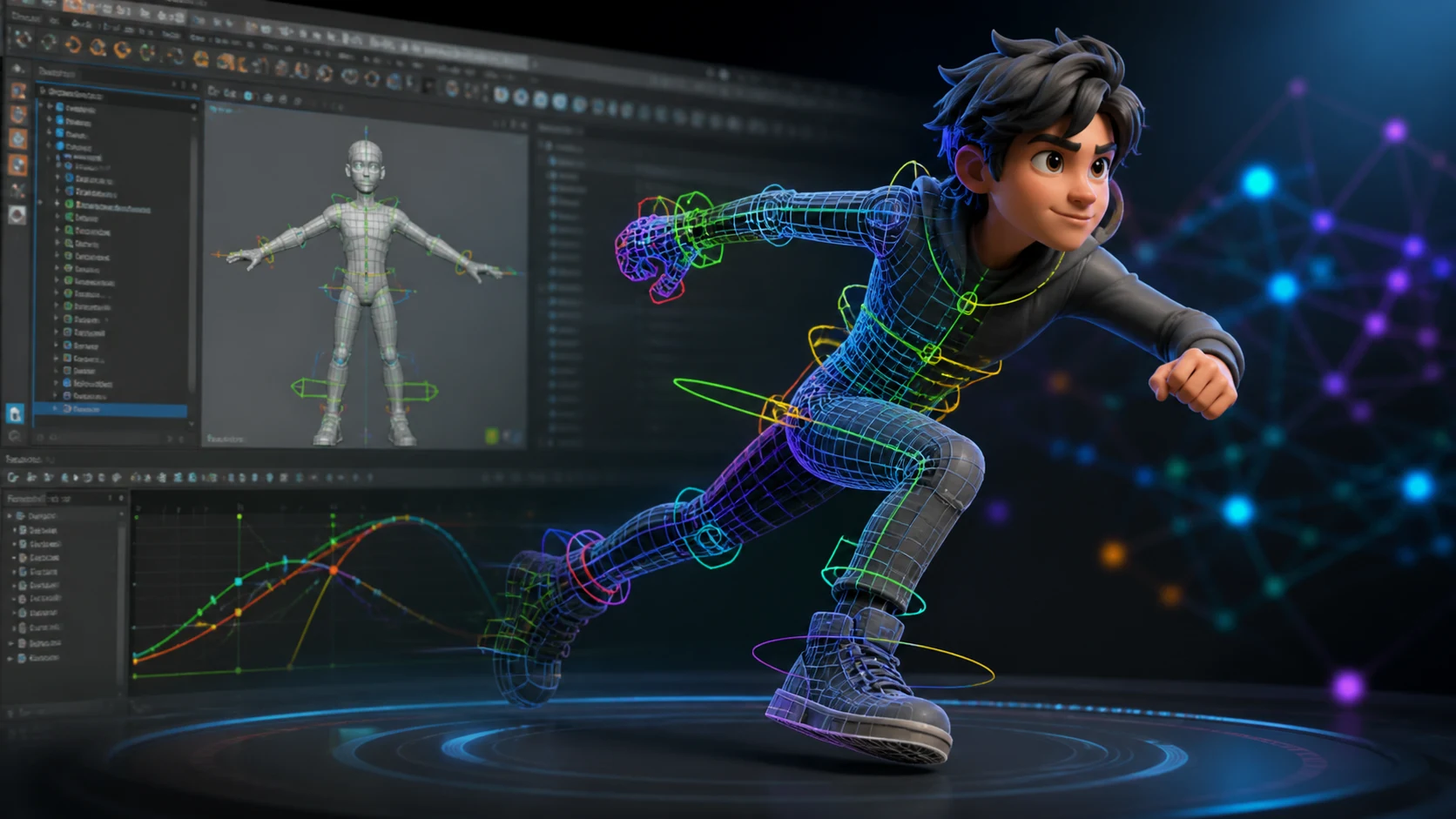
The global 3D animation industry is entering a new phase, and this time the momentum is coming from artificial intelligence. One of the most talked-about developments in creative technology right now is how Autodesk AI rigging is helping artists build characters faster, cleaner, and with far less repetitive work. For years, rigging has been one of the most technical and time-consuming stages in animation production. It sits between modeling and animation, and if done poorly, everything after it becomes harder. Now, Autodesk is pushing a smarter workflow that could reshape studios, freelancers, game developers, and content creators worldwide.
This matters because the demand for 3D content has exploded. Streaming platforms need animated series. Game studios need more characters and faster updates. Brands want cinematic product ads. Social media creators are entering the 3D space. Virtual production keeps growing. Every sector wants high-quality visuals, but deadlines keep shrinking. That creates a massive pressure point inside pipelines, especially in rigging. If AI can solve that bottleneck, it changes the economics of the entire industry.
Autodesk has long been a dominant name in professional 3D tools through software like Maya and 3ds Max. These platforms are already deeply embedded in animation studios, VFX houses, indie pipelines, and academic training programs. So when Autodesk introduces AI-powered tools into character setup and rigging, it is not a niche experiment. It has the potential to become a mainstream workflow standard faster than many startup tools.
For creators watching the future of digital production, this is bigger than just another software update. It signals a shift where artists spend less time on setup and more time on storytelling, movement, emotion, and style. That is exactly where the creative industry wants to go next.
What Is AI Rigging and Why It Matters
To understand the impact, you first need to know what rigging is. In simple terms, rigging means building the skeleton, controls, joints, constraints, and deformation systems inside a 3D model so it can move. A beautiful character model without a rig is basically frozen. It cannot walk, jump, smile, fight, dance, or interact with the world.
Traditional rigging requires both artistic judgment and technical skill. Artists need to place joints accurately, define skin weights, create controllers, test movement ranges, fix deformation issues, and often script custom systems. On complex productions, this can take days or even weeks per character depending on quality level.
That is where AI rigging tools enter the conversation. Instead of building everything manually, machine learning systems can analyze a mesh, detect anatomy patterns, estimate joint placements, assign skinning, and generate usable controls automatically. It does not remove human oversight, but it dramatically reduces setup time.
For example, a humanoid character that once required long preparation may now receive a first-pass rig in minutes. A technical artist can then refine the result instead of starting from zero. This flips the workflow from manual construction to intelligent optimization.
That difference becomes huge at scale. A game studio shipping dozens of NPC characters. A streaming series needing many stylized creatures. A marketing agency creating quick mascot animations. Time saved on each asset compounds into weeks or months of production efficiency.
Why Autodesk’s Move Is a Big Industry Signal
Autodesk is not just any company launching AI features. It is one of the foundational software providers behind professional animation and design ecosystems. When a major platform integrates AI into core workflows, adoption barriers become lower because users already live inside that ecosystem.
Many studios hesitate to rebuild pipelines around new standalone startups. Compatibility, training, security, and asset migration can slow adoption. But when Autodesk introduces AI rigging inside familiar software environments, the transition feels more practical. Artists do not need to abandon established workflows. They can layer AI acceleration into tools they already trust.
This is especially important for Maya users, since Maya remains one of the most recognized standards in character animation, film production, and high-end game development. If AI rigging becomes smoothly embedded there, studios can test productivity gains without tearing apart their pipeline.
It also creates competitive pressure. Once one major vendor successfully reduces setup time, others must respond. Expect rival software companies and plugin developers to accelerate their own AI roadmap. The result is a broader innovation wave across 3D production.
How AI Rigging Can Speed Up 3D Animation Globally
The phrase “speeds up animation” can sound vague, but the production benefits are concrete. AI rigging influences multiple layers of the pipeline.
1. Faster Character Turnaround
Studios can move from concept art to animatable characters more quickly. That means fewer delays between modeling and animation departments. Instead of waiting days for rigging queues, teams can start motion testing earlier.
2. Lower Cost for Smaller Teams
Indie studios and solo creators often cannot afford dedicated rigging specialists. AI-generated base rigs allow smaller teams to produce professional-looking animation with fewer people.
3. Rapid Prototyping
Directors and clients frequently request revisions. New proportions, new costumes, alternate characters, creature variants. AI rigging helps teams rebuild faster, making iteration less painful.
4. Better Scalability
Live-service games and virtual worlds need many assets. Efficient rigging pipelines allow faster expansion of content libraries without linear staffing increases.
5. Education Access
Students learning animation can spend more time understanding motion principles and storytelling rather than getting stuck for weeks on technical rigging barriers.
These benefits explain why the market is paying attention. AI rigging is not only about convenience. It changes production capacity.
The Gen Z Creator Economy Meets 3D Tools
One underrated angle here is the rise of young creators entering 3D spaces. A new generation of artists does not always come through traditional studio training. Many learn from YouTube, Discord communities, TikTok tutorials, online academies, and creator platforms.
They want speed, flexibility, and output. They build short films, VTuber avatars, indie games, music visuals, brand promos, and social content. For them, technical bottlenecks are frustrating because they slow momentum.
This is why Autodesk AI rigging lands at the right moment. It aligns with creator culture where people want to ideate fast, test fast, publish fast, and improve in public. AI assistance lowers friction between imagination and finished motion.
That does not mean skills disappear. It means entry barriers drop. More creators can start, experiment, fail, learn, and grow.
Will AI Replace Human Riggers? Not That Simple
Whenever AI enters creative workflows, the same question appears: will jobs disappear? In rigging, the more realistic answer is transformation rather than total replacement.
High-end productions still need expert riggers and technical directors. Stylized characters, non-human anatomy, creatures, facial systems, advanced muscle setups, cloth interactions, gameplay constraints, and custom control logic often require experienced human judgment.
What AI is likely to replace first is repetitive baseline work. Standard bipeds. Initial skinning passes. Routine controller generation. Technical cleanup tasks. Time-consuming setup that adds little creative uniqueness.
That means skilled riggers may shift upward in value. Instead of spending hours on repetitive basics, they can focus on advanced systems, performance optimization, troubleshooting, and innovation.
Studios that understand this shift will use AI to amplify experts, not remove them blindly.
The Future of Animation Pipelines
The smartest pipelines of the next few years may look very different from old-school production flows.
First, artists model characters with AI-assisted sculpting tools. Then AI rigging generates a functional skeleton and controls. Motion capture or AI motion tools provide first-pass animation. Human animators refine timing, emotion, and style. AI upscalers improve previews. Cloud collaboration syncs teams globally.
That means production cycles become shorter while creative quality can still rise if human direction remains strong.
For global studios working across multiple time zones, speed matters. Delays in one department can stall entire teams elsewhere. AI rigging helps remove one of those common bottlenecks.
This is why many executives see AI not only as a creative tool, but an operational advantage.
Game Industry Impact Could Be Massive
Gaming may benefit even faster than film. Modern games need huge character counts, cosmetics, seasonal updates, emotes, NPC variations, and cross-platform optimization.
Manual rigging every asset becomes expensive. AI-assisted systems can help studios deploy more characters and update content faster. That is especially valuable in competitive online games where fresh content drives retention.
Indie developers may benefit most. Small teams often have strong ideas but limited technical resources. If AI rigging cuts setup complexity, more indie titles can compete visually with larger studios.
Expect this trend to accelerate in mobile gaming, metaverse-like platforms, and stylized multiplayer experiences.
Challenges Autodesk and the Industry Still Face
Even with excitement, AI rigging is not magic. There are real challenges.
Quality Consistency
Auto-generated rigs may work well on standard human characters but struggle with unusual anatomy or extreme stylization.
Cleanup Still Needed
Artists often need to refine weights, fix bends, adjust controls, and optimize performance.
Pipeline Compatibility
Studios rely on existing naming systems, scripts, exporters, and game engine standards. AI output must integrate cleanly.
Trust and Reliability
Professionals need predictable results. If AI tools fail unpredictably, teams may revert to manual methods.
Training Data Ethics
As with many AI tools, questions remain around datasets, ownership, and fairness depending on how systems are trained.
These issues do not erase the opportunity, but they shape adoption speed.
Why This Trend Matters for Visual Vortixel Readers
If you follow digital creativity, design trends, or visual technology, this story is worth tracking because it reflects a broader movement. AI is no longer limited to image generators and chat tools. It is moving deeper into professional production layers where real commercial work happens.
That includes:
- 3D animation
- Game asset creation
- Product visualization
- Virtual influencers
- Motion graphics
- AR and VR experiences
- Film previsualization
- Creator economy content
When AI starts solving infrastructure tasks, industries scale faster.
What Artists Should Do Right Now
Instead of fearing change, creators can adapt strategically.
Learn Fundamentals
Animation principles, anatomy, posing, timing, storytelling, and design still matter. AI cannot replace taste.
Use AI as Assistant
Let tools handle repetitive setup while you focus on direction and quality.
Build Hybrid Skills
Artists who understand both creative work and technical workflows become highly valuable.
Stay Software Fluent
Learn Maya, Blender, Unreal Engine, and related tools alongside new AI systems.
Create a Portfolio Fast
With faster pipelines, creators can ship more work and improve visibility online.
Autodesk’s Competitive Advantage
Autodesk holds a strong position because it already owns trust among professionals. While many AI startups move fast, enterprise customers value reliability, support, integrations, and long-term roadmaps.
If Autodesk balances innovation with stability, it can dominate the AI-assisted production category. That would strengthen Maya’s relevance for a new generation that increasingly experiments with Blender and other alternatives.
The next battle will not just be features. It will be ecosystem strength.
What Happens Next in 2026 and Beyond
Expect AI rigging to become only one piece of a larger automation stack. Soon, users may describe a character in text, generate a mesh, auto-rig it, simulate clothing, apply motion, light the scene, and export content in a fraction of current production time.
That does not eliminate artistry. It increases the speed of iteration. And in creative industries, iteration often decides quality.
The winners will be those who can generate more ideas, test more versions, and finish stronger projects faster than competitors.
Autodesk understands that race.
Final Verdict
Autodesk AI rigging is more than a convenient feature update. It represents a real shift in how 3D animation pipelines may operate globally. By reducing one of the most technical and time-consuming stages of character production, AI gives artists more room to focus on movement, emotion, storytelling, and style.
For studios, it means lower friction and faster delivery. For indie teams, it means better access. For students, it means easier entry. For the global market, it means more content produced at greater speed.
The future of 3D animation will not be human versus AI. It will be human creativity accelerated by AI tools. And right now, Autodesk is placing a serious bet on that future.