

AI Camera Robot Is Insta360’s Bold Visual Bet
 Vortixel
15 minutes read
Vortixel
15 minutes read
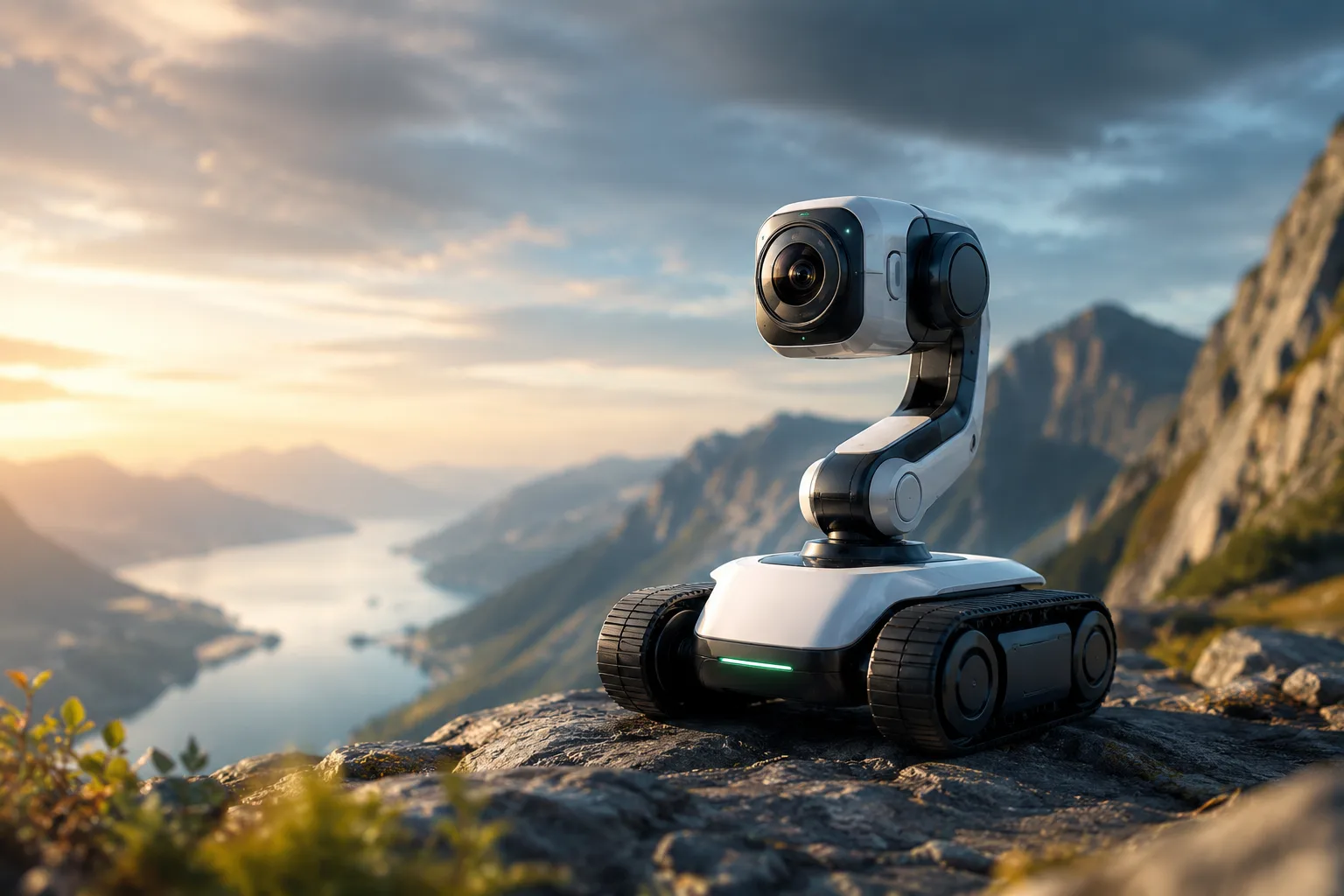
The camera world has spent years chasing sharper sensors, smoother stabilization, and faster editing, but Insta360 is now pushing the conversation into stranger and more ambitious territory. The company is talking about a future where cameras do not just record what users point them at, but actively understand a scene, choose the right angle, follow the emotion, and create a finished visual story with minimal human control. That vision makes AI camera robot the strongest SEO keyword for this story, because it captures the shift from smart camera features into something closer to autonomous visual production. Insta360’s idea is not simply about making another action cam with better specs, or another 360 camera with cleaner stitching. It is about turning the camera into a creative companion that can behave like a silent cameraperson, editor, and visual assistant at the same time.
That is why the phrase AI camera robot feels both exciting and uncomfortable. On one side, it promises a new era where creators can stay inside the moment instead of constantly checking framing, exposure, horizon lines, or whether the shot is still usable. On the other side, it raises huge questions about authorship, privacy, creativity, and whether people actually want machines quietly deciding what moments are worth preserving. Insta360 has built its reputation on helping people capture impossible-looking shots with 360 cameras, action cameras, compact gimbals, and creator-first software, so this vision does not come out of nowhere. The company has already trained users to think beyond traditional framing, and now it is asking them to imagine a camera that can make framing decisions by itself.
Why the AI Camera Robot Idea Matters Now
The reason this moment matters is that camera technology is no longer only competing on hardware. For years, brands tried to win with bigger sensors, higher resolution, stronger stabilization, brighter lenses, and tougher bodies. Those things still matter, but they are no longer enough to define the next leap in visual technology. The real battleground is moving into computational photography, spatial intelligence, subject tracking, automated editing, and generative workflows that can turn raw footage into finished stories. Insta360’s AI camera robot concept lands exactly at that intersection, where physical camera design meets machine perception and creator software.
This shift also reflects how modern creators actually work. A solo traveler, cyclist, vlogger, musician, skater, or small business owner often has to be the talent, camera operator, director, editor, and distributor at once. The result is a creative workflow that looks effortless online but feels exhausting behind the scenes. A camera that can follow action, recognize key moments, reframe footage, and prepare social-ready output could remove a lot of that friction. In that sense, Insta360 is not just imagining a futuristic gadget; it is responding to the pressure of content creation in an era where visual storytelling never really turns off.
From Action Camera to Autonomous Cameraperson
Insta360’s biggest advantage is that it has already spent years building pieces of this future in public. Its 360 cameras let users record everything around them first and decide the final framing later, which already changes the traditional relationship between shooter and camera. Its stabilization tech helps footage look smooth even when the person filming is running, biking, skiing, or moving through chaotic environments. Its subject-tracking and auto-editing tools reduce the amount of manual work required after a shoot. When these features are connected together, the idea of an AI camera robot starts to feel less like science fiction and more like a logical product roadmap.
The phrase “robot” does not necessarily mean a humanoid machine holding a camera like a person. In this context, it can mean a system that senses, moves, frames, listens, predicts, and edits with a level of autonomy that feels robotic. It might take the form of a compact gimbal camera, a flying 360 drone, a wearable device, a desktop capture system, or a hybrid product that combines several of those categories. The important part is not the body shape, but the intelligence behind the shot. If the camera can understand what is happening and act before the user gives detailed instructions, it starts to become more than a camera.
The Tech Stack Behind the Vision
An AI camera robot needs more than a good lens to feel useful. It needs computer vision to recognize people, movement, objects, gestures, faces, environments, and potentially even emotional cues. It needs stabilization systems that can keep footage watchable while the camera itself moves or while the subject moves unpredictably. It needs microphones or audio intelligence if it wants to understand when something important is happening outside the frame. It also needs editing intelligence that can choose highlights, build pacing, trim dead space, and format footage for different platforms without making everything feel generic.
This is where Insta360’s existing product DNA becomes important. The company already understands the value of “shoot now, decide later,” which is one of the biggest conceptual changes in modern visual production. With 360 capture, a creator does not have to perfectly aim at the moment of recording because the scene can be reframed afterward. With AI, that reframing process can become faster and more automatic, especially when the system understands where the subject is and what the viewer is likely to care about. A future AI camera robot could combine panoramic awareness with automated decision-making, making it feel like the camera is constantly watching the whole scene and selecting the best story from inside it.
Why Creators Might Actually Want This
The most obvious benefit is freedom. Anyone who has tried to film themselves knows how awkward it can be to set up a tripod, walk back into frame, check the shot, repeat the action, and then discover later that the focus or framing was off. The same problem happens with travel videos, product demos, fitness content, behind-the-scenes clips, and event coverage. A camera that can recognize the main subject and adjust the composition on its own could make solo production feel less like a technical task and more like natural storytelling. For creators who publish often, that time savings could be more valuable than another bump in resolution.
There is also a deeper psychological benefit. Many people stop being present when a camera enters the scene because they become responsible for documenting the moment. Parents miss parts of a birthday because they are filming it, travelers watch views through a screen, and creators break the flow of real experiences because they need to capture proof for the feed. Insta360’s pitch seems to point toward a camera that handles more of that burden quietly. If it works, the AI camera robot could help users live the moment while still walking away with polished footage afterward.
The Creative Risk Nobody Can Ignore
Still, the same idea that makes this technology appealing also makes it risky. Photography and video are not just about recording reality; they are about choosing what matters. A human photographer brings instinct, hesitation, taste, bias, timing, and emotion into the act of framing. If a machine begins making those decisions automatically, the final result may become smoother but less personal. The big question is whether an AI camera robot can support human vision without flattening everything into algorithm-friendly sameness.
This concern is especially serious in a creator economy already shaped by templates, trends, and platform incentives. If many people use the same automated camera behaviors, their videos may start to share the same pacing, angles, transitions, and emotional beats. That could make content easier to produce but harder to distinguish. The best version of this technology would behave more like a flexible assistant than an invisible director. It should learn a creator’s preferences, offer options, and speed up the workflow without quietly replacing the human taste that makes visual work memorable.
Privacy Becomes the Hardest Problem
The privacy issue is even more complicated than the creative issue. A normal camera is already sensitive because it captures people, places, routines, and private behavior. An intelligent autonomous camera adds another layer because it may be constantly scanning for faces, motion, audio cues, and meaningful moments. If the device becomes small, mobile, or nearly invisible in everyday spaces, people around the user may not know when they are being analyzed or recorded. That makes transparency a major design requirement, not a minor policy detail.
For an AI camera robot to become socially acceptable, it will need clear signals, strong local processing options, responsible storage controls, and obvious ways to stop recording. Users will need to understand what the camera sees, what data it keeps, what it sends to the cloud, and how long that information remains accessible. Bystanders will also need some form of respect in the design, because a camera that feels magical to the owner can feel invasive to everyone else. The future of autonomous visual capture will not be decided only by what is technically possible. It will also be decided by whether people trust the device enough to let it share physical space with them.
How This Fits the Bigger Visual AI Trend
Insta360’s vision is part of a much wider movement across Artificial Intelligence, camera hardware, robotics, mobile editing, and visual entertainment. Smartphone brands are adding more AI scene processing, social platforms are pushing automated video creation, and creative software companies are turning editing into a more conversational experience. At the same time, drones, wearable cameras, and compact creator devices are becoming smarter about movement and subject recognition. The AI camera robot sits at the center of these trends because it turns the camera from a passive capture tool into an active participant in the creative process. That makes it one of the clearest symbols of where visual technology is heading.
The next step is not just better footage, but footage that requires less planning. A creator may soon tell a camera to follow a skateboard trick, capture a cooking process, record a room tour, or build a cinematic travel recap, and the system could understand the assignment. It could change angles, prioritize the most expressive moments, and generate multiple edits for different platforms. This is not the same as replacing the creator, because the creator still decides the story, the context, and the final approval. But it does mean the technical middle layer between idea and output could shrink dramatically.
What It Could Mean for Photographers
Professional photographers may look at the phrase AI camera robot and hear a threat, especially when the conversation includes language about automatic composition and autonomous capture. That reaction is understandable because photography has already been disrupted by smartphones, stock image automation, generative AI, and platform-driven content habits. However, the more realistic near-term impact may be uneven. Casual creators and small teams are likely to adopt these tools quickly because they solve obvious workflow problems. High-end photographers, documentary shooters, commercial directors, and artists will still differentiate themselves through access, concept, taste, trust, and human judgment.
The real pressure will land in the middle of the market. Basic event coverage, simple social content, lifestyle reels, product clips, and routine brand videos could become easier for non-specialists to produce. That may reduce demand for some entry-level production work while increasing demand for people who can direct, curate, refine, and manage AI-assisted workflows. Photographers who treat AI as a competitor may feel squeezed, while those who treat it as a tool may find new ways to deliver more value. The camera may become more autonomous, but the story still needs someone who understands why the shot matters.
The Editing Layer May Be the Real Breakthrough
Most people focus on the robotic capture part because it sounds futuristic, but the editing layer may be even more important. Capturing footage is only half the battle for modern creators. The real time drain is reviewing clips, selecting highlights, cutting boring sections, syncing audio, correcting color, reframing for vertical formats, and exporting versions for different platforms. If Insta360 can connect autonomous capture with genuinely useful auto-editing, the AI camera robot becomes less of a novelty and more of a full creative pipeline. That could be the difference between a cool demo and a daily-use product.
The challenge is that editing is deeply subjective. A mountain biker may want intensity, speed, and close calls, while a travel creator may want atmosphere, quiet transitions, and a sense of place. A family user may prefer faces and emotional moments, while a brand may need product clarity and consistent visual identity. The best AI editing system will need to understand those differences instead of forcing everyone into the same highlight-reel formula. If Insta360 solves personalization well, its camera robot idea could become a serious creative software story, not just a hardware story.
Why 360 Capture Gives Insta360 an Edge
Insta360’s 360-degree background gives it a unique advantage in this race. Traditional cameras require the user to aim carefully, which means the device can only work with the frame it was given. A 360 camera captures the entire surrounding environment, giving software more room to choose the best angle after the fact. That approach is naturally compatible with AI reframing, because the system has more visual information to analyze. In a future AI camera robot, 360 capture could function like spatial memory, letting the device understand the whole scene before deciding what the viewer should see.
This matters for unpredictable moments. Sports, pets, children, street scenes, live performances, and travel experiences rarely wait for perfect camera positioning. A traditional camera can miss the action if the user points slightly the wrong way. A panoramic system combined with AI can reduce that risk by capturing more context and selecting the best frame later. That is why Insta360’s vision feels more credible than it might from a company with only conventional cameras in its portfolio.
The Social Media Factor
Social platforms are a huge reason the AI camera robot idea could take off. Short-form video has trained people to value speed, vertical framing, clear subjects, fast pacing, and immediate shareability. Many users do not want a traditional editing timeline; they want something that can turn a moment into a polished clip before the energy disappears. Insta360 has already leaned into this behavior with software that helps users reframe and edit quickly. A more autonomous camera would push that convenience even further, making content creation feel closer to capture-and-post than shoot-and-produce.
That could change expectations for visual devices. Users may start judging cameras not only by image quality, but by how quickly they can deliver something ready for TikTok, Instagram, YouTube Shorts, or a brand channel. A camera that records beautiful footage but leaves hours of editing work may feel less appealing to a generation used to instant creative tools. At the same time, creators who care about craft will still want manual control, color flexibility, and export quality. The winning product will likely offer both quick AI output and deeper control for people who want to refine the final result.
Practical Insight for Creators and Brands
For creators, the practical takeaway is not to wait passively for the perfect autonomous camera. The smarter move is to start thinking about workflow now. Creators should identify which parts of their process are repetitive, which shots are hard to capture alone, and which editing tasks consume the most time without improving the final story. When an AI camera robot or similar system becomes available, the creators who already understand their workflow pain points will know exactly how to use it. They will also know when to reject automation because the human choice is still better.
For brands, the opportunity is speed and consistency. A small team could use autonomous visual tools to document events, product demos, office culture, launches, and customer experiences without hiring a full production crew every time. That does not remove the need for strategy, scripting, brand voice, or creative direction. It does, however, lower the barrier between an idea and a usable visual asset. In a content market where brands need more video than ever, a reliable AI-powered camera workflow could become a competitive advantage.
What Could Go Wrong
The obvious failure mode is over-automation. If the camera makes too many decisions, users may feel like they are watching the device’s version of their life instead of their own memory. Another risk is false confidence, where creators trust the system to capture everything and later discover that the AI misunderstood the moment. There is also the danger of awkward social behavior, because people may behave differently around a camera that seems to be watching autonomously. For an AI camera robot to succeed, it needs to feel helpful without becoming creepy, pushy, or creatively controlling.
Technical limitations will matter too. Battery life, heat, storage, processing power, weather resistance, object recognition, and low-light performance can all make or break the experience. A device that works beautifully in a polished demo may struggle in crowded streets, messy homes, loud events, or fast-moving outdoor scenes. The AI must also avoid making edits that feel emotionally wrong, such as cutting away from the most meaningful part of a moment because another movement looked more visually dramatic. The camera has to understand not just motion, but context.
The Bigger Cultural Question
The most interesting part of Insta360’s vision is not the hardware itself. It is the cultural question behind it. If cameras become more autonomous, people may start documenting life with less effort and more frequency. That sounds useful, but it also raises the question of whether every moment needs to become content. The AI camera robot could help people stay present, but it could also make recording so easy that people never fully disconnect from the urge to capture.
This is where product philosophy becomes as important as product engineering. The best future camera should not pressure users to record everything. It should help them capture what matters with intention, consent, and creative control. It should make the camera less distracting, not more dominant. If Insta360 can build around that principle, its vision could feel empowering rather than dystopian.
Conclusion: Insta360 Is Betting on Visual Autonomy
Insta360’s conversation about the future of the AI camera robot feels like a preview of the next major chapter in visual technology. The company is not only chasing better specs; it is imagining a camera that can understand scenes, follow people, compose shots, and help turn raw moments into finished stories. That vision fits the direction of creator culture, where speed, mobility, automation, and social-ready output are becoming central to the value of a camera. It also fits Insta360’s history of using 360 capture, stabilization, reframing, and software intelligence to make complex shots easier for everyday users. The result is a bold idea that could reshape how people think about filming their lives.
But the future will depend on balance. An AI camera robot must be smart enough to reduce creative friction, but not so controlling that it erases human taste. It must be autonomous enough to capture hard moments, but transparent enough to respect privacy and social boundaries. It must deliver polished output quickly, but still leave room for creators who want to shape the final story themselves. If Insta360 gets that balance right, the next great camera may not be the one with the biggest sensor or the sharpest spec sheet. It may be the one that knows when to help, when to follow, and when to stay out of the way.