
Feature-Length AI Video Faces Grok’s Odyssey
 Vortixel
16 minutes read
Vortixel
16 minutes read
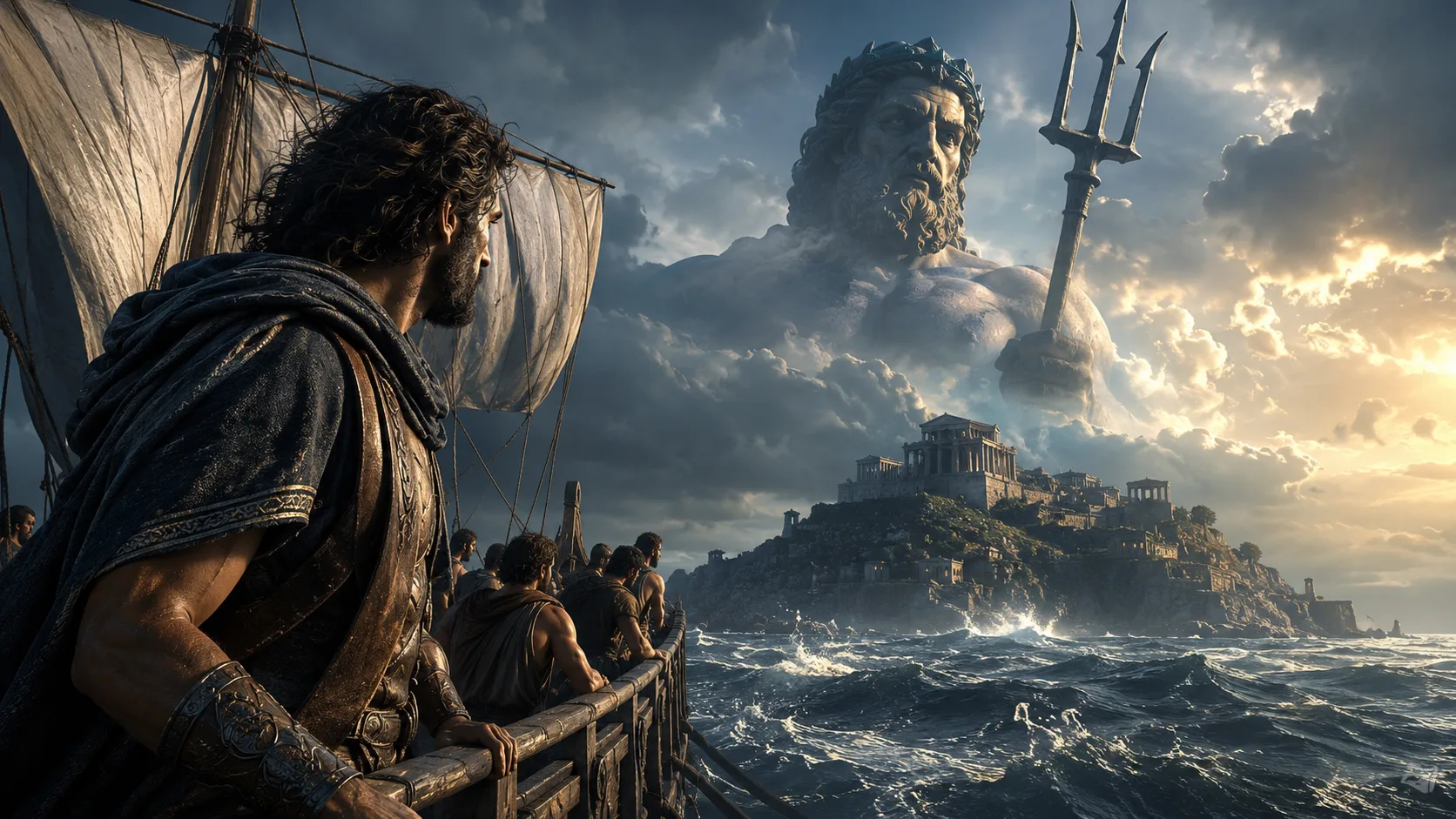
Feature-length AI video just moved from creator-tool hype into full cinematic dare, and Grok’s promised Odyssey project is the kind of bet that makes the whole visual-tech world stop scrolling for a second. The idea sounds simple on the surface: use Grok Imagine to build a full-length adaptation of Homer’s ancient epic before the end of the year, with a look and feel that aims for historical texture instead of glossy fantasy shortcuts. But the moment that claim lands, the conversation gets bigger than one AI model, one tech founder, or one mythological hero trying to get home. It becomes a stress test for whether generative video can sustain characters, emotion, continuity, pacing, production design, and visual logic across something longer than a viral clip. For a site like feature-length AI video, this is exactly the kind of turning point that reveals where the future of visual entertainment is actually heading.
The timing matters because AI video has already become familiar enough to feel normal in short bursts, yet still unstable enough to feel fragile when stretched into real storytelling. A three-second storm over an ancient sea can look stunning, a warrior’s face can carry cinematic lighting, and a monster reveal can pop on a feed with the drama of a trailer shot. But a movie is not a mood board, and an epic like The Odyssey is not just a series of cool frames stitched together with music. It needs visual memory, emotional rhythm, world rules, consistent costumes, believable geography, and scenes that build meaning instead of only showing spectacle. That is why Grok’s Odyssey bet feels less like a product demo and more like a public exam for the next phase of AI filmmaking.
Why Grok’s Odyssey Bet Feels Bigger Than Hype
At first glance, The Odyssey is an obvious target for AI video because it already lives in the imagination as a chain of visually rich episodes. There are ships, gods, storms, monsters, rituals, islands, disguises, grief, longing, violence, and homecoming all packed into one of the most durable stories in Western literature. For a generative model, that sounds like a dream dataset of cinematic prompts, because almost every chapter invites dramatic visuals and bold art direction. Yet that same richness is what makes the project risky, because an epic is built on continuity, not just variety. If Grok can make each scene look impressive but cannot make Odysseus feel like the same exhausted, cunning survivor from beginning to end, the illusion breaks fast.
The claim also lands in a media environment where audiences are more visually literate than ever. People can instantly spot melting hands, inconsistent armor, weird eye contact, floating props, broken shadows, and faces that look almost right but emotionally empty. The internet has trained viewers to pause, zoom, roast, compare, and remix every frame, especially when a project arrives with a big promise attached. That means Grok’s Odyssey will not be judged only as an experiment, but as a cultural statement about whether AI-generated cinema deserves the word cinema. The stronger the promise, the harsher the frame-by-frame audit becomes.
The Main Challenge Is Story, Not Resolution
The biggest mistake in the AI video debate is treating image quality as the finish line. Higher resolution, cleaner motion, better lighting, and more cinematic camera movement are all important, but they do not automatically create a movie. A feature-length film needs structure, and structure is where generative systems still face their toughest creative wall. The audience has to understand where a character has been, why a scene matters, what changed after the scene ends, and why the next moment feels inevitable rather than random. In that sense, the real challenge for feature-length AI video is not making one beautiful shot of Odysseus at sea, but making the hundredth shot still feel connected to the first.
This is where the Odyssey premise becomes especially revealing for the industry. The story is episodic, which could help AI production because each island or trial can become its own visual module. But it is also deeply psychological, because the entire journey depends on memory, temptation, loyalty, loss, and the slow burn of returning to a world that may no longer recognize you. If an AI film reduces that journey to monster scenes and golden sunsets, it may look expensive while feeling emotionally thin. If it finds a way to make visual repetition meaningful, preserve character identity, and pace silence as well as spectacle, then the project becomes much more than a novelty. It becomes a blueprint for how generative systems might support long-form visual storytelling.
What Grok Imagine Has to Prove Visually
For Grok Imagine, the Odyssey promise puts several technical layers under the spotlight at once. Character consistency is the first obvious test, because a full-length film cannot afford a hero whose face, age, hairline, posture, and emotional register keep drifting from scene to scene. Costume continuity comes next, especially in a supposedly grounded ancient setting where armor, fabrics, ships, weapons, jewelry, and architecture will be judged for visual coherence. Then comes motion, because AI video often looks strongest when movement is brief, stylized, or partially hidden by dramatic lighting. A feature needs walking, fighting, rowing, speaking, aging, reacting, embracing, and waiting, which are all harder than making a splashy trailer moment.
The second layer is shot logic, and this is where AI films often start to feel like dreams instead of edited scenes. Traditional cinema uses coverage, blocking, lens choices, eyelines, cuts, and spatial geography to help viewers understand where everyone is. If a scene cuts from Odysseus to a crew member and back again, their positions need to make sense, the lighting needs to remain believable, and the emotional tension needs to build across the cut. AI can generate cinematic fragments, but film language requires those fragments to obey a shared visual grammar. That is why Grok’s real test is not whether it can create one jaw-dropping Odyssey clip, but whether it can maintain a readable cinematic world for an entire runtime.
Feature-Length AI Video Needs a New Workflow
The future of AI filmmaking probably will not look like one person typing a prompt and receiving a finished movie from the cloud. A more realistic workflow is closer to a hybrid studio pipeline, where writers, art directors, prompt designers, editors, historians, sound teams, visual supervisors, and post-production artists guide the machine through thousands of decisions. AI may generate shots, variations, textures, background plates, concept art, and motion tests, but humans still decide what belongs in the story. For Grok’s Odyssey project to work, the system would need a strong creative spine behind it, not just an engine that can make ancient Greek visuals on demand. That is why the phrase feature-length AI video should be understood as a production model, not just a video format.
This matters for creators because the most useful AI tools are often the ones that disappear into the workflow rather than dominate the headline. A director might use AI to previsualize a scene, test different lighting setups, create alternate camera moves, or generate background environments that would be expensive to build physically. An editor might use AI to create missing inserts, smooth transitions, or explore pacing options before the final cut. A designer might use it to iterate ancient interiors, ship details, textile palettes, or creature silhouettes at a speed that would have seemed impossible a few years ago. In this version of the future, AI is less of a replacement button and more of a visual engine that expands what a small team can attempt.
The Historical Accuracy Problem
The phrase “historically accurate” is tricky when applied to The Odyssey because the story is mythic, poetic, and layered across oral tradition. There is no clean documentary version of Odysseus waiting to be reconstructed through better rendering. Historical accuracy in this context likely means a visual style that respects the ancient Greek world more carefully than a generic fantasy blockbuster would. That could involve clothing, ships, weapons, architecture, rituals, landscape, social details, and the texture of everyday life around the myth. But even then, the film would still be interpreting a poem full of gods, monsters, transformations, and symbolic journeys rather than recording literal history.
This is where AI can both help and hurt. On the helpful side, a model-guided visual workflow could rapidly compare design references, generate historically inspired variations, and allow artists to test multiple interpretations of ancient settings. On the dangerous side, AI can confidently blend eras, cultures, and objects into images that look persuasive while being wrong. A bronze-age scene can accidentally borrow from Roman sculpture, modern fantasy armor, Renaissance painting, or contemporary fashion photography without the viewer noticing at first glance. For a project making bold claims about accuracy, visual research becomes as important as generation quality. Without strong human review, AI can create the vibe of authenticity while quietly filling the frame with anachronisms.
Why the Internet Reaction Matters
Grok’s Odyssey plan is not arriving in a neutral room full of patient film scholars. It is arriving inside a loud online culture that turns every AI breakthrough into a debate about labor, art, taste, bias, ownership, and trust. Some viewers are excited because the idea of generating a full epic without a traditional studio budget feels like a creative door opening. Others are skeptical because AI films can feel like content machines chasing scale without soul. A third group is simply waiting for the weird details, because AI video mistakes often become more shareable than the intended achievement. That mix of curiosity, doubt, and meme energy is exactly why this project has become a bigger cultural signal.
The reaction also shows how the public judges AI visuals differently from traditional visual effects. When a VFX-heavy movie has a strange shot, viewers may blame budget pressure, rushed post-production, or studio notes. When an AI-generated film has a strange shot, viewers often treat it as evidence that the entire technology is not ready. That may not always be fair, but it is the reality AI creators have to work within. The first wave of feature-length AI projects will carry the burden of proving the medium can do more than surprise people for a minute. Grok’s Odyssey bet is therefore not only about one adaptation; it is about whether audiences are willing to sit with AI visuals for a full emotional journey.
How This Could Reshape Visual Entertainment
If Grok or any competing system delivers a watchable AI-generated feature, the impact on Visual Entertainment could be immediate. Independent creators would start asking whether they can make mythic stories, sci-fi pilots, animated features, music films, or experimental cinema without waiting for studio permission. Small studios would test AI-first pipelines to reduce pre-production costs, accelerate pitch reels, and create concept trailers that look closer to final output. Agencies and brands would push harder into cinematic campaigns made from generative assets, especially for products that need fast visual turnaround. Streaming platforms would not instantly replace traditional production, but they would pay attention to any workflow that can lower risk and multiply output.
That does not mean Hollywood disappears into a prompt box. Big entertainment companies still rely on stars, directors, crews, unions, production infrastructure, marketing machines, and audience relationships that AI cannot simply clone. But the middle layer of visual production could change dramatically, especially in areas where speed, variation, and stylized worlds matter more than live-action realism. Think animated explainers, game cinematics, virtual influencers, serialized web fiction, experimental shorts, book trailers, educational epics, and fan-driven visual worlds. Grok’s Odyssey concept sits right at the edge of this shift because it borrows the ambition of a studio feature while speaking the language of AI-native creation. Whether it succeeds or fails, it gives creators a new benchmark to argue with.
The Creative Labor Debate Will Get Louder
Every serious conversation about AI film eventually runs into labor, and Grok’s Odyssey bet is no exception. A feature-length AI production raises questions about writers, actors, concept artists, animators, editors, composers, historians, voice performers, and the many invisible specialists who make films feel alive. If a company presents AI as a way to bypass those people, the backlash will be fierce and understandable. If it presents AI as a tool that expands what smaller creative teams can make while still crediting and paying human talent, the conversation becomes more complicated. The future will likely be shaped by that tension between efficiency and respect.
There is also the question of training data and visual ownership. Audiences may admire an AI-generated shot, but artists want to know what images, films, illustrations, performances, and styles helped teach the model to make it. If a generated Odyssey scene looks like a famous painter, a recognizable actor, or a specific studio’s visual language, the ethical debate does not vanish just because the output is new. Feature-length production increases the stakes because it multiplies the amount of generated material and makes style borrowing more visible. For AI cinema to mature, the industry will need clearer norms around consent, licensing, attribution, and compensation. Without that, even technically impressive projects may carry a trust problem into every frame.
What Creators Can Learn From the Grok Bet
For visual creators, the smartest takeaway is not to wait for one company to prove everything. The real lesson is that long-form AI work demands planning, discipline, and taste far more than casual prompting. Anyone experimenting with AI video should start thinking in systems: character sheets, reference boards, shot lists, continuity rules, style guides, scene goals, and editorial maps. The more structured the input, the better chance the output has of feeling like a designed world instead of a random sequence of pretty images. Grok’s Odyssey hype is useful because it reminds creators that the future belongs to people who understand both cinematic language and AI tool behavior.
A practical creator workflow might begin with a short proof-of-concept rather than a full movie. Build one scene with a clear beginning, middle, and end, then test whether the characters remain consistent across angles and emotional beats. Create a visual bible that defines wardrobe, color palette, architecture, environment rules, and camera style before generating too many clips. Use AI for exploration, but use human editing judgment to decide what actually supports the story. This approach may sound less magical than “generate a movie,” but it is much closer to how strong AI-assisted cinema will probably be made.
Why Short Clips Are Not the Same as Cinema
The social feed has made us comfortable with visual intensity without narrative depth. A short AI clip can win attention through atmosphere, surprise, or one surreal detail that makes people replay it. Cinema asks for a different kind of attention, because viewers give their time in exchange for emotional payoff. That payoff depends on rhythm, contrast, silence, buildup, and release, not only on visual novelty. This is why many AI video demos feel impressive for ten seconds and exhausting after ten minutes. The more ambitious the runtime becomes, the more the medium must prove it can hold meaning instead of only generating motion.
The Odyssey is a useful test because it already has a powerful narrative skeleton. The audience understands the idea of a long journey home, even if they do not know every episode. That gives an AI adaptation a built-in emotional direction, which is an advantage compared with inventing a new story from scratch. But a famous story also creates expectations, because viewers know the adaptation should carry weight beyond aesthetics. If Grok’s version feels like a montage of impressive ancient images, it may go viral once and then fade. If it finds a way to make the journey feel human, it could shift the conversation around AI cinema in a serious way.
The Business Signal Behind the Spectacle
Behind the spectacle, there is a business signal that visual-tech companies will study closely. A full-length AI movie would act as a flagship demo for model capability, creative workflow, compute infrastructure, and platform distribution. It would show potential customers that a model can do more than generate isolated assets; it can support a large creative project with public attention attached. That kind of proof matters for investors, studios, advertisers, agencies, and software partners looking for the next growth lane in AI media. Even if the finished film is imperfect, the process could reveal where the market is moving and which production bottlenecks remain most expensive.
There is also a platform advantage in making the project public. If clips circulate on X, creators test the model, audiences debate the results, and critics dissect every frame, Grok gets a feedback loop that doubles as marketing. The project becomes a living campaign for AI video adoption, whether people love it or hate-watch it. That is part of why the Odyssey bet feels so modern: the film is not only the final product, but the conversation around its creation is also the product. In the AI era, hype, critique, user experiments, and model updates can all become part of the same launch cycle. Visual entertainment is no longer just screened; it is iterated in public.
The Risk of Confusing Scale With Quality
The biggest creative risk is that AI companies mistake scale for artistry. Making a full-length AI movie quickly would be technically impressive, but speed alone does not guarantee that anyone will care about the result. Audiences remember films because of characters, scenes, lines, emotional turns, images with meaning, and endings that land. If Grok’s Odyssey becomes a long showcase of what the model can render, it may accidentally prove that feature length is not the same as cinematic value. The future of AI video will depend on whether creators can use the technology to deepen storytelling rather than only inflate production volume.
This is where human taste remains irreplaceable. AI can produce options at a speed that changes the economics of creativity, but taste decides which option deserves to survive. Taste knows when a shot is beautiful but wrong, when a scene needs less motion, when a face is too polished, when a monster should remain unseen, and when silence says more than another generated spectacle. In long-form projects, those decisions compound until they become the difference between content and cinema. Grok’s Odyssey bet will be judged not only by what the model can make, but by what the people behind it choose not to use.
What Success Would Actually Look Like
Success does not have to mean a flawless masterpiece that replaces traditional filmmaking overnight. A more realistic win would be a coherent, watchable, visually distinctive feature that proves AI-generated scenes can hold continuity and emotional attention across a long runtime. It would need a strong opening, a consistent hero, scenes that connect, visual rules that stay intact, and an ending that feels earned. It would also need sound design, music, dialogue, pacing, and editing that support the images rather than expose their artificiality. If Grok achieves even part of that, the industry will treat it as a meaningful step forward for feature-length AI video.
Failure would also be useful, as long as the industry studies it honestly. If the project collapses into inconsistent faces, awkward movement, shallow emotion, or visual anachronisms, creators will learn where the technology still needs human support. If audiences reject it because it feels soulless, that will say something important about the limits of novelty. If the strongest parts come from human editing and art direction, that will reinforce the hybrid workflow argument. In visual technology, failures often become maps. Grok’s Odyssey could still help the field mature even if it does not become the AI-cinema breakthrough its backers imagine.
Conclusion: AI Cinema Enters Its Hardest Test
Grok’s Odyssey bet matters because it forces the AI video conversation to grow up. Short clips have already shown that generative systems can create beautiful, strange, cinematic images that move with increasing confidence. But feature-length AI video asks a harder question: can the technology sustain story, emotion, continuity, and trust long enough for an audience to forget the machine and care about the journey? The answer is not obvious yet, and that uncertainty is what makes this moment so interesting. The future of AI visual entertainment will not be decided by one promised epic, but this project gives the industry a bold, messy, high-visibility test case. Whether Grok’s Odyssey becomes a breakthrough, a cautionary tale, or something in between, it marks the moment AI video stopped being just a clip generator and started reaching for the big screen.