
Deepfake Ads Are Turning Faces Into Scams
 Vortixel
16 minutes read
Vortixel
16 minutes read
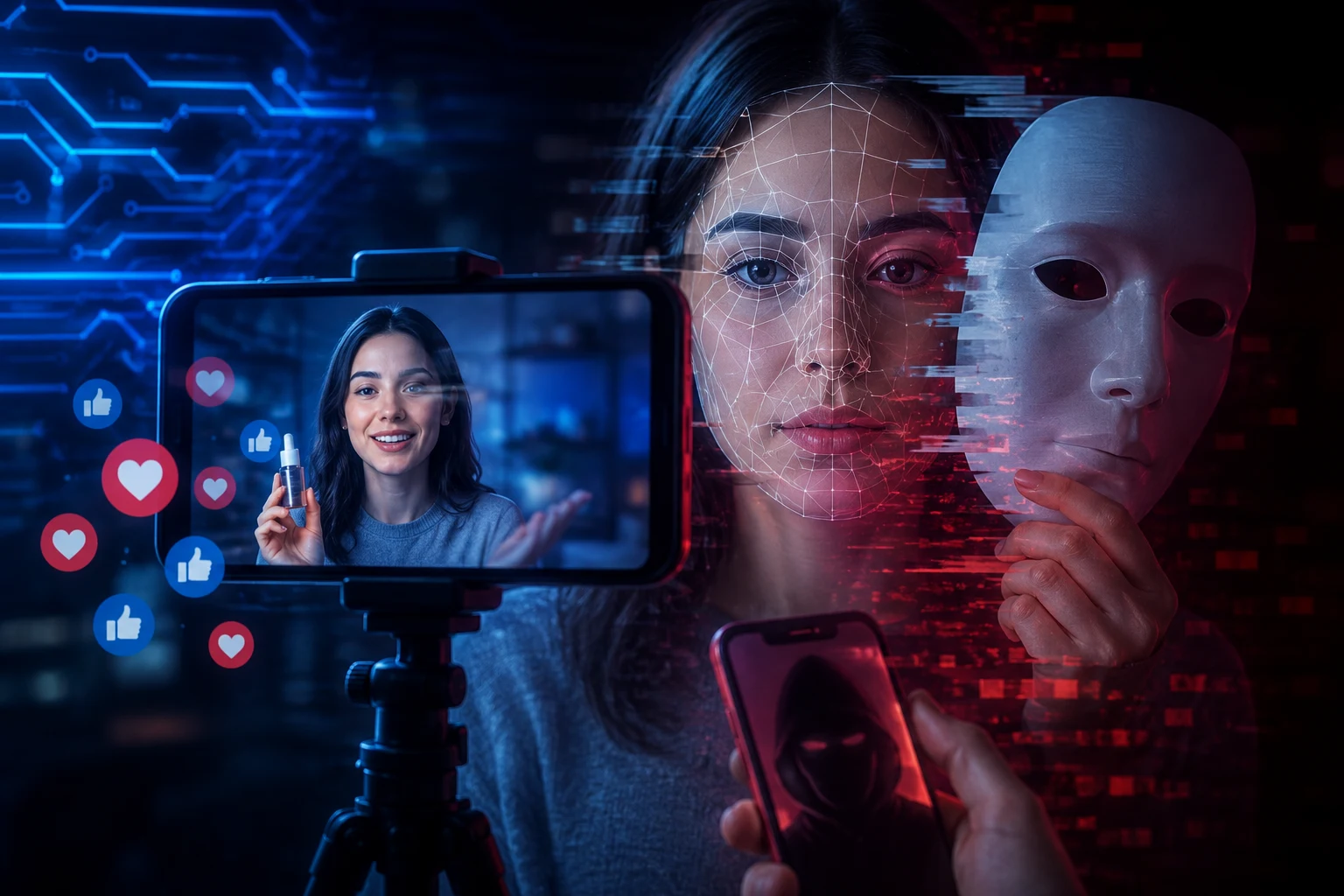
The internet used to have a simple rule: if a familiar creator appeared on screen holding a product, saying a line, or recommending a deal, viewers assumed that person had at least agreed to be there. That rule is breaking fast. Deepfake ads are now turning influencer faces into scam bait, and the shift feels less like a distant tech problem and more like something happening in the middle of everyone’s daily scroll. A creator’s smile, voice, gestures, and personal brand can be copied, remixed, and placed inside a fake promotion before the real person even knows it exists. For audiences, that means the line between a trusted recommendation and a synthetic trap is getting harder to see.
The keyword that best captures this moment is deepfake ads, because the problem is no longer only about fake videos made for shock value or viral chaos. It is about advertising, money, identity, and trust all colliding in the same feed. These scams often borrow the face of someone with built-in credibility, especially influencers who have spent years building a connection with their audience. The fake ad may push skincare, crypto, diet products, investment platforms, mystery gadgets, or “limited-time” giveaways that are designed to move quickly before anyone can report them. What makes the trend dangerous is not just the technology itself, but how perfectly it fits the speed and emotional logic of social media.
Why Deepfake Ads Are Spreading So Fast
Deepfake ads are spreading because they solve an old scammer problem with new visual power. Traditional fake ads usually relied on stolen photos, awkward captions, or copied celebrity names, which made them easier to spot. Now, synthetic video tools can create a clip that looks like a creator is personally speaking to the viewer, even when that person never filmed it. The ad can copy a familiar tone, match the kind of products the influencer usually discusses, and appear inside platforms where audiences are already trained to trust short-form recommendations. In a culture where people make buying decisions from thirty-second videos, a convincing fake face can become a shortcut to instant credibility.
The rise of this scam also reflects how modern online attention works. Influencers are not just entertainers anymore; they are human search engines, taste curators, lifestyle guides, and product filters. When a viewer follows someone for beauty advice, fitness routines, finance tips, or tech reviews, the relationship can feel more personal than a traditional celebrity endorsement. Scammers understand this bond and use it as emotional infrastructure. A fake ad does not need to convince the whole internet; it only needs to reach enough people who already believe the influencer would never steer them wrong.
Another reason the issue is moving quickly is the low barrier to visual manipulation. A scammer no longer needs a studio, a production crew, or professional editing skills to create something that feels polished enough for a mobile screen. Social platforms compress video, autoplay content, and place paid or boosted posts in environments where users are not always analyzing every detail. A slightly strange mouth movement or flat voice may not matter when someone is watching on a phone while commuting, eating, or multitasking. The result is a perfect storm: cheap synthetic visuals, high-trust personalities, fast-moving feeds, and a public that is still learning what fake video actually looks like.
The New Scam Formula: Borrow Trust, Sell Urgency
The core formula behind fake influencer ads is brutally simple. First, scammers borrow a recognizable face or voice. Then they attach that identity to a product, platform, or offer that sounds exciting but requires quick action. Finally, they push the content through ads, fake pages, cloned accounts, or repost networks before the creator, platform, or audience can fully react. This strategy works because urgency lowers skepticism, especially when it appears to come from someone viewers already like.
Many fake ads use language that feels familiar to online shoppers. Phrases like “I finally found this,” “I was skeptical too,” “this changed everything,” or “they don’t want you to know about this” are common because they mimic the casual rhythm of influencer marketing. The scam may also include fake comments that appear to confirm the product is real, with accounts claiming they ordered it, received it, or made money from it. This creates a small theater of trust around the ad, making it feel less like a cold promotion and more like a community recommendation. When paired with a deepfaked influencer face, the illusion can become convincing enough to trigger impulse clicks.
The danger grows when the scam targets products connected to insecurity, aspiration, or financial pressure. Beauty scams may promise miracle results using the image of a creator known for skincare content. Finance scams may use a trusted online personality to promote fake investment dashboards or trading apps. Health-adjacent scams may borrow the tone of wellness creators to push questionable supplements or quick fixes. The fake face does more than decorate the ad; it turns the viewer’s existing trust into a conversion tool.
Influencers Are Becoming Unwilling Ad Actors
For influencers, the rise of deepfake ads turns personal branding into a security risk. Their face is their business card, their voice is part of their signature, and their audience relationship is often the most valuable asset they own. When a scam uses that identity, the creator is not only impersonated; they are forced into a fake commercial role without consent. Even worse, the audience may blame the real person before realizing the ad was synthetic. That means creators can suffer reputational damage from content they never made, approved, or profited from.
This is especially tough for mid-size creators and niche influencers. A-list celebrities may have legal teams, publicists, and platform contacts who can push takedowns faster. Smaller creators often do not have that infrastructure, even though their audiences may trust them more deeply than mainstream celebrities. A fitness coach with a loyal audience, a beauty reviewer with a tight community, or a tech creator with a reputation for honest reviews can be highly attractive to scammers. Their influence is concentrated, believable, and often built on authenticity, which makes the fake endorsement more powerful.
The emotional toll is also real. Imagine waking up to messages from followers asking whether a suspicious product is actually yours. Then imagine realizing your face has been used to sell something harmful, misleading, or financially exploitative. Creators may have to spend hours posting warnings, filing reports, responding to confused fans, and trying to prove a negative. In a creator economy already shaped by burnout and platform pressure, synthetic impersonation adds a new layer of anxiety that feels personal and professional at the same time.
Why Audiences Keep Falling for Visual Scams
It is easy to say people should simply “look closer,” but that advice ignores how digital life actually works. Most people do not scroll like forensic analysts. They scroll quickly, emotionally, and often during tiny gaps in the day. A fake ad only needs a few seconds of belief to earn a click, collect data, or push someone toward a payment page. In that environment, visual trust becomes a shortcut, and scammers are learning how to exploit it.
Audiences also tend to trust consistency. If a fake ad appears with a creator who often talks about similar products, the brain fills in missing context. A beauty influencer promoting a skincare deal sounds plausible. A finance creator discussing a new platform sounds plausible. A tech reviewer recommending a gadget sounds plausible. The scam hides inside the creator’s normal content lane, which makes it harder to reject immediately.
Another factor is the normalization of highly edited media. Filters, AI avatars, voice cleanup, beauty retouching, auto-captioning, and background replacement have already made online visuals feel slightly synthetic. Many viewers have accepted that digital content does not always look perfectly natural. That tolerance can make deepfake warning signs easier to overlook. When everything online is already polished, smoothed, optimized, and algorithmically packaged, a fake face can blend into the visual noise.
The Visual Technology Behind the Trust Crisis
The broader issue is not that AI visual tools exist. The problem is that the same technology powering creative experiments, accessibility features, editing workflows, and entertainment can also be used to impersonate real people. Generative video, voice cloning, face swapping, lip-sync tools, and automated ad production are improving at the same time. For legitimate creators and brands, these tools can speed up production and open new creative possibilities. For scammers, they can turn identity theft into content production.
This is why the topic belongs inside the future of Artificial Intelligence and visual technology. The next phase of online media will not only be about whether an image looks good, but whether it can be trusted. Watermarking, provenance labels, content credentials, and platform verification systems are becoming more important because visual realism is no longer enough to prove authenticity. The internet is moving from an era of “seeing is believing” into an era where seeing is only the beginning of the question. Every platform that hosts visual content now has to think like a security system, not just a publishing tool.
There is also a design problem hiding inside the technical one. Platforms need warning labels that are clear without making every post feel like a legal document. They need reporting flows that ordinary users can understand. They need ad review systems that can detect synthetic impersonation before a campaign reaches thousands of people. Most importantly, they need to treat identity misuse as a core trust issue, not as a small moderation inconvenience.
Brands Have a Bigger Problem Than Fake Clicks
For brands, the rise of fake influencer ads creates a messy trust environment. Even legitimate campaigns may face more skepticism as audiences become unsure whether a creator actually endorsed something. A real ad can be mistaken for a scam, while a scam can look like a real ad long enough to cause damage. This puts extra pressure on brands to make partnerships transparent, verifiable, and easy to confirm. The old model of simply placing a recognizable face next to a product is starting to feel fragile.
Brands also have to worry about adjacency. If scammers use a fake creator face to sell a counterfeit or shady version of a product, consumers may associate the negative experience with the broader category or even the legitimate company. A customer who gets burned by a fake beauty deal may become more skeptical of real beauty brands. Someone who loses money through a fake investment ad may distrust finance creators and platforms more broadly. The damage spreads beyond one scam because it weakens the entire trust chain around digital advertising.
The smartest brands will likely move toward stronger verification signals. They may create official partnership pages, creator confirmation posts, campaign codes, or visible authenticity markers that help audiences check whether an offer is real. Some may also educate their communities directly, telling followers where official promotions appear and what red flags to watch for. This may sound less glamorous than a sleek campaign launch, but trust is becoming part of the product experience. In an era of deepfake advertising, credibility has to be designed as carefully as the ad itself.
What Platforms Need to Fix Next
Social platforms sit at the center of the deepfake ad problem because they control distribution. A fake video sitting on a scammer’s device is harmful, but a fake video boosted through an ad network becomes a public threat. Platforms already review ads for certain policy violations, but synthetic impersonation requires faster, sharper, and more context-aware systems. The review process has to recognize not just banned products or suspicious links, but unauthorized use of a real person’s likeness. That is much harder than scanning text, because the same face can appear in legitimate fan edits, commentary, parody, interviews, and actual paid campaigns.
Detection alone will not be enough. Platforms also need better response systems when creators report impersonation. A deepfake scam can do the most damage in the first hours after it goes live, so slow takedown pipelines are a gift to scammers. Creators should not have to repeatedly prove they are themselves while fake versions of them keep circulating. A platform that profits from visual advertising has a responsibility to protect the identities being weaponized inside that system.
There is also a transparency gap. Users often do not know why they are seeing a certain ad, whether the advertiser is verified, or whether the person shown in the creative has confirmed participation. Better disclosure could make scam campaigns less invisible. Clear labels for verified brand partnerships, stronger advertiser identity checks, and easy public reporting tools would all help. None of these fixes are perfect, but together they can raise the cost of deception.
How Viewers Can Spot Suspicious Deepfake Ads
Viewers should not carry the entire burden of solving this problem, but practical awareness still matters. The first red flag is urgency that feels out of character. If a creator suddenly appears to promote a miracle product, secret investment, extreme discount, or shocking giveaway, pause before clicking. Check the creator’s official profile, website, or recent posts to see whether the campaign is mentioned elsewhere. Real partnerships usually leave a trail beyond one random ad.
- Watch for unnatural mouth movement, strange blinking, stiff facial expressions, or audio that feels slightly disconnected from the video.
- Be cautious with ads that use a famous or familiar face but link to an unknown store, landing page, or financial platform.
- Check whether the offer appears on the creator’s verified channels, not just inside a boosted post or cloned page.
- Avoid entering payment details, crypto wallet information, or personal data after clicking through a suspicious influencer ad.
- Report the ad and warn others if the creator has publicly said the promotion is fake.
Another useful habit is to separate recognition from verification. Recognizing someone’s face is not the same as confirming their endorsement. A real creator may appear in fake content, and a polished video may still be fraudulent. This mental shift can feel annoying at first because it adds friction to the scroll. But that tiny pause can be the difference between ignoring a scam and handing over money or data to someone hiding behind a stolen identity.
Why This Trend Changes Digital Creativity
The rise of deepfake ads also creates a complicated moment for digital creativity. AI visual tools are not only being used by bad actors. Artists, editors, marketers, educators, filmmakers, and independent creators are using generative tools to experiment with new forms of storytelling. The technology can help small teams create polished visuals, prototype ideas faster, and make content that would have been too expensive before. That creative promise is real, but it becomes harder to celebrate when the same tools are also being used to steal faces and sell scams.
This is where the conversation needs more nuance. Banning every AI visual tool is not realistic, and pretending the risks are minor is equally unserious. The future likely depends on consent, transparency, and traceability becoming normal parts of the creative workflow. If a person’s likeness is used, there should be permission. If content is synthetic, audiences should have a clear way to know. If an ad uses AI-generated media, platforms and advertisers should be able to prove who made it, who approved it, and whether the people represented agreed to participate.
For creators, this may lead to a new kind of personal media security. Just as influencers learned to protect passwords, avoid phishing links, and manage impersonator accounts, they may now need systems for tracking unauthorized visual copies of themselves. Agencies and managers may offer identity monitoring as part of creator representation. Legal contracts may include stronger clauses around AI likeness rights. The creator economy is growing up, and deepfake scams are forcing it to take identity protection seriously.
The Legal and Ethical Pressure Is Building
Lawmakers, platforms, and advertisers are all under pressure to respond because deepfake scams expose a gap between old rules and new media realities. Traditional advertising law already cares about false endorsement, fraud, and misleading claims. The challenge is that synthetic media can move faster than enforcement, especially when scammers operate across borders, use disposable accounts, and switch domains quickly. By the time one fake ad is removed, another version may already be live. The legal system was not built for a feed where impersonation can be generated, tested, and replaced almost instantly.
Ethically, the issue is even clearer. A person’s face and voice should not become raw material for someone else’s scam. Consent is not a luxury detail; it is the difference between creative technology and digital exploitation. When audiences see a familiar influencer promoting something, they are responding to years of perceived honesty, style, humor, and expertise. Using that relationship without permission turns personal trust into stolen infrastructure.
The advertising industry also has to confront its own incentive structure. Platforms want ad revenue, brands want attention, creators want reach, and scammers want conversions. If speed and scale remain the only priorities, fake ads will keep finding cracks in the system. Real accountability means slowing down certain parts of the ad pipeline, verifying identities more carefully, and treating suspicious creative assets as potential harm rather than routine content. That may be inconvenient, but the cost of doing nothing is a public that trusts online video less every year.
What Creators Should Do Right Now
Creators do not need to panic, but they do need a plan. The first step is making official partnerships easy to verify. A creator can maintain a simple page, highlight, newsletter section, or pinned post that lists current collaborations and warns followers about fake promotions. This gives audiences a place to check before buying. It also gives the creator a clearer public record when pushing platforms to remove impersonation campaigns.
Creators should also document fake ads as soon as they appear. Screenshots, screen recordings, ad links, account names, landing pages, and timestamps can help with reports and potential legal steps. Public warnings should be direct but calm, making it clear that the creator did not authorize the ad and that followers should avoid clicking or purchasing. The goal is not only damage control, but audience education. Every warning teaches followers how these scams operate.
For creators with larger audiences, it may be worth building a more formal response workflow. That could include a dedicated email for impersonation reports, a saved statement template, a contact list for platform support, and a regular search routine for suspicious ads. It may feel strange to treat your own face like a protected digital asset, but that is where the industry is headed. In the age of synthetic media, personal identity is part of cybersecurity.
Conclusion: Deepfake Ads Are a Trust Test
Deepfake ads are not just another weird internet trend. They are a stress test for the entire visual web, from creator culture and platform moderation to brand safety and audience trust. The technology can make a fake endorsement look personal, familiar, and urgent, which is exactly why scammers are using it. Influencer faces have become valuable not only because they are recognizable, but because they carry emotional credibility. When that credibility is stolen, the damage reaches creators, viewers, brands, and the platforms that host the scam.
The future of AI and visual technology will depend on whether the industry can build systems that protect consent without killing creativity. Synthetic media can be useful, expressive, and powerful when it is transparent and permission-based. It becomes dangerous when it hides behind real identities to manipulate people. Viewers will need sharper habits, creators will need stronger defenses, and platforms will need faster accountability. The scroll is not going away, but the trust rules around it are being rewritten in real time.