

AI Visual Production Gets Cheaper With Runway
 Vortixel
17 minutes read
Vortixel
17 minutes read
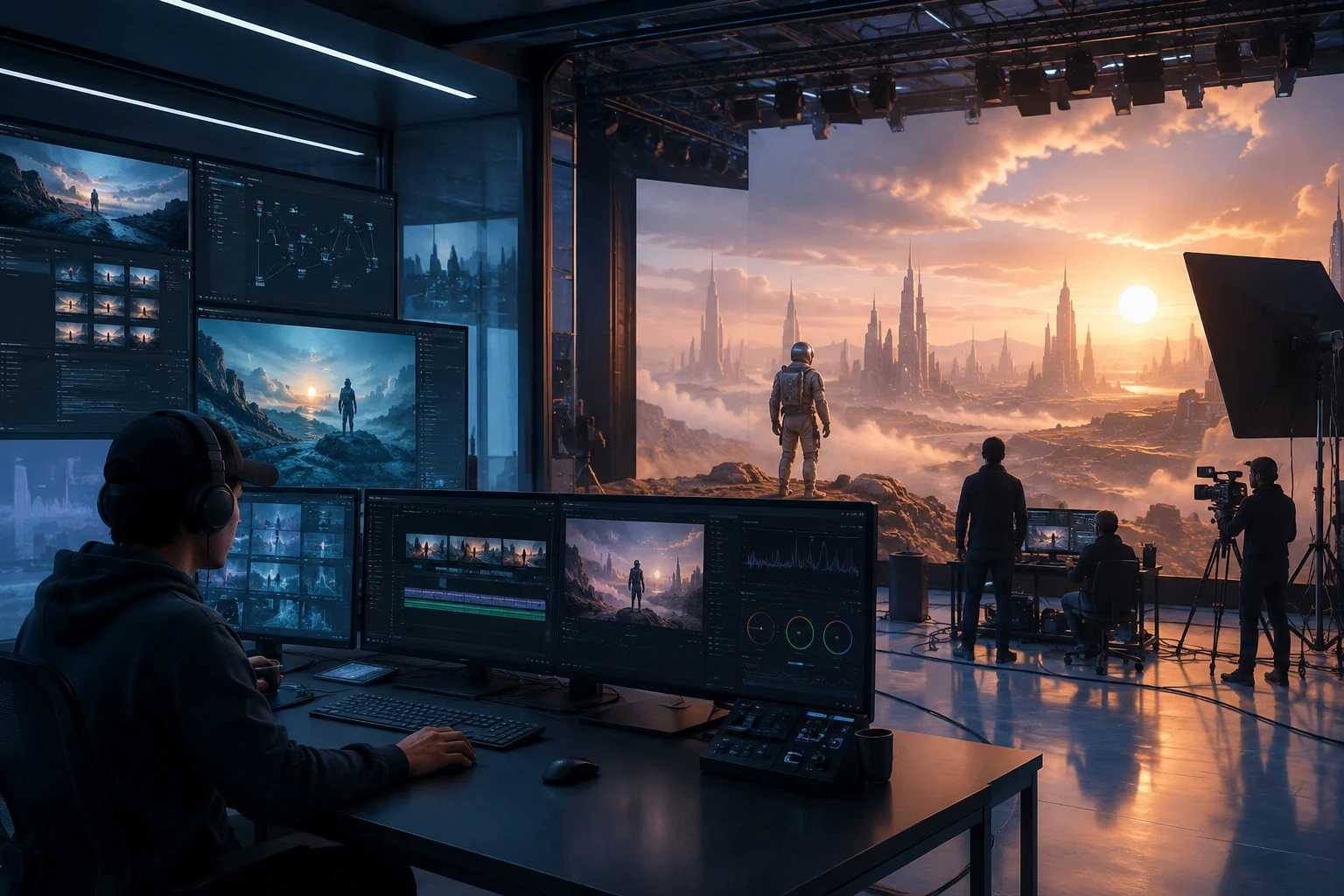
AI visual production is moving from a futuristic experiment into a real business conversation, and Runway is trying to make that shift feel impossible to ignore. For years, high-end video, branded content, digital campaigns, and cinematic visuals were treated like expensive art forms that needed large crews, long timelines, and heavy budgets. Now the pitch is changing fast: what once required a studio floor, location permits, motion graphics teams, editors, reshoots, and weeks of post-production can increasingly begin with a prompt, a reference image, and a browser-based creative workflow. Runway’s latest message is simple but loaded with consequences: visual media can be produced faster, cheaper, and at a scale that traditional pipelines were never built to handle. That claim does not just affect filmmakers or ad agencies; it touches every brand, creator, designer, and media team trying to survive in a world where the internet is hungry for visuals every single day.
The timing matters because visual culture is no longer optional for digital businesses. A brand cannot just publish one hero video and call it a campaign anymore, because audiences now expect fresh clips, product visuals, social edits, vertical cuts, short teasers, behind-the-scenes assets, and personalized creative across multiple platforms. The pressure is brutal, especially for teams that are expected to look premium while working with budgets that feel anything but premium. This is where AI visual production starts to look less like a shiny tech demo and more like a survival tool. Runway is not simply saying AI can make cool-looking videos; it is claiming that AI can change the economics of making visual media altogether.
Why AI Visual Production Is Suddenly a Budget Story
The biggest shift in the conversation around AI visual production is that it has moved beyond novelty. In the early hype cycle, people focused on surreal clips, strange artifacts, and whether an AI-generated scene could trick someone at first glance. That era was loud, chaotic, and often more entertaining than useful. Now the industry is asking a more serious question: can these tools reduce production costs without destroying creative quality? Runway’s answer is clearly yes, and its latest report frames AI as a practical production layer for companies that need more content, more variations, and more speed.
Traditional visual production has always been expensive because every step carries friction. Planning takes time, shooting takes coordination, editing takes labor, and distribution demands endless resizing, localization, and repackaging. Even a relatively simple product video can become complicated once a brand needs versions for TikTok, Instagram Reels, YouTube Shorts, website landing pages, paid ads, email campaigns, and regional markets. AI does not magically erase every part of that process, but it can compress many early and middle steps into a much smaller workflow. That compression is the core reason Runway’s claim about cheaper production is getting attention from creative leaders and business teams alike.
The cost conversation also hits differently in 2026 because content demand keeps rising while marketing budgets are being watched more closely. Companies want cinematic output, but they often do not want cinematic invoices. They want campaigns that feel custom, but they do not always have the money to create every variation by hand. They want creative teams to move fast, but the old production calendar was built for a slower media environment. This tension is exactly where AI tools like Runway become attractive, because they offer a way to make more visuals without multiplying every cost at the same rate.
Runway’s Claim Is Bigger Than Cheaper Video
Runway’s argument is not only about making a single video for less money. The bigger story is that AI changes what production teams can afford to test, scrap, refine, and repeat. In a traditional workflow, experimentation can be expensive because every new direction may require new assets, new edits, or even a new shoot. With AI-assisted production, a team can explore more visual ideas before locking into one direction. That matters because modern creative work is not only about execution; it is also about iteration.
For marketers, this could mean generating multiple ad concepts before spending real money on a campaign. For filmmakers, it could mean testing scene moods, character blocking, environments, or visual effects ideas before full production begins. For designers, it could mean building motion references and visual directions that once required a specialized team. For small creative studios, it could mean competing for work that previously belonged only to larger agencies with deeper resources. The common thread is that AI visual production makes the early creative process feel less financially risky.
This is why Runway’s cost claim should not be read as a simple discount story. Cheaper production changes creative behavior. When visual ideas cost less to test, teams are more willing to explore unexpected directions. When timelines shrink, brands can respond to cultural moments before the moment disappears. When output becomes easier to scale, creative teams can move from one-size-fits-all campaigns toward more targeted visual storytelling.
The New Visual Pipeline Looks More Flexible
The old pipeline for visual production was mostly linear. A team would brief the concept, plan the shoot, capture the material, edit the footage, polish the final version, and then distribute it. Each stage had a clear place, and changing direction late in the process often became expensive. AI introduces a more flexible pipeline where ideation, generation, editing, and revision can happen closer together. That does not mean the process becomes effortless, but it does become more fluid.
Runway’s tools sit inside that new workflow by giving creators ways to generate, modify, extend, and transform visual assets. A brand can start from an image, create motion, adjust the style, change the environment, or build multiple versions around the same concept. A creative director can test visual moods without waiting for a full render team. A social media editor can create quick supporting clips for a campaign that would otherwise be too minor to justify a shoot. These uses may sound small individually, but together they create a major shift in how visual content gets made.
The most important part is not that every AI output is final-ready. In many professional workflows, AI-generated material functions as a draft, a prototype, a reference, or a production shortcut. It helps teams see an idea sooner, compare options faster, and decide where to invest human polish. That makes AI less like a replacement button and more like a creative acceleration layer. In serious production, the best results still depend on taste, direction, editing, and a clear understanding of what the audience should feel.
Why Brands Are Paying Attention Now
Brands are obsessed with visual consistency, but the internet keeps pushing them toward visual abundance. That creates a tricky challenge because a company needs to look recognizable while producing a constant stream of content for different audiences and platforms. AI tools can help by generating variations that stay close to a brand’s visual language while adapting to different formats. This is especially useful for retail, fashion, entertainment, gaming, travel, beauty, consumer tech, and any industry where visuals drive attention quickly. When production costs drop, those brands can create more assets without treating every post like a full campaign.
Imagine a home goods brand launching a new furniture line. Traditionally, the team might need lifestyle shoots, studio photos, product videos, room variations, seasonal edits, social cuts, and ad versions for different customer segments. That can quickly become expensive, especially if every visual requires physical staging and professional production. With AI visual production, the brand can generate room concepts, motion previews, alternate backgrounds, and campaign variations at a much lower creative cost. The final campaign may still use human photography and design, but AI can reduce the number of expensive unknowns before the team commits.
This is also powerful for smaller companies that could never afford big production cycles in the first place. A startup can create polished launch visuals without hiring a large video team. An indie game studio can test cinematic trailers before building full scenes. A local fashion label can create mood-driven content that feels bigger than its budget. In that sense, Runway’s message is not only about efficiency for enterprises; it is also about access for creative teams that were locked out of premium production aesthetics.
The Creative Industry Is Entering a Volume Era
The visual internet has become a volume game, but not in the lazy sense of posting anything just to stay active. The real challenge is producing enough quality content to match the speed of culture. A single campaign now needs multiple lives: the cinematic cut, the short-form cut, the creator-style cut, the product-focused version, the region-specific version, and the version that reacts to whatever people are talking about this week. Traditional production was never designed for that level of constant variation. AI visual tools are becoming popular because they fit the pace of modern media better than older workflows do.
This does not mean every brand should flood the internet with synthetic visuals. In fact, overproduction can backfire if the work feels generic, empty, or disconnected from real taste. The smarter use of AI is not endless output; it is strategic output. Teams can use AI to create drafts, test directions, and produce variations while still applying strong creative judgment. The winners will likely be the teams that combine speed with taste, not the ones that publish the most clips.
For Visual Innovation, this is one of the most important trends to watch because production economics shape creative culture. When tools become cheaper and faster, more people get to participate in visual storytelling. That can lead to fresh aesthetics, new creative voices, and more experimental work. It can also create a wave of lookalike content if everyone uses the same prompts, templates, and styles. The technology lowers the barrier, but the creative challenge becomes standing out in a world where more people can make something that looks expensive.
The Impact on Agencies and Creative Studios
Creative agencies are among the most exposed to this shift because their value has traditionally been built around strategy, taste, execution, and production management. If AI makes parts of production faster and cheaper, agencies have to rethink where their real value sits. The old model of charging heavily for every production step may become harder to defend when clients know that some visual tasks can now be automated or accelerated. However, this does not make agencies irrelevant. It pushes them toward higher-level creative direction, sharper strategy, and better control over AI-powered workflows.
The best agencies will not treat Runway and similar platforms as threats. They will treat them as new production instruments, similar to how digital editing, motion graphics, and 3D tools became standard parts of the creative stack. Teams that understand AI workflows can pitch faster, prototype better, and bring more options to clients without inflating costs. They can also use AI to handle repetitive production tasks while saving human energy for concept, storytelling, and final polish. That combination could make small agencies more competitive and large agencies more efficient.
There is also a talent shift happening under the surface. The creative professional of the near future may need to understand prompting, visual direction, model limitations, copyright risk, brand safety, and post-production cleanup. A designer who can only operate traditional tools may feel pressure, but a designer who can blend traditional skill with AI direction becomes more valuable. The same applies to editors, art directors, producers, and content strategists. AI does not remove the need for craft; it changes which parts of craft become most important.
Cheap Does Not Automatically Mean Good
The most important caution in this whole trend is that cheaper production does not guarantee better storytelling. AI can create impressive visuals quickly, but it can also create content that feels hollow, inconsistent, or strangely polished without meaning. Audiences are getting better at noticing when a piece of content has no real point behind it. A video can look cinematic and still fail if the concept is weak, the pacing feels off, or the emotional logic is missing. That is why the human layer remains essential, especially in brand storytelling and entertainment.
Runway’s claim about lower costs should be understood as an opportunity, not a magic fix. A cheaper workflow can give teams more room to experiment, but someone still has to decide what is worth making. Someone still has to understand the audience, the message, the visual identity, and the cultural context. Someone still has to reject the easy output when it looks generic. The real advantage comes when AI reduces production friction while human taste raises the final quality.
There are also technical limits that professionals cannot ignore. AI video can still struggle with continuity, complex physics, character consistency, realistic hands, readable text, exact product details, and brand-specific accuracy. These issues are improving quickly, but they remain important for commercial work. A luxury brand cannot accept a product visual where the texture, logo, or silhouette is slightly wrong. A medical, automotive, or architecture project may need even stricter accuracy, which means AI outputs still need review, correction, and sometimes traditional production support.
The Ethics of Cheaper Visual Production
As AI visual production becomes cheaper, the ethical questions become harder to avoid. If brands can generate realistic people, locations, products, and lifestyles without hiring real talent or visiting real places, the industry has to ask what happens to photographers, actors, set designers, stylists, illustrators, and production crews. Some tasks will shift, some jobs will change, and some lower-budget work may disappear from traditional pipelines. At the same time, new roles will emerge around AI direction, synthetic asset management, model training, content verification, and hybrid post-production. The transition will not feel equal for everyone.
There is also the issue of transparency. Audiences may not always care whether a background or effect was generated, but they may care if an ad presents synthetic people as real customers or fake locations as real experiences. Trust becomes especially important when AI visuals are used in news, politics, health, education, or social impact campaigns. The cheaper these tools become, the easier it is for both good and bad actors to produce convincing media. That means responsible labeling, internal review, and content authenticity systems will become more important as adoption grows.
Copyright and training data questions also remain part of the conversation. Creative industries are still debating how AI models learn from existing work, what counts as fair use, and how artists should be protected or compensated. Brands using AI tools need to think beyond speed and price because legal uncertainty can become expensive later. A cheaper asset is not truly cheap if it creates reputation risk or rights problems. Professional teams will need clear policies before they make AI-generated media part of their daily workflow.
Practical Lessons for Creators and Brands
The first practical lesson is to use AI where speed and variation matter most. Social clips, concept boards, early campaign ideas, background motion, mood exploration, and rough visual prototypes are strong starting points. These are areas where AI can reduce time without demanding perfect realism on the first try. Teams should avoid rushing AI into high-risk final assets before they have a review process. The smartest move is to build confidence with low-risk use cases, then gradually expand into more important production stages.
The second lesson is to create a human approval layer. Every AI-generated visual should pass through someone who understands the brand, the audience, and the context. This person should check quality, accuracy, consistency, and whether the asset actually supports the story. Without that layer, AI can create a lot of content that looks usable but weakens the brand over time. Cheap visuals are only valuable if they still feel intentional.
The third lesson is to document the workflow. Teams should track which tools they use, what prompts or references shaped the output, what edits were made, and where the final asset will appear. This helps with consistency, legal review, and future iteration. It also prevents creative chaos when multiple people are generating assets at the same time. As AI becomes part of production, organization becomes just as important as imagination.
The fourth lesson is to protect originality. AI tools can make it tempting to chase whatever style is trending, but that is how brands end up looking interchangeable. The better approach is to define a visual identity before generating assets. Color, pacing, composition, texture, camera language, typography, and emotional tone should guide the AI workflow. When the brand has a clear point of view, AI becomes a tool for scaling identity instead of replacing it with generic gloss.
How Runway Fits Into the Bigger AI Visual Race
Runway is not alone in trying to define the future of visual creation. The AI video and image space is crowded with companies building tools for generation, editing, animation, sound, characters, branded assets, and automated creative workflows. Major tech companies, creative software platforms, entertainment studios, and startups are all racing to make visual AI more useful. The competition is pushing tools to become faster, more controllable, and more integrated with professional workflows. That pressure benefits creators because the tools are improving quickly, even as the industry debates what responsible adoption should look like.
What makes Runway especially interesting is its position between creative software and media production. It is not only offering a single model that generates video from text. It is building a broader environment where AI becomes part of the creative process from ideation to output. That makes it attractive for agencies, studios, marketers, and digital creators who need more than a one-off clip generator. In the long run, the winning platforms may be the ones that feel less like toys and more like production systems.
This is where the future of AI visuals becomes less about spectacle and more about workflow design. The next major leap may not be one perfect AI-generated short film. It may be a system that helps a team plan, generate, revise, approve, localize, and distribute a full campaign with fewer bottlenecks. That kind of infrastructure would make AI visual production deeply embedded in everyday business. Runway’s latest cost argument points directly toward that future.
What This Means for Visual Entertainment
In visual entertainment, cheaper AI production could unlock a wave of independent experimentation. Smaller studios may be able to create proof-of-concept scenes that help them pitch stories with more confidence. Filmmakers could test fantasy worlds, science fiction environments, dream sequences, or surreal transitions without needing huge early budgets. Musicians could create more ambitious visualizers and music videos. Digital artists could turn still images into moving worlds with fewer technical barriers.
At the same time, entertainment audiences are sensitive to authenticity. They may accept AI-assisted visuals when the work feels imaginative and emotionally strong, but they may reject projects that feel like cheap shortcuts. This means creators cannot rely on the technology alone to carry the experience. Story, rhythm, performance, sound, editing, and human intention still matter. AI can lower the cost of entry, but it cannot automatically create cultural impact.
The most exciting possibility is not that AI replaces traditional production, but that it expands what smaller creative teams can attempt. A filmmaker with a bold idea may be able to visualize a world that would have been impossible to pitch before. A digital artist may be able to build motion-based work without becoming a full animation studio. A brand may be able to create cinematic storytelling without spending like a streaming platform. That is the real democratizing promise behind cheaper AI visual workflows.
The Bottom Line on AI Visual Production
Runway’s claim that AI can make visual production cheaper is believable because it matches a broader shift already happening across media, marketing, design, and entertainment. The internet needs more visual content than traditional workflows can comfortably supply. Brands need speed, creators need flexibility, and studios need ways to test ideas without burning huge budgets. AI tools answer those pressures by reducing friction across ideation, prototyping, editing, and variation. The result is not a world where every visual is automatically better, but a world where more visuals can be made, tested, and refined faster.
The real challenge now is creative discipline. If teams use AI only to cut corners, the web will fill with cheap-looking sameness. If they use it to explore stronger ideas, reduce waste, and give human creators more room to direct, the impact could be genuinely exciting. Runway is selling cost savings, but the deeper value is creative optionality. In a media economy where attention moves fast and budgets stay tight, AI visual production may become one of the most important shifts in modern visual technology.
The future will likely belong to hybrid teams that know how to mix AI speed with human taste. They will understand when to generate, when to edit, when to shoot, when to reject, and when to slow down for quality. They will treat AI as part of the creative stack, not as a replacement for vision. Runway’s latest push makes one thing clear: the cost of making visual media is changing, and the creative industry has to adapt with intention. Cheaper tools may open the door, but meaningful visual storytelling will still depend on people who know what should walk through it.