
AI Slop Crackdown Reshapes Visual Platforms
 Vortixel
16 minutes read
Vortixel
16 minutes read
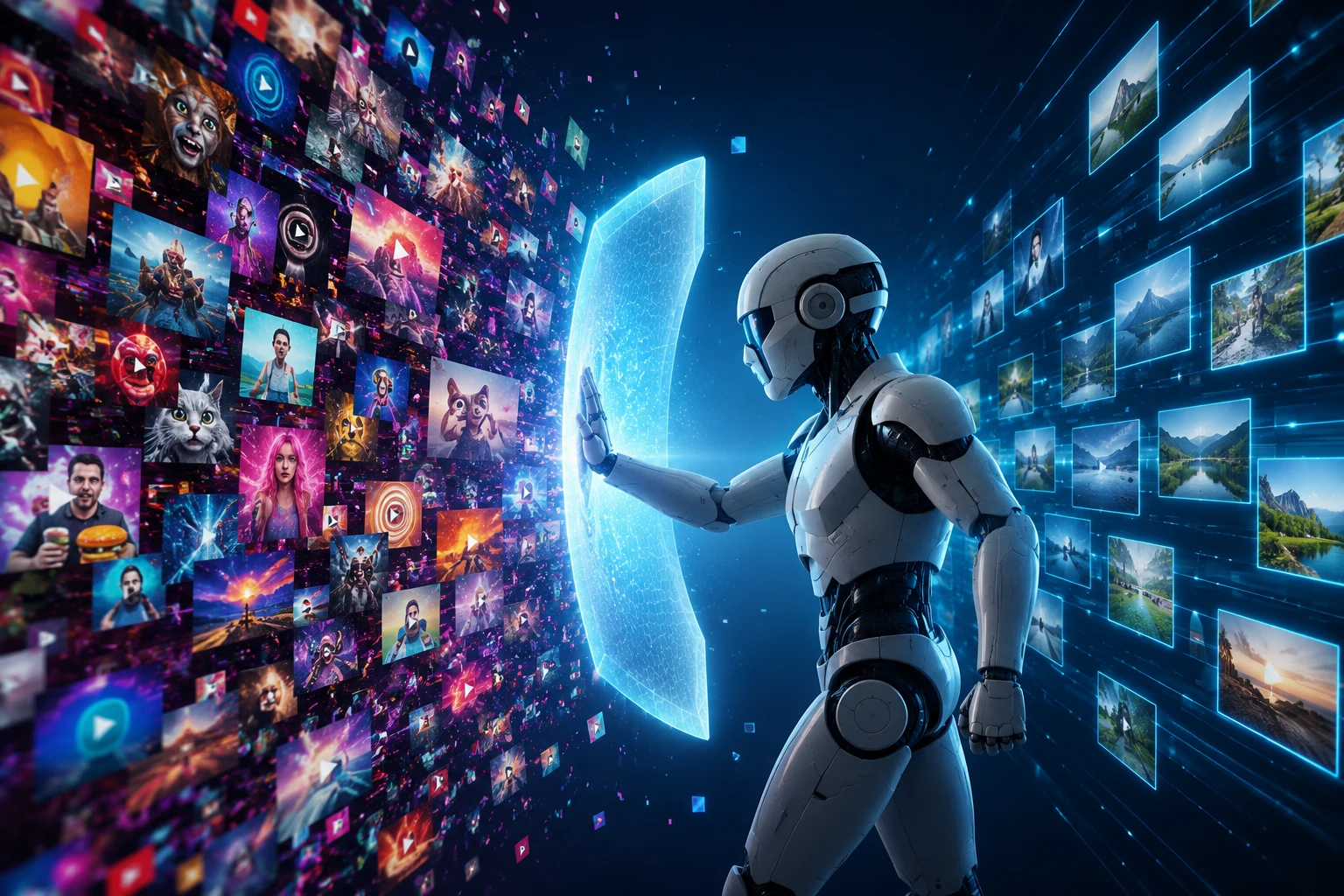
The AI slop crackdown is no longer a niche complaint from frustrated creators scrolling through feeds that feel strangely synthetic. It has become one of the biggest turning points for social visual platforms, especially as short videos, image carousels, AI avatars, generated ads, and low-effort remix content flood the internet at a speed human moderation was never built to handle. For years, platforms treated generative AI like a growth hack, a shiny creative tool that could keep users posting, watching, sharing, and buying. Now the same platforms are being pushed to clean up the mess because users are starting to recognize the difference between useful AI-assisted creativity and endless machine-made filler. The result is a new phase of the visual internet, where platforms are not banning AI outright but are quietly redrawing the line between creativity and spam.
At first, AI slop looked almost harmless because it was weird, funny, and easy to ignore. People laughed at fake cooking videos, uncanny historical photos, glossy fantasy interiors, and emotional animal rescue clips that felt a little too perfect to be real. But the novelty faded fast once these posts began taking over search results, recommendation feeds, marketplaces, and creator dashboards. The internet did not just get more artificial; it got harder to trust, harder to browse, and harder to use as a place for discovery. That is why the AI slop crackdown matters for visual platforms, digital artists, marketers, and everyday users who simply want their feeds to feel alive again.
Why the AI Slop Crackdown Is Happening Now
The timing of the AI slop crackdown is not random, because platforms are facing pressure from every direction at once. Users are complaining that their feeds are filled with repetitive AI videos, fake celebrity images, recycled inspirational clips, low-effort product ads, and visual posts that exist only to bait engagement. Creators are frustrated because original work now competes against accounts that can generate dozens or hundreds of posts in a day with very little human input. Advertisers are nervous because their brands can appear next to content that looks polished at first glance but feels deceptive once viewers realize it was assembled by automation. Platforms are also worried because low-quality AI content can damage trust, and trust is the invisible currency that keeps people scrolling, searching, subscribing, and spending.
The deeper issue is that visual platforms are built to reward volume, consistency, and quick emotional reaction. Generative AI fits that system almost too well because it can produce endless content optimized for attention without necessarily offering context, originality, or human experience. A creator using AI thoughtfully might spend hours developing a visual concept, refining a style, editing a script, and adding a personal point of view. A slop account can generate dozens of nearly identical clips about fake science facts, luxury lifestyles, miracle products, or imaginary news events before lunch. When both appear in the same feed, the platform has to decide whether it values output alone or the quality behind that output.
This is why the crackdown is less about AI itself and more about content behavior. Platforms are not simply asking whether a post was made with AI, because that question is becoming less useful every month. Many photographers use AI denoising, designers use generative fill, editors use automated captions, and video teams use AI to speed up repetitive production tasks. The real question is whether the final post misleads users, repeats mass-produced formats, manipulates emotion, floods recommendations, or creates a poor viewing experience. In that sense, the AI slop crackdown is really a quality crackdown wearing an AI label.
The Visual Internet Has a Trust Problem
Social visual platforms used to sell the idea that what you saw was connected to a real moment, a real person, or at least a real creative decision. Instagram was built around snapshots of life, YouTube around personalities and communities, Pinterest around taste and inspiration, and TikTok around raw performance energy. Generative AI has complicated that promise because now a post can look cinematic, emotional, intimate, or documentary-like without being connected to any real event at all. That does not automatically make the content bad, but it does change the relationship between viewer and platform. When users start assuming everything might be fake, even real creativity loses some of its power.
This trust problem becomes especially intense in visual categories like news, wellness, shopping, children’s content, travel, finance, and entertainment. A fake image of a disaster can spread before people verify it, while a fake product demonstration can convince shoppers that an item works better than it does. A generated travel video can promote a place that looks nothing like reality, and an AI-made health clip can wrap questionable claims in clean graphics and calm narration. Even harmless-looking content can reshape expectations by making real life seem less beautiful, less efficient, and less emotionally dramatic than synthetic feeds. The more AI slop spreads, the more users need to perform mental fact-checking just to enjoy a scroll session.
For platforms, this is dangerous because people do not leave all at once when trust breaks. They disengage gradually, they stop clicking recommendations, they watch less deeply, and they become suspicious of creators they used to follow. They may still open the app, but the experience starts feeling cheaper, noisier, and more disposable. That slow decline is hard to measure with a single metric, yet it can weaken the entire ecosystem over time. A platform filled with content but drained of credibility is not a thriving creative network; it is a content landfill with better lighting.
How Platforms Are Drawing the New Line
The new wave of enforcement is emerging in several forms, and none of them are perfect. Some platforms are leaning into labels that identify AI-generated or AI-altered content, giving users more context before they engage. Others are tightening monetization rules so repetitive, mass-produced, or low-effort posts cannot easily earn money. Some are adjusting recommendation systems to reduce the visibility of spammy AI visuals, while others are developing detection tools that look for synthetic patterns across images, audio, captions, and upload behavior. Together, these moves show that platforms are trying to separate AI-assisted creativity from AI-powered feed pollution.
The labeling approach sounds simple, but it gets complicated quickly. A fully generated video is easy to label in theory, but what about a real video with AI captions, an AI-translated voiceover, or an edited background? What about a digital artist who sketches a concept by hand, uses AI for textures, then paints over the result for hours? What about a brand campaign where AI is used in storyboarding but not in the final image? Platforms have to create policies that are clear enough for users, flexible enough for creators, and enforceable enough to matter.
Monetization rules may end up being more powerful than labels because money is what drives the worst behavior. If a spam network can generate cheap content and earn ad revenue, affiliate commissions, or product sales, the incentive to flood platforms stays strong. Once platforms make it harder for low-effort AI content to profit, the economics change. Creators who use AI as a serious tool can still build audiences, but accounts that rely on volume farming may lose their reason to exist. That shift could reshape the visual creator economy more than any single policy announcement.
The Difference Between AI Creativity and AI Slop
The most important distinction in this debate is that AI slop is not the same thing as AI art, AI editing, or AI-assisted production. A strong AI-assisted piece can still have taste, intention, research, structure, revision, and a human point of view. It can help a small creator make visuals that once required a studio budget, or help a designer explore ideas faster than traditional workflows allow. It can make visual storytelling more accessible to people who do not have advanced technical skills. The problem begins when AI is used to replace judgment rather than support it.
AI slop usually feels empty because it is optimized for appearance without substance. It often uses familiar emotional tricks, such as dramatic music, shocking captions, impossible transformations, fake nostalgia, or sentimental animal scenes. It may look visually clean, but the story behind it feels generic, copied, or suspiciously frictionless. It rarely teaches anything meaningful, reveals anything personal, or rewards deeper attention. The viewer is left with the strange feeling of having consumed content without receiving an actual experience.
That difference matters because a blanket anti-AI attitude would punish many serious creators. Digital artists, editors, filmmakers, photographers, motion designers, educators, and marketers are already using AI inside normal creative workflows. The future of visual content will almost certainly involve AI, but not every AI output deserves reach, money, or cultural attention. The real challenge is building systems that recognize craft even when the tools change. Platforms that understand this nuance will protect both innovation and user trust better than platforms that only chase easy enforcement headlines.
What This Means for Creators
For creators, the AI slop crackdown is both a warning and an opportunity. The warning is obvious: mass-producing generic visuals, recycled scripts, fake reactions, and low-effort AI videos is becoming a risky strategy. Even if that approach works in the short term, it can lead to demonetization, reduced reach, account penalties, or audience fatigue. The opportunity is more interesting because audiences are becoming more hungry for proof of human taste. In a feed full of synthetic sameness, a clear voice, original footage, behind-the-scenes context, and real expertise can stand out more than ever.
Creators who use AI should start treating transparency as part of their brand rather than a burden. That does not mean every post needs a long technical breakdown, but it does mean viewers should not feel tricked. A designer can mention that AI helped with mood exploration, a filmmaker can explain that a scene used synthetic background elements, and a content team can clarify when a visual is illustrative rather than documentary. This kind of honesty builds trust before platforms force the issue through labels or penalties. It also helps audiences understand the difference between thoughtful creative technology and disposable automation.
The practical shift is that creators need to invest more in concept, research, editing, and identity. A generic AI video about “five futuristic homes” will be easy to copy, but a creator with a specific design perspective can still make that topic feel fresh. A generated image may get attention, but a process video showing decisions, references, failures, and revisions can build loyalty. A faceless channel can scale quickly, but a recognizable editorial voice can survive algorithm changes more easily. The next era of visual platforms will reward creators who can prove that there is a mind behind the machine.
How Brands Should Respond to the Crackdown
Brands have a different but equally urgent problem because they often adopted AI visuals to save time and production costs. That made sense when the goal was faster testing, cheaper variations, and more flexible campaign assets. But as audiences become more sensitive to AI slop, brands risk looking lazy if their visuals feel generic or deceptive. A polished AI image can still damage a brand if viewers sense that it was created without taste, context, or respect for the audience. In a crowded feed, cheap-looking authenticity can beat expensive-looking emptiness.
The best brand response is not to abandon AI, but to build stronger creative standards around it. Teams should decide when AI is acceptable, when disclosure is needed, and when real photography, illustration, or human-led production is non-negotiable. Product demos, customer stories, news-driven campaigns, and cause-related visuals require extra care because audiences expect a closer connection to reality. Concept art, mood boards, internal drafts, and stylized campaign experiments may offer safer spaces for AI assistance. The key is making sure the tool serves the story instead of replacing the story.
Brands should also pay attention to where their ads appear and how their own AI-generated assets might be interpreted. If a platform is filled with low-quality synthetic content, even legitimate advertising can feel less trustworthy by association. That is especially important for visual industries like fashion, beauty, gaming, architecture, entertainment, travel, and consumer tech. These sectors depend heavily on aspiration, but aspiration loses value when every image looks artificially perfect. A smarter brand strategy will mix AI efficiency with human texture, real-world proof, and editorial restraint.
The Impact on Digital Art and Visual Culture
For digital artists, the crackdown may feel overdue because many creative communities have been warning about feed pollution for years. Artists have watched AI-generated images imitate popular styles, overwhelm discovery pages, and make it harder for original work to surface. Some viewers cannot easily tell the difference between a carefully crafted illustration and a prompt-generated image designed to mimic one. That creates frustration because attention is already scarce, and visual platforms often reward whatever gets clicked fastest. A stronger distinction between human-led work and mass-produced AI content could help restore some balance to digital discovery.
Still, the cultural impact is complicated because AI is also expanding who gets to participate in visual creation. Someone with limited drawing skill can now prototype a character, test a scene, or build a rough concept that communicates an idea. Independent filmmakers can create pitch materials, musicians can visualize album worlds, and small businesses can experiment with campaign art without huge budgets. These are real benefits, and they should not be dismissed just because low-effort content exists. The challenge is making space for accessibility without allowing automation to flatten visual culture into endless sameness.
This is where Artificial Intelligence coverage becomes more than a tech story. It is also a design story, an entertainment story, and a culture story. Visual platforms are becoming the place where society negotiates what counts as original, what counts as honest, and what counts as valuable. The AI slop debate is really a debate about attention, labor, authorship, and taste. It asks whether the future of digital creativity will be richer because of AI or cheaper because of the incentives around it.
Why Recommendation Algorithms Are Under Pressure
Recommendation algorithms are at the center of the AI slop crackdown because slop spreads through systems designed to detect engagement, not meaning. If a video gets quick reactions, high watch time, or repeated shares, the algorithm may treat it as valuable even if the content is misleading or low quality. AI-generated visuals are often engineered to trigger exactly those signals, using bright colors, impossible scenarios, emotional hooks, and curiosity gaps. That creates a feedback loop where the easiest content to produce can become the easiest content to distribute. The platform then has to clean up a problem that its own incentives helped create.
Fixing this requires more than detecting whether something was made with AI. Platforms need to understand repetition, account behavior, visual similarity, content farms, and patterns of manipulation. A single AI-assisted post may be harmless, but thousands of near-identical posts across coordinated accounts can degrade the entire feed. The same applies to generated thumbnails, fake before-and-after clips, and recycled narration templates that appear across multiple niches. Good enforcement has to look at ecosystem behavior, not just individual files.
This is difficult because platforms also depend on large volumes of content to keep users engaged. If they reduce too much low-effort content too quickly, they may expose how much of the feed was being carried by synthetic output. If they move too slowly, users may decide the platform is no longer worth their attention. The most likely outcome is a gradual tightening of monetization, visibility, labeling, and creator verification rather than one dramatic purge. In other words, the crackdown will probably feel less like a single event and more like a new operating system for the visual web.
Practical Signals That Separate Quality From Slop
Creators and brands can protect themselves by learning the signals that platforms and audiences increasingly associate with quality. Original footage, personal narration, credible context, consistent visual identity, and clear editorial purpose all help content feel more trustworthy. Viewers can usually sense when a post has been shaped by someone with real knowledge, even if AI tools were used in the workflow. On the other hand, vague captions, unnatural voiceovers, recycled structures, suspiciously perfect images, and emotionally manipulative scenes can make content feel disposable. The more the internet fills with synthetic visuals, the more these small signals matter.
One strong practical move is to add process into the content itself. Show sketches, drafts, camera setups, editing timelines, location details, prompt experiments, or before-and-after comparisons that explain the human decisions behind the final visual. Another move is to develop a recognizable point of view, because style without perspective is easy to imitate. Creators should also avoid posting at a scale that makes their work look automated, even if automation is available. Sometimes the smartest response to the AI age is not producing more, but producing with more intention.
For audiences, the best defense is slower attention. Before sharing a shocking image or emotional clip, users should ask whether the source is clear, whether the scene makes sense, and whether the account has a credible history. This does not mean every viewer needs to become a forensic analyst, but healthy skepticism is now part of digital literacy. Platforms can help with labels and policies, but users also shape the demand side of the content economy. AI slop wins when people reward it without thinking, and it loses when audiences become harder to fool.
The Future of Visual Platforms After the Crackdown
The future of visual platforms will not be AI-free, and pretending otherwise misses the real story. AI will be built into cameras, editing apps, design tools, ad systems, video generators, search interfaces, and creator dashboards. The question is whether platforms can create rules that support useful AI while limiting the flood of low-effort synthetic content. If they succeed, users may get better tools, more accessible creativity, and cleaner discovery experiences. If they fail, the visual internet could become faster, louder, and less meaningful.
The most interesting platforms may be the ones that turn quality into a competitive advantage. A platform that helps users filter AI content, understand provenance, reward verified creators, and discover human-led work could feel refreshing in a noisy market. Smaller communities may also benefit because people are increasingly seeking spaces where taste matters more than volume. Meanwhile, large platforms will have to prove they can moderate at the scale they created. The next battle for social media may not be about who has the most content, but who has the most trustworthy content.
This shift could also create new opportunities for creative software companies. Tools that help creators disclose AI use, track asset origins, verify edits, and document creative process may become more valuable. Watermarking, metadata, content credentials, and authenticity layers could move from niche features to standard parts of visual workflows. Designers and editors may start thinking about transparency as part of the production pipeline, not just a legal afterthought. In that world, trust becomes a design feature as much as a policy issue.
Conclusion: The AI Slop Crackdown Is a Reset
The AI slop crackdown is not the end of generative AI on social visual platforms. It is the beginning of a more mature phase where platforms, creators, brands, and users have to decide what kind of visual internet they actually want. The first wave of AI content was defined by speed, novelty, and scale, but the next wave will be judged by trust, originality, and usefulness. That change will not happen overnight, and it will not be clean or perfectly fair. But it does signal that the era of endless synthetic filler moving through feeds without consequences is starting to face resistance.
For serious creators, this reset can be good news because it rewards the qualities that automation struggles to fake over time. Taste, lived experience, research, humor, restraint, and emotional honesty are becoming more valuable as the feed gets more artificial. For brands, the message is clear: AI can support visual storytelling, but it cannot replace credibility. For platforms, the challenge is even bigger because they must rebuild trust while still embracing the technologies they helped popularize. The visual internet is not rejecting AI; it is rejecting the idea that more content automatically means better culture.
In the end, the crackdown is about protecting attention from being treated like an unlimited resource. Users are tired of feeds that feel machine-stuffed, creators are tired of competing with content farms, and platforms are realizing that short-term engagement can create long-term damage. The winners will be the people and companies that use AI with intention, disclosure, and creative direction. The losers will be the ones who treat audiences as targets for automated noise. That is why the AI slop crackdown may become one of the defining visual technology stories of this era.