
Future Studio Uses Real-Time AI Visual Tech
 Vortixel
9 minutes read
Vortixel
9 minutes read
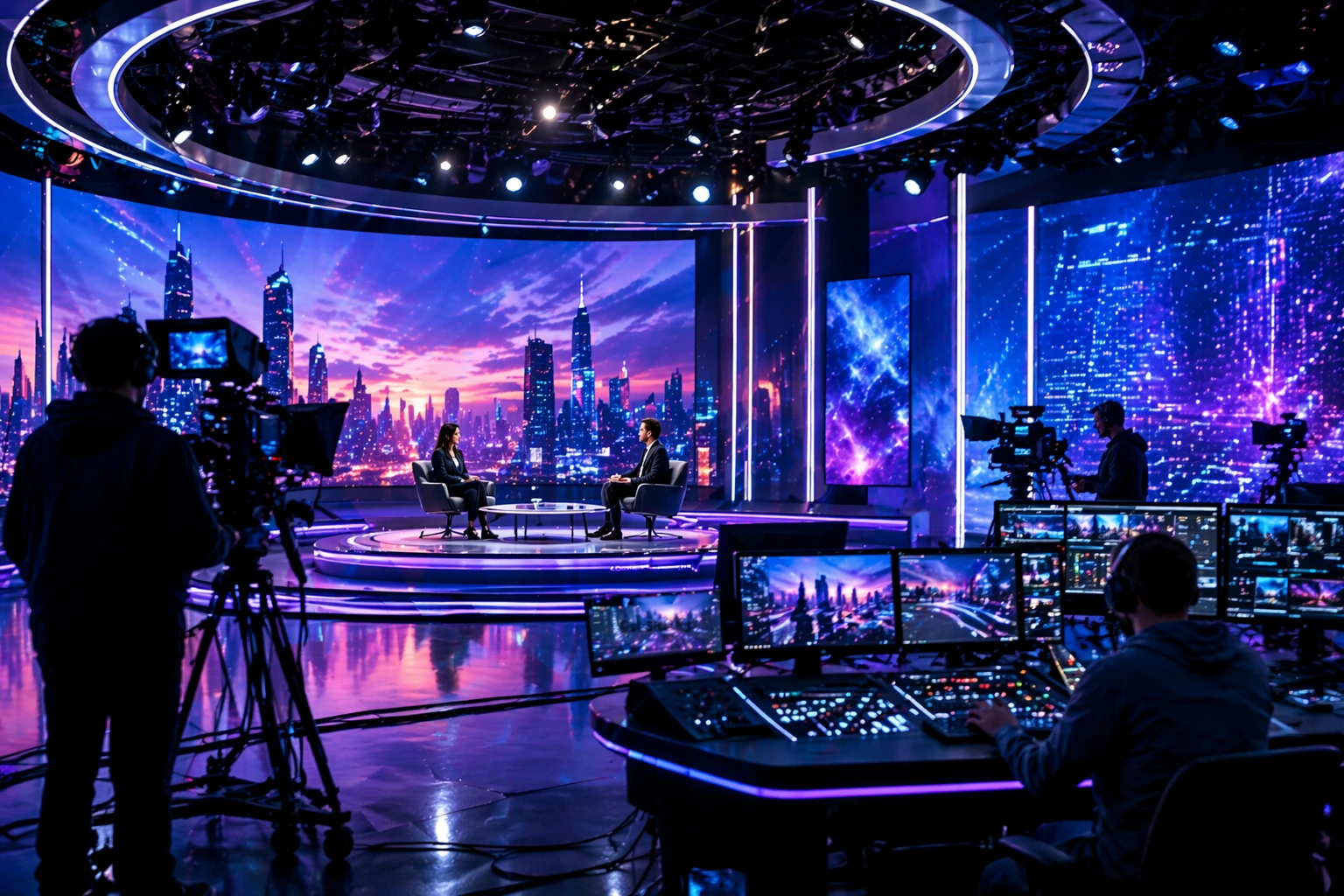
The creative industry is moving faster than ever, and one of the biggest signals in 2026 is the rise of the future studio powered by real-time AI visual technology. What used to require massive teams, expensive hardware, and weeks of post-production can now happen in minutes inside smart production environments. From live broadcasting and advertising to film sets and creator spaces, studios are evolving into intelligent ecosystems where AI handles visuals, automation, editing, and scene generation instantly. This is not some distant sci-fi concept anymore. It is already happening, and brands, media companies, and creators are racing to adapt before they get left behind.
A modern studio today is no longer just cameras, lights, and green screens. It is becoming a connected digital engine where machine learning, cloud rendering, automation tools, and immersive displays work together in real time. The biggest advantage is speed. Teams can generate graphics live, adjust scenes instantly, personalize content for audiences, and cut production costs at the same time. For a generation raised on fast content and constant innovation, this shift feels natural. The future studio is built for the pace of now.
What Is a Future Studio With Real-Time AI Visuals?
A future studio is a next-generation production environment that combines traditional media tools with artificial intelligence systems capable of generating, editing, enhancing, and managing visuals instantly. Instead of waiting hours or days for rendering, correction, or edits, creators can see results live during production. That means faster decisions, fewer delays, and a much smoother workflow.
Real-time AI visuals can include automatic background replacement, live scene extensions, AI lighting adjustments, facial cleanup, instant subtitles, camera tracking overlays, object removal, and dynamic motion graphics. Imagine filming an interview in a simple room, then transforming the entire set into a futuristic skyline while recording. That level of flexibility changes everything.
Studios using this model are also connected to cloud systems. Teams in different cities can collaborate on the same production in real time. Editors, producers, designers, and directors can all work simultaneously. In an era where speed matters as much as creativity, this is a major upgrade.
Why 2026 Is the Turning Point
The reason 2026 feels different is because the technology stack is finally mature enough to scale. AI image generation has become more realistic. Video models can now understand movement and continuity better than earlier versions. Cloud GPUs are stronger. Latency is lower. Smart cameras and sensors are cheaper. All these trends are colliding at the same moment.
At the same time, audience behavior has changed. People expect faster content, sharper visuals, more personalization, and constant updates. Brands want campaigns launched in days, not months. Streaming platforms need more content volume. Newsrooms need live graphics that adapt instantly. Gaming broadcasts demand immersive production quality. Traditional workflows simply cannot keep up with that demand.
That is why companies are investing in AI-powered production studios right now. They know the old model is too slow, too expensive, and too rigid for where the market is going.
How Real-Time AI Visual Technology Works
Behind the scenes, several technologies power this transformation. First is computer vision. This allows AI systems to understand what cameras are seeing in real time. It can track faces, recognize objects, separate backgrounds, and detect movement with precision.
Second is generative AI. This layer creates visuals, textures, environments, animations, and graphic assets instantly based on prompts or templates. Need a cyberpunk skyline behind a host? Need a tropical beach for a travel show? AI can build it in seconds.
Third is machine learning optimization. AI studies workflows and improves efficiency over time. It learns preferred camera angles, brand styles, color grading preferences, and editing patterns. This means the studio becomes smarter the more it is used.
Fourth is cloud computing. Heavy rendering tasks no longer need to happen on one local machine. Massive computing power can be accessed remotely, allowing even mid-sized studios to produce premium-level visuals.
Together, these tools create a seamless production environment where creators focus more on ideas and less on technical bottlenecks.
The Biggest Benefits for Media Companies
Media companies are among the biggest winners in this shift. A future studio can dramatically lower costs while increasing output quality. Instead of building physical sets for every show, virtual sets can be generated and reused. Instead of hiring large post-production teams for every project, many repetitive tasks are automated.
Speed is another major advantage. Breaking news graphics can be built live. Sports overlays can update instantly. Social clips can be cut automatically right after filming. This gives media brands a stronger chance to win attention in competitive feeds.
Consistency also improves. AI systems can maintain branding rules across thousands of outputs. Fonts, colors, transitions, logo placement, pacing, and style can remain on-brand automatically. That matters for large networks handling content at scale.
Finally, localization becomes easier. The same studio output can be adapted for multiple languages, markets, and formats almost instantly.
Why Creators and Influencers Love It
It is not only giant corporations benefiting. Independent creators are entering a new era too. In the past, high-end visuals required expensive teams and big budgets. Now solo creators can access tools once reserved for elite studios.
A content creator can record in a bedroom and stream from a cinematic digital set. A YouTuber can create dynamic motion graphics without a designer. A podcaster can turn audio into visually engaging clips automatically. A small startup can produce premium product launches without renting costly spaces.
This levels the playing field. Talent, ideas, and storytelling matter more when technical barriers drop. That is why Gen Z creators are especially positioned to win in this environment. They already understand platform culture, speed, trends, and digital aesthetics.
The Future of Live Broadcasting
Live broadcasting may see the biggest disruption. Traditional live production requires multiple operators, switching teams, graphics teams, lighting crews, and fast coordination. AI can simplify many of these layers.
Real-time AI systems can auto-switch camera angles based on speech detection. They can generate captions instantly. They can create audience polls, pull social comments, insert sponsor graphics, and even suggest highlight moments while the event is happening.
Imagine esports broadcasts with AI-generated arena visuals reacting to gameplay. Imagine financial news shows where charts update live based on market data. Imagine concerts where stage visuals adapt to crowd energy. These experiences become more interactive and more engaging.
Live content is valuable because it feels immediate. AI makes it more polished without slowing it down.
Advertising Enters a New Phase
Marketing teams are also embracing future studios. Campaign production often involves long timelines, expensive shoots, and multiple versions for different markets. AI studios compress that timeline massively.
Brands can shoot one product demo, then instantly create variations for different regions, languages, age groups, and platforms. They can test multiple visual styles quickly. They can generate seasonal campaigns without reshooting everything.
For example, a sneaker brand could produce one core campaign and automatically transform the background, tone, music pacing, and messaging for TikTok, Instagram, YouTube, and TV audiences. That flexibility increases ROI and helps brands stay relevant in fast-moving markets.
Film and Entertainment Transformation
Hollywood and streaming studios are watching this trend closely. AI does not replace storytelling, actors, or direction, but it can streamline production. Previsualization becomes faster. Virtual worlds become cheaper. Smaller studios can attempt ambitious visuals once only possible for blockbuster budgets.
Writers and directors can test scenes in real time. Cinematographers can preview lighting setups instantly. Editors can build rough cuts faster. Producers can reduce waste by planning smarter shoots.
This means more experimentation. Niche stories with bold visuals may finally become financially realistic. Indie creators may compete visually with larger players. Entertainment could become more diverse because barriers to entry are lower.
Challenges the Industry Must Face
Of course, not everything is smooth. AI studios raise serious questions. Job roles will change. Some repetitive production tasks may shrink. Teams will need reskilling programs. Creative unions and workers will demand fair policies.
There are also concerns around originality. If everyone uses the same AI tools, content can start to feel generic. That means human taste and direction become even more valuable. AI can generate options, but humans still decide what matters.
Data security is another issue. Studios handling unreleased campaigns, scripts, or confidential footage need strong protection. Cloud systems must be secure. Permissions and ownership rules must be clear.
Ethics around deepfakes, synthetic actors, and manipulated footage also require strong boundaries. Trust is critical in media.
How Brands Should Prepare Now
Brands that want to stay competitive should not wait. The smartest move is to begin with hybrid adoption. Keep strong creative teams while introducing AI tools gradually into workflows.
Start with tasks like auto-captioning, instant resizing, smart editing, virtual backgrounds, and graphic generation. Then scale into real-time production environments. Train teams early. Build internal guidelines. Test multiple vendors. Focus on ROI and workflow speed, not hype alone.
The brands that win will be the ones using AI to amplify creativity, not replace it.
Skills That Will Matter in the AI Studio Era
The future workforce needs a new mix of skills. Technical knowledge helps, but taste matters more than ever. Prompt design, creative direction, brand storytelling, audience psychology, and fast experimentation are becoming valuable.
Editors who understand AI tools will move faster. Designers who know motion systems will lead more projects. Producers who can manage human teams plus automated systems will become highly valuable. Creators who understand both culture and tools will dominate.
In short, being adaptable is the new superpower.
Why This Matters for Southeast Asia
Southeast Asia has huge potential in this space. The region has fast-growing digital populations, creator economies, mobile-first audiences, and rising startup ecosystems. Countries like Indonesia, Singapore, Malaysia, Thailand, and Vietnam are positioned to benefit from lower production barriers.
Local studios can now compete globally with better tools. Regional brands can produce premium campaigns faster. Independent creators can export content internationally. This could become a major growth wave for the creative economy.
For Indonesia especially, where young audiences drive digital trends, AI-powered studios could unlock a new generation of creators and media businesses.
What the Next Five Years Could Look Like
By 2030, future studios may become standard rather than special. Cameras will be smarter. Editing may happen during filming. Personalized content may be generated live for each viewer. Virtual presenters may assist hosts. Mixed reality sets may replace many physical builds.
Studios may become smaller physically but more powerful digitally. Teams may be leaner but more productive. Global collaboration may feel effortless. The line between gaming engines, film production, livestreaming, and social content will continue to blur.
The biggest winners will be those who adapt early and keep human creativity at the center.
Final Thoughts
The rise of the future studio using real-time AI visual technology is one of the clearest signs of where media is heading. Production is becoming faster, smarter, cheaper, and more flexible. From creators to broadcasters, advertisers to filmmakers, everyone has something to gain from this shift.
But tools alone are not enough. The real advantage still comes from ideas, storytelling, and cultural relevance. AI can accelerate execution, but humans create meaning. That is why this moment is exciting. We are not entering a world without creators. We are entering a world where creators can build bigger than ever before.
For anyone in media, content, marketing, or entertainment, the message is simple. The studio of the future is no longer coming. It is already here.