

Hollywood’s First AI Blockbuster Is Coming
 Vortixel
16 minutes read
Vortixel
16 minutes read
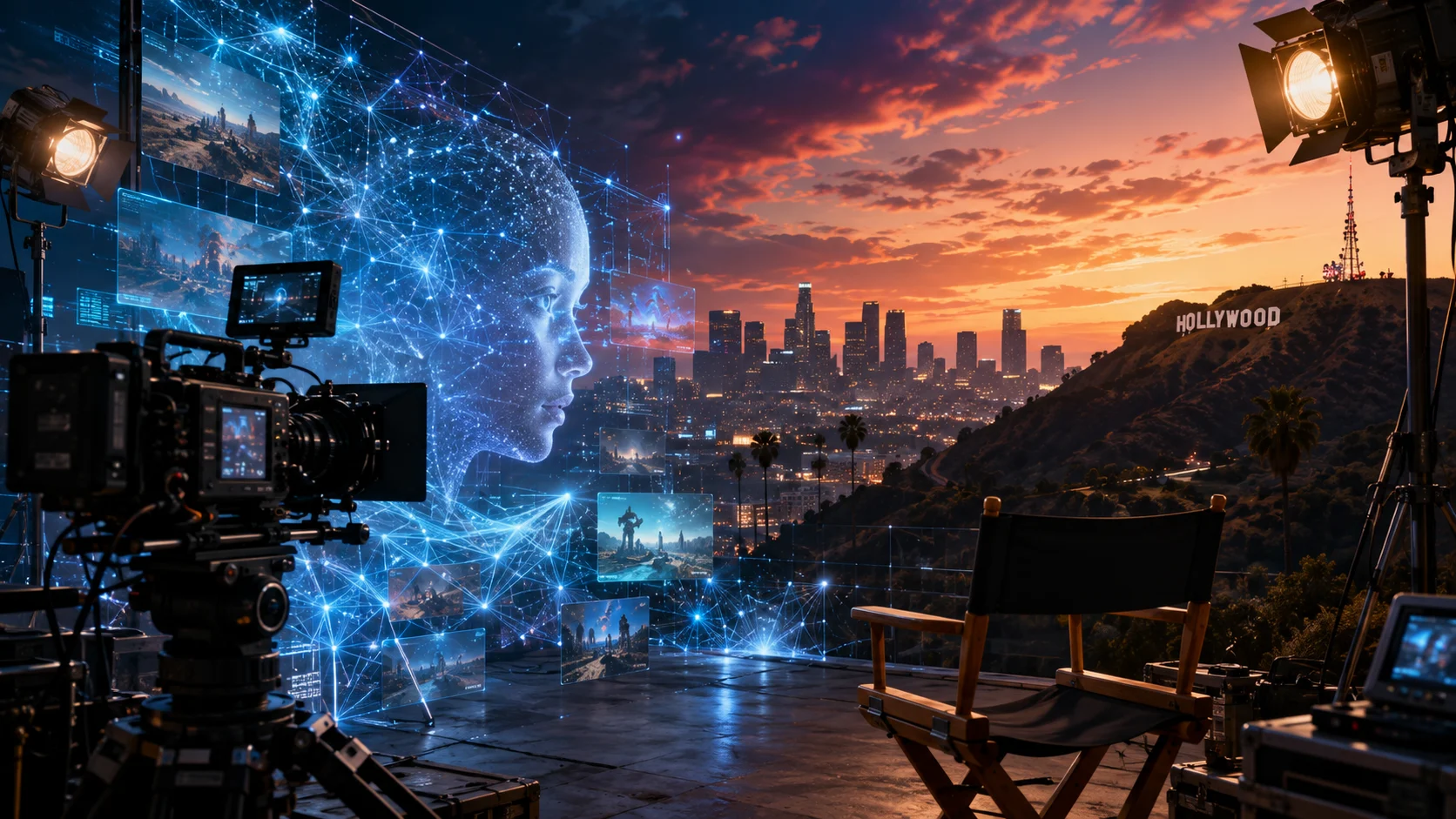
AI blockbuster used to sound like a punchline whispered in studio hallways, somewhere between a tech demo and a threat to everything people love about movies. Now it feels more like a countdown. Across Hollywood, filmmakers, studios, actors, editors, visual effects teams, and investors are quietly testing how far generative technology can go before the audience notices the difference. The race is not only about who can make the first movie with artificial intelligence inside the workflow. It is about who can make the first one that still feels big, emotional, cinematic, and undeniably human.
The idea of a first AI blockbuster matters because Hollywood has always been shaped by moments when a new tool stopped being a novelty and became the language of the industry. Sound changed the movies, color changed the movies, digital editing changed the movies, CGI changed the movies, and streaming changed the business around the movies. Artificial intelligence is arriving with the same disruptive energy, but the vibe is different because the tool does not just change the camera or the screen. It touches the script, the performance, the production schedule, the budget, the marketing campaign, and the future of creative labor itself.
Why the AI Blockbuster Race Feels Inevitable
Hollywood is not racing toward an AI blockbuster because executives suddenly fell in love with robots. It is happening because the economics of making movies have become brutal. A massive theatrical release can cost hundreds of millions before marketing even begins, while audience habits are more fragmented than ever. Studios are under pressure to make films faster, cheaper, and more visually ambitious without losing the global scale that makes a blockbuster worth the risk. Artificial intelligence is being treated as a possible way to keep the spectacle alive while shrinking the financial panic behind it.
The pitch sounds simple on paper: use AI to build environments, test shots, accelerate edits, generate concept art, extend visual effects, preview scenes, and support production planning before the expensive part begins. In reality, it is much more complicated because filmmaking is not a spreadsheet with a soundtrack. Every shortcut has artistic consequences, and every automated process raises questions about authorship, taste, consent, and quality. Still, for studios staring at ballooning budgets and unpredictable box office returns, the promise is hard to ignore. The first convincing AI blockbuster could become a new blueprint for how expensive movies are made.
The timing also explains the urgency. AI video tools are improving fast, and creative teams are already using them in parts of the pipeline where audiences rarely look. A director might use AI to imagine camera angles before a shoot, while a production designer might generate dozens of world-building references before the first physical set is built. An editor might use machine-assisted tools to organize footage, test rhythm, or speed up technical tasks that used to consume entire days. None of that automatically makes a film artificial, but it does mean the next generation of studio filmmaking may be AI-assisted long before it is openly AI-branded.
The Real Story Is Not Replacing Hollywood
The loudest version of the AI movie debate usually asks whether machines will replace writers, actors, directors, designers, and editors. That question is scary, but it is also too narrow. The more realistic shift is that AI becomes another layer in the creative stack, sitting beside cameras, render farms, editing suites, motion capture stages, and virtual production walls. This does not mean the risk to jobs is imaginary, because automation always changes who gets hired and what skills are valued. But the immediate story is less about one machine making one movie alone and more about a new production culture forming around hybrid workflows.
That hybrid culture is already familiar to younger creators who grew up editing videos on laptops, remixing formats, and moving between platforms without treating tools as sacred. For them, AI is not always viewed as a magic button or a moral disaster. It can be a sketchpad, a mood board, a rough-cut assistant, a visual sandbox, or a way to prototype an idea that would otherwise stay trapped in someone’s head. The problem starts when the tool becomes a substitute for taste. Audiences can forgive experimental visuals, but they rarely forgive a story that feels empty.
This is where Hollywood’s first AI blockbuster will face its hardest test. A blockbuster is not just a collection of polished shots. It needs pacing, chemistry, stakes, emotional payoff, memorable characters, and a visual identity strong enough to survive the noise of the internet. AI can help generate images, accelerate options, and lower certain barriers, but it cannot automatically understand why a quiet scene lands or why a face in close-up can matter more than a collapsing city. The winners in this new era will be filmmakers who use AI to expand intention, not replace it.
From Visual Effects to AI-Generated Worlds
Hollywood already relies on invisible technology more than casual viewers realize. Many modern blockbusters are built from layers of practical photography, digital environments, performance capture, simulation, compositing, color grading, and post-production tricks that disappear when done well. AI enters this world as both an extension and a shock. It can speed up the creation of backgrounds, concept frames, crowd scenes, texture references, lighting studies, and previsualization materials. The visual imagination of a film can move from a slow chain of requests into a fast loop of experimentation.
For production teams, that speed can be powerful. A director can explore different versions of a futuristic city, a haunted desert, or a ruined space station before committing to a costly build. A cinematographer can test the mood of a sequence before a camera crew arrives. A visual effects supervisor can identify problems earlier instead of waiting for late-stage fixes that drain the budget. The potential is not only cheaper spectacle, but better planning. When used responsibly, AI can make the expensive parts of filmmaking more deliberate instead of more chaotic.
At the same time, AI-generated visuals come with a recognizable weakness. They can look impressive at first glance but strangely weightless after a few seconds. The lighting may feel glossy, the faces may feel slightly off, the camera movement may lack intention, and the world may look designed by trend data instead of lived experience. That matters because blockbuster audiences are visually fluent now. They have seen decades of CGI, game cinematics, deepfakes, fan edits, and AI clips, so they can often sense when an image has no soul behind it.
The Actor Question Will Define the Debate
No part of the AI blockbuster conversation is more sensitive than performance. Hollywood is built on faces, voices, bodies, charisma, and the strange chemistry that happens when an actor turns written words into something alive. AI can now recreate likenesses, alter voices, de-age performers, generate doubles, and imagine scenes that were never physically performed. That opens creative possibilities, but it also creates a serious consent problem. An actor’s image is not just data; it is labor, identity, reputation, and legacy.
The future may involve more performers licensing digital versions of themselves under strict terms. Some actors may see this as a way to protect their likeness while earning from uses they approve. Others may reject it because the idea of a reusable digital self feels too close to losing control. Studios will likely push for flexible rights, while unions and talent representatives will push for informed consent, compensation, and limits. The first major AI-assisted blockbuster will be watched closely not only for its visuals, but for how it treats the people whose faces carry the story.
There is also a creative reason this matters. Viewers connect with performances because they sense vulnerability, timing, hesitation, and emotional risk. A synthetic face can copy expression, but copying is not the same as presence. If a movie uses AI to enhance a performance with permission and care, audiences may accept it the same way they accepted digital stunt doubles and de-aging when the story justified the choice. If it feels like a studio used technology to avoid paying people or to revive a performer without dignity, the backlash could define the entire release.
Gen Z Is Not as Easy to Fool as Studios Think
One of the funniest assumptions in the entertainment business is that younger audiences automatically want more technology in everything. Gen Z grew up inside platforms, filters, recommendation feeds, short-form edits, gaming worlds, and algorithmic content, which means they are often more skeptical of digital fakery than older executives expect. They can spot a cheap AI visual, a soulless trend grab, or a synthetic aesthetic that exists only because a tool made it easy. This does not mean they hate AI. It means they have a strong detector for content that feels lazy.
That creates a strange challenge for the first AI blockbuster. The film cannot win by simply announcing that it used artificial intelligence. That might generate curiosity for one weekend, but curiosity is not the same as fandom. Younger audiences still show up for films that feel crafted, weird, beautiful, ambitious, emotional, or culturally alive. The smartest studios will understand that AI is not the selling point. The selling point is whether the movie gives people something they want to talk about after leaving the theater.
This is also why the best AI-assisted films may avoid shouting about AI at all. They may market the director, the cast, the world, the story, and the cinematic experience while keeping the technology in the background. That approach makes sense because audiences do not usually buy tickets to watch a workflow. They buy tickets to feel something. If AI helps create that feeling without becoming the whole personality of the film, it has a better chance of being accepted.
What AI Could Actually Improve in Filmmaking
The strongest case for AI in Hollywood is not that it can replace artists, but that it can remove friction from the parts of filmmaking that slow artists down. Pre-production is one obvious area. Writers, directors, designers, and producers often need to align around a shared visual language before anyone spends real money. AI can help turn early ideas into quick references, mood frames, character variations, location concepts, and storyboards that make collaboration easier. That does not make the final choices automatic, but it can make the conversation clearer.
Post-production is another major opportunity. Editors and visual teams deal with mountains of footage, alternate takes, rough effects, continuity issues, temp sound, color references, and version after version of the same scene. AI tools can help organize, search, clean, test, and accelerate repetitive work. In the best version of this future, artists spend less time fighting technical clutter and more time making creative decisions. The danger is when companies use efficiency as an excuse to reduce teams so aggressively that the final work becomes thinner.
Localization may become one of the biggest areas of impact. A global blockbuster needs to travel across languages, markets, platforms, and cultural contexts. AI dubbing, voice matching, lip-sync adjustment, subtitle assistance, and localized marketing visuals could help films reach international audiences faster. That could be good for viewers who want better access and for studios that depend on global box office. But even here, quality control matters because language is emotional, not just technical.
The Creative Software Boom Behind the Race
The coming AI blockbuster is not only a Hollywood story. It is also a creative software story. Every major shift in entertainment creates a new tool layer, and right now companies are competing to become the default engine for AI-assisted visual production. Some tools focus on video generation, others on image models, editing, voice, virtual actors, 3D assets, animation, previs, or production management. The result is a fast-moving software ecosystem trying to attach itself to the most expensive storytelling machine in the world.
For independent creators, this shift is even more dramatic. A small team can now produce pitch materials that look closer to studio-level concepts than anything possible a few years ago. That could open doors for filmmakers who never had access to big production infrastructure. A director with a strong idea can build a proof of concept, test a visual world, and attract attention without waiting for a studio to approve every step. In that sense, AI may not only strengthen Hollywood; it may also create competition from outside the traditional system.
This outside pressure could be what truly scares the industry. If the first viral AI-assisted feature comes from a small team, a game studio, a creator collective, or an international production house, Hollywood will have to react quickly. The blockbuster model has always depended on scale, access, and distribution power. AI weakens some of those walls by making visual ambition cheaper and more portable. That does not mean anyone can make a great movie overnight, but it does mean more people can attempt the kind of spectacle that once required a studio gatekeeper.
The Ethics Problem Hollywood Cannot Edit Out
AI filmmaking comes with ethical questions that cannot be fixed in post-production. What data trained the model that created the visual style? Were artists’ works scraped without permission? Did performers consent to the use of their likenesses? Are crew members being replaced without transparency? A film can look futuristic on screen while still carrying old problems of exploitation behind the scenes.
Transparency will become a major issue. Studios may not want to reveal every tool they use, especially if they fear public backlash or legal complications. But audiences, unions, and creative communities will increasingly demand clarity about how AI was involved. A vague “AI was used responsibly” statement will not satisfy people if they suspect the technology replaced human work without credit or compensation. The first AI blockbuster that handles this conversation poorly could become a warning sign for the entire industry.
There is also the question of cultural texture. AI systems often generate from patterns, and patterns can flatten originality if nobody pushes back. A movie trained on the visual memory of past hits may accidentally become a remix of familiar lighting, familiar faces, familiar color palettes, and familiar emotional beats. Hollywood already struggles with franchise fatigue, so an AI-powered version of sameness would only make the problem louder. The best filmmakers will use AI to break patterns, not worship them.
How Studios Might Market the First AI Blockbuster
The marketing strategy for the first major AI blockbuster will be delicate. If a studio pushes the AI angle too hard, the film could be judged like a tech product instead of a story. Viewers may enter the theater looking for mistakes, unnatural faces, weird hands, strange physics, or emotional dead zones. Critics may review the production method as much as the movie itself. That can create buzz, but it can also turn the release into a referendum on the future of cinema.
A smarter campaign might frame AI as part of a larger creative innovation. Instead of saying the movie was made by AI, the studio could emphasize that filmmakers used new tools to create impossible worlds, reduce waste, empower artists, or bring an ambitious story to life. The cast and director would still need to be front and center. The audience needs a human doorway into the experience. Even the most futuristic film still needs someone viewers trust to guide them through it.
The biggest challenge will be avoiding the smell of desperation. Audiences can sense when a studio is using technology as a gimmick to cover a weak concept. A true blockbuster needs more than production trivia. It needs characters people quote, images people remember, and scenes that survive beyond the release weekend. If the AI conversation disappears once the story begins, that may be the clearest sign the technology actually worked.
Practical Insight for Creators Watching This Shift
For visual creators, designers, editors, filmmakers, and digital artists, the rise of AI in Hollywood is not something to ignore until it becomes official. The tools are already moving into everyday creative work. The practical move is not to panic or blindly adopt everything, but to understand where AI fits inside your process. Learn how to use it for ideation, references, workflow speed, and experimentation while protecting the parts of your craft that come from taste, judgment, and lived experience. The people who combine technical fluency with strong creative identity will have the best position in the next phase.
Creators should also pay attention to rights. If your work, voice, face, style, or performance becomes part of an AI workflow, ownership matters. Contracts, licensing, attribution, and consent will become as important as software skills. Young artists entering the industry should understand not only how to use generative tools, but how to protect themselves from being used by them. The future will reward creators who can speak both the language of art and the language of rights.
There is also an opportunity to build more personal visual worlds. When everyone has access to similar tools, originality becomes even more valuable. A generic AI-generated city will not stand out because anyone can make one. A world with a specific point of view, cultural detail, emotional rhythm, and visual discipline will matter more. The human edge will be the ability to decide what should exist, not just generate endless versions of what could exist.
The Future of Visual Entertainment Is Hybrid
The most likely future is not fully human versus fully artificial. It is hybrid. A major film may use practical sets for emotional grounding, AI previs for planning, virtual production for environments, human actors for performance, machine-assisted tools for post-production, and traditional artists to make every frame feel intentional. That combination may become normal faster than people expect. The real question is whether the industry uses the hybrid model to make better cinema or just cheaper content.
This is why the first AI blockbuster will be more than a movie. It will be a signal. If it succeeds artistically and commercially, studios will accelerate adoption across development, production, post, and marketing. If it fails because audiences reject the look or distrust the process, Hollywood may become more cautious in how openly it uses AI. Either way, the technology will not disappear because too many parts of the pipeline are already being touched by it.
The deeper impact may be on what counts as cinematic. AI could help filmmakers imagine environments that would be impossible to build, resurrect lost visual languages, personalize viewing experiences, or create new formats between film, game, animation, and immersive media. It could also flood the market with forgettable synthetic spectacle. The difference will come down to direction, taste, ethics, and restraint. Technology can expand the canvas, but it cannot decide why the painting matters.
Conclusion: The AI Blockbuster Era Is Starting
The race toward Hollywood’s first AI blockbuster is not just hype, and it is not just fear. It is the next chapter in a long history of cinema absorbing new tools and fighting over what they mean. Artificial intelligence can lower costs, speed up production, open doors for new creators, and make visual worlds easier to explore. It can also threaten jobs, blur consent, flatten originality, and turn creativity into a data-driven shortcut if the industry lets convenience lead the story. The technology is powerful, but power alone does not make a great film.
The first truly successful AI blockbuster will not be remembered because it used artificial intelligence. It will be remembered if people care about its characters, believe in its world, and feel something real while watching it. That is the paradox Hollywood has to solve. The future of visual entertainment may be built with smarter machines, but the audience is still looking for human stakes. If the industry understands that, the AI era could expand cinema instead of shrinking it.