
Meta Muse Image Privacy Debate Goes Global
 Vortixel
16 minutes read
Vortixel
16 minutes read
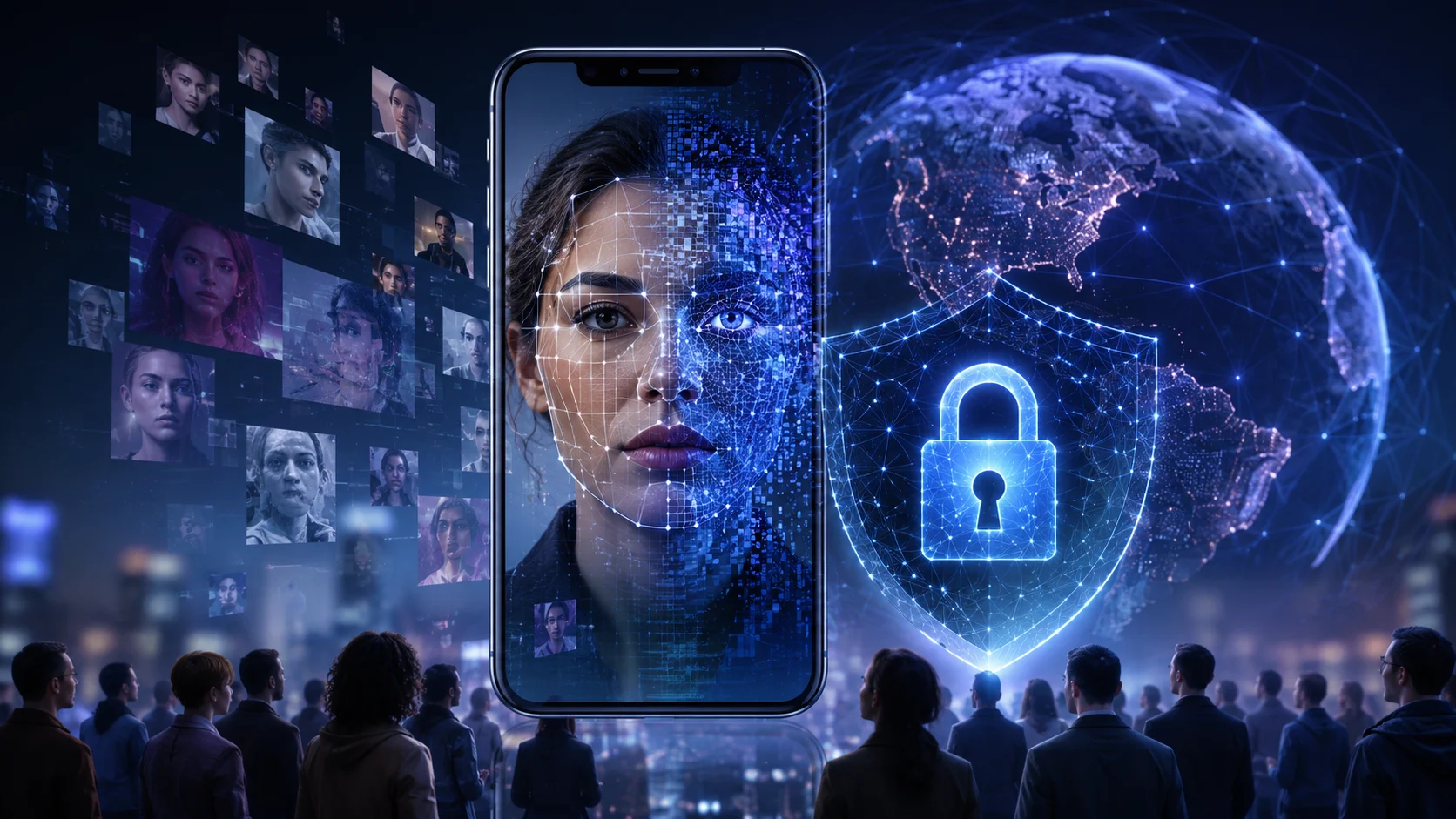
Meta Muse Image privacy has suddenly become one of the loudest conversations in visual technology, and it did not arrive like a slow-moving policy update buried in a sleepy app menu. It landed inside the everyday spaces where people already post their faces, outfits, vacations, artwork, family photos, and half-edited reels without thinking too hard about what those uploads might become years later. The debate feels bigger than one AI feature because it touches a nerve that has been building across the internet for a while: who gets to remix your image when your profile is public, and what does “public” even mean in the age of generative AI? For creators, designers, influencers, actors, photographers, and regular users, the question is not only whether AI can generate something cool, but whether it should be able to generate something that feels like you. That is why Meta Muse Image privacy is now a global flashpoint for the future of visual identity.
The story starts with a feature that sounds futuristic on the surface and deeply uncomfortable once people understand the mechanics. Muse Image is Meta’s new AI image generation system, designed to create and edit visuals from prompts, sketches, and social media context. The tool is being connected to platforms like Instagram, WhatsApp in limited regions, and the Meta AI app, placing it directly inside the social ecosystem where billions of visual memories already live. The controversial part is that adult users with public Instagram accounts can become part of AI-generated visual creations through their public content, depending on platform settings and availability. In simple terms, the same public posts that helped people build a following can now become raw material for AI-powered image remixing.
Why Meta Muse Image Privacy Became a Global Debate
The phrase Meta Muse Image privacy is gaining attention because the issue is not limited to one country, one creator community, or one type of user. Instagram is a global stage, and public accounts often include people who never imagined that their photos might be used as visual references in AI-generated scenes. A fashion creator may post outfit photos to grow a brand, a travel blogger may share location-based content to inspire followers, and a small artist may upload work to find clients. In the older social media contract, visibility meant reach, engagement, and discoverability. In the new AI-powered contract, visibility may also mean machine-readable identity, reusable style, and likeness-driven generation.
That shift is why the backlash feels so immediate. For years, users were told that making a profile public helped audiences find them, gave brands more visibility, and made content easier to share. Now the same public status can feel like a doorway into a much larger and less personal system. A person can understand that strangers may view or repost a public photo, but AI remixing introduces a different emotional layer. It can create images that never happened, scenes the user never approved, or stylized versions that blur the line between tribute, parody, marketing, and impersonation.
The privacy debate also lands at a time when people are already exhausted by AI surprises. Users have watched AI summaries appear in search, AI chatbots enter messaging apps, AI-generated content flood feeds, and synthetic media become harder to identify at a glance. Muse Image is not happening in a vacuum; it is arriving after years of tension between platforms that move fast and users who often find out later what changed. That gap between rollout and understanding is where distrust grows. The feature may be technically impressive, but the social question is whether people were given enough clarity before their likeness became part of the creative machine.
The New Meaning of a Public Instagram Profile
Public social media used to be easier to explain. A public post meant anyone could see it, maybe share it, maybe save it, and maybe comment on it. That was already complicated, but at least the action still felt somewhat direct and human. Generative AI changes the meaning of public because the content does not only get viewed; it can be interpreted, transformed, and placed into new outputs. When an AI system uses public posts as creative context, the original image becomes less like a photo on a wall and more like an ingredient in an endless visual recipe.
This matters because many people use public accounts for professional visibility without wanting total creative reuse of their identity. A designer may showcase personal style to attract clients, but that does not mean they consent to having their face placed into AI-generated campaigns. A musician may post behind-the-scenes studio shots, but that does not mean fans should be able to generate fake album art featuring them in any imagined setting. A journalist may keep a public profile for work, but that does not automatically mean their image should become prompt-ready material. Public visibility and creative consent are related, but they are not the same thing.
The central tension is that platforms often treat public content as broadly available, while users often treat public content as context-specific. People understand that their posts can be seen, but they attach invisible boundaries to those posts. A beach photo is meant for followers, not for synthetic romance edits. A professional headshot is meant for networking, not for AI fan fiction. A creator’s self-portrait is meant to represent their own brand, not become a reusable avatar for someone else’s imagination.
Opt-Out Design Is the Part People Cannot Ignore
The debate becomes more intense because the system is framed around opting out rather than opting in. For many privacy advocates and everyday users, that detail is the whole story. An opt-in model would mean people actively choose to let others generate AI visuals with their content or likeness. An opt-out model means users may be included by default unless they find the right setting and turn it off. In a world where most people do not regularly audit every privacy control in every app, default settings can shape reality more powerfully than any public statement.
Opt-out systems often create a quiet imbalance between platform power and user awareness. The company controls the interface, the rollout speed, the wording, and the location of the setting. The user has to notice the update, understand what it means, believe it affects them, find the menu, interpret the toggle, and take action. That is a lot to ask from people who use Instagram casually between work, school, errands, and life. It is even more complicated when the feature involves technical terms that do not clearly explain how someone’s image might appear in another person’s AI-generated output.
This is why interface design becomes part of the ethical debate. A privacy setting is not just a checkbox; it is a communication tool. If the language is vague, the control feels hidden, or the default favors platform expansion, users may feel guided toward participation rather than genuine choice. For a company building large-scale AI systems, that perception can be damaging. Trust is not only about whether a setting exists, but whether the average user can find it, understand it, and feel respected by it.
Creators Are Reading the Fine Print Differently
For creators, the Meta Muse Image privacy debate is not abstract. Their faces, styles, poses, editing habits, color palettes, and visual identities are often part of their business. A creator does not only post content; they build a recognizable signal that audiences can identify in seconds. If AI tools can remix that signal too easily, the creator economy starts to feel less protected. The fear is not just that someone might make a silly image, but that the boundary between fan creativity, brand misuse, impersonation, and commercial exploitation could become harder to police.
This concern hits especially hard for visual artists, photographers, models, stylists, actors, and digital creators. Their work depends on ownership of image, mood, aesthetic, and personality. AI generation can flatten all of that into a promptable asset, making a person’s hard-earned visual presence feel like platform infrastructure. Even when a generated image is not directly harmful, it can still dilute the creator’s control over how they appear online. For people whose careers depend on visual trust, that loss of control is not a small inconvenience.
There is also a reputational risk that platforms often underestimate. If an AI-generated image looks believable enough, audiences may not immediately know whether it is real, edited, authorized, or fully synthetic. A creator could be shown endorsing a product they never touched, appearing in a scene they would never approve, or wearing a style that conflicts with their personal brand. Even if the platform labels AI content, labels can be cropped, ignored, misunderstood, or lost when screenshots travel across the internet. The result is a messy visual environment where denial and correction may come too late.
The Watermark Problem Makes the Debate Bigger
Meta has emphasized safeguards, including systems meant to identify AI-generated content and reduce misuse. That sounds reassuring, but the broader AI industry has already learned that detection is a fragile game. Watermarks, labels, metadata, and invisible signals can help, yet they are not magic shields. Once an image is downloaded, cropped, filtered, compressed, reposted, or screenshotted, the detection chain can weaken. That matters because AI images do not stay neatly inside the platform where they were created.
The problem is not that watermarking is useless. It is that watermarking is often treated like a final answer when it is really one layer in a larger trust system. A robust visual ecosystem needs labeling, provenance, user education, platform enforcement, legal clarity, and better consent tools. If any one part fails, the whole experience can become confusing. People do not want to hear that a synthetic image was probably labeled correctly before someone cropped it and sent it into a group chat.
This is especially relevant during election cycles, social movements, celebrity controversies, and breaking news moments. AI-generated images can travel faster than corrections, and emotional visuals are often more persuasive than text. A fake image of a public figure, protest, disaster, or private citizen can shape perception before verification catches up. Even when an image is not political, it can still create personal harm through harassment, impersonation, or humiliation. The more realistic AI images become, the more fragile visual trust becomes.
Why Gen Z Is Especially Sensitive to Visual Consent
Gen Z grew up online, but that does not mean they are careless about privacy. In many ways, younger users are more fluent in the difference between visibility and consent because they have lived through screenshot culture, cancel cycles, finsta accounts, parasocial fandom, and algorithmic identity. They know a post can leave its original context almost instantly. They know a joke can become evidence, a selfie can become a meme, and a private-looking moment can become searchable forever. Muse Image adds a new layer by making visual identity not just shareable, but generatable.
That is why the “your account is public” argument may not convince younger audiences. Public does not always mean permissionless. A creator might want followers to see a photo but not want strangers to create synthetic images using their likeness. A student might keep a public portfolio but not want classmates generating fake versions of them. A musician might use Instagram for discovery but still expect control over how their face is used creatively.
Gen Z also understands that AI content can become social currency. People generate images for jokes, trends, reactions, edits, fan posts, and drama. That playful energy can be harmless, but it can also turn invasive quickly when real people are pulled into the loop without clear approval. The line between remix culture and violation is not always obvious, which is exactly why platforms need stronger consent design. When the tool is powerful, the default should not feel casual.
Visual Technology Is Moving Faster Than Social Norms
The Muse Image controversy shows a familiar pattern in tech. A company launches a powerful creative feature, frames it as innovation, and then society rushes to define the boundaries after the fact. This has happened with facial recognition, deepfakes, recommendation algorithms, location sharing, and AI training data. Visual technology moves quickly because the incentives are massive: more engagement, more creation, more personalized experiences, and more time spent inside the platform. Social norms move slower because people need time to understand what a new tool actually changes.
For the visual technology industry, this is a warning sign. The future of AI creativity cannot be built only on technical capability. It also needs emotional intelligence, cultural awareness, and respect for how people experience their own image. A feature can be legal and still feel unfair. It can be innovative and still feel invasive. It can offer settings and still fail the basic test of whether users feel genuinely informed.
The platforms that win the next era of Artificial Intelligence will not only be the ones with the best models. They will be the ones that make users feel safe enough to create, share, and experiment without constantly wondering what hidden permission they missed. AI art, AI video, synthetic influencers, digital doubles, and prompt-based editing are all becoming normal parts of the creative stack. But normal does not mean frictionless. The companies pushing these tools into mainstream life need to understand that trust is now a core product feature.
The Practical Impact for Everyday Users
For everyday Instagram users, the first practical takeaway is simple: public content is more powerful than it used to be. A public account can help with reach, discovery, networking, and creative growth, but it can also make your visual identity easier to reuse in ways you may not expect. People should review privacy settings more often, especially when platforms introduce new AI features. They should understand whether their posts, reels, profile information, or likeness can be reused in AI-generated outputs. The days of setting an account to public and forgetting about it are over.
The second takeaway is that users need to think about different layers of exposure. There is account exposure, which determines who can see your profile. There is content exposure, which determines how your posts can be shared or reused. There is AI exposure, which determines whether your content can become part of synthetic creation or model behavior. These layers are increasingly separate, and platforms do not always explain them in plain language. A modern privacy routine means checking all three, not just making a profile private or public.
The third takeaway is that creators may need a more intentional visual strategy. If your face, brand, or art style is part of your livelihood, you should treat AI permissions as part of digital asset management. That means reviewing platform controls, documenting your official visual identity, educating your audience about authorized content, and watching for misuse. It may also mean using watermarks, official channels, and clearer brand guidelines. None of these steps are perfect, but they help creators stay ahead of a fast-moving visual environment.
What Brands and Designers Should Learn From This
Brands should pay close attention to this debate because AI image generation is quickly becoming part of marketing workflows. Teams are already using AI tools for mood boards, concept art, ad variations, product mockups, and social assets. The temptation is obvious: faster visuals, lower costs, and endless experimentation. But the Muse Image debate shows that visual speed can create trust problems if consent is unclear. A brand that uses AI-generated likenesses or creator-inspired visuals without careful approval can damage its reputation quickly.
Design teams should build consent checks into their creative process before a campaign goes live. If an AI image resembles a real person, references a creator’s style, or appears to use public social media context, someone on the team should ask whether that use is authorized. The same applies to agencies, freelancers, and content studios experimenting with AI tools. Just because a prompt can generate something does not mean the output is ethically clean. The future of responsible Digital Creativity will depend on making these questions routine instead of reactive.
This is also a design leadership issue. Creative directors, product designers, and brand strategists need to understand that AI visuals carry social meaning. An AI-generated image is not just a file; it can imply endorsement, identity, intimacy, or reality. When a system uses human likeness, the stakes become personal. Smart teams will create internal rules before regulators force them to do so.
The Bigger Trend: Identity Becomes Editable
The deeper trend behind Meta Muse Image privacy is that identity is becoming editable at scale. In the past, editing someone into a fake scene required skill, time, and software knowledge. Now, generative AI reduces that friction dramatically. A user can describe a scene, tag a profile, and produce a visual that feels polished enough to circulate. That ease changes the social cost of making synthetic content about real people.
When identity becomes editable, the internet needs stronger norms around permission. We already understand this in some offline contexts. You generally cannot use someone’s face in an ad without consent, and you cannot pretend a person endorsed something they did not approve. Online culture has been looser, especially around memes, edits, and fan content. AI forces a reset because the outputs can look too real, spread too fast, and scale too widely.
This is why the debate will not end with Muse Image. Every major platform with a camera roll, social graph, messaging app, or creator network will face similar questions. Can users generate images with friends? Can fans generate scenes with celebrities? Can brands generate models based on public creators? Can AI tools learn aesthetic identity without crossing personal boundaries?
A Better Path for AI Visual Platforms
A better path begins with consent that is clear, active, and easy to change. Users should not need to decode vague menu labels to understand whether their content can appear in AI-generated images. Platforms should explain the feature in direct language, show examples of possible use, and make the control visible during rollout. They should also provide different permission levels, because not every user will want the same thing. Some creators may welcome fan generations, while others may want strict limits.
Platforms should also improve notification systems. If someone’s public profile is used in an AI-generated image, the person should have a meaningful way to know, review, and object when appropriate. That kind of transparency would not solve every problem, but it would shift the relationship from invisible reuse to accountable creation. Reporting tools should be fast, specific, and designed for AI misuse rather than squeezed into old harassment categories. The more powerful the image tool, the more serious the accountability layer needs to be.
Finally, AI platforms should treat provenance as a user experience, not only a technical standard. Labels should travel with images as much as possible, but users also need clear visual cues that are understandable outside expert circles. A small hidden signal does not help much if people never see it. A practical trust system should combine visible labeling, durable metadata, platform enforcement, and education. That is how AI creativity can grow without making everyone feel like their face is up for grabs.
Conclusion: Visual AI Needs Trust Before Scale
Meta Muse Image privacy is not just a one-week controversy about a new feature. It is a preview of the next major conflict in visual technology: the collision between creative possibility and personal control. AI image generation is becoming more accessible, more social, and more deeply connected to the platforms where people already express themselves. That makes the technology exciting, but it also makes the consent question impossible to ignore. If platforms want people to embrace AI creativity, they must prove that innovation does not require quietly stretching the meaning of public content.
The future of visual entertainment and digital art will be shaped by tools that can generate scenes, characters, ads, avatars, and memories in seconds. But the future will also be shaped by whether users believe those tools respect them. People are not just datasets, profiles, handles, or style references. They are individuals with context, boundaries, and reputations that cannot be reduced to a toggle buried in settings. Muse Image may be part of the next chapter of AI creativity, but the global reaction shows that the next chapter needs a stronger social contract.