

On-Device AI Deepfake Detection Goes Live
 Vortixel
19 minutes read
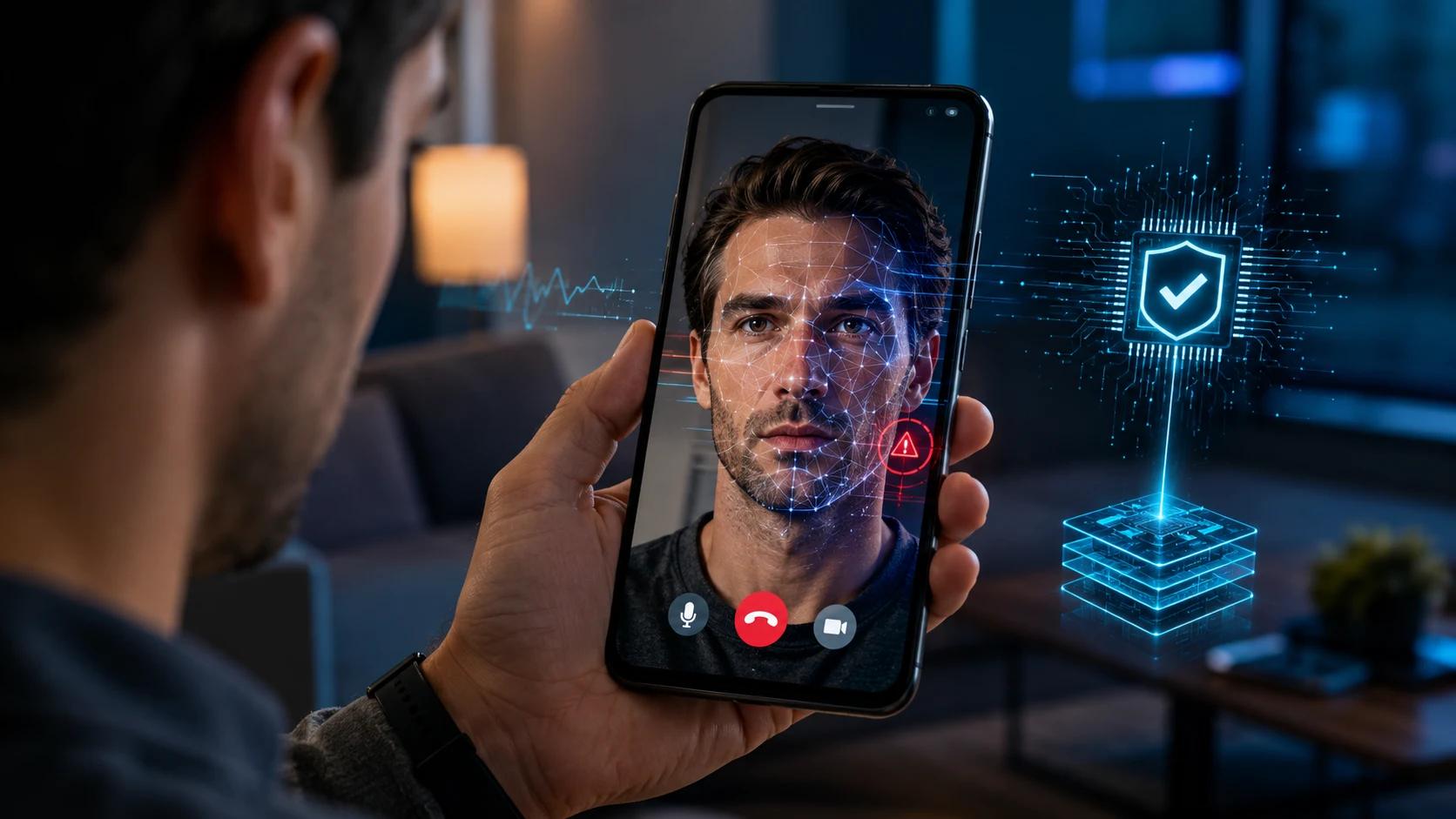
The next phase of online trust is no longer just about spotting fake videos after they go viral. It is about catching synthetic faces, cloned voices, and manipulated live streams while they are still happening. That is why on-device AI deepfake detection is becoming one of the most important shifts in visual technology right now. Instead of waiting for a platform, cloud server, or human moderator to review suspicious footage, the device itself can analyze signals in real time. For anyone who works, studies, creates, invests, or socializes through screens, this changes the entire meaning of a video call.
For years, deepfakes felt like a problem that belonged mostly to social media feeds, celebrity scandals, and weird internet experiments. Now the threat has moved into the spaces people treat as private and immediate: team meetings, investor calls, family chats, hiring interviews, customer support sessions, and creator livestreams. A fake face does not need to become a viral clip to cause damage. It only needs to look real enough for five minutes, convince the right person, and disappear before anyone knows what happened. That is the uncomfortable reality pushing AI security from the cloud into the device itself.
The timing matters because visual AI has become wildly accessible. The same creative boom that helps filmmakers, designers, marketers, and independent artists produce stunning visuals with less friction also gives scammers better tools. Face swapping, lip sync, voice cloning, and synthetic video generation are no longer rare skills locked behind expensive studios. They are becoming part of everyday digital culture, which means trust can no longer depend only on what the eye sees. If the screen is now easy to fake, the screen also needs its own defense layer.
That is where the new wave of local detection comes in. An on-device model can run directly on a laptop, phone, or edge hardware without sending every video frame to a remote server. This makes the defense faster, more private, and harder for attackers to dodge with latency tricks or platform gaps. It also fits the direction the broader AI industry is already moving toward, where smaller and more efficient models handle specialized tasks close to the user. For on-device AI deepfake detection, that local-first approach could be the difference between catching a fake during the call and discovering the fraud after the money is gone.
Why On-Device AI Deepfake Detection Matters Now
On-device AI deepfake detection matters because the threat is becoming live, personal, and operational. A traditional fake video can be debunked later, even if the correction arrives too late to stop reputational damage. A live deepfake is different because it happens inside a moment of decision. Someone may approve a transfer, share sensitive files, accept a fake identity, or believe a manipulated message before any public fact-checking process begins. The attack window is short, but the consequences can be huge.
The old internet trust model was built around review after publication. A video appeared online, people questioned it, moderators investigated it, and experts sometimes analyzed it frame by frame. That process is too slow for live video fraud. A fake executive in a meeting does not need to survive a forensic lab test tomorrow. It only needs to bypass human suspicion today, while everyone is busy, distracted, and conditioned to believe video calls are normal proof of presence.
Local detection also reflects a practical privacy concern. Sending video calls to the cloud for analysis can create a new trust problem, especially in business, healthcare, education, finance, law, and government workflows. People want protection from fake media, but they do not want every frame of a sensitive conversation uploaded somewhere else. When detection happens on the device, the model can evaluate visual patterns without turning private meetings into a data pipeline. That is why this approach feels less like a feature and more like a future baseline for secure communication.
The shift also fits the hardware story behind modern AI. Neural processing units, efficient GPUs, and optimized chips are making it possible for devices to run AI tasks that previously required cloud servers. This matters for creative tools, camera effects, video enhancement, translation, and now identity protection. As laptops and phones become more capable AI machines, security models can live closer to the user. In visual technology, that closeness is becoming a serious advantage.
The Deepfake Problem Has Moved From Viral Clips to Live Calls
Deepfakes used to be discussed mostly as a media literacy challenge. People worried about fake speeches, edited political clips, and synthetic celebrity content spreading across feeds. Those risks still exist, but the more urgent issue is now direct impersonation. A scammer no longer has to publish a fake video and hope the public believes it. They can enter a live conversation looking and sounding like someone the victim already trusts.
This is why live deepfake scams feel so psychologically powerful. Human beings are wired to trust faces, voices, eye contact, and real-time responses. When a person appears to blink, nod, pause, smile, and react in a meeting, the brain treats that as presence. Even if something feels slightly off, social pressure often stops people from challenging it. Nobody wants to be the person who accuses a boss, client, teacher, or family member of being fake in the middle of a call.
Attackers understand that hesitation. They can combine urgency with visual realism, pushing victims into quick decisions before doubt has time to grow. A fake manager might say a payment is confidential. A fake recruiter might request documents. A fake relative might ask for emergency help. A fake creator might lead followers toward a scam link during a livestream, using familiarity as the hook and synthetic video as the costume.
The danger is not only technical; it is cultural. Remote work normalized video as a substitute for physical presence. Creator culture normalized livestreaming as authenticity. Online education normalized face-to-face learning through a screen. Digital finance normalized high-value decisions happening inside apps and meetings. Deepfakes attack all of those habits at once, which is why the defense has to be just as embedded as the camera itself.
How Local AI Detection Changes the Trust Layer
Cloud-based detection can still be useful, especially for platforms analyzing uploaded videos at scale. But live video is a different environment because every second matters. On-device detection can watch for subtle inconsistencies while the call is happening. It can look at facial motion, lighting behavior, compression artifacts, lip synchronization, frame-level patterns, and other signals that may not be obvious to human eyes. The goal is not to turn everyone into a forensic analyst, but to give users a warning system when the visual feed appears suspicious.
A local model also reduces dependence on a single platform. People use different meeting apps, browsers, devices, operating systems, and livestream tools. If detection only exists inside one app, attackers can simply move to another channel. Device-level or chip-optimized detection has the potential to work more broadly across everyday communication. That creates a security layer that follows the user instead of depending entirely on the app they happen to open.
This does not mean every suspicious signal should automatically declare someone fake. Real video can glitch, webcams can lag, lighting can be messy, and low-bandwidth calls can create strange artifacts. Good detection needs to be careful, transparent, and designed around risk levels rather than dramatic alarms. A soft warning, trust score, or verification prompt may be more useful than a loud accusation. The best systems will likely help people pause, verify, and ask better questions before acting.
For visual technology, this is a major design challenge. Security tools cannot feel like clunky enterprise software if they are going to protect ordinary users. They need to appear at the right moment, explain uncertainty clearly, and avoid overwhelming people with technical language. The experience has to feel native to video culture, not bolted on after the fact. That is where the future of AI security overlaps with product design, user interface, and digital trust.
The Visual AI Boom Created the Need for Visual AI Defense
The rise of generative video is not only a security story. It is also one of the most exciting creative shifts of the decade. Artists can prototype scenes faster, designers can explore visual concepts with fewer resources, and small teams can produce assets that used to require huge budgets. AI video tools are entering filmmaking, advertising, education, gaming, social media, and digital art. The creative upside is real, and it should not be ignored.
But every powerful visual tool creates a mirror problem. The more realistic synthetic media becomes, the more important verification becomes. A tool that helps a creator produce a cinematic shot can also help a scammer imitate a person. A model that makes avatars more expressive can also make impersonation more convincing. The same progress that makes digital creativity feel limitless also makes visual proof less stable.
This is not a reason to panic about AI creativity. It is a reason to build guardrails that understand how creative technology actually spreads. Banning tools rarely works when the demand is massive and the software keeps improving. A better path is to pair creation with detection, labeling, authentication, and user education. That balance lets artists keep experimenting while giving audiences stronger ways to separate performance from deception.
Websites covering Artificial Intelligence, creative software, digital art, and visual entertainment should treat this as a core beat rather than a side story. Deepfake defense is no longer just cybersecurity news. It affects the future of design tools, camera apps, video platforms, creator monetization, virtual influencers, online learning, and remote collaboration. The next generation of visual technology will be judged not only by how realistic it looks, but by how responsibly it handles reality itself.
Why Speed Is the New Security Feature
In live video fraud, speed is everything. A warning that arrives after the call ends may still help with investigation, but it does not stop the decision made during the call. That is why real-time analysis is such a big deal. If a system can flag a possible synthetic face while the conversation is still active, the user has a chance to slow down. That pause can prevent a bad transfer, a leaked document, or a manipulated public moment.
On-device AI can also help reduce latency. When detection depends on cloud processing, video frames may need to travel to a server, get analyzed, and return a result. That round trip may be acceptable for uploaded content, but it is less ideal for fast-moving conversations. Local processing can happen closer to the camera feed, which can make alerts feel more immediate. In security, a few seconds can completely change the outcome.
Speed also matters because scammers often rely on emotional momentum. They create pressure, urgency, and confusion so the victim acts before thinking. A real-time detection prompt interrupts that rhythm. It gives the user permission to verify identity through another channel, ask a challenge question, or delay the action. The technology does not need to be perfect to be useful if it helps break the attacker’s timing.
Still, speed must be paired with accuracy. Too many false alarms can make people ignore warnings, while missed detections can create a false sense of safety. The strongest systems will need continuous testing across lighting conditions, camera quality, compression levels, skin tones, languages, facial expressions, and device types. Live video is messy, and real-world messiness is where AI systems either prove themselves or fall apart. The future winners will be the tools that stay fast without becoming careless.
What This Means for Businesses and Remote Teams
For businesses, deepfake live video is not a distant future risk. It is a workflow risk hiding inside normal communication. Companies have spent years training employees to spot phishing emails, suspicious links, and fake login pages. Now they also need to think about fake faces inside meetings. That shift can feel strange, but it is quickly becoming part of modern digital hygiene.
Finance teams, executive assistants, HR departments, customer support groups, legal teams, and sales teams are especially exposed. These roles often deal with approvals, identity documents, confidential files, or high-trust conversations. A fake video call can exploit professional politeness and organizational hierarchy. When someone appears to be a senior leader or trusted client, employees may feel pressure to comply quickly. That is exactly why verification habits need to be normalized before a crisis happens.
Practical policies can make a major difference. Companies should avoid approving sensitive actions based only on a live call, even when the person appears familiar. High-risk requests should require a second channel, such as a known phone number, secure internal system, or written approval process. Teams should agree on challenge phrases or verification steps for unusual situations. The goal is not paranoia; the goal is making verification routine enough that nobody feels awkward using it.
On-device detection can support those policies by acting as an early warning layer. It can tell users when something about the video stream deserves caution, but it should not replace human process. A smart organization will combine AI detection with training, access controls, approval limits, and incident reporting. The companies that adapt fastest will be the ones that treat visual fraud as part of everyday risk management. In a remote-first world, trust has to be designed, not assumed.
Creators and Streamers Are in the Deepfake Blast Zone
Creators have a different but equally serious problem. Their face, voice, style, and audience trust are part of their brand. When scammers clone a creator for a fake livestream, fake giveaway, fake investment pitch, or fake product endorsement, the damage can spread quickly. Viewers may not realize the stream is synthetic until after they click, pay, or share personal information. Even when the creator is not responsible, the audience may still associate the harm with their identity.
This is especially dangerous because creator culture runs on intimacy. Fans trust the familiar setup, the usual camera angle, the speaking style, and the feeling of direct access. A convincing deepfake can borrow all of that social capital in minutes. The more public footage a creator has online, the more material attackers may have to imitate them. For popular streamers, educators, founders, and visual personalities, identity protection is becoming a serious part of brand protection.
Platforms need better live verification tools, but creators can also build safer habits. They can maintain official channel lists, warn audiences about scam formats, avoid surprise financial promotions, and use consistent verification signals for major announcements. Communities can help by reporting suspicious livestreams quickly and questioning anything that asks for money, crypto, credentials, or private information. Trust should not depend only on whether a face looks right. It should depend on context, channel authenticity, and behavior.
For the creator economy, AI deepfake detection may become as normal as copyright filters and account security. Streamers may want alerts when a fake version of them is circulating. Viewers may want browsers or devices that warn them about suspicious live video. Brands may want stronger verification before signing campaigns or approving influencer content. The visual internet is becoming more synthetic, so reputation tools need to become more intelligent.
The Privacy Advantage of Keeping Detection Local
One of the strongest arguments for local AI detection is privacy. Video calls can include trade secrets, medical details, legal discussions, family issues, financial information, and personal moments. A security tool that protects those calls should not create unnecessary exposure. Running detection on the device can reduce the amount of sensitive video data that leaves the user’s machine. That matters because trust tools also need to be trustworthy.
Local processing can also make adoption easier in industries with strict compliance needs. Some organizations cannot casually route video content through third-party servers for analysis. Others may face regional data rules, client confidentiality requirements, or internal security policies. If the detection model can operate directly on approved hardware, it becomes easier to fit into existing workflows. That could make on-device security more attractive than cloud-only systems for serious business use.
There is also a user experience benefit. People are more likely to accept AI protection when they understand that their private calls are not being constantly uploaded for review. Clear product messaging will matter here. Users need to know what is analyzed, what stays local, what is stored, and what is never collected. Without that clarity, even a helpful detection feature could trigger suspicion.
Privacy-first design is not just a legal checkbox. It is part of the emotional contract between users and visual technology. People want AI to protect them from deception without turning their devices into surveillance machines. On-device models offer a cleaner path if they are built carefully. They can make digital spaces safer while respecting the private nature of live conversation.
The Limits of Deepfake Detection Still Matter
Even with strong progress, deepfake detection is not magic. Attackers will keep improving their methods, and detection models will need to keep adapting. A system trained on yesterday’s fake patterns may struggle with tomorrow’s generation tools. This creates an arms race between synthetic media creation and synthetic media detection. Anyone expecting one tool to permanently solve the problem is misunderstanding how fast this space moves.
There are also real risks around false positives and bias. A bad detection system could wrongly flag real people because of poor lighting, camera quality, disability-related facial movement, network compression, or underrepresented training data. That could create embarrassment, discrimination, or unnecessary conflict. For this reason, detection tools should be framed as risk signals, not final judgments. A warning should invite verification, not instantly label someone as a fraud.
Transparency will be essential. Users should understand that an alert means the system found suspicious indicators, not absolute proof. Businesses should train employees to respond calmly and professionally when a warning appears. Platforms should avoid turning detection scores into public shame labels without review. The more sensitive the setting, the more careful the response design needs to be.
The best future is layered defense. Detection should work alongside cryptographic content credentials, verified accounts, secure meeting links, identity checks, watermarking, user education, and platform enforcement. No single layer will stop every fake. But multiple layers can make attacks harder, slower, and less profitable. That is the realistic path toward a safer visual internet.
A New Design Challenge for the AI Era
The rise of live deepfake defense creates a fascinating design challenge for the tech industry. How do you warn someone without making every video call feel suspicious? How do you explain a complex AI judgment in a simple interface? How do you protect people without making them feel watched? These questions are not only technical. They are deeply human.
Good design will need to balance urgency with calm. A small visual cue may be enough for low-risk anomalies, while stronger alerts may be needed for high-risk situations. The system may need to consider context, such as whether the call involves a payment request, identity verification, or unusual behavior. It may also need integrations with meeting software, browsers, operating systems, and enterprise security dashboards. The visual language of trust will become a design category of its own.
This is where creative software and security software begin to overlap. Designers already understand attention, friction, emotion, and visual hierarchy. Those same skills are needed to build deepfake warnings that people actually understand. If the warning is too subtle, users miss it. If it is too intense, users panic or disable it. The right answer will likely come from collaboration between AI researchers, interface designers, behavioral experts, and security teams.
In that sense, visual innovation is no longer only about generating better images. It is also about building better trust signals around those images. The future camera may not simply capture light; it may help verify authenticity. The future video call may not simply connect faces; it may evaluate whether those faces are likely to be real. That is a huge shift in how people will experience digital presence.
Practical Steps for Users Right Now
While the technology matures, users should build simple habits that reduce risk. The first habit is slowing down whenever a video call includes urgency, secrecy, or money. Scammers want fast decisions because speed weakens judgment. If someone asks for a transfer, password, document, or unusual favor, verify through a separate channel. A real colleague, client, or family member should understand why verification matters.
The second habit is paying attention to context, not just appearance. A real-looking face on the wrong account, an unexpected meeting link, a strange request, or unusual speech patterns should raise questions. Deepfakes may become visually convincing, but scams often still reveal themselves through behavior. The story may feel rushed, the request may break normal procedure, or the communication channel may be slightly off. Those clues matter as much as visual quality.
The third habit is keeping devices and apps updated. As on-device AI features become more common, security improvements may arrive through operating system updates, chip-level optimizations, browser changes, or meeting app integrations. Users who delay updates may miss protections designed for newer threats. Businesses should make this part of endpoint security planning. Regular updates are not exciting, but they are one of the simplest ways to stay closer to current defenses.
The fourth habit is treating AI detection as support, not a substitute for judgment. A warning can help, but it should not be the only reason to trust or distrust someone. Likewise, the absence of a warning should not automatically make a strange request safe. Smart users will combine detection tools with verification habits and common sense. That balanced mindset is the most practical defense for the current moment.
What Comes Next for Visual Trust
The next few years will likely bring a rapid expansion of AI trust features. Cameras may include authenticity checks by default. Meeting apps may display real-time risk indicators. Browsers may warn users about suspicious livestreams. Enterprise devices may ship with local models designed to detect synthetic media during calls, presentations, and remote support sessions. The idea of a video feed as raw proof will continue to fade.
At the same time, content credentials and provenance systems will become more important. Detection asks whether something looks fake, while provenance asks where it came from and how it changed. Both approaches are needed because realistic AI media can be difficult to judge from pixels alone. A verified capture history can give audiences more confidence, especially in journalism, legal evidence, brand communication, and public announcements. The strongest visual ecosystem will combine detection, provenance, and platform accountability.
There will also be a creative tension. Audiences want transparency, but creators also want freedom to experiment with synthetic visuals. A filmmaker using AI effects should not be treated the same as a scammer impersonating a real person. The industry will need better labels, norms, and design patterns to separate creative transformation from deceptive identity abuse. That distinction will shape how people talk about digital art, AI video, and visual entertainment in the mainstream.
The big picture is clear: visual technology is entering its verification era. The first wave of generative AI amazed people by showing what machines could create. The next wave will be judged by whether it can help people know what to trust. For users, creators, platforms, and businesses, that may become the defining challenge of the AI-powered internet. The future of visuals is not just sharper, faster, and more cinematic; it has to be more accountable.
Conclusion: Trust Has to Move Closer to the Camera
On-device AI deepfake detection is not just another security feature for a world full of video calls. It is a sign that digital trust is being rebuilt at the edge, closer to the camera, the microphone, and the person making a decision. As deepfakes become more live, more convincing, and more personal, waiting for after-the-fact moderation is no longer enough. People need protection during the moment when trust is being tested. That is why local AI detection feels like a turning point.
The technology will not remove every risk, and it should not be treated as a perfect truth machine. It will need careful design, constant updates, privacy protection, and honest communication about uncertainty. But the direction is promising because it gives users a faster way to notice when something is wrong. It also gives businesses, creators, and platforms a stronger foundation for defending identity in real time. In an internet where seeing is no longer automatically believing, the smartest visual systems will help people verify before they act.
For Visual Vortixel, this story sits right at the intersection of Artificial Intelligence, visual innovation, creative software, and digital culture. The same AI revolution that makes new forms of art and entertainment possible is forcing the web to rethink authenticity. That tension will define the next generation of visual technology. The future will not belong only to tools that create the most realistic images. It will belong to tools that help humans understand which images, faces, and voices deserve their trust.