

AI Cinema Enters Its A24 Era With Google
 Vortixel
16 minutes read
Vortixel
16 minutes read
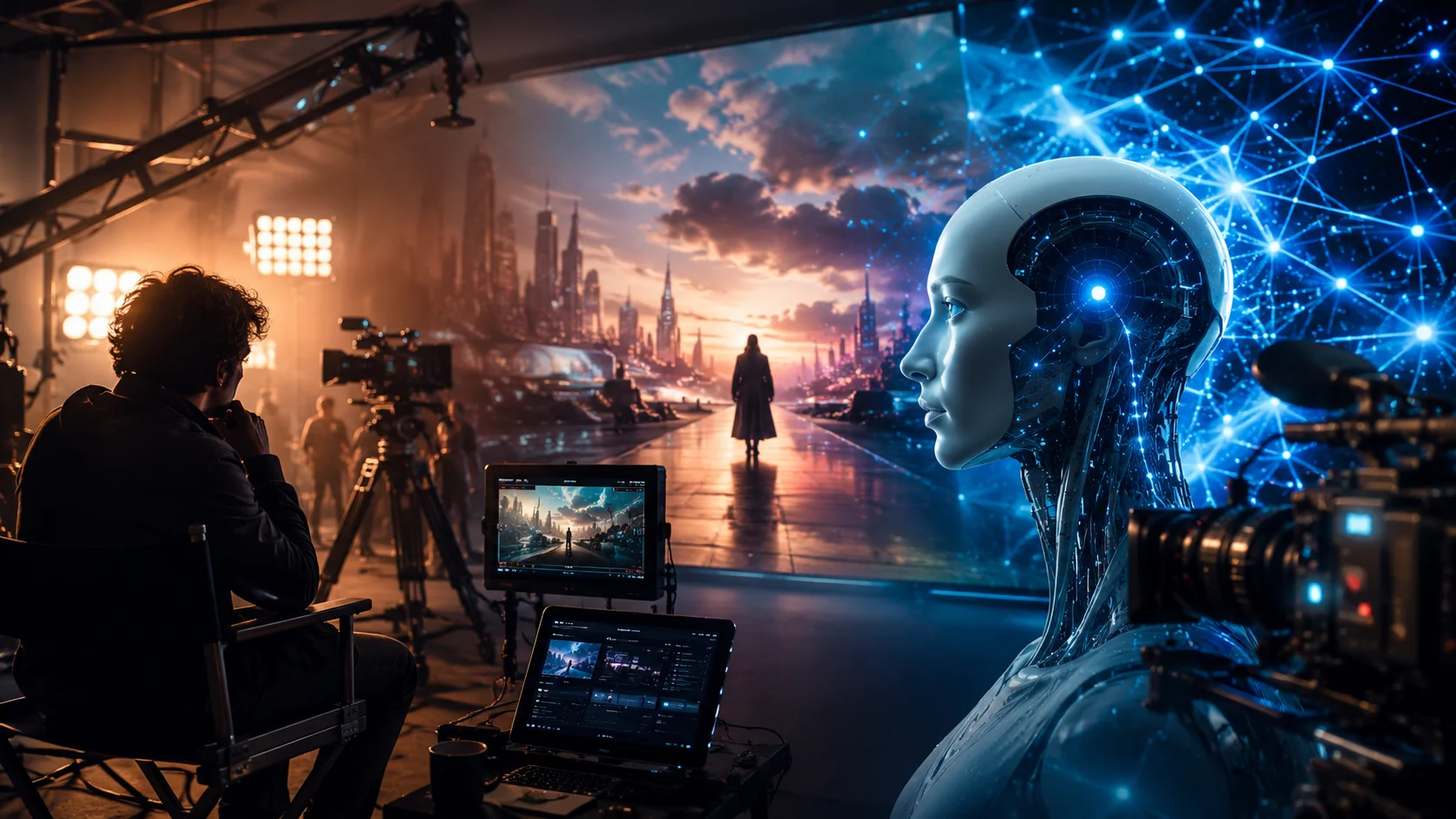
AI cinema is no longer sitting in the corner of Hollywood as a weird experiment that only tech demos and late-night internet threads want to talk about. It just walked into the room wearing an A24 hoodie, backed by Google’s DeepMind muscle, and suddenly the conversation feels a lot more serious. The new partnership between Google and A24 is not just another headline about machines making images faster or studios chasing the next shiny tool. It feels like a signal that the film industry is entering a new phase where artificial intelligence could become part of the creative pipeline without completely flattening the messy, emotional, human chaos that makes movies worth watching. For a studio known for strange risks, intimate stories, and visual identity, this move makes the future of filmmaking feel less like a robot takeover and more like a high-stakes creative test.
The timing matters because audiences are already overwhelmed by AI-generated everything. Feeds are packed with synthetic trailers, fake celebrity clips, surreal image dumps, and video tools that can turn a sentence into something that almost looks like a scene from a dream. At the same time, many filmmakers, artists, actors, and writers are asking the same uncomfortable question: who benefits when creative labor gets automated? That tension makes Google and A24 an unusual pairing, because one side represents some of the most advanced AI research in the world, while the other has built a brand around taste, mood, and artistic credibility. This is exactly why the deal is fascinating, because it places AI cinema at the center of a cultural debate that is bigger than software.
A24 has never felt like a traditional studio chasing safe franchises on autopilot. Its identity comes from backing films that can be beautiful, unsettling, funny, slow, chaotic, and deeply specific without begging for mass-market approval. Google, by contrast, arrives with massive compute power, research labs, AI infrastructure, and the ability to turn experimental models into tools that millions of people might eventually use. When those two worlds meet, the obvious headline is about money and technology, but the deeper story is about control. The real question is not whether AI can help make movies, because it already can in certain ways. The real question is whether a filmmaker can use AI without letting the machine set the taste, rhythm, and soul of the work.
That question makes this partnership feel different from the usual wave of generative AI launches. Most AI product announcements sound like they were designed for speed, scale, and productivity slides in a boardroom. Film, especially the kind of film A24 is famous for, is not only about speed. It is about pacing, silence, texture, faces, weird choices, uncomfortable timing, visual restraint, and emotional buildup that does not always look efficient from the outside. If AI tools are built only to make production cheaper and faster, filmmakers will push back hard. If they are built to help directors explore ideas, previsualize scenes, test visual concepts, or reduce technical friction, the conversation becomes more complicated and much more interesting.
Why AI Cinema Is Bigger Than a Studio Deal
The phrase AI cinema can sound futuristic, but the reality is already forming in smaller pieces across the production process. Script teams can use AI to organize research, editors can experiment with rough cuts, visual artists can generate concept frames, and production designers can quickly test environments before a set is built. These uses do not automatically replace creative work, but they change how creative work begins. The blank page becomes less blank when a tool can instantly throw back visual options, mood references, character sketches, or scene variations. That can be exciting for indie filmmakers with limited budgets, but it can also be dangerous if studios start treating generated options as a substitute for lived experience and artistic instinct.
Google’s role makes the story especially important because DeepMind is not just another app builder trying to ride the AI wave. It is connected to some of the most advanced research in machine learning, reasoning systems, and generative models. A partnership with a respected film studio gives that research a real creative testing ground, not just a lab environment or a tech conference demo. That matters because filmmaking is full of constraints that AI demos often avoid, from continuity and lighting to performance, emotional logic, rights, crew workflows, and director intent. If AI can survive inside a real production culture, it has to be more than a prompt box that makes pretty frames.
For A24, the deal could open a new lane in entertainment technology without forcing the studio to become a cold, corporate content factory. The brand already carries a certain trust among younger audiences who want films that feel handcrafted, strange, and emotionally risky. That trust is valuable, and it could also be fragile. If fans think the studio is using AI to dilute artists, replace crew members, or mass-produce its own aesthetic, the backlash could be loud. If the tools are framed and used as creative instruments, not creative replacements, A24 could help define a more thoughtful version of AI filmmaking.
This is why the partnership feels like a pressure test for the entertainment industry. Hollywood has spent years trying to understand streaming disruption, franchise fatigue, shrinking attention spans, and the rising cost of theatrical releases. Now AI arrives with another promise: faster workflows, cheaper experimentation, and new visual possibilities. But movies are not just output. They are relationships between directors, actors, editors, cinematographers, composers, designers, crews, and audiences, and those relationships are built on trust. Any future version of AI cinema that ignores that trust will probably look impressive for a week and then feel empty forever.
The Creative Pipeline Is Where the Real Shift Starts
The most realistic impact of this partnership will likely happen before a final frame reaches theaters. Pre-production is one of the clearest areas where AI tools can help without taking over the entire creative process. A director might use AI to explore how a dream sequence could feel before hiring a full visual effects team to build it. A cinematographer might test lighting moods or camera language with generated references before walking onto a set. A production designer might create dozens of environment concepts in a single afternoon, then refine the best ideas with human artists who understand materials, space, and story.
Storyboarding is another obvious zone for transformation. Traditional storyboards can be expensive, time-consuming, and hard to revise when a director is still searching for the shape of a scene. AI-assisted tools could make it easier to test blocking, shot order, scale, and atmosphere before the production spends real money. That does not mean a generated storyboard is automatically good. It means the early conversation between director, cinematographer, editor, and production team could become more visual from day one. In a world where budget pressure hits both indie and mid-budget films, that kind of speed could be useful if it stays under human direction.
Post-production could also change in quiet but meaningful ways. Editors already work with mountains of footage, endless revisions, sound experiments, and timing choices that can shift the entire emotional meaning of a film. AI tools could help organize takes, identify continuity issues, suggest alternate cuts, or speed up tedious cleanup work. Visual effects teams could use AI to accelerate rotoscoping, background generation, object removal, and early compositing tests. The danger is that studios may see these tools as an excuse to compress schedules even more, which would turn a helpful assistant into another form of pressure on already exhausted artists.
Distribution is another piece of the story that should not be ignored. AI can analyze audience behavior, localize marketing materials, generate variations of trailers, and help studios understand how different communities respond to different visual hooks. That sounds practical, but it also raises a cultural question about whether films will be marketed as art or optimized like content. A24 has succeeded partly because its marketing often feels distinct, mysterious, and internet-native without being generic. If AI helps extend that creativity, it could make campaigns sharper. If it turns everything into algorithm-approved sameness, it could weaken the very identity that makes A24 valuable.
A24’s Brand Makes the AI Question More Emotional
A24 is not just a film company in the normal sense. For a lot of younger movie fans, it represents a taste universe, a signal that a film might be strange enough to matter, and a reminder that theatrical culture can still feel personal. That reputation changes how people react to this partnership. If a traditional blockbuster studio announces AI tools, many audiences shrug because the business already feels industrial. When A24 does it, people notice because the studio’s whole image is tied to human weirdness, auteur energy, and visual fingerprints that do not feel manufactured.
That emotional reaction is understandable. AI has become a loaded topic in creative communities because it often arrives wrapped in vague language about innovation while artists worry about credit, consent, pay, and originality. Filmmakers are not against technology by default. Cinema has always evolved through cameras, editing systems, sound design, CGI, digital color grading, virtual production, and new distribution platforms. The difference is that generative AI can appear to imitate creative labor at scale, which makes people nervous in a way that a new camera lens usually does not. A24 stepping into this space means the studio has to communicate not just what it is building, but why artists should trust it.
There is also a deeper aesthetic question hiding under the business news. A24’s best-known films often succeed because they resist smoothness. They have awkward pauses, strange faces, imperfect rooms, raw performances, and visual choices that feel tied to a director’s obsessions rather than a market formula. AI-generated visuals, especially at the mass-market level, often lean toward polish, symmetry, cinematic glow, and overly perfect composition. That can look impressive in a demo, but movies need friction. If AI tools for filmmakers are going to work inside A24’s world, they need to preserve the strange edges that make cinema feel alive.
This is where the partnership could become culturally important. Instead of using AI to chase generic spectacle, A24 could push the technology toward mood, constraint, and specificity. Imagine tools that help a director test an unsettling color palette, map dream logic, visualize impossible architecture, or build a rough animatic for a scene that would otherwise be too expensive to explore. That kind of use does not erase the artist. It gives the artist more ways to fail early, search faster, and arrive at a stronger idea before production becomes too expensive to change.
The Industry Impact Goes Beyond Hollywood
The Google and A24 partnership will likely be watched by more than film executives in Los Angeles. Independent creators, YouTubers, animation studios, VFX teams, game developers, advertisers, and design agencies are all trying to understand where AI fits into visual storytelling. When a respected studio experiments with AI in a serious way, it can shape expectations across the broader creative economy. Smaller teams may start asking whether similar tools can help them pitch ideas, build concept reels, or produce ambitious visual sequences without traditional studio resources. That could open doors for new voices, but only if access does not remain locked behind expensive enterprise systems.
For visual artists, the impact will feel mixed. Some will see opportunity in faster prototyping, new creative services, and more demand for people who know how to guide AI systems with taste. Others will worry that clients will expect polished concepts overnight and pay less for the thinking behind them. This is already happening in design, advertising, and digital art, where AI has changed client expectations faster than many workflows can adapt. The smartest creative professionals will not simply ignore these tools. They will learn where AI is useful, where it is weak, and how to defend the value of human judgment in a market obsessed with speed.
The partnership also matters for education. Film schools and creative programs can no longer treat AI as a side topic or a novelty workshop. Students entering the industry will need to understand how AI affects previsualization, editing, visual effects, ethics, authorship, and production management. They will also need to learn when not to use it. That last part is important because future filmmakers should not become passive operators of automated tools. They should become sharper decision-makers who know when a machine helps the story and when it makes the story weaker.
For audiences, the change may be less visible at first. Viewers probably will not walk into a theater and see a label announcing that an AI tool helped shape an early storyboard or marketing workflow. Instead, the shift may show up in weirder visuals, faster production cycles, more experimental small-budget films, or new forms of hybrid entertainment. It may also show up in controversy when viewers suspect a film used AI in ways that feel deceptive or exploitative. The next era of visual entertainment will not just depend on what tools can do. It will depend on how honestly studios explain their role.
The Ethics Problem Will Not Disappear
No serious conversation about AI cinema can avoid the ethics problem. The entertainment industry is still dealing with intense debates over training data, copyright, performer likeness, writer compensation, and the future of crew labor. AI tools can assist artists, but they can also blur boundaries around ownership and consent. If a model can generate a style that resembles a living cinematographer, designer, or animator, who gets credit? If a studio uses AI to imitate background performers or reduce visual effects staffing, who loses work?
These questions are not abstract. They sit directly inside the daily economics of creative work. Hollywood already has a long history of squeezing labor while celebrating creativity in public. AI could make that worse if executives use it mainly to cut costs and reduce bargaining power. On the other hand, ethical AI tools could reduce repetitive tasks, help smaller teams visualize bigger ideas, and give underfunded filmmakers more creative leverage. The gap between those two futures depends on contracts, transparency, data rights, labor protections, and the culture of the companies building the tools.
For Google and A24, trust will become part of the product. It will not be enough to say that AI is only there to help. Filmmakers will want to know what data is being used, how creative work is protected, whether human artists remain central, and whether the tools respect rights across the production chain. Audiences may also demand clearer disclosure as AI becomes more common in entertainment. A studio that gets this right could help create a more mature standard for Artificial Intelligence in film, while a studio that gets it wrong could trigger the kind of backlash that turns innovation into a brand problem.
The ethical challenge also includes taste. That may sound softer than legal rights, but it matters deeply in cinema. If AI systems are trained to predict what looks cinematic based on existing patterns, they may reinforce familiar visual language instead of helping filmmakers break it. The risk is not only that machines replace artists. The risk is that tools quietly push artists toward average decisions because average decisions are easier for models to generate. Great cinema often comes from choices that feel wrong until they suddenly feel unforgettable.
Practical Insight for Creators Watching This Shift
For creators, the Google and A24 deal is a reminder to stay curious without becoming naive. AI tools are not magic buttons, and they are not harmless toys either. They are systems that can speed up parts of the creative process, reshape client expectations, and change who gets paid for what. The practical move is to learn the tools at the edges of your workflow before they arrive in the center of your industry. That means experimenting with concept generation, visual references, rough edits, mood boards, and production planning while staying clear about what still needs human taste.
Filmmakers should also start documenting their process more carefully. In an AI-heavy creative environment, the ability to show how an idea developed may become more valuable. Treatment notes, visual references, sketches, drafts, shot lists, and revision history can help protect authorship and clarify what role AI played. This is not only about legal defense. It is also about creative discipline, because tools can produce endless variations that feel productive while slowly pulling a project away from its original emotional reason to exist.
Creative teams should build AI rules before a project begins. Those rules might define which tools can be used, what material cannot be uploaded, how generated outputs are reviewed, and how human artists are credited. Producers should not wait until post-production to ask these questions. A clear policy can prevent confusion, protect collaborators, and keep the creative culture from turning into a quiet free-for-all. As AI production tools become more normal, professional trust will depend on having these conversations early.
Designers, editors, and visual artists should focus on taste as their moat. Prompting may be useful, but taste is what separates a forgettable generated image from a frame that actually serves a story. The people who understand composition, pacing, texture, cultural context, and emotional rhythm will remain valuable even as tools become more powerful. AI can generate options, but it cannot fully understand why a quiet close-up hurts, why a room should feel too empty, or why a cut should arrive half a second later. The future belongs to creators who can use technology without surrendering their instincts to it.
What This Means for the Future of Visual Entertainment
The most interesting future is not one where AI makes every movie from scratch. That version of the future sounds loud, cheap, and emotionally thin. The more interesting future is one where AI becomes part of a larger creative instrument panel, sitting beside cameras, lenses, editing software, color tools, sound design systems, and virtual production stages. In that future, filmmakers still make the meaningful choices. The tools simply give them new ways to explore visual language before committing money, time, and crew energy.
A24’s involvement makes that future feel less theoretical because the studio has cultural credibility with audiences who usually distrust corporate tech hype. If A24 can prove that AI can support strange, specific, filmmaker-driven work, the industry may become more open to a nuanced model. If the results feel generic or ethically messy, the deal could become a warning sign instead. That uncertainty is what makes this moment worth watching. It is not guaranteed to be good, but it is definitely not small.
Google also has something to prove. Big tech companies often talk about creativity in broad, polished language, but artists tend to judge tools by how they behave under pressure. Does the tool respect the director’s intent? Does it help an editor work faster without flattening the cut? Does it give visual artists more control, or does it flood the room with almost-good images that still need exhausting cleanup? The answers will decide whether this partnership becomes a real creative breakthrough or just another chapter in the long story of tech companies trying to enter Hollywood.
The broader visual technology world should pay attention because film often shapes how new creative tools are understood. When digital cameras became normal, the look and economics of filmmaking changed. When CGI matured, entire genres expanded. When streaming took over distribution, the relationship between audiences and studios changed almost overnight. Now AI cinema could become the next shift, not because it replaces the old language of film, but because it adds a strange new layer to how images are imagined, tested, refined, and sold.
Conclusion: AI Cinema Needs Humans More Than Ever
The Google and A24 partnership makes one thing clear: AI cinema is moving from speculative debate into the real machinery of entertainment. That does not mean filmmakers are about to disappear, and it does not mean every future movie will be assembled by algorithms. It means the tools around filmmaking are changing, and the people who shape stories will need to decide how those tools are used. The best version of this future is not anti-human. It is a future where technology expands the space for bold visual ideas while artists keep control over meaning, emotion, and taste.
There is no reason to pretend the road ahead will be clean. AI will create conflicts over labor, rights, originality, disclosure, and the value of creative judgment. It will also create openings for filmmakers who have big ideas and small budgets, artists who want faster ways to prototype, and studios willing to build tools with care instead of panic. A24 and Google now sit at the center of that contradiction. If they handle it responsibly, this partnership could help define a smarter, more artist-aware era for cinema. If they do not, it may become another reminder that the future of visual technology only works when humans remain more than an afterthought.