Art Week NYC 2026 Reshapes the City’s Art Scene
 Vortixel
16 minutes read
Vortixel
16 minutes read
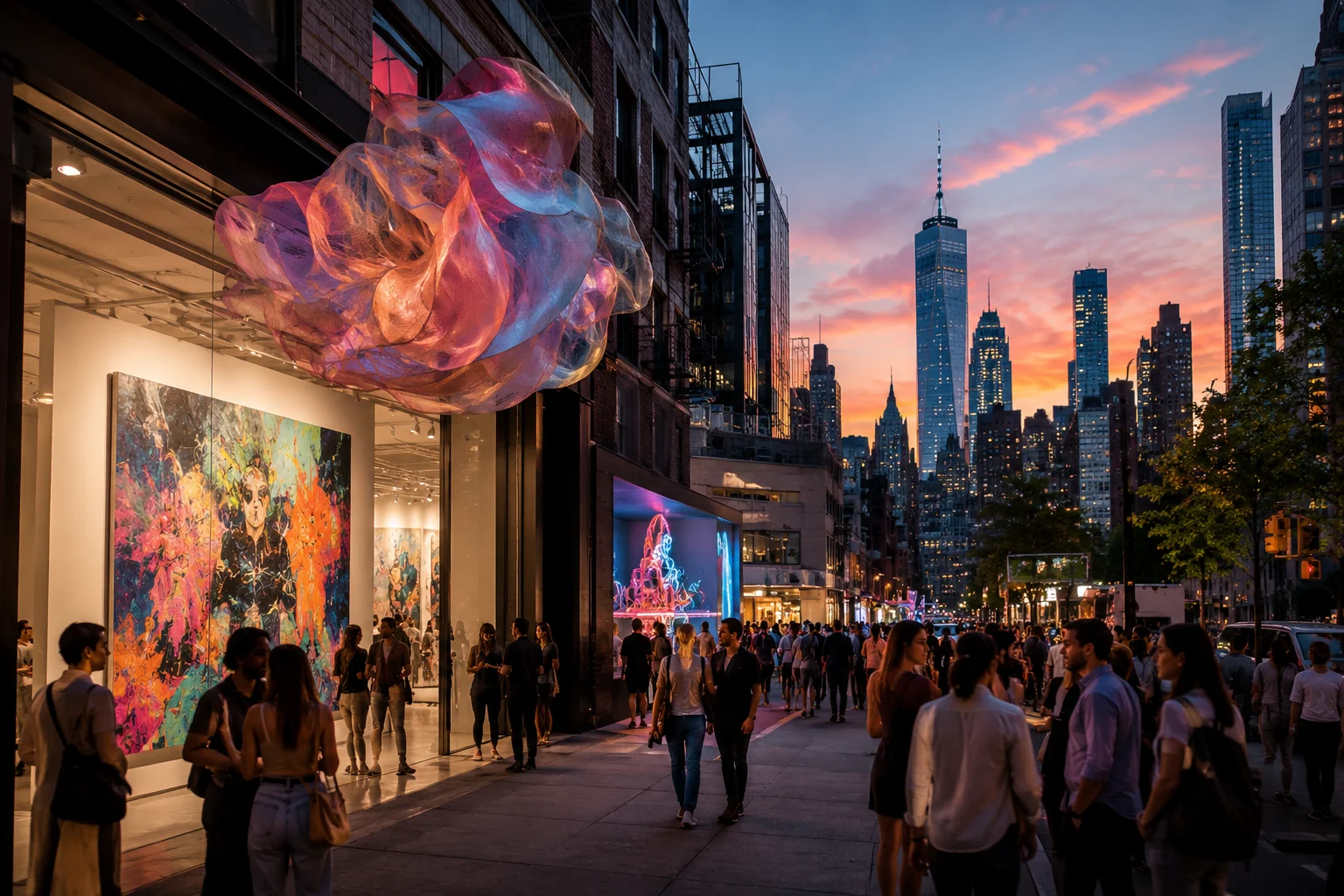
New York has never needed permission to feel like the center of the art world, but Art Week NYC 2026 arrives with the kind of timing that makes the city feel newly awake. The idea is simple on the surface: a four-day cultural push built around gallery openings, artist talks, tours, public programs, and the restless energy that already moves through neighborhoods like Chelsea, Tribeca, Harlem, Brooklyn, and the Lower East Side. But underneath that clean format is a bigger story about how cities now compete for attention, how audiences discover art, and how visual culture has moved far beyond the quiet white cube. For Visual Vortixel readers, this is not just another calendar item for collectors and curators. It is a signal that the modern art scene is becoming more public, more social, more citywide, and more tied to the way people experience culture in real time.
The keyword that best captures this moment is Art Week NYC 2026, because it combines the event, the city, and the year into one search-friendly phrase that can hold news value and evergreen interest at the same time. People are not only searching for what is happening in New York; they are searching for why it matters, where to go, what to watch, and what this shift says about the future of art cities. New York already has a dense art ecosystem, from blue-chip galleries and museum institutions to artist-run spaces and digital-first communities. What makes this new chapter interesting is the attempt to frame all that movement into a more visible, connected experience. In a city where culture often feels scattered across subway lines, private previews, and neighborhood-specific scenes, Art Week NYC turns the map itself into part of the story.
Why Art Week NYC 2026 Feels Bigger Than an Event
Every major art city has its own rhythm, and New York’s rhythm has always been a little chaotic in the best possible way. The city does not move like a polished showroom; it moves like a street full of conversations happening at once. Art Week NYC 2026 matters because it takes that raw cultural density and gives it a shared frame without flattening the city’s personality. Instead of asking audiences to choose between museums, galleries, auctions, talks, or independent spaces, the week suggests that all of these layers can belong to one larger cultural moment. That matters in 2026, when attention is fragmented, audiences are overstimulated, and cultural events need stronger narratives to break through the noise.
For years, the traditional art calendar has often been shaped by fairs, auction seasons, museum openings, and VIP previews that felt more legible to insiders than casual visitors. Art Week NYC 2026 has the potential to make that ecosystem feel easier to enter without removing the seriousness of the work being shown. This is important because younger audiences do not always discover art through the same channels as previous generations. They might first encounter an installation through a short video, a gallery facade through a street photo, or an artist talk through a shared clip. A citywide art week gives all of those entry points a stronger cultural context, turning scattered impressions into a fuller experience.
The event also lands at a moment when New York’s cultural identity is being actively refreshed. Museums are expanding, galleries are shifting strategies, artists are building hybrid careers, and public audiences are more curious about visual storytelling than ever. The city is not just selling art to collectors; it is selling a sense of participation to residents, travelers, students, designers, photographers, and digital creators. That is why this story belongs naturally on Art Week NYC 2026 coverage for a visual culture site. It is not only about what hangs on the wall, but about how the city itself becomes a moving exhibition.
The City as a Gallery Without Walls
One reason Art Week NYC 2026 feels so current is that it matches how people actually explore cities today. The old model of culture was built around destinations: go to the museum, attend the opening, visit the fair, leave with a program in hand. The newer model is more fluid, and it often begins before anyone steps into a room. People save exhibitions on social platforms, check neighborhood routes, follow artists directly, scan event listings, and build their own cultural itinerary around food, transit, friends, and whatever looks visually magnetic that day. Art Week NYC fits this behavior because it turns the city into a navigable creative field.
New York is especially good at this because its art scene is not confined to one polished district. Chelsea has the gallery concentration and market power, but Tribeca brings a different texture, Harlem carries deep cultural memory, Brooklyn keeps experimental energy alive, and the Lower East Side continues to feel like a place where small spaces can still punch above their weight. When these neighborhoods appear under one broad event identity, the visitor experience changes. The city becomes less like a list of separate addresses and more like a layered visual route. That is powerful for both local audiences and international visitors who want to understand the city beyond one museum stop.
This citywide structure also gives smaller and mid-sized spaces a chance to be seen inside a bigger conversation. In a crowded cultural market, visibility can be just as important as quality. A strong art week can help audiences connect the dots between a major museum show, a young gallery exhibition, a public performance, and a studio visit that might otherwise feel hidden. That does not mean every space gets equal attention, because New York is still New York, and hierarchy does not disappear overnight. But the format creates more pathways for discovery, and discovery is one of the strongest currencies in contemporary visual culture.
A New Moment for Galleries, Artists, and Audiences
The gallery world has been under pressure to rethink how it reaches people, and Art Week NYC 2026 arrives right inside that pressure point. Galleries can no longer rely only on private networks, quiet prestige, and the assumption that serious audiences will automatically show up. The strongest spaces today understand that presentation, storytelling, access, and atmosphere matter. That does not mean every exhibition needs to become a spectacle, but it does mean the way art is framed can shape how deeply people engage with it. A citywide art week gives galleries an opportunity to experiment with pacing, programming, and audience experience without abandoning their curatorial identity.
For artists, the opportunity is also layered. A major art week can expand attention, but it can also intensify the competition for that attention. The artists who stand out will not only be the ones with the biggest names or most photogenic installations. They will be the ones whose work carries a clear voice in a crowded visual environment. In a week full of openings, talks, tours, and public events, audiences need an emotional or intellectual reason to remember a work after they leave the space. That is where storytelling becomes just as important as visibility.
For audiences, the biggest shift may be psychological. Art can feel intimidating when the scene appears too insider-driven, too expensive, or too coded with social rules that nobody explains out loud. A structured week can lower that barrier by giving people a reason to enter spaces they might usually walk past. It creates permission to explore, ask questions, compare neighborhoods, and treat contemporary art as something active rather than distant. That sense of permission matters, especially for younger audiences who are visually fluent but not always institutionally fluent.
How Digital Culture Changes the Art Week Formula
No major cultural event in 2026 exists only in physical space, and Art Week NYC 2026 will almost certainly be shaped by the digital layer around it. The gallery opening is no longer just an opening; it is a content moment, a social signal, a visual archive, and sometimes the first step in a much wider conversation. Visitors document what they see, artists share behind-the-scenes context, galleries publish installation views, and critics respond across multiple platforms. This does not make the art less serious. It simply means the life of an exhibition now extends far beyond the room where it is installed.
This digital layer is especially relevant for visual-first platforms and websites focused on Digital Art, design, and creative technology. A painting, sculpture, photograph, or installation may begin as a physical encounter, but its second life happens through images, clips, essays, newsletters, searches, and reposts. The best exhibitions understand this without becoming shallow. They create works that reward being seen in person while still carrying enough visual force to travel online. Art Week NYC 2026 will likely become a testing ground for that balance between physical presence and digital circulation.
There is also a deeper point here about audience memory. People now remember cultural events through a mixture of experience and media trace. They remember the room, the crowd, the route, the lighting, the conversation, the image they saved, and the article they read afterward. This means an art week is not just competing for attendance; it is competing for afterlife. The events that last in public imagination will be the ones that create strong visual moments and strong interpretive meaning at the same time.
The Trend: Art Weeks Are Becoming Urban Media Platforms
The rise of citywide art weeks is part of a bigger trend in how culture is packaged and experienced. A successful art week is no longer just a cluster of exhibitions; it functions almost like an urban media platform. It gives the city a theme, gives institutions a shared calendar, gives galleries a promotional rhythm, and gives audiences a reason to move through cultural spaces with intention. In this sense, Art Week NYC 2026 is not only an art event. It is a branding mechanism for the city’s creative identity.
This does not have to be cynical. Cities have always used culture to tell stories about themselves. The difference now is speed, competition, and visibility. London, Paris, Miami, Seoul, Hong Kong, Mexico City, and Los Angeles all understand that art events can shape tourism, investment, talent migration, and soft power. New York has never lacked cultural gravity, but even gravity needs to be renewed for each generation. Art Week NYC 2026 is one way the city can reintroduce itself as not just established, but alive.
The most interesting art weeks are not the ones that simply gather expensive objects in expensive rooms. They are the ones that reveal how a city thinks, argues, remembers, and imagines. New York is built for that kind of friction because it is not visually neat. It is layered with wealth and struggle, legacy and reinvention, polished institutions and rough creative edges. If Art Week NYC 2026 leans into that complexity, it can become more than a schedule. It can become a portrait of a city negotiating what culture means now.
What Visual Creators Can Learn From This Shift
For designers, photographers, digital artists, curators, content strategists, and creative writers, Art Week NYC 2026 offers more than inspiration. It offers a practical case study in how visual attention is built. The event shows that strong creative ecosystems are not made only from individual talent. They are made from timing, placement, collaboration, narrative, access, and repeatable cultural signals. A great artwork matters, but the world around that artwork also shapes whether people notice it, remember it, and talk about it. That is the lesson many creative professionals can take beyond the art world.
- Build around context: A visual project becomes stronger when audiences understand where it sits culturally, geographically, and emotionally.
- Create pathways, not just moments: People engage more deeply when they can move from discovery to explanation to experience without friction.
- Think citywide, even when working small: Local scenes, neighborhoods, and communities can make creative work feel rooted and memorable.
- Balance physical and digital presence: The best visual work today often needs to hold power in person and remain compelling online.
- Use storytelling as infrastructure: A clear narrative helps audiences connect separate events, images, and ideas into one meaningful experience.
These lessons matter because the creative economy is becoming more ecosystem-driven. A designer is not only designing an object; they are designing how that object is found, photographed, discussed, and remembered. A digital artist is not only releasing a visual piece; they are building a context around the work’s meaning and circulation. A gallery is not only hanging art; it is shaping a visitor journey. Art Week NYC 2026 makes these patterns easier to see because the whole city becomes a living diagram of cultural attention.
The Impact on New York’s Visual Identity
New York’s visual identity has always been built from contrast. It is high culture and street culture, marble museums and basement shows, fashion week polish and subway platform improvisation. Art Week NYC 2026 has the potential to make those contrasts feel more visible at once. The city does not need a single visual language, and that is exactly the point. Its power comes from the fact that so many languages can collide within the same week, sometimes within the same block.
This collision is important for the global art conversation because many cities are trying to become smoother, cleaner, and easier to package. New York’s advantage is that it can still feel unresolved. That unresolved quality creates tension, and tension often produces better art conversations than perfection does. Visitors do not come only to see finished objects; they come to feel a city thinking in public. If Art Week NYC 2026 captures that feeling, it could strengthen New York’s role as a place where visual culture does not simply display itself, but argues with itself.
The city’s visual identity is also increasingly shaped by who gets included in the frame. A meaningful art week should not only amplify established galleries and wealthy institutions. It should also create room for emerging artists, independent curators, community-rooted spaces, and experimental formats that challenge the usual hierarchy. That inclusion is not just a moral talking point; it is a creative advantage. The broader the field of voices, the more interesting the city’s cultural image becomes.
What Visitors Should Pay Attention To
For anyone planning to follow Art Week NYC 2026, the smartest approach is not to chase every opening or treat the week like a checklist. New York rewards curiosity more than completion. Instead of trying to see everything, visitors should build routes around neighborhoods, themes, or mediums that genuinely interest them. One day might focus on galleries and artist talks, another on museum exhibitions, another on experimental spaces or public programs. The goal is not to consume culture at maximum speed, but to build a personal map of what the city is saying.
It is also worth paying attention to how spaces present themselves. Notice which galleries create welcoming environments and which still rely on old-school distance. Notice how artists use scale, sound, light, materials, screens, and performance to pull people into the work. Notice which exhibitions feel made for quick images and which ones deepen only after slow looking. These details reveal where the art world is heading. They also help visitors understand that the most interesting part of an art week is often the relationship between the work, the room, and the public moving through it.
Another practical insight is to look beyond the obvious names. Big institutions and headline galleries will naturally dominate attention, but some of the week’s most memorable moments may happen in smaller spaces. Independent programs often take more risks because they have less to protect. Emerging artists may bring fresher visual language because they are still forming their audience rather than serving an established market. In a city as dense as New York, the side route can sometimes become the main story.
The Market Question Behind the Cultural Buzz
It would be naive to discuss Art Week NYC 2026 without acknowledging the market behind the mood. New York is a cultural capital, but it is also a commercial capital, and art weeks often operate at the intersection of public excitement and private deal-making. Collectors, advisors, galleries, auction houses, institutions, sponsors, and media all move through these events with different goals. Some are looking for discovery, some for prestige, some for sales, and some for influence. The public-facing energy may feel open, but the economic machinery is always nearby.
That tension is not automatically a flaw. Art has always existed between expression and patronage, between experimentation and financial systems. What matters is whether the cultural experience remains meaningful beyond the transaction. A strong art week can support sales while still giving public audiences access to ideas, spaces, and conversations they might not otherwise encounter. A weak one becomes a luxury circuit with better lighting. The future value of Art Week NYC 2026 will depend on which direction it leans.
The current art market also makes this timing interesting. Galleries are being forced to think carefully about sustainability, audience development, and the cost of visibility. Artists are navigating a world where digital presence can increase reach but not always guarantee stability. Institutions are trying to remain relevant to audiences who expect stronger storytelling and more inclusive programming. In that context, Art Week NYC 2026 becomes a stress test for the city’s cultural infrastructure. It asks whether New York can turn density into connection rather than overload.
Why This Matters for the Future of Visual Culture
The deeper story behind Art Week NYC 2026 is about the future of visual culture itself. Art is no longer experienced only by people who identify as art-world insiders. It is consumed by designers looking for references, filmmakers studying composition, fashion audiences tracking silhouettes, architects reading space, gamers thinking about world-building, and social media users responding instinctively to images. This expanded audience changes the stakes. Art events now speak to a broader creative public that moves across disciplines without asking for permission.
This is why categories like Design, Digital Creativity, Visual Innovation, and Visual Entertainment are increasingly connected. A gallery installation can influence set design. A museum exhibition can shape fashion language. A public art project can inspire digital environments. A photography show can change how people think about identity, memory, or urban life. Art Week NYC 2026 sits at the center of these overlaps, making it relevant far beyond the traditional art pages.
The event also reflects a broader hunger for real-world cultural experience after years of increasingly screen-heavy life. Digital access is powerful, but people still want the feeling of standing in a room with other people and encountering something that cannot be fully compressed into a feed. That hunger gives art weeks renewed importance. They remind audiences that visual culture is not only something to scroll past. It is something to walk through, debate, photograph, question, and carry home in memory.
Conclusion: A New Chapter for the Art City
Art Week NYC 2026 feels important because it understands that the future of the art city is not only about prestige. It is about movement, access, storytelling, and the ability to turn many separate cultural signals into one shared public moment. New York already has the galleries, museums, artists, collectors, critics, students, tourists, and neighborhoods needed to make a major art week feel alive. The challenge is not whether the city has enough art. The challenge is whether it can make that abundance feel connected rather than overwhelming.
If the week succeeds, it could become more than a new event on the calendar. It could become a fresh model for how New York presents itself to a generation that discovers culture through both sidewalks and screens. It could help galleries open their doors wider, help artists find broader audiences, and help visitors understand the city as a living visual system. Most of all, it could remind people that art is not separate from urban life. In New York, at its best, art is one of the ways the city explains itself.
For Visual Vortixel, the takeaway is clear: Art Week NYC 2026 is not just a headline about an art event. It is a story about how visual culture is being reorganized for a faster, more public, more connected era. The white cube still matters, but so does the street outside it, the neighborhood around it, the digital image that travels from it, and the audience that gives it meaning. That is why this moment feels like the beginning of a new chapter. New York is not only hosting art; it is becoming the medium again.