

Crystal Bridges Expansion Reframes Museum Art
 Vortixel
15 minutes read
Vortixel
15 minutes read
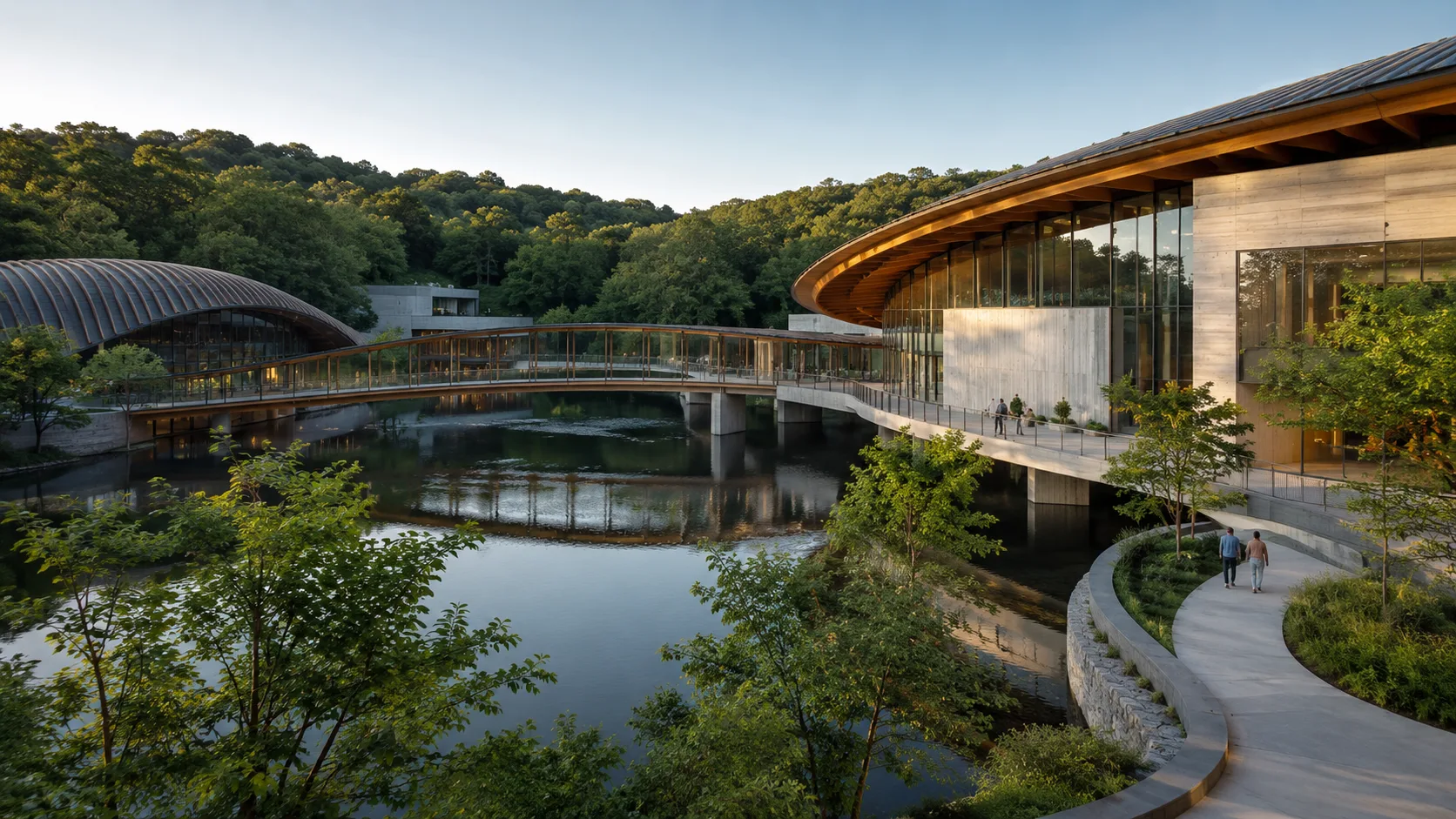
The Crystal Bridges expansion arrives at a moment when museums are being asked to do more than display beautiful objects behind quiet walls. In Bentonville, Arkansas, the museum is stretching its physical footprint and its cultural imagination at the same time, turning a major architectural project into a broader statement about who gets included in the story of American art. The new chapter adds galleries, studios, gathering spaces, and a stronger connection between art, nature, education, and public life. It also gives the museum more room to present a layered view of creativity, where painting, craft, digital practice, Indigenous work, community memory, and contemporary experimentation can sit inside the same conversation. For a visual culture audience, the Crystal Bridges expansion is not just a building update; it is a sign of how the modern museum is evolving into a more open, flexible, and emotionally intelligent cultural platform.
Why the Crystal Bridges Expansion Matters Now
The timing of the Crystal Bridges expansion feels especially important because museums are facing a new kind of attention economy. Visitors no longer arrive only to admire a masterpiece, take a slow walk through a gallery, and leave with a postcard memory. They come with cameras, personal histories, questions about representation, and a desire for spaces that feel alive rather than frozen. Crystal Bridges seems to understand that the future of museum culture depends on making art feel both elevated and accessible, both historically grounded and emotionally close. By expanding its spaces and rethinking how stories move through them, the museum is positioning itself as a place where American art can feel less like a fixed canon and more like a living, unfinished conversation.
The expansion also matters because Crystal Bridges has always had a different energy from many older American museums. It is not sitting in a traditional coastal art capital, and that gives it an unusual kind of freedom. Bentonville brings a different regional texture, one tied to the Ozarks, outdoor life, civic growth, and a changing creative economy. That context makes the museum’s growth feel less like an institutional flex and more like a cultural signal from a place that wants to be part of the national art dialogue on its own terms. In that sense, the project expands more than square footage; it expands the map of where serious art conversations can happen.
A Museum Built Around Art, Nature, and Movement
Crystal Bridges has long been known for the way it connects architecture with landscape, and the new expansion continues that identity instead of interrupting it. The museum’s original concept was never about separating art from the outside world, because its bridges, pavilions, ponds, trails, and wooded setting already made nature part of the viewing experience. The new spaces build on that atmosphere by giving visitors more ways to move between interior and exterior moments. That matters visually because the museum experience becomes less linear and more cinematic, almost like walking through a sequence of changing frames. The architecture does not simply hold the art; it shapes how the eye, body, and attention move through the story.
This relationship between structure and landscape is one of the reasons the expansion feels relevant to design, not only to museum news. In contemporary cultural spaces, design is no longer just about making a room look refined. It is about creating emotional pacing, social comfort, visual clarity, and a sense of belonging. Crystal Bridges uses its natural surroundings as part of that design language, giving visitors moments to pause, reset, and reconnect before entering another gallery. In a digital age where most visual experiences happen on bright screens, that slower spatial rhythm gives the museum a powerful advantage.
More Space Means More Complex Storytelling
The most obvious impact of the Crystal Bridges expansion is physical: more room for art, programs, and visitors. Yet the deeper impact is narrative. When a museum gains new galleries, it gains the ability to show relationships that were previously harder to see. Works that may have been stored away, underrepresented, or isolated from larger conversations can become part of a more complete visual journey. This is especially important for American art, a field that has often been presented through a narrow set of names, movements, and cultural assumptions.
With expanded space, Crystal Bridges can make room for stories that complicate the old museum script. A painting can speak beside a craft object, a contemporary installation can challenge a historic portrait, and a digital artwork can sit within a longer timeline of experimentation. That kind of curatorial flexibility helps visitors understand American creativity as something shaped by many hands, regions, materials, and identities. It also makes the museum feel more honest, because the visual history of a country is never clean or single-voiced. The strongest museums of this decade are the ones willing to admit that complexity and turn it into a public experience.
The Shift From Collection to Conversation
For generations, museums built authority by collecting, preserving, and presenting objects as cultural proof. That role still matters, but the public now expects more interaction with meaning. Visitors want to know why a work is shown, whose perspective shaped its placement, what histories are missing, and how the artwork connects to the world outside the gallery. The Crystal Bridges expansion reflects that larger shift from collection-centered thinking to conversation-centered thinking. The museum becomes a platform where objects are not only displayed but activated through context, education, community programs, and new visual pairings.
This shift is especially powerful for younger audiences who experience culture across multiple formats every day. A Gen Z visitor may move from a museum gallery to a short-form video, from a digital archive to a design mood board, and from a public art installation to an online debate about cultural ownership. For that audience, a museum cannot feel like a sealed-off temple of expertise. It has to feel navigable, responsive, and visually generous. Crystal Bridges appears to be leaning into that reality by creating spaces that support both deep looking and social connection.
A New Model for Regional Cultural Power
The expansion also points to a broader trend: regional museums are becoming major players in shaping national and international art conversations. For a long time, the art world’s center of gravity was heavily associated with cities like New York, Los Angeles, London, and Paris. Those cities still matter, but the cultural field is becoming more distributed. Institutions outside the traditional capitals are building ambitious programs, commissioning bold architecture, and attracting audiences who want art experiences beyond the usual map. Crystal Bridges is one of the clearest examples of how a regional museum can develop global relevance without losing its local identity.
That balance between local place and global ambition is one of the most interesting parts of the project. The museum is deeply tied to Bentonville and the surrounding landscape, but it is also speaking to debates happening across the museum world. How should institutions represent national identity when the nation itself is always changing. How can architecture invite people in rather than intimidate them. How can visual storytelling make space for both beauty and discomfort. The Crystal Bridges expansion does not answer every question, but it gives those questions a much larger stage.
The Visual Impact of a More Open Museum
One of the most important design lessons from the expansion is that openness can be visual as well as social. A museum that feels open is not only one with free admission or public programs, although those things matter. It is also a museum where sightlines, materials, light, circulation, and gathering areas reduce the feeling of distance between visitors and art. The new Crystal Bridges spaces seem designed to support that kind of openness, giving people more reasons to stay, wander, talk, and return. In visual terms, this makes the museum feel less like a sequence of rooms and more like a living cultural environment.
Open design can change the way visitors behave. When a museum offers clear pathways, warm gathering zones, flexible learning areas, and direct relationships to nature, visitors often feel less pressure to perform the role of the perfect art viewer. They can move casually, pause when something catches them, and build their own rhythm through the space. That matters because many people still feel that museums are not built for them. By making the experience more human and less intimidating, the Crystal Bridges expansion could help widen the audience for American art.
Digital Creativity Enters the Museum Story
Another important part of the museum’s growth is the presence of spaces connected to contemporary making, including studios that can support new forms of creativity. This is where the expansion becomes especially relevant to digital culture and visual innovation. Museums can no longer treat digital art as a side category or a temporary novelty. Digital tools now shape how artists sketch, model, archive, remix, animate, install, and distribute their work. By creating more room for creative practice, Crystal Bridges signals that the museum of the future must support both finished objects and the evolving processes behind them.
This matters for audiences who see creativity as something active rather than distant. A visitor who works with design software, generative tools, photography apps, video platforms, or interactive media may connect with art differently from someone raised on a purely object-based museum model. They may want to understand how ideas are built, not only how they are displayed. They may care about the bridge between handmade craft and digital experimentation. In that sense, the Crystal Bridges expansion gives the museum a stronger foundation for discussing creativity as a continuum across materials, tools, and generations.
Why Digital Art Belongs Beside Traditional Media
The conversation around digital art is often framed as if it exists in opposition to painting, sculpture, or craft. That divide feels increasingly outdated. Artists have always used the tools available to them, whether those tools were pigments, looms, cameras, printing presses, editing software, sensors, or code. A museum that wants to tell a fuller story of American art has to show how these tools overlap and influence one another. Crystal Bridges’ expanded platform can help make that connection clearer by placing newer creative languages within a broader visual history.
For visitors, this can make digital creativity feel less abstract. Instead of seeing a screen-based artwork as something detached from the museum’s core mission, they can understand it as part of a longer human desire to capture movement, memory, identity, and imagination. That approach is also useful for educators, because it gives students a way to connect museum collections with the tools they already use. When young creators see their own visual language reflected in an institution, the museum becomes less remote. The Crystal Bridges expansion can therefore support not only looking at art but also imagining how art gets made next.
Community Spaces Are the New Cultural Infrastructure
One of the strongest trends in museum design right now is the rise of community-focused space. Galleries remain essential, but cafés, studios, lounges, classrooms, outdoor play areas, and flexible public zones are becoming just as important to the visitor experience. These spaces are not decorative extras. They are cultural infrastructure, because they turn a museum from a destination into a habit. The Crystal Bridges expansion understands that people are more likely to build lasting relationships with art when the museum also supports conversation, rest, learning, family time, and informal discovery.
This is where the museum’s connection to wellness becomes especially relevant. In a stressed-out digital society, cultural spaces can offer something rare: a place to slow down without fully disconnecting from the world. Art can become a form of attention training, emotional reflection, and social connection. Architecture can support that by giving visitors environments that feel calm, open, and generous. Crystal Bridges’ expanded campus strengthens the idea that a museum can be both intellectually serious and personally restorative.
Trend Analysis: Museums Are Becoming Creative Ecosystems
The Crystal Bridges expansion fits into a larger international trend: museums are becoming creative ecosystems rather than static exhibition halls. The best institutions are thinking like cultural campuses, combining collections with performance, education, landscape, design, technology, and public gathering. This shift is partly practical, because museums need to attract broad audiences and give people reasons to visit more than once. It is also philosophical, because art itself has become more interdisciplinary. A museum that separates visual culture from social life, technology, architecture, or community experience can quickly feel behind the times.
This ecosystem model changes how museums measure impact. Success is no longer only about blockbuster attendance or the prestige of a single acquisition. It is also about how many people feel invited into the space, how artists and educators use the institution, how local communities see themselves reflected, and how the museum participates in wider civic life. For Crystal Bridges, the expansion strengthens its ability to operate on all of those levels at once. That is why the project feels bigger than a construction milestone and closer to a cultural strategy.
The Impact on American Art Narratives
American art is not a simple category, and the expansion gives Crystal Bridges more room to treat it with the complexity it deserves. The story of American creativity includes migration, conflict, experimentation, labor, landscape, industry, spirituality, protest, pop culture, craft traditions, Indigenous knowledge, and digital invention. When museums lack space, those stories can get compressed into a narrow timeline or a familiar set of highlights. More space allows for more friction, more contrast, and more unexpected connections. The Crystal Bridges expansion can help turn American art from a neat museum subject into a broader visual field full of competing voices.
That broader field matters because audiences are increasingly skeptical of cultural narratives that feel too polished. People want museums to show beauty, but they also want honesty. They want to see achievement without erasing tension. They want institutions to acknowledge that national identity is made through many communities, not handed down from one center of authority. Crystal Bridges’ expanded galleries can support that kind of storytelling by making room for a wider range of artists, materials, and historical relationships.
Practical Insights for Designers and Creators
For designers, digital artists, content creators, and creative strategists, the Crystal Bridges expansion offers several useful lessons. The first lesson is that space shapes story. Whether someone is designing a museum wing, a website, a digital gallery, or a brand experience, the structure of the environment changes how people understand the content inside it. Crystal Bridges shows the value of building a journey rather than simply adding more display area. A strong visual system guides people through emotion, context, discovery, and memory.
The second lesson is that accessibility is a design choice, not a slogan. When a space feels welcoming, readable, and flexible, more people can participate in its meaning. That applies to museum architecture, but it also applies to digital interfaces, editorial layouts, creative software, and visual entertainment platforms. People stay longer when they feel oriented and respected. The museum’s expanded approach is a reminder that good design does not only impress the eye; it reduces friction and increases connection.
The third lesson is that mixed formats create richer storytelling. A museum that brings together traditional galleries, studios, outdoor experiences, community areas, and digital possibilities can reach different types of attention. Some visitors learn by reading, others by making, others by moving through space, and others by sharing the experience socially. Creative brands and visual platforms can learn from that layered model. The future of visual communication will belong to experiences that feel both curated and participatory.
What This Means for Visual Innovation
The Crystal Bridges expansion is also a strong case study in visual innovation because it shows that innovation does not always mean louder technology or more spectacle. Sometimes innovation means creating better conditions for people to see, feel, and think. A museum can innovate by changing whose stories are centered, how visitors move through space, how architecture relates to landscape, and how learning becomes part of the cultural experience. This kind of innovation is slower than a viral visual trend, but it may have a deeper impact. It changes the way people understand the role of art in public life.
That is especially important in an era when images move faster than context. Online culture can make visual content feel instant, disposable, and endlessly replaceable. Museums offer a counterbalance by asking people to spend time with images, objects, materials, and spaces that cannot be fully absorbed in a scroll. Crystal Bridges’ expanded campus strengthens that counterbalance while still acknowledging that contemporary audiences bring digital habits with them. The result is a museum model that does not reject the present but gives it more depth.
A Bigger Stage for Future Exhibitions
More space also gives Crystal Bridges more flexibility for future exhibitions. Large-scale installations, cross-disciplinary shows, educational labs, and collection rotations all become easier when a museum has room to breathe. This can change the rhythm of programming and make the institution more responsive to current conversations. A museum with limited space often has to choose between showing its permanent collection and taking risks with new projects. The Crystal Bridges expansion gives the institution a stronger ability to do both.
This flexibility could become one of the museum’s biggest long-term advantages. Visual culture is moving quickly, and institutions need spaces that can adapt to new formats, new audiences, and new questions. A gallery designed only for traditional wall-hung works may struggle to support immersive media, participatory installations, or hybrid educational programs. Expanded and adaptable spaces help museums remain relevant without chasing every trend. Crystal Bridges now has more room to let future art forms arrive without forcing them into old containers.
Conclusion: A Museum Expansion With a Bigger Message
The Crystal Bridges expansion is important because it treats museum growth as a storytelling opportunity, not just a construction achievement. By adding new galleries, studios, gathering spaces, and stronger public experiences, the museum is making a clear argument about the future of American art. That future is more inclusive, more spatial, more connected to nature, more open to digital creativity, and more aware of the communities that give culture its meaning. For Visual Vortixel readers, the project offers a valuable snapshot of where visual institutions are heading in 2026. The modern museum is no longer only a place to look at art; it is becoming a creative ecosystem where design, memory, technology, and public life meet.
What makes this expansion stand out is not only its size, but its ambition to widen the emotional and cultural frame of the museum experience. Crystal Bridges is giving itself more room to tell complicated stories, welcome different audiences, and connect historical works with contemporary creative practice. That kind of move feels necessary in a visual world that is becoming more fragmented, faster, and more demanding every year. The Crystal Bridges expansion suggests that the answer is not to make museums louder, but to make them deeper, more flexible, and more human. In the end, its biggest contribution may be showing that the future of museum art is not only about what hangs on the wall, but about how people are invited to enter the story.