
AI Art Criticism Reshapes Digital Creativity
 Vortixel
15 minutes read
Vortixel
15 minutes read
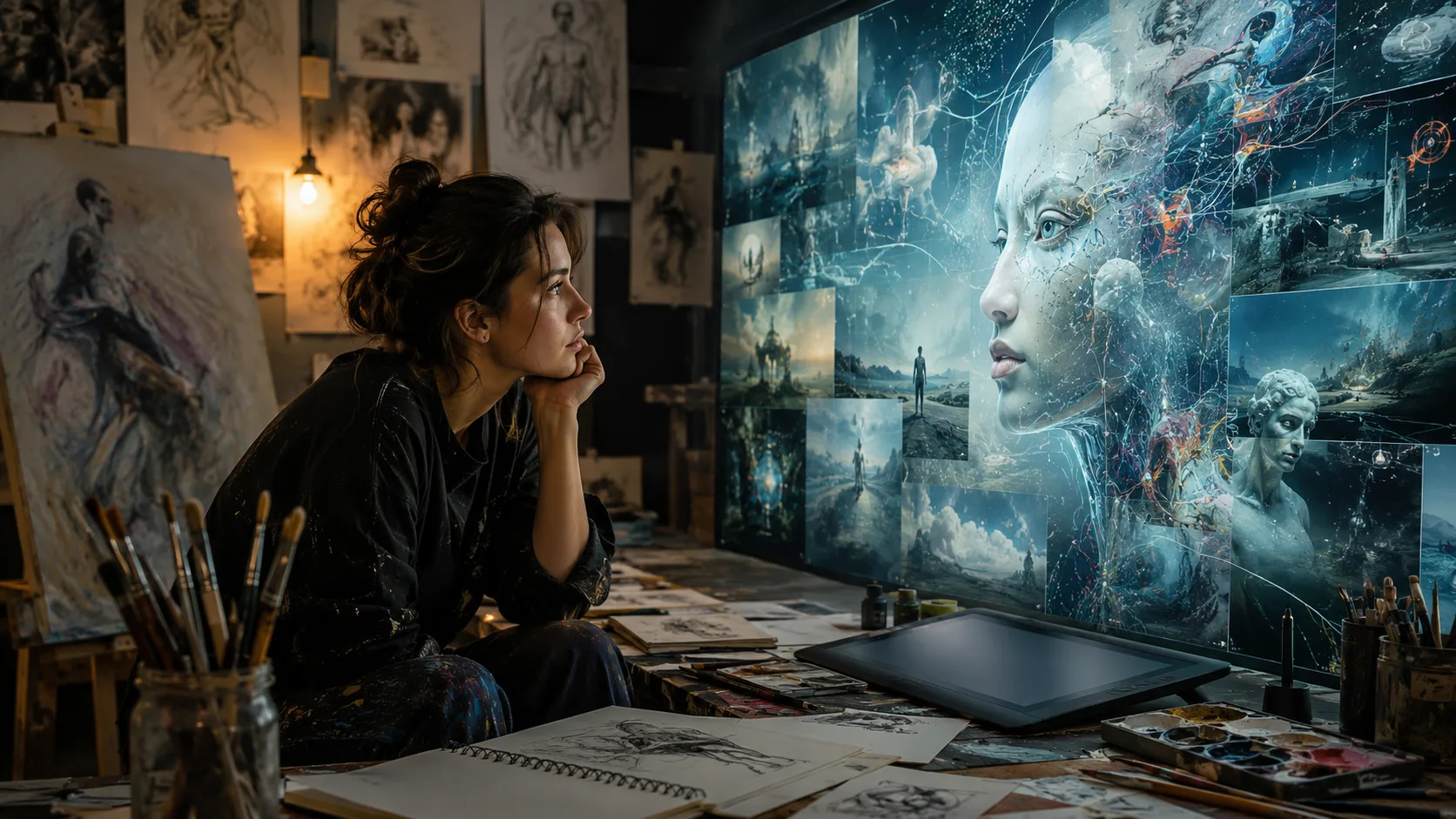
AI art criticism has moved from niche studio debates into the center of mainstream visual culture, and the conversation is getting louder because artists are no longer treating generative tools as a harmless novelty. What once looked like a futuristic shortcut for mood boards, posters, concept visuals, and experimental images is now being questioned as a system that can flatten taste, blur authorship, and turn creative labor into disposable data. Visual artists are pushing back not only because they dislike new technology, but because they see a deeper tension between speed and meaning. In many creative circles, the issue is not whether artificial intelligence can generate a beautiful image, because it clearly can, but whether that image carries the lived process, risk, intention, and accountability that make art feel human. That is why the backlash against AI art criticism has become one of the most important cultural debates in digital creativity today.
The rise of generative image tools has created a strange moment for visual artists, designers, illustrators, photographers, and creative directors who once saw software as a partner rather than a rival. Photoshop, 3D modeling, digital painting tablets, and editing suites changed creative work before, but they still required a person to build, revise, and decide. AI art tools arrived with a different promise: write a few words, wait a few seconds, and receive a polished image that looks as if it took days of practice to make. That promise feels magical to casual users, but to working artists, it can feel like a trapdoor opening beneath an entire profession. The criticism is not nostalgia for an older creative world; it is a warning that visual culture could become faster, cheaper, and emptier at the same time.
Why AI Art Criticism Is Getting Louder
The loudest critiques of AI-generated images often begin with a simple question: what exactly is being created, and who gets credit for it. Many visual artists argue that current AI image systems do not emerge from a neutral void, because they are trained on huge collections of images, styles, compositions, visual habits, and cultural references. Even when a final image does not copy one artwork directly, it may still echo the labor of thousands or millions of creators whose work helped shape the system. That makes AI art criticism less about fear of the future and more about fairness in the present. Artists want to know why their work can be absorbed into a machine learning pipeline without meaningful consent, compensation, or visibility.
This concern hits especially hard because visual artists have already spent years dealing with unstable income, unpaid exposure, low commission rates, and algorithmic platforms that reward constant output. For many creatives, AI art feels like the next layer of pressure inside an economy that already undervalues their skill. A designer who spent a decade refining color systems, typography sensitivity, composition, and visual storytelling may suddenly be compared with a prompt-based image produced in minutes. A concept artist may find that a client now expects thirty visual directions in an afternoon because software makes that number look possible. The deeper frustration is not that AI exists, but that the market may use it as an excuse to demand more while respecting artists less.
The Difference Between Tool and Replacement
Creative software has always changed the rhythm of visual production, and artists are not strangers to technology. Digital painting tools changed illustration, layout software changed publishing, 3D engines changed entertainment design, and mobile cameras changed photography culture. The difference with generative AI is that it does not simply extend the hand of the artist; it can produce a complete image before the artist has touched a canvas, staged a shot, or built a scene. That shift makes the tool feel less like a brush and more like a substitute worker. When a tool moves from helping a creator to replacing parts of creative judgment, criticism becomes unavoidable.
Some artists do use AI as part of their workflow, and that detail matters because the debate is not perfectly divided between artists and machines. A digital illustrator might use AI for rough references, a filmmaker might test lighting ideas, and a designer might explore surreal directions before rebuilding the final work manually. In those cases, the artist still acts as the author who filters, edits, rejects, transforms, and takes responsibility. The problem begins when AI-generated output is treated as finished culture without context, credit, or human refinement. That is why many creators are calling for clearer boundaries between AI-assisted work and fully machine-generated imagery.
Aesthetic Fatigue and the Problem of Sameness
One of the strongest arguments in AI art criticism is not only ethical but aesthetic. Many artists describe AI images as impressive at first glance but strangely hollow after a second look. The surface can be glossy, cinematic, and technically detailed, yet the image may feel over-smoothed, emotionally vague, or trapped in familiar visual formulas. Certain lighting styles, fantasy compositions, surreal portraits, and hyper-polished textures have already become recognizable as AI-coded aesthetics. The result is a flood of images that look expensive but feel interchangeable.
This sameness matters because visual culture depends on friction, surprise, imperfection, and personal obsession. Great art often carries evidence of a specific person fighting through a specific problem, whether that problem is political, emotional, technical, or deeply private. AI-generated visuals can remix patterns at huge scale, but they often struggle to express the weird specificity that makes a work unforgettable. A real artist may spend years developing an awkward line, a strange color palette, or a recurring symbol that only makes sense inside their worldview. When visual culture becomes optimized around instantly pleasing outputs, the messy qualities that make art alive can get pushed to the edge.
How AI Images Changed the Creative Economy
The business side of AI art is where the debate becomes especially intense, because visual work is not only self-expression; it is also labor. Illustrators, photographers, animators, storyboard artists, motion designers, and brand creatives rely on paid projects to survive. When companies discover that AI tools can generate quick visual options at low cost, some may reduce budgets for early-stage creative exploration. That can shrink opportunities for junior artists who traditionally build careers through smaller assignments, drafts, and production support. If those entry points disappear, the industry risks weakening the next generation of visual talent before it has time to mature.
There is also a perception problem, because AI tools can make creative work look easier than it is. A finished-looking image can appear instantly on screen, but that does not mean it carries the same strategic thinking as a human-made visual system. Good design requires audience understanding, cultural sensitivity, brand awareness, composition logic, accessibility, and emotional pacing. A campaign image may need to communicate trust, urgency, luxury, rebellion, or warmth without saying those words directly. AI can generate options, but it cannot fully understand the business, social, and human consequences of those choices without human direction.
The Copyright Question Artists Cannot Ignore
Copyright sits at the heart of the AI art debate because creative ownership is already difficult in the digital era. Images move across platforms quickly, screenshots detach work from credit, and style can be copied faster than ever. Generative AI adds another layer by making style itself feel extractable, repeatable, and commercially useful. Artists worry that their visual identities can be mined into systems that produce similar-looking work for clients who never hire them. Even when the law struggles to keep up, the ethical concern remains easy to understand: creators do not want their careers used to train tools that may compete against them.
The issue becomes even more complicated because visual style is not always protected in a simple way. A painter can own a specific artwork, but the broader feeling of their brushwork, subject matter, or color language may be harder to defend. AI tools thrive in that gray area because users can ask for images that imitate a movement, a genre, a mood, or a recognizable creative signature. This creates a tension between inspiration and extraction that traditional art criticism has discussed for centuries, but now the scale is radically different. One person copying a style is one problem; a global platform generating endless variations from that style is another.
Why Human Process Still Matters
Human process matters because art is not only the final object; it is the chain of decisions behind it. A photographer chooses when to wait, where to stand, what to exclude, and how much risk to take in the moment. A painter builds meaning through texture, failure, correction, and time. A designer edits possibilities until the final system feels inevitable, even though it rarely begins that way. AI-generated images can produce outcomes, but they cannot experience hesitation, obsession, memory, grief, play, or responsibility in the way a person can.
This does not mean every human-made image is automatically profound or every AI image is automatically worthless. Weak art existed long before artificial intelligence, and digital tools have always been used for both lazy and brilliant work. The difference is that human-made work carries a relationship between maker, material, audience, and context. That relationship gives criticism something to engage with beyond surface quality. When a machine produces a visual pattern without lived intention, the viewer may still enjoy it, but the conversation around meaning becomes thinner.
The Gen Z Creative Split on AI Art
Younger creatives are not reacting to AI art in one single way, and that makes the cultural picture more interesting. Some Gen Z artists see AI as a tool they can bend, remix, and hack into new forms of expression. They grew up with filters, templates, editing apps, game engines, and algorithmic feeds, so they are often comfortable treating technology as part of identity. Others are deeply skeptical because they are entering creative careers at the exact moment when automation is being used to lower the value of entry-level work. For them, AI art criticism is not an abstract debate; it is about whether they will have a sustainable future in the creative economy.
This split also appears in online communities where visual experimentation happens at high speed. Some creators share AI-assisted concept worlds, surreal character designs, and speculative architecture as part of a new visual language. Others call out these works as derivative, exploitative, or detached from craft. The tension is intense because both sides care about creative freedom, but they define freedom differently. One side sees freedom as access to powerful tools, while the other sees freedom as protection from systems that absorb human work without permission.
Impact on Design, Branding, and Visual Media
In design and branding, the AI art debate has practical consequences because companies are moving faster than cultural standards can settle. Agencies may use AI for mood boards, campaign tests, product mockups, and visual research, while clients may not always understand where the images came from. That creates risks around originality, legal uncertainty, and brand trust. A company that uses generic AI imagery might save money in the short term but lose distinctiveness in the long term. In a visual market flooded with similar outputs, human-led art direction may become more valuable, not less.
Visual entertainment faces a similar pressure because film, gaming, advertising, and streaming culture depend on concept development. AI can accelerate early ideation for environments, costumes, characters, posters, and promotional art. Used carefully, it can help teams explore possibilities before committing resources. Used carelessly, it can flatten production design into familiar tropes and make every fantasy city, cyberpunk alley, or futuristic warrior look like a variation of the same database. The real challenge is not whether entertainment companies will use AI, but whether they will still invest in strong human art direction.
Why Disclosure Is Becoming a Big Deal
Disclosure has become one of the most practical demands in the AI art conversation. Many artists and viewers want to know when an image was generated by AI, when it was AI-assisted, and when it was fully created by a human artist. This is not only about purity; it is about trust. A viewer may react differently to a documentary-style image, an editorial illustration, or a historical visual if they know it was generated rather than captured or drawn. Clear labeling helps audiences understand what they are seeing and helps artists protect the value of transparent creative work.
Disclosure also gives professional teams a way to build responsible workflows. A studio can define which stages allow AI, which require human review, and which must avoid AI-generated assets entirely. A publication can set rules for editorial visuals so readers are not misled. A brand can decide whether AI fits its values or whether handmade, photographed, or commissioned work sends a stronger message. Without disclosure, every image becomes slightly suspicious, and that uncertainty damages the trust that visual culture needs.
Practical Insights for Artists and Creative Teams
For artists, the rise of AI art does not mean the end of creative value, but it does mean positioning matters more than ever. Artists who can explain their process, show their sketches, document revisions, and communicate the thinking behind their work may stand out in a market filled with instant images. The story behind the work becomes part of the value because it proves intention, authorship, and craft. This is especially important for independent creators who depend on trust from collectors, clients, followers, and collaborators. In a world where polished visuals are easy to generate, visible human process becomes a competitive advantage.
Creative teams should also treat AI as a governance issue, not just a productivity trick. Before using AI-generated imagery, teams need policies around training data, client approval, labeling, copyright risk, and human review. They should decide whether AI belongs in brainstorming, internal drafts, public campaigns, or nowhere at all for certain projects. They also need to protect junior creatives from being replaced by tools that should be used to support learning rather than erase opportunity. The strongest studios will likely be the ones that combine technical speed with ethical clarity and strong artistic leadership.
- Document the process: Artists should save sketches, drafts, references, and revisions to show the human thinking behind the final work.
- Set workflow boundaries: Creative teams should define when AI can be used and when human-made work is required.
- Prioritize disclosure: Labels and client notes can prevent confusion around AI-generated and AI-assisted visuals.
- Invest in art direction: Strong human taste is the best defense against generic machine-made aesthetics.
- Protect originality: Brands should avoid using AI outputs that imitate living artists, recognizable styles, or copyrighted visual identities.
The Cultural Cost of Instant Images
The most underrated part of AI art criticism is the cultural cost of making images feel infinite. When visuals become unlimited, people may start paying less attention to each one. Feeds already move quickly, but generative tools can multiply content beyond what audiences can emotionally process. This creates a paradox where the world has more images than ever, yet fewer images feel memorable. Art becomes less like an encounter and more like background noise.
That cultural shift matters because images shape memory, identity, politics, fashion, entertainment, and public imagination. The posters people hang, the album covers they remember, the photographs that define an era, and the illustrations that change how a story feels all depend on attention. If AI-generated imagery floods every platform with technically competent but emotionally thin visuals, audiences may become more visually numb. The danger is not that machines will make images; the danger is that people will stop caring about where images come from. When origin stops mattering, the relationship between viewer and creator becomes weaker.
Can AI Art Become Meaningful?
The honest answer is complicated because technology does not stay fixed, and artists are famously good at misusing tools in interesting ways. Some creators may turn AI into a meaningful medium by exposing its limits, critiquing its biases, or using it inside larger human-led projects. In that context, the value may not come from pretending the machine is an artist, but from showing how machine vision reflects human culture back at us. AI art can become more interesting when it is not used as a shortcut, but as a subject of investigation. The strongest AI-related artworks may be the ones that reveal the system instead of hiding it.
Still, meaningful AI art will require more than better prompts and sharper outputs. It will require artists to frame the work, challenge the tool, and take responsibility for the result. It will require institutions, platforms, and audiences to ask harder questions about consent, labor, and authorship. It will also require the creative industry to stop confusing novelty with depth. A new tool can open doors, but it cannot decide what is worth saying once those doors are open.
What This Means for Visual Innovation
Visual innovation is often misunderstood as the arrival of something new, but real innovation also involves judgment. A culture can generate new images nonstop and still fail to move forward if those images do not deepen perception, challenge habits, or create stronger connections. The future of digital art will not be defined only by how advanced AI models become, but by how artists, designers, and audiences choose to use or resist them. This makes the current backlash productive, even when it sounds harsh. Criticism is not the enemy of innovation; it is one of the forces that keeps innovation honest.
For a site focused on visual culture and Digital Art, this moment is bigger than a software trend. It touches the future of creative identity, image ethics, design education, entertainment production, and the value of human taste. The debate also reminds us that visual technology is never just technical. Every new image system changes who gets paid, who gets seen, who gets copied, and who gets remembered. That is why the criticism of AI art should be treated as a serious cultural signal, not as resistance from artists who simply fear change.
Conclusion: The Future Needs Human Taste
AI art criticism is not a rejection of every new creative tool, and it is not a demand to freeze art in the past. It is a call to protect meaning, authorship, labor, and trust at a time when images can be generated faster than people can understand them. Visual artists are warning that a creative future built only on speed could become visually rich but culturally poor. The strongest path forward will not come from banning experimentation or blindly celebrating automation, but from building ethical systems where human creativity remains central. If AI is going to shape the next era of visual culture, it must be guided by artists, not used to erase them.
The debate will continue because the technology will continue to evolve, and the creative industry will keep testing its limits. But the most important lesson is already clear: art is not valuable only because of how it looks. It matters because someone chose to make it, struggled with it, shaped it, and stood behind it. AI can generate an image, but culture still needs people who know why an image should exist. That is why the future of digital creativity depends not just on smarter machines, but on stronger human taste.