

Future City Design Takes Center Stage in Istanbul
 Vortixel
13 minutes read
Vortixel
13 minutes read
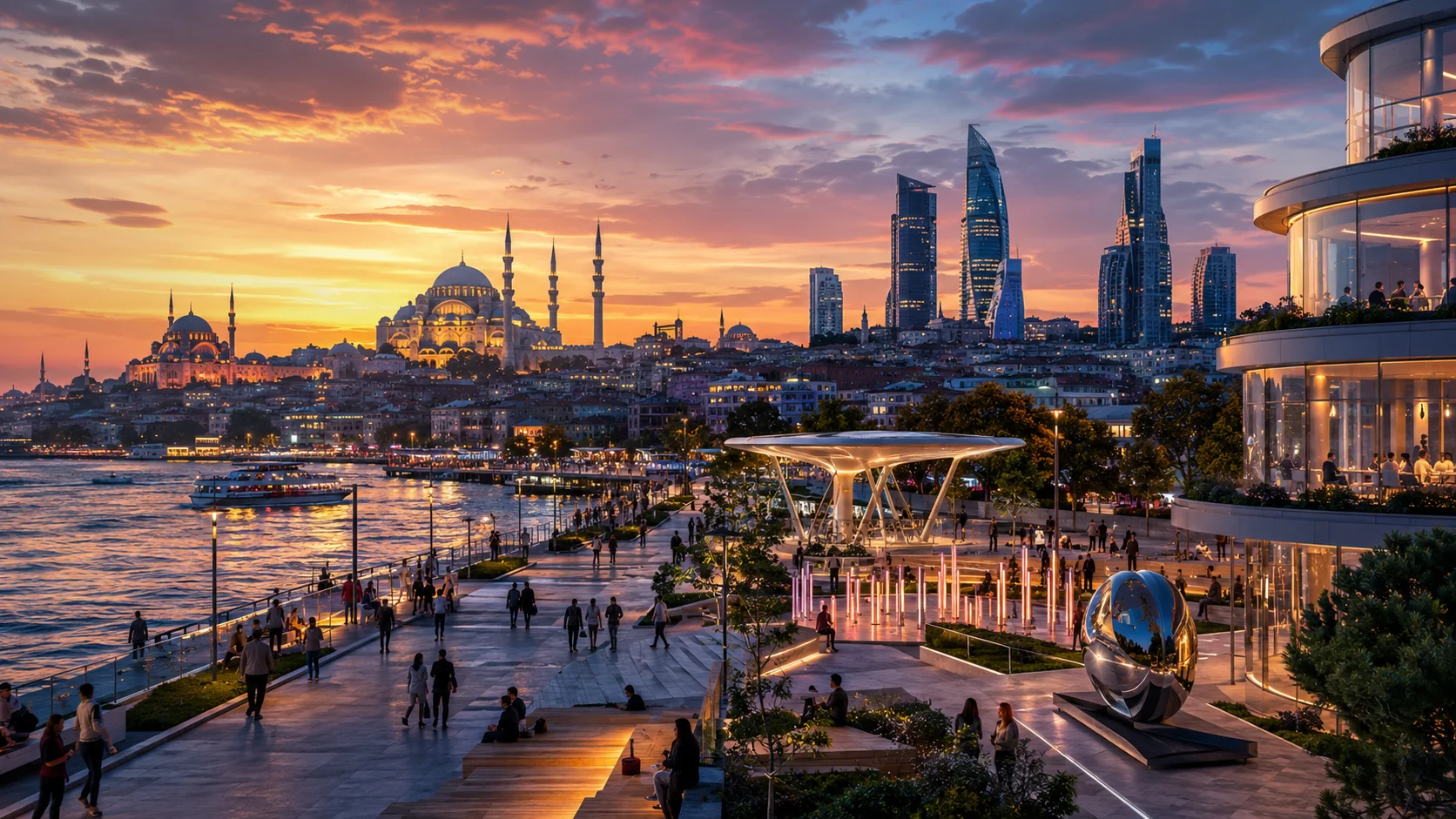
Future city design is no longer a distant concept reserved for glossy renderings, science fiction skylines, or expensive urban masterplans that live inside private boardrooms. In Istanbul, the conversation has started to feel much more alive, much more public, and much more urgent, because the city itself is the perfect stage for asking what tomorrow’s urban life should look like. The recent Global Design Forum Istanbul placed architects, designers, urban thinkers, artists, cultural voices, and public audiences into one shared dialogue about how cities can evolve without losing their soul. Instead of treating design as decoration, the forum framed it as a tool for survival, adaptation, identity, and connection. That is exactly why the story matters for future city design, because Istanbul showed how the next chapter of urban living may depend less on building higher and faster, and more on designing smarter, kinder, and more human spaces.
Istanbul has always been more than a city on a map, and that is what made this design moment feel different from a typical conference. It sits between continents, cultures, histories, trade routes, religions, architectural languages, and daily rhythms that refuse to fit into one neat label. When a global design forum lands in a place like this, the city does not become a passive backdrop; it becomes part of the argument. Every street, courtyard, ferry route, palace wall, market corner, and waterfront view adds another layer to the question of how humans should live together in dense, changing urban environments. In that sense, Istanbul did not just host a discussion about the future of cities; it acted like a living case study for how old and new worlds can collide, negotiate, and sometimes create something unexpectedly fresh.
Why Istanbul Matters in Future City Design
To understand why future city design feels so relevant in Istanbul, you have to look at the city as both a memory archive and a pressure cooker. It carries ancient architecture, layered neighborhoods, public rituals, and visual traditions that still shape daily life, but it also faces the same twenty-first-century stress points seen across the world. Cities today are dealing with climate anxiety, housing tension, mobility problems, rising tourism pressure, digital transformation, cultural fragmentation, and the need for public spaces that feel safe and inclusive. Istanbul makes these issues visible because it is dense, symbolic, beautiful, complicated, and constantly moving. When designers gather there, they are not speaking into an abstract future; they are standing inside a place where the future is already pushing against the past in real time.
The forum’s strongest visual message was that a city can become a design platform without turning into a sterile showroom. Instead of limiting the conversation to polished interiors or closed expert panels, the program stretched across talks, installations, screenings, public events, and city-based routes. That approach matters because urban design is not only about what professionals create, but also about how ordinary people experience movement, shade, gathering, waiting, looking, resting, and belonging. A bench, a courtyard, a temporary installation, a renovated building, or a public route can change how someone reads a city. In Istanbul, design became something people could encounter through motion, which made the forum feel closer to the pulse of urban life than a traditional design fair.
A City-Wide Forum, Not Just a Conference
One of the most interesting parts of the Istanbul design conversation was its city-wide structure, because it challenged the old idea that major design events need to be contained inside a single venue. The city itself became a network of experiences, connecting historic settings, contemporary ideas, creative practices, and public-facing moments. This matters because the future of urban culture will likely depend on distributed experiences rather than one centralized cultural stage. People no longer interact with cities only through museums, offices, malls, or landmark buildings; they move through overlapping systems of work, leisure, memory, transportation, and digital influence. A forum that spreads through the city mirrors the way modern urban life actually works, where meaning is created across routes instead of locked inside one destination.
This format also makes design feel less exclusive, which is a major shift for younger audiences and digitally native communities. For years, design discourse could feel distant, wrapped in academic language or luxury branding that made it seem reserved for insiders. Istanbul’s forum suggested a different direction, where design becomes a public conversation about how people live, share space, and imagine change. That does not mean every event automatically becomes accessible to everyone, but the city-wide model opens the door to broader participation. For a visual culture platform like Visual Vortixel, this is important because it shows how design news is no longer only about objects, exhibitions, or celebrity architects; it is increasingly about systems, experiences, and cultural impact.
Design as a Response to Urban Pressure
The phrase future city design can sound sleek, but the real story behind it is often uncomfortable. Cities are under pressure from climate disruption, migration, inequality, energy demands, infrastructure gaps, and public health concerns that do not wait for perfect solutions. Design cannot solve all of these issues alone, but it can change how cities respond to them. It can make public space more flexible, buildings more adaptive, materials more responsible, and communities more visible in planning decisions. Istanbul’s forum placed design inside this wider pressure system, which is exactly where the conversation needs to be if it wants to stay relevant beyond aesthetics.
What feels especially current is the idea that the future city should not be imagined only through futuristic architecture. The next city may be defined by repair as much as invention, and by care as much as speed. Adaptive reuse, climate-sensitive materials, pedestrian-first streets, cultural preservation, public seating, water awareness, and neighborhood-scale interventions can be just as important as new towers or smart sensors. Istanbul’s layered urban fabric makes that point naturally, because it shows that cities are never truly blank canvases. They are living palimpsests, and the smartest design approach often starts by reading what is already there before adding something new.
The Rise of Human-Centered Urban Visuals
Visual culture plays a massive role in how people understand future cities, because images shape expectations before policies or buildings do. For years, the dominant image of the future city was metallic, vertical, glassy, and heavily automated. That visual language is not disappearing, but it is being questioned by a new generation that wants cities to feel more breathable, inclusive, local, and emotionally intelligent. The Istanbul conversation fits into that shift because it connected design with memory, culture, public encounter, and urban storytelling. Instead of presenting the future as a clean break from the past, it suggested that future cities may need deeper roots, not fewer of them.
This shift matters because city branding has become visual, viral, and global. A successful urban idea can travel through images, short videos, installation photos, architectural renders, street scenes, and public art moments long before people read a planning document. That gives designers power, but it also gives them responsibility. If future city imagery only sells luxury lifestyles, it risks erasing the people who actually keep cities alive. Istanbul’s design forum hinted at a more layered visual future, where beauty is not separated from social meaning and where the city is seen as a shared cultural body rather than a product shot.
What Designers Can Learn From Istanbul
For designers, architects, urbanists, and creative teams, Istanbul offers one of the clearest reminders that context is not optional. A design idea that looks impressive in isolation can fail when it ignores local rhythms, climate realities, social habits, and historical memory. The future city cannot be copied and pasted from one region to another, because people do not live inside universal templates. They live inside specific streets, languages, rituals, materials, weather patterns, transport habits, and cultural expectations. That is why Istanbul’s design conversation feels useful beyond Turkey, because it pushes the global industry to think less like a style machine and more like a listening system.
Another practical lesson is that design events can become more meaningful when they connect with the physical city around them. Creative professionals often talk about placemaking, but events themselves sometimes ignore place by using the same stage layouts, white booths, branded panels, and networking formats everywhere. Istanbul showed how a forum can become stronger when it absorbs the character of its host city rather than hiding it behind event infrastructure. That approach creates a richer experience for visitors and a more honest relationship with local culture. It also gives audiences a reason to remember the event as more than a schedule of talks.
Future Cities Need Cultural Intelligence
The most important takeaway from Istanbul may be that future cities need cultural intelligence as much as technological intelligence. Smart city tools, data systems, mobility apps, energy dashboards, and digital infrastructure can help urban life function better, but they cannot automatically create belonging. A city can be efficient and still feel cold, optimized and still feel unequal, connected and still feel lonely. Cultural intelligence asks different questions about memory, identity, ritual, public trust, and emotional connection. In a city like Istanbul, those questions are impossible to ignore because the built environment carries centuries of meaning in every direction.
This is where urban design becomes more than planning and enters the realm of cultural storytelling. A public square can tell people whether they are welcome, a transit hub can shape daily dignity, and a waterfront can become either a shared civic space or a privatized postcard. The same is true for lighting, signage, seating, shade, public art, and the material language of buildings. None of these details are small when millions of people experience them repeatedly. Future city discussions that ignore these human layers risk producing impressive systems that fail emotionally, and that is why Istanbul’s layered identity made the forum feel especially relevant.
The Gen Z Lens on Urban Futures
Gen Z is entering the urban conversation with a different set of expectations, and that changes the way design forums are received. Younger audiences are less impressed by empty futurism and more interested in whether cities are livable, ethical, climate-aware, affordable, diverse, and visually meaningful. They are also used to reading spaces through images, reels, maps, posts, reviews, and digital communities, which means city identity now circulates faster than ever. A design forum in Istanbul does not only speak to professionals sitting in a room; it also speaks to online audiences watching how the city presents itself as a global creative node. That visibility can turn urban design into a cultural conversation far beyond the event itself.
For Gen Z creatives, the future city is not just about architecture; it is about lifestyle, access, identity, and agency. They want walkable neighborhoods, inspiring public spaces, safer streets, better third places, greener infrastructure, and cultural scenes that do not feel locked behind privilege. They also care about authenticity, which means they can quickly sense when a city uses design only as branding without improving real life. Istanbul’s forum lands inside that tension between image and impact. The opportunity is huge, because when a city can connect strong visuals with real public value, it becomes more than photogenic; it becomes meaningful.
How Public Space Became the Main Character
Public space is having a major comeback in global design conversations, and Istanbul’s forum fits perfectly into that wider trend. After years of digital acceleration, remote work shifts, climate stress, and social fragmentation, people are rethinking what shared urban life should feel like. Parks, plazas, markets, waterfronts, libraries, cultural routes, and pedestrian streets are no longer side details in city planning. They are becoming the emotional infrastructure of urban life, because they shape how people gather, rest, protest, celebrate, and simply exist together. In this context, design culture becomes directly connected to civic health.
Istanbul’s public-facing design energy shows why this matters. A city with deep history and intense movement cannot rely only on private interiors or iconic buildings to define its future. Its public spaces must carry the weight of everyday life, tourism, culture, memory, and change. When design activates these spaces, it can help people notice their city differently and imagine alternative uses for familiar places. That is one of the quiet powers of installations, routes, and temporary interventions: they do not always need to be permanent to shift public imagination.
The Impact on Global Design Conversations
The Istanbul forum also signals a broader decentralization of global design discourse. For a long time, the biggest design conversations were heavily associated with a familiar circuit of Western capitals and elite industry events. That circuit still matters, but the global design map is clearly expanding, and cities like Istanbul can bring different questions to the center. Its position between regions gives it a unique ability to host conversations about exchange, conflict, hybridity, migration, craft, heritage, and modernization. These are not side topics anymore; they are some of the defining issues of contemporary urban culture.
This decentralization is healthy because the future city cannot be designed from one worldview. A climate solution that works in one context may not work in another, just as a mobility model, housing strategy, or public space concept may need local adaptation. Global forums become more valuable when they allow multiple urban realities to speak rather than presenting one dominant vision of progress. Istanbul’s role in this conversation feels timely because it naturally resists simple categories. It reminds the design world that the future may be plural, messy, negotiated, and deeply shaped by cultural geography.
Practical Insights for Creative Teams
Creative teams watching Istanbul’s design moment can take several useful lessons into their own work. First, future-facing projects should begin with context research that goes beyond mood boards and trend reports. Designers need to understand how people move, gather, remember, buy, rest, and interact with public systems before proposing visual or spatial solutions. Second, storytelling should not be treated as an afterthought, because people connect with cities through narratives as much as infrastructure. Third, design should be tested against real human experience, not only against aesthetic standards or presentation value.
There is also a strong lesson for publishers, curators, and cultural platforms. The best design stories today are rarely just about objects; they are about relationships between objects, spaces, people, and systems. A chair can tell a story about material culture, a street installation can tell a story about civic imagination, and a forum can tell a story about how a city wants to be seen by the world. For Visual Vortixel, that means the Istanbul topic is not only architecture news. It is a lens for exploring how visual culture helps cities explain themselves during a period of global uncertainty.
Why the Future City Must Feel Human
The biggest mistake in future city design is assuming that the future must look cold, hyper-polished, and disconnected from everyday emotion. People do not experience cities as diagrams, even if planners need diagrams to manage them. They experience cities through heat, noise, smell, light, memory, convenience, frustration, beauty, danger, surprise, and belonging. A future city that ignores those emotional layers may function on paper but fail in daily life. Istanbul’s design conversation matters because it points toward a more human version of urban futurism, where design is not only about what comes next, but also about what deserves to remain.
This human focus is especially important as artificial intelligence, automation, and digital planning tools become more common in urban development. Technology can help map patterns, reduce waste, optimize movement, and improve services, but it cannot replace the need for cultural judgment. Cities are not software products with simple updates and clean version histories. They are emotional ecosystems shaped by conflict, memory, habit, and hope. The future city will need data, but it will also need empathy, and design is one of the few fields capable of translating both into lived experience.
Conclusion: Istanbul Points to a Softer Urban Future
In the end, Istanbul’s design forum did more than spotlight a creative event; it opened a bigger conversation about what cities can become when history, culture, technology, and public life are allowed to speak together. The strongest version of future city design will not be defined only by taller skylines, smarter devices, or cleaner renderings. It will be defined by places that help people feel connected, protected, inspired, and included while still adapting to the pressures of a changing planet. Istanbul matters because it shows that the future does not have to erase the past to feel modern. It can build from memory, move through complexity, and still imagine something brave enough for tomorrow.