
PhotoVogue MENA Redefines Visual Storytelling
 Vortixel
14 minutes read
Vortixel
14 minutes read
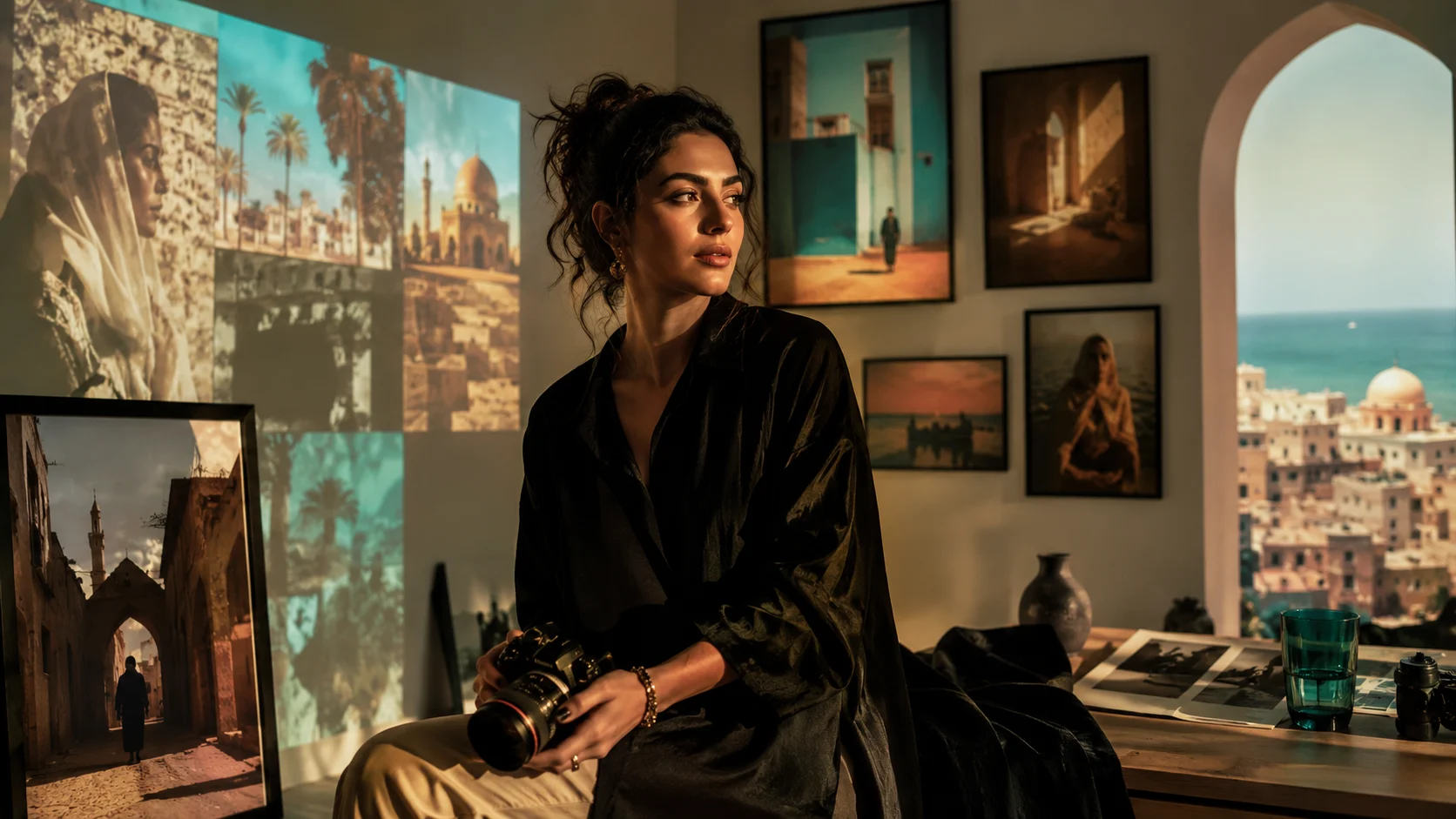
PhotoVogue MENA is arriving at a moment when the global image economy is being questioned, stretched, and reimagined by artists who no longer want their regions reduced to easy visual codes. The new MENA Panorama open call gives photographers, video makers, and multimedia artists from the Middle East, North Africa, and their diasporas a wider stage to tell stories with complexity, intimacy, and control. It is not just another opportunity for visibility, because visibility alone can feel shallow when the frame is still shaped by outside expectations. What makes this initiative feel current is its insistence that visual storytelling from the MENA region can be layered, contradictory, stylish, political, personal, experimental, and deeply human at the same time. In an era where images move faster than context, PhotoVogue MENA feels like a push toward slower looking, sharper listening, and a more responsible way of seeing.
The timing matters because audiences today are surrounded by images yet still underexposed to the people behind them. Social platforms have made photography feel instant, but they have also made visual culture easier to flatten into trends, aesthetics, and quick emotional reactions. For artists from regions often filtered through conflict, exoticism, luxury, nostalgia, or crisis, the challenge is not only to create beautiful work but to interrupt the predictable lens placed on them. The MENA Panorama open call responds to that challenge by asking for work with a strong point of view, not just polished technique. It recognizes that the most important visual stories are often those that refuse to perform neatly for a global audience.
Why PhotoVogue MENA Feels Bigger Than an Open Call
At first glance, PhotoVogue MENA may look like a regional talent search, but its deeper meaning sits in how it expands the conversation around authorship. For decades, many images of the Middle East and North Africa circulated through outside cameras, outside headlines, and outside cultural assumptions. Those images were not always false, but they were often incomplete, because they left little room for ordinary life, humor, softness, experimentation, youth culture, fashion codes, family memory, and private forms of resistance. A platform built around artists from the region and its diaspora changes that balance by moving the creator closer to the center of interpretation. It says that the people living within these histories should not only be subjects of the image, but also designers of the visual language itself.
This matters especially now because visual culture is no longer contained inside galleries, magazines, or museums. A single photograph can cross continents in seconds, but the meaning attached to it can shift depending on who reposts it, captions it, crops it, or places it inside a larger narrative. When artists are given stronger platforms to present their own work, the image gains more than exposure; it gains context, intention, and ethical weight. That is why MENA visual storytelling has become such a relevant conversation for the global creative industry. The question is not whether the world has seen the region before, but whether it has been taught to see it with enough patience and depth.
A New Frame for Identity, Belonging, and Memory
The most compelling part of the initiative is its focus on themes that already shape contemporary image-making: identity, belonging, memory, displacement, culture, and social change. These themes are not abstract ideas for many MENA artists, because they often live inside family archives, city streets, inherited rituals, migration stories, and daily negotiations between tradition and modernity. A portrait can become a conversation about gender, a fashion image can carry questions about heritage, and a documentary sequence can reveal how public life changes under pressure. The strength of PhotoVogue MENA lies in allowing these genres to sit beside one another instead of separating art from journalism, fashion from politics, or personal memory from public history. That mix feels honest because real life in the region, like anywhere else, rarely respects neat categories.
For diaspora artists, the idea of belonging can be even more complicated and visually rich. Many live between languages, cities, names, family expectations, and inherited memories of places they may know intimately or only through stories. Their images can carry a double vision, looking both toward the region and away from it, both inside and outside the cultures that shaped them. That tension can create some of the strongest work because it refuses a single definition of home. In this sense, PhotoVogue MENA is not only about geography, but also about emotional maps that cross borders, generations, and identities.
The Rise of Regional Visual Storytelling
The global art and media industries have been moving toward regional storytelling for years, but the shift has become more urgent as audiences grow tired of generic international aesthetics. The old idea of a universal visual language often meant that certain regions had to translate themselves for Western approval, while others were treated as the default center of taste. Today, younger artists are less interested in smoothing out local references for easy consumption. They are building images from dialects, street textures, family gestures, spiritual symbols, fashion subcultures, environmental anxieties, and digital life. This is where PhotoVogue MENA becomes important, because it supports visual work that can be global without becoming culturally diluted.
Regional storytelling also has commercial impact, even when the work itself is not designed as a market product. Brands, magazines, museums, festivals, and cultural institutions are increasingly searching for visual voices that feel specific rather than interchangeable. The audience can sense when an image has been created from lived knowledge rather than trend research. That creates space for photographers and multimedia artists who bring fresh visual grammar to fashion, documentary, portraiture, fine art, and experimental media. For Visual Vortixel readers who follow visual culture, this shift is one of the clearest signs that the future of image-making will be more decentralized, more multilingual, and more rooted in place.
Photography Is No Longer the Only Language
One of the smartest aspects of the open call is that it does not limit visual storytelling to traditional photography alone. By welcoming video and multimedia projects, PhotoVogue MENA acknowledges how artists actually work today. Many image-makers move across still images, moving images, sound, installation, digital archives, AI-adjacent tools, and online formats without feeling bound to one discipline. This matters because the stories being told are often too layered for a single frame, especially when dealing with memory, displacement, climate pressure, identity, or rapidly changing urban life. The broader format gives artists permission to build visual worlds instead of simply submitting isolated images.
This expansion also reflects a wider shift in how audiences experience art. A younger viewer may encounter a project first through a short video clip, then find the full series online, then see it later in an exhibition, and finally follow the artist’s process through social media. The boundary between portfolio, archive, publication, and performance has become more fluid. Artists who understand this landscape are not just making images; they are shaping how those images live, travel, and gather meaning over time. That makes MENA visual storytelling especially powerful when it combines documentary sensitivity with contemporary digital fluency.
Beyond Stereotypes and Into Visual Complexity
The phrase “beyond stereotypes” can sound simple, but in visual culture it is a serious creative and political task. Stereotypes survive because they are efficient; they give viewers a quick way to categorize what they see without doing the harder work of interpretation. The MENA region has often been framed through a narrow set of images that emphasize desert landscapes, ancient monuments, war zones, veils, oil wealth, political unrest, or cinematic exoticism. None of these visual elements are automatically invalid, but they become limiting when they dominate the entire imagination of a region. PhotoVogue MENA challenges artists to complicate that imagination by showing everyday contradictions, unexpected beauty, and personal truth.
Visual complexity does not mean making images that are difficult for the sake of being difficult. It means allowing an image to hold more than one feeling at once, such as pride and grief, elegance and tension, memory and disruption, intimacy and public pressure. A young photographer might document nightlife in a changing city, while another explores inherited clothing as a form of family memory. A video artist might examine environmental anxiety through coastal landscapes, while a portrait maker might focus on quiet gestures of self-definition. Together, these approaches make PhotoVogue MENA feel less like a single campaign and more like an expanding archive of how a region sees itself.
Fashion, Documentary, and Fine Art Start Blending
The most exciting visual work today often happens in the space between categories. Fashion photography can borrow the emotional charge of documentary, documentary can use the staging and symbolism of fine art, and fine art can absorb the immediacy of social media or street culture. This blending is especially relevant for PhotoVogue MENA, because artists from the region and diaspora are working with visual traditions that already mix personal, political, and aesthetic codes. Clothing can become a record of migration, architecture can become a portrait of power, and the body can become a site where history and modern identity meet. The result is a visual field that feels alive because it refuses to stay in one lane.
For the fashion world, this kind of storytelling is a reminder that style is never just surface. In MENA contexts, fabric, silhouette, modesty, ornament, streetwear, craft, and luxury can all carry cultural meaning depending on who is wearing them and how they are photographed. A strong image can make fashion feel like biography rather than consumption. It can reveal how young people remix heritage, how families preserve identity through objects, and how cities become backdrops for new visual codes. That is why MENA photography is increasingly relevant not only to art audiences, but also to editors, creative directors, designers, and visual researchers searching for the next language of contemporary style.
What the Grants and Festival Pathway Signal
The grant structure behind the initiative gives the project practical weight, because visibility without support can leave artists admired but under-resourced. With awards designed for outstanding vision, strong creative direction, and rising voices, the open call recognizes that artists need more than applause to continue developing serious work. Financial support can help with production costs, equipment, travel, research, editing, printing, or simply the time required to complete a project with care. The pathway toward festival presentation and portfolio reviews also matters because it places artists inside professional networks that can lead to commissions, exhibitions, publication, and long-term mentorship. For emerging creators, those doors can be just as important as the prize itself.
This is also where PhotoVogue MENA becomes part of a larger infrastructure for creative careers. Many talented image-makers do not lack vision; they lack access to the rooms where that vision can be seen by the right people. A regional open call can help reduce that distance by creating a bridge between local practice and global platforms. It also gives curators and editors a more direct way to discover work outside the usual circuits of art schools, Western capitals, and established gallery systems. That kind of access does not solve every inequality in the creative industry, but it can shift the map in meaningful ways.
The Gen Z Lens: Personal, Political, and Online
Gen Z artists are entering visual culture with a different sense of what an image is supposed to do. They grew up watching personal identity become content, politics become visual language, and global events unfold through screens in real time. For them, the camera is not only a tool of documentation; it is also a tool of self-positioning, critique, healing, and community building. In the context of PhotoVogue MENA, this generational lens could bring work that feels emotionally direct without being simplistic. It could also bring projects that understand how images circulate online and how quickly meaning can be amplified, distorted, or reclaimed.
This does not mean younger artists are automatically more authentic or innovative, because strong visual storytelling depends on discipline as much as instinct. Still, many emerging creators are less patient with outdated expectations of what regional art should look like. They may be more willing to mix family archives with fashion shoots, smartphone footage with cinematic video, or intimate portraits with broader social questions. They are also more aware of the politics of representation, because they have seen how quickly a powerful image can become a simplified symbol. That awareness could make MENA visual storytelling more self-critical, more experimental, and more emotionally precise.
The Impact on Global Visual Culture
The impact of PhotoVogue MENA will not only be measured by which artists are selected. Its larger influence may come from how it encourages viewers, editors, and institutions to rethink what visual authority looks like. When more artists from the region and its diaspora enter global conversations on their own terms, the center of contemporary photography becomes harder to define. That is a good thing, because visual culture grows stronger when it has multiple centers rather than one dominant taste-making direction. The result is a richer ecosystem where images can challenge each other, speak across borders, and resist becoming decorative proof of diversity.
For audiences, this could mean encountering the MENA region through stories that feel less expected and more lived-in. Instead of only seeing images attached to crisis, tourism, or luxury, viewers may see work about friendship, queerness, motherhood, architecture, youth, ecology, grief, humor, faith, fashion, and ordinary routines. That range is essential because a region becomes visually human when it is allowed to be inconsistent. No place should be forced into one mood, one color palette, or one political meaning. By supporting artists who can hold that range, PhotoVogue MENA may help reshape how global audiences read the region through images.
Practical Insights for Emerging Visual Artists
For artists thinking about this kind of opportunity, the biggest lesson is that strong work begins with a clear point of view. A technically beautiful image can still feel forgettable if it does not reveal why it needed to exist. The most memorable submissions will likely be those that understand their own stakes, whether they are personal, cultural, political, environmental, or emotional. Artists should think carefully about the relationship between subject, form, and audience, because a project about identity may require a different rhythm than a project about urban change or family memory. In a space like PhotoVogue MENA, clarity does not mean simplifying the story; it means knowing what tension the work is trying to hold.
Another practical insight is to build projects as bodies of work, not just collections of strong individual images. A portfolio can impress with single frames, but a visual series builds trust through sequence, pacing, and emotional development. Artists should ask whether the viewer can feel a beginning, a shift, and a lasting impression after moving through the work. They should also consider how captions, titles, and project statements can deepen the images without overexplaining them. The best visual storytelling often gives viewers enough guidance to enter the work while still leaving room for interpretation.
For editors, curators, and creative directors, the practical takeaway is equally important. Discovering regional talent should not be treated as a seasonal diversity exercise or a quick trend in global aesthetics. It requires sustained attention, fair commissioning practices, careful editing, and a willingness to let artists define the terms of their own visual language. Platforms that engage with MENA artists should avoid asking them to constantly explain their cultures for outsiders or reproduce the same symbols that have already been overused. If PhotoVogue MENA succeeds, it will show that responsible visual discovery is not about extracting fresh style, but about building long-term creative relationships.
Why This Moment Matters for Visual Vortixel Readers
For readers interested in design, photography, media, and visual trends, this initiative is a signal of where the creative world is heading. The future will not be shaped only by big studios, famous museums, established fashion capitals, or algorithm-friendly aesthetics. It will also be shaped by artists who work from specific cultural positions and still speak to global questions about identity, memory, climate, migration, gender, and belonging. PhotoVogue MENA stands at that intersection, where regional storytelling becomes part of a wider transformation in how images are produced and valued. It reminds us that visual culture is not just about what looks new, but about who finally gets to define what newness means.
The initiative also asks viewers to become more visually literate. Looking at images from the MENA region should not be an exercise in confirming what one already believes about the place. It should be an invitation to notice composition, context, silence, gesture, contradiction, and the choices made by the artist. This kind of viewing is slower, but it is also more rewarding because it treats images as layered cultural documents rather than disposable content. In that sense, PhotoVogue MENA is not only supporting artists; it is also training audiences to look with more responsibility.
Conclusion: A New Visual Chapter Is Opening
PhotoVogue MENA arrives with the energy of a new chapter, but its importance goes beyond one open call or one festival pathway. It reflects a broader shift in global image-making, where artists from the Middle East, North Africa, and their diasporas are not waiting to be interpreted from the outside. They are building their own frames, questioning inherited narratives, and creating work that can be tender, confrontational, elegant, experimental, and socially aware. That complexity is exactly what contemporary visual culture needs at a time when images are everywhere but deep seeing is still rare. If the project reaches its full potential, PhotoVogue MENA will not just spotlight new artists; it will help expand the way the world understands visual storytelling itself.