
Real-Time AI Video Editing Changes Creator Game
 Vortixel
7 minutes read
Vortixel
7 minutes read
The Rise of Real-Time AI Video Editing
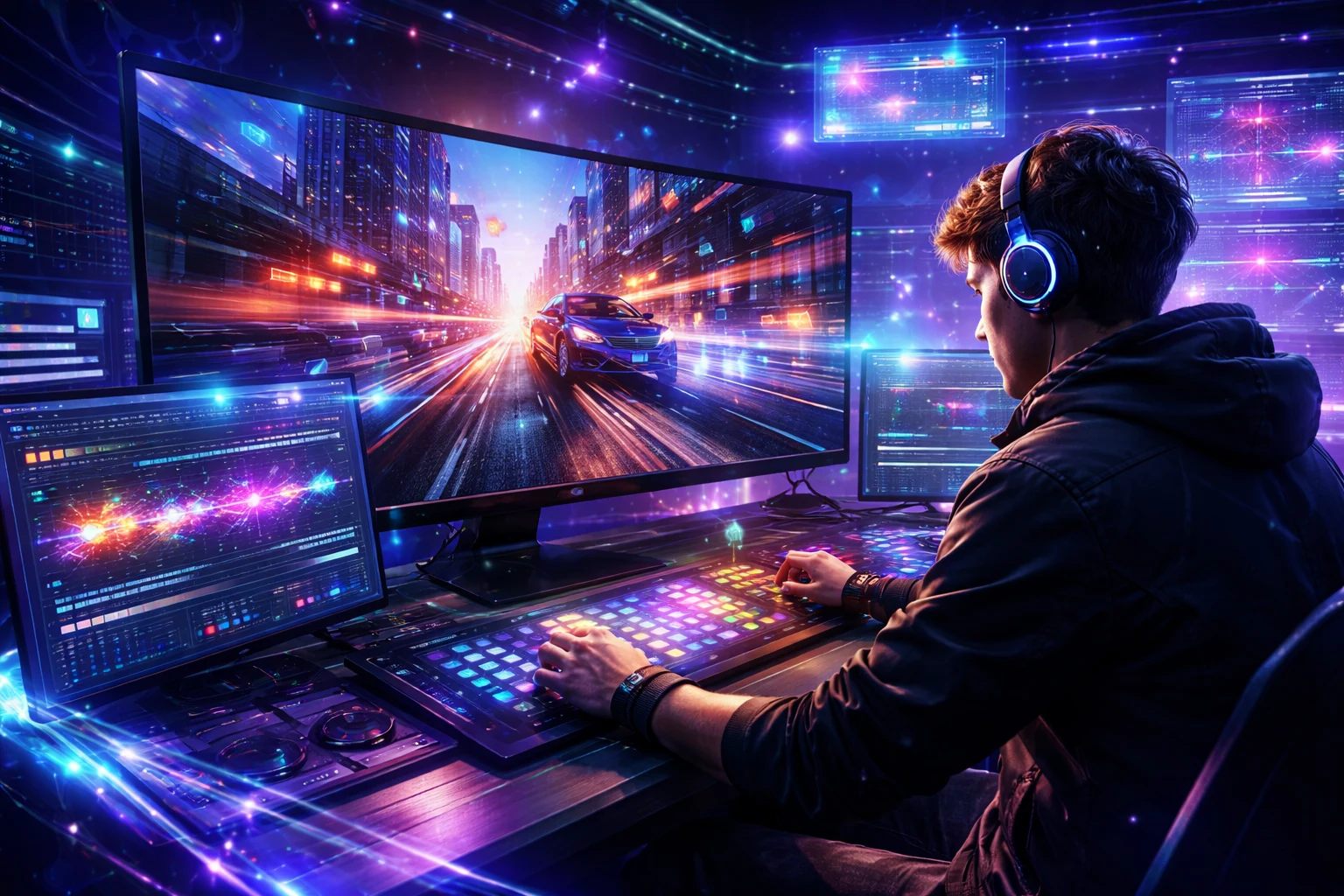
The real-time AI video editing revolution is no longer a concept stuck in tech demos or experimental labs. It is happening right now, reshaping how creators, filmmakers, and digital storytellers approach content production in 2026. What used to take hours of rendering, manual keyframing, and post-production adjustments can now be done instantly, thanks to the latest advancements in AI-powered visual tools. This shift is not just about speed, but about redefining creativity itself, allowing creators to think, experiment, and publish at the same pace as their ideas.
At the center of this transformation is a new generation of AI systems capable of analyzing video frames in real time, understanding context, and applying edits dynamically. Tools inspired by innovations like Adobe’s MotionStream AI are pushing boundaries by enabling drag-and-drop scene manipulation, camera repositioning, and object editing without the need for re-rendering. This means creators can adjust scenes on the fly, test multiple creative directions instantly, and deliver polished results in record time.
The implications of this shift are massive. For Gen Z creators who thrive on speed, trends, and instant engagement, AI video editing tools are becoming essential rather than optional. The ability to produce high-quality visuals quickly aligns perfectly with the fast-paced nature of platforms like TikTok, YouTube Shorts, and Instagram Reels, where timing and consistency often determine success.
How Real-Time AI Editing Actually Works
To understand why this technology is so disruptive, it’s important to break down how real-time AI editing differs from traditional workflows. In conventional video production, editing involves processing raw footage, applying effects, rendering frames, and exporting the final product. Each step consumes time and computing resources, especially when dealing with high-resolution formats like 4K or 8K.
With AI-driven editing systems, the process is fundamentally different. Instead of rendering after each change, AI models interpret visual data instantly. They recognize objects, lighting conditions, camera angles, and motion patterns, then apply adjustments in real time. This is made possible by advanced machine learning models trained on massive datasets of visual content.
The result is a seamless editing experience where creators can:
- Adjust camera angles dynamically
- Move objects within a scene instantly
- Change lighting and color grading in real time
- Apply cinematic effects without rendering delays
- Preview final output instantly
This shift eliminates one of the biggest bottlenecks in content creation: waiting. In a world where speed equals relevance, removing that delay changes everything.
Why This Matters for Creators in 2026
The impact of real-time AI video editing goes far beyond convenience. It fundamentally changes how creators think about storytelling and production. Instead of planning every detail in advance, creators can now experiment freely, iterate quickly, and refine their content on the go.
For independent creators, this means leveling the playing field. High-quality production is no longer limited to studios with expensive equipment and large teams. With AI tools, a single creator can produce content that rivals professional productions. This democratization of creativity is one of the most important trends shaping the digital economy.
For agencies and brands, the benefits are equally significant. Marketing campaigns can be produced faster, adapted in real time, and optimized based on audience feedback. Instead of waiting days for edits, teams can create multiple versions of a video within hours, test them across platforms, and scale what works.
Key Advantages of AI Video Editing
- Faster production timelines
- Lower costs for post-production
- Increased creative flexibility
- Real-time collaboration possibilities
- Better adaptation to trending content
These advantages explain why AI video tools are rapidly becoming the backbone of modern content strategies.
From Manual Editing to AI Automation
The transition from manual editing to AI-powered automation represents a major shift in creative workflows. Traditional editing required technical skills, patience, and a deep understanding of software tools. While those skills are still valuable, AI is reducing the barrier to entry significantly.
Creators no longer need to master complex timelines or spend hours learning advanced editing techniques. Instead, they can focus on storytelling, ideas, and audience engagement. AI handles the technical heavy lifting, allowing creators to stay in their creative zone.
This doesn’t mean human creativity is being replaced. In fact, the opposite is happening. By removing repetitive tasks, AI is giving creators more time to think, experiment, and innovate. The role of the editor is evolving from technician to creative director.
The Role of Generative AI in Video Editing
Another key driver behind this trend is the rise of generative AI, which enables systems to create visual content rather than just modify it. In the context of video editing, this means AI can generate backgrounds, enhance scenes, and even create entirely new elements within a video.
For example, creators can:
- Replace backgrounds without green screens
- Generate realistic visual effects instantly
- Enhance low-quality footage automatically
- Create cinematic scenes from simple inputs
This capability opens up new creative possibilities that were previously impossible or extremely expensive to achieve. It also blurs the line between production and post-production, merging them into a single, continuous process.
Real-Time Collaboration and Cloud Workflows
One of the most underrated aspects of AI video editing is its impact on collaboration. With cloud-based AI tools, multiple creators can work on the same project simultaneously, making adjustments in real time and seeing the results instantly.
This is particularly important in a global creative ecosystem where teams are often distributed across different locations. Real-time collaboration eliminates delays, reduces miscommunication, and speeds up decision-making.
For agencies and production teams, this means:
- Faster feedback loops
- Improved team coordination
- More efficient project management
- Reduced turnaround times
In a competitive digital landscape, these advantages can make a significant difference.
Challenges and Limitations of AI Editing
Despite its benefits, real-time AI video editing is not without challenges. One of the main concerns is the potential loss of originality. As more creators rely on AI tools, there is a risk that content may become more uniform, with similar styles and effects being used across platforms.
Another challenge is the learning curve associated with new tools. While AI simplifies many aspects of editing, creators still need to understand how to use these tools effectively to achieve the best results.
There are also technical limitations. Real-time processing requires powerful hardware or cloud infrastructure, which may not be accessible to everyone. Additionally, AI models are not perfect and may sometimes produce unexpected or inaccurate results.
Common Challenges
- Risk of creative uniformity
- Dependence on AI tools
- Hardware and infrastructure requirements
- Occasional inaccuracies in AI outputs
Addressing these challenges will be crucial as the technology continues to evolve.
The Future of AI Video Editing
Looking ahead, the future of AI video editing is incredibly promising. As AI models become more advanced, we can expect even greater levels of automation, realism, and creative control. Real-time editing will likely become the standard rather than the exception.
Future developments may include:
- Fully AI-generated video production pipelines
- Personalized editing styles based on user preferences
- Integration with AR and VR environments
- Advanced storytelling tools powered by AI
These innovations will continue to push the boundaries of what is possible in digital content creation.
Impact on the Creative Industry
The rise of real-time AI editing tools is already having a profound impact on the creative industry. Traditional roles are evolving, new opportunities are emerging, and the definition of creativity is being redefined.
For aspiring creators, this is an exciting time. The barriers to entry are lower than ever, and the tools available are more powerful than ever. At the same time, competition is increasing, making it essential for creators to stand out through originality and storytelling.
For established professionals, adapting to these changes is crucial. Embracing AI tools can enhance productivity and open up new creative possibilities, while resisting change may lead to falling behind.
Why Speed is the New Currency
In 2026, speed is more than just an advantage. It is a necessity. The ability to produce and publish content بسرعة determines visibility, engagement, and ultimately success. Real-time AI video editing aligns perfectly with this reality, enabling creators to keep up with trends and respond to audience demands instantly.
This is especially relevant in the era of short-form content, where trends can rise and fall within hours. Being able to create, edit, and publish content quickly can make the difference between going viral and being overlooked.
Conclusion: A New Era of Creative Freedom
The emergence of real-time AI video editing marks the beginning of a new era in digital creativity. By eliminating traditional limitations and empowering creators with powerful tools, AI is transforming the way content is produced, shared, and experienced.
This is not just a technological shift. It is a cultural shift. Creativity is becoming more accessible, more dynamic, and more collaborative. For creators willing to embrace these changes, the opportunities are endless.
As AI continues to evolve, one thing is clear: the future of content creation will be faster, smarter, and more creative than ever before.