

AI Filmmaking Enters Global Education 2026
 Vortixel
8 minutes read
Vortixel
8 minutes read
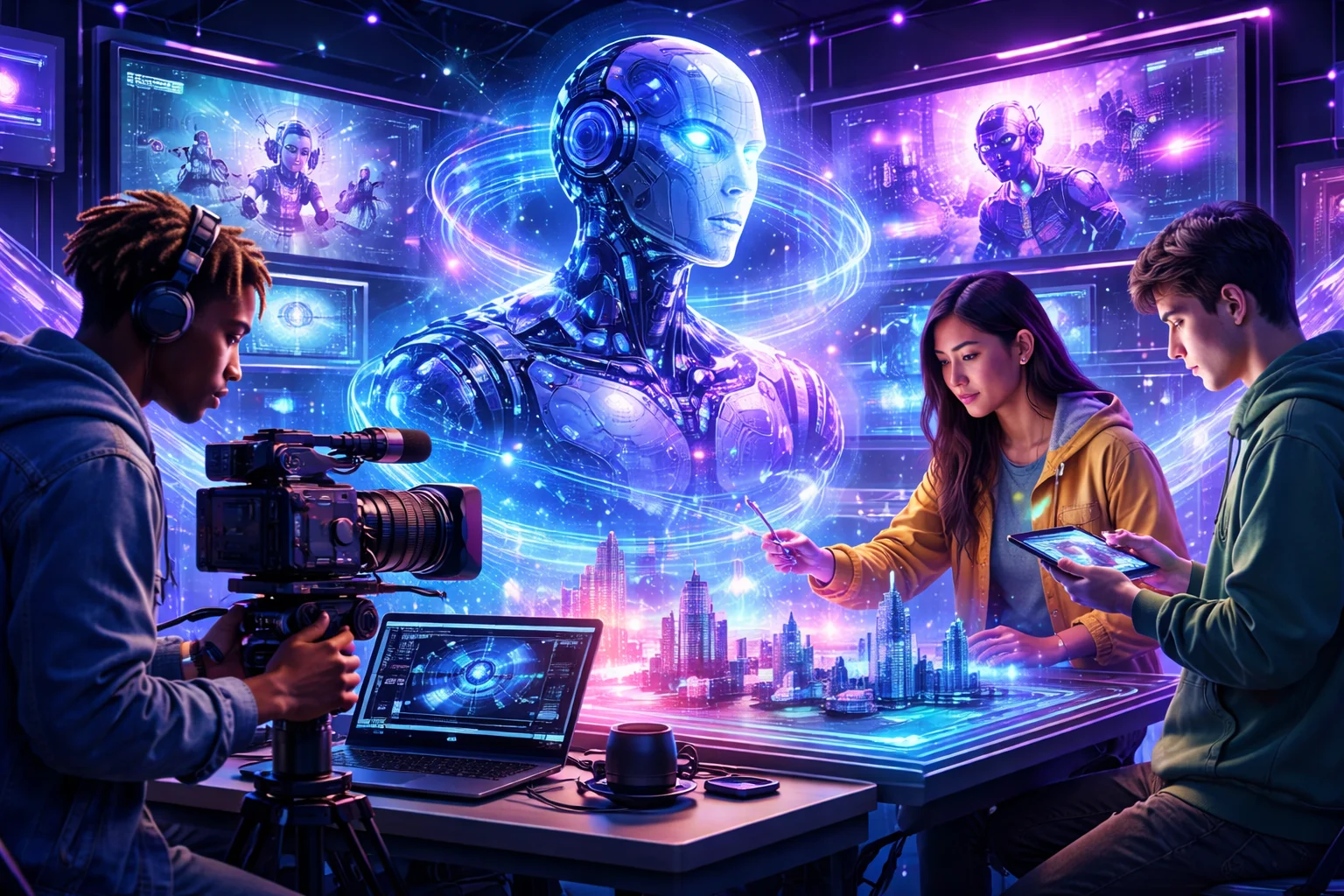
The rise of AI filmmaking is no longer just a headline—it is now a structural shift happening inside classrooms, studios, and creative institutions around the world. In 2026, one of the most disruptive changes in creative education is the formal integration of AI-powered filmmaking into academic curricula. What was once experimental is now becoming standardized, as universities, film schools, and online platforms begin teaching students how to create films using generative AI tools, automation pipelines, and machine-assisted storytelling systems. This shift is not just about adopting new technology, but about redefining what it means to be a filmmaker in an era where creativity is augmented by algorithms.
The concept of AI filmmaking education reflects a deeper transformation across the global creative economy. Students are no longer trained solely in camera techniques, editing software, or directing actors. Instead, they are learning how to prompt AI models, generate scenes, simulate lighting environments, and even produce entire narratives using synthetic actors and virtual production tools. This evolution signals a major turning point where storytelling becomes a hybrid process—part human imagination, part machine execution.
The Rise of AI Filmmaking in Education
In 2026, film schools across the United States, Europe, and Asia are actively redesigning their programs to include AI filmmaking modules. Institutions that once focused heavily on traditional cinematography are now introducing courses on generative video AI, prompt engineering for storytelling, and AI-assisted editing workflows. This change is driven by the rapid advancement of tools capable of producing cinematic visuals with minimal resources.
The shift is also fueled by industry demand. Studios, production houses, and streaming platforms are increasingly looking for creators who understand how to leverage AI in production pipelines. As a result, education systems are adapting quickly to ensure graduates remain relevant in a competitive and rapidly evolving market. This alignment between education and industry is one of the key drivers behind the mainstream adoption of AI filmmaking as a formal discipline.
Another important factor is accessibility. AI tools significantly lower the barrier to entry for filmmaking. Students who previously needed expensive cameras, lighting equipment, and large crews can now produce high-quality content using AI-driven platforms. This democratization of filmmaking is one of the strongest arguments for integrating AI into education, as it opens doors for a new generation of creators who may not have had access to traditional resources.
What Students Are Learning in 2026
The curriculum of AI filmmaking programs in 2026 is fundamentally different from traditional film education. While core storytelling principles remain essential, the technical components have evolved dramatically. Students are now learning how to combine creative direction with computational thinking.
One of the most important skills being taught is prompt-based storytelling, where students learn how to guide AI systems to generate specific scenes, moods, and narratives. This requires a deep understanding of language, context, and visual composition. Writing a prompt is no longer a simple instruction—it is a creative act that determines the outcome of an entire scene.
Another key area is AI-driven visual generation. Students are trained to use advanced tools that can create realistic environments, characters, and animations. These tools allow filmmakers to experiment with styles and concepts that would be difficult or impossible to achieve using traditional methods. From hyper-realistic simulations to abstract visual storytelling, the possibilities are expanding rapidly.
Editing has also been transformed. Instead of manually cutting and arranging footage, students are learning how to use AI-assisted editing systems that can automatically generate cuts, transitions, and even emotional pacing based on narrative intent. This not only speeds up production but also introduces new creative possibilities that were previously unavailable.
Why Film Schools Are Adapting Fast
The adoption of AI filmmaking in education is not happening slowly—it is accelerating at an unprecedented pace. Film schools are under pressure to stay relevant in an industry that is being reshaped by technology. Institutions that fail to adapt risk becoming outdated, as students increasingly seek programs that prepare them for the future of content creation.
One of the main reasons for this rapid adaptation is the changing nature of the film industry itself. Traditional production models are being disrupted by AI-driven workflows that reduce costs and increase efficiency. Studios are experimenting with AI-generated scripts, virtual actors, and automated post-production processes. As these technologies become more widespread, the demand for AI-literate filmmakers continues to grow.
Another reason is competition. Educational institutions are competing globally to attract students, and offering cutting-edge programs in AI filmmaking has become a major differentiator. Schools that embrace innovation are more likely to attract top talent and establish themselves as leaders in creative education.
The Impact on Creative Careers
The integration of AI filmmaking into education is reshaping career paths in the creative industry. Traditional roles such as cinematographers, editors, and visual effects artists are evolving, as AI takes over many technical tasks. However, this does not mean these roles are disappearing. Instead, they are being redefined.
Filmmakers are becoming more like creative directors who oversee AI systems rather than manually executing every aspect of production. This shift requires a new set of skills, including the ability to collaborate with technology, interpret AI outputs, and maintain a strong creative vision.
At the same time, entirely new roles are emerging. Positions such as AI narrative designer, prompt engineer for film, and synthetic media director are becoming more common. These roles reflect the growing importance of AI in the creative process and highlight the need for specialized knowledge in this area.
Challenges and Ethical Concerns
Despite its many advantages, the rise of AI filmmaking education also brings significant challenges. One of the most pressing issues is the question of originality. When AI systems generate content based on existing data, it raises concerns about intellectual property and creative ownership. Students must be taught not only how to use these tools but also how to navigate the ethical implications of their work.
Another concern is the potential loss of traditional skills. As AI automates many aspects of filmmaking, there is a risk that foundational techniques may be overlooked. Educators must find a balance between teaching new technologies and preserving the core principles of storytelling and visual communication.
There are also broader societal implications. The ability to create highly realistic synthetic media raises questions about misinformation and the misuse of technology. As future filmmakers, students must be equipped with the knowledge and responsibility to use AI ethically and responsibly.
The Role of Technology Companies
Technology companies play a crucial role in shaping the future of AI filmmaking education. Many of the tools used in classrooms are developed by major tech firms and startups specializing in generative AI. These companies are actively collaborating with educational institutions to provide access to their platforms and resources.
This collaboration benefits both sides. Schools gain access to cutting-edge technology, while companies can train the next generation of users and innovators. This ecosystem is accelerating the adoption of AI in filmmaking and ensuring that education keeps pace with technological advancements.
Global Trends and Regional Differences
The adoption of AI filmmaking curricula varies across different regions, but the overall trend is global. In the United States, film schools are leading the way with comprehensive programs that integrate AI into every stage of production. In Europe, there is a strong focus on ethical considerations and artistic experimentation. Meanwhile, in Asia, rapid technological adoption is driving innovation in both education and industry.
These regional differences highlight the diverse approaches to AI filmmaking, but they all point toward the same conclusion: AI is becoming an essential part of creative education worldwide.
How AI Is Changing Storytelling Itself
Perhaps the most profound impact of AI filmmaking is on storytelling itself. AI tools enable new forms of narrative that were previously unimaginable. Interactive stories, personalized content, and adaptive narratives are becoming more common, as AI allows filmmakers to create experiences that respond to audience input.
This shift challenges traditional notions of authorship and narrative structure. Instead of a fixed story, filmmakers can create dynamic experiences that evolve in real time. This opens up new possibilities for creativity but also requires a rethinking of how stories are conceived and delivered.
The Future of AI Filmmaking Education
Looking ahead, the integration of AI filmmaking into education is likely to deepen even further. As technology continues to evolve, new tools and techniques will emerge, and curricula will need to adapt accordingly. The goal is not to replace traditional filmmaking but to enhance it, creating a hybrid approach that combines human creativity with machine efficiency.
In the coming years, we can expect to see more interdisciplinary programs that combine film, computer science, and design. These programs will prepare students for a future where creativity and technology are inseparable.
Conclusion
The emergence of AI filmmaking as a formal curriculum in 2026 marks a significant milestone in the evolution of creative education. It reflects a broader shift toward a future where technology plays a central role in storytelling and content creation. For students, this represents an opportunity to explore new creative possibilities and redefine what it means to be a filmmaker.
As the industry continues to evolve, those who embrace AI and learn how to use it effectively will be at the forefront of the next generation of storytelling. The classroom is no longer just a place to learn traditional techniques—it is becoming a laboratory for innovation, where the future of filmmaking is being shaped in real time.