

AI Transforms 2D into 3D: The Future of Content Creation
 Vortixel
6 minutes read
Vortixel
6 minutes read
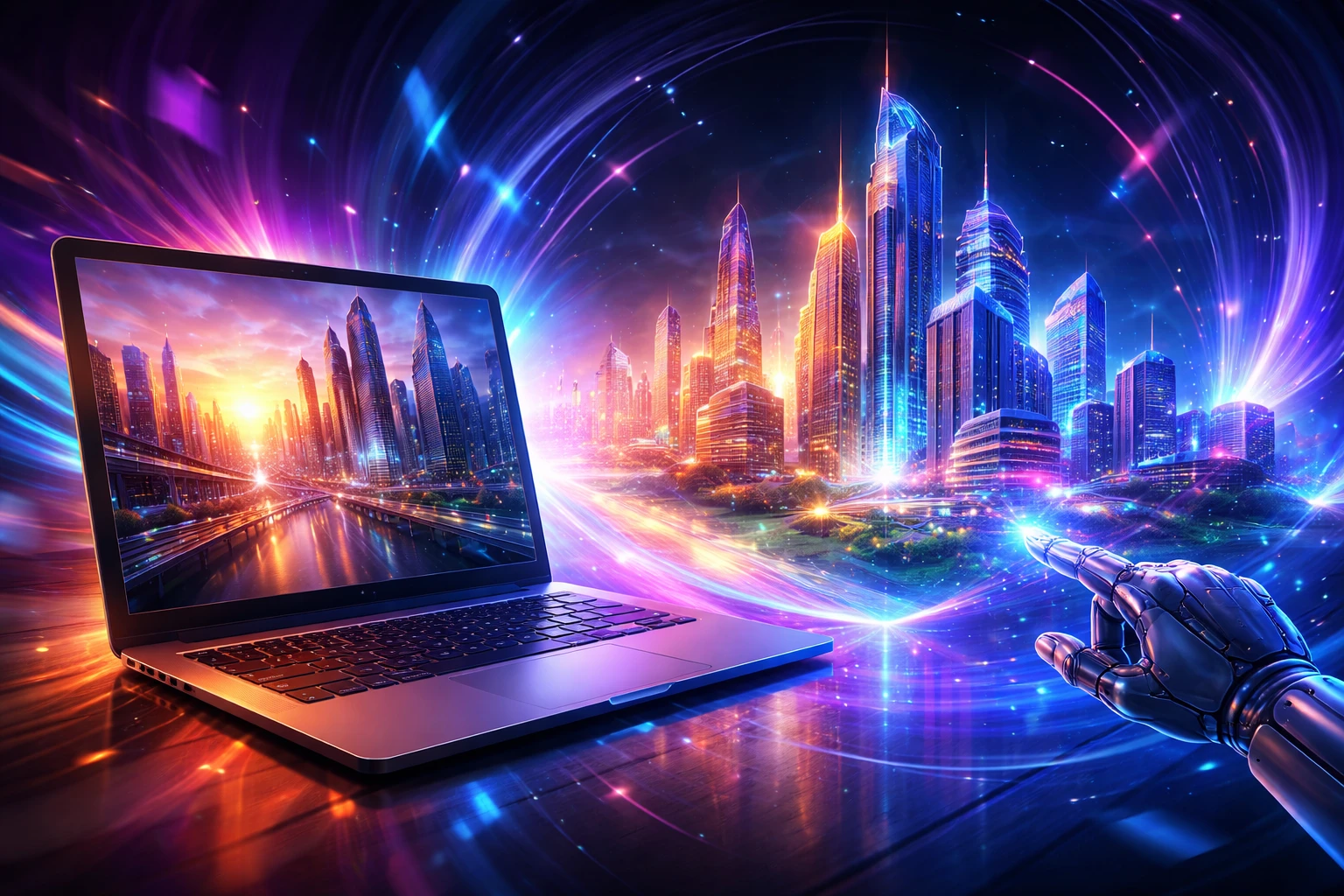
Introduction: A New Era of Visual Content
The world of digital content is entering a massive transformation, and at the center of it all is AI-powered 2D to 3D conversion technology. What once required complex modeling, expensive software, and highly skilled artists can now be achieved with advanced artificial intelligence in a fraction of the time. This shift is not just a technical upgrade, but a complete redefinition of how visual content is created, consumed, and monetized across industries.
From gaming and film production to e-commerce and social media, the ability of AI to turn flat images into immersive 3D environments is unlocking new creative possibilities. In 2026, this technology is no longer experimental. It is becoming mainstream, driven by major players in the tech industry who are investing heavily in neural rendering, volumetric capture, and AI-generated spatial content.
The implications are massive. Content creators, developers, and businesses are all being forced to rethink their workflows as AI-generated 3D visuals begin to outperform traditional pipelines in speed, cost efficiency, and scalability. The question is no longer whether AI will dominate visual production, but how fast industries can adapt to this new reality.
What Is AI 2D to 3D Conversion?
At its core, AI 2D to 3D conversion is a process where machine learning models analyze flat images and reconstruct them into three-dimensional representations. This involves understanding depth, lighting, texture, and spatial relationships—all from a single or limited set of 2D inputs.
Unlike traditional 3D modeling, which requires manual input and precise geometry building, AI systems rely on deep neural networks trained on massive datasets of real-world objects and environments. These models can infer missing details, predict depth maps, and generate realistic 3D structures with minimal human intervention.
The key technologies behind this innovation include:
Key Technologies Powering the Shift
1. Neural Rendering
Neural rendering uses AI to simulate how light interacts with objects in a scene. This allows for highly realistic textures, shadows, and reflections, even when the original input is just a flat image. It is one of the main drivers behind photorealistic AI-generated visuals.
2. Depth Estimation Models
AI models can now accurately predict depth from a single image, creating a layered understanding of foreground, midground, and background elements. This is essential for building 3D geometry from 2D sources.
3. Volumetric Reconstruction
Volumetric AI techniques allow systems to generate full 3D volumes instead of simple flat projections. This means objects can be viewed from multiple angles, not just simulated perspectives.
4. Generative AI Models
Generative AI, including diffusion models, plays a major role in filling in missing data. These models can create textures, surfaces, and even entire objects that were not present in the original image.
Together, these technologies form the backbone of the AI-driven visual revolution that is reshaping digital production pipelines.
Why 2026 Is the Breakthrough Year
While AI-based visual tools have existed for years, 2026 marks a turning point where the technology becomes both accessible and commercially viable. Several key developments have accelerated adoption:
- Major tech companies investing in AI-driven visual engines
- Integration of AI tools into mainstream software platforms
- Increased demand for immersive content in AR, VR, and gaming
- Faster GPU performance enabling real-time processing
One of the biggest catalysts has been the rise of AI tools that can convert simple photos into fully navigable 3D environments. This has reduced the barrier to entry for creators, allowing even small teams to produce high-quality 3D content without traditional expertise.
The result is a democratization of 3D production, where anyone with a camera and access to AI tools can create immersive digital experiences.
Impact on the Gaming Industry
The gaming industry is one of the biggest beneficiaries of AI-generated 3D visuals. Traditionally, creating game assets required large teams of artists working for months on detailed models and environments. With AI, much of this process can now be automated.
Developers can:
- Convert real-world photos into game-ready assets
- Generate entire environments from concept art
- Enhance existing textures using AI upscaling
- Create dynamic worlds that adapt in real-time
This not only speeds up development but also reduces costs significantly. Indie developers, in particular, are gaining access to tools that were once exclusive to AAA studios.
More importantly, AI is enabling a new level of realism. Games are becoming more immersive as AI-generated lighting, textures, and geometry push visual fidelity to new heights.
Revolutionizing Film and Media Production
In film and media, AI 2D to 3D conversion is transforming how scenes are created and edited. Directors and visual effects teams can now generate 3D environments from simple reference images, reducing the need for expensive sets and green screens.
This technology allows for:
- Faster pre-visualization of scenes
- Real-time editing of 3D environments
- Cost-efficient production of visual effects
- Enhanced storytelling through immersive visuals
Streaming platforms and content studios are rapidly adopting AI tools to stay competitive in a market that demands high-quality visuals at lower costs.
The Rise of Immersive E-Commerce
E-commerce is also undergoing a major transformation thanks to AI-generated 3D content. Online shoppers increasingly expect interactive experiences, and static images are no longer enough.
With AI, businesses can:
- Turn product photos into 3D models
- Enable customers to view items from all angles
- Integrate AR features for virtual try-ons
- Create immersive shopping environments
This not only improves user experience but also increases conversion rates. Consumers are more likely to purchase products they can interact with in a realistic way.
Social Media and the Creator Economy
The creator economy is evolving rapidly, and AI 2D to 3D tools are becoming essential for content creators who want to stand out. Platforms are shifting toward immersive and interactive formats, pushing creators to adopt new technologies.
Creators can now:
- Transform photos into 3D content for social media
- Build virtual environments for storytelling
- Create unique visual identities باستخدام AI tools
- Produce high-quality content with minimal resources
This is leveling the playing field, allowing smaller creators to compete with larger production teams.
Challenges and Ethical Considerations
Despite its advantages, the rise of AI-generated 3D visuals also brings challenges. One of the main concerns is the potential loss of jobs in traditional 3D modeling and visual effects roles.
There are also ethical questions حول:
- Ownership of AI-generated content
- Authenticity of digital visuals
- Misuse of technology for deepfakes
- Data privacy in AI training models
As the technology evolves, industries will need to establish clear guidelines and regulations to ensure responsible use.
The Future of AI in Visual Technology
Looking ahead, the future of AI-driven visual technology is incredibly promising. We can expect:
- Real-time 2D to 3D conversion on mobile devices
- Fully immersive virtual worlds generated by AI
- Integration with metaverse platforms
- Hyper-realistic digital humans and environments
The line between reality and digital content will continue to blur as AI becomes more advanced. This will open up new opportunities for creativity, business, and innovation.
Conclusion: The Beginning of a New Visual Era
The transformation of 2D visuals into 3D experiences using AI is not just a trend—it is a fundamental shift in how content is created and consumed. As technology continues to evolve, industries across the board will need to adapt to stay relevant.
For creators, developers, and businesses, this is a moment of opportunity. Those who embrace AI-driven workflows will gain a significant advantage in a rapidly changing digital landscape.
The future of content is immersive, interactive, and powered by AI. And that future has already begun.