

Sony Invests in AI Visual Tech: Game Graphics Enter a Hyper-Realistic Era
 Vortixel
7 minutes read
Vortixel
7 minutes read
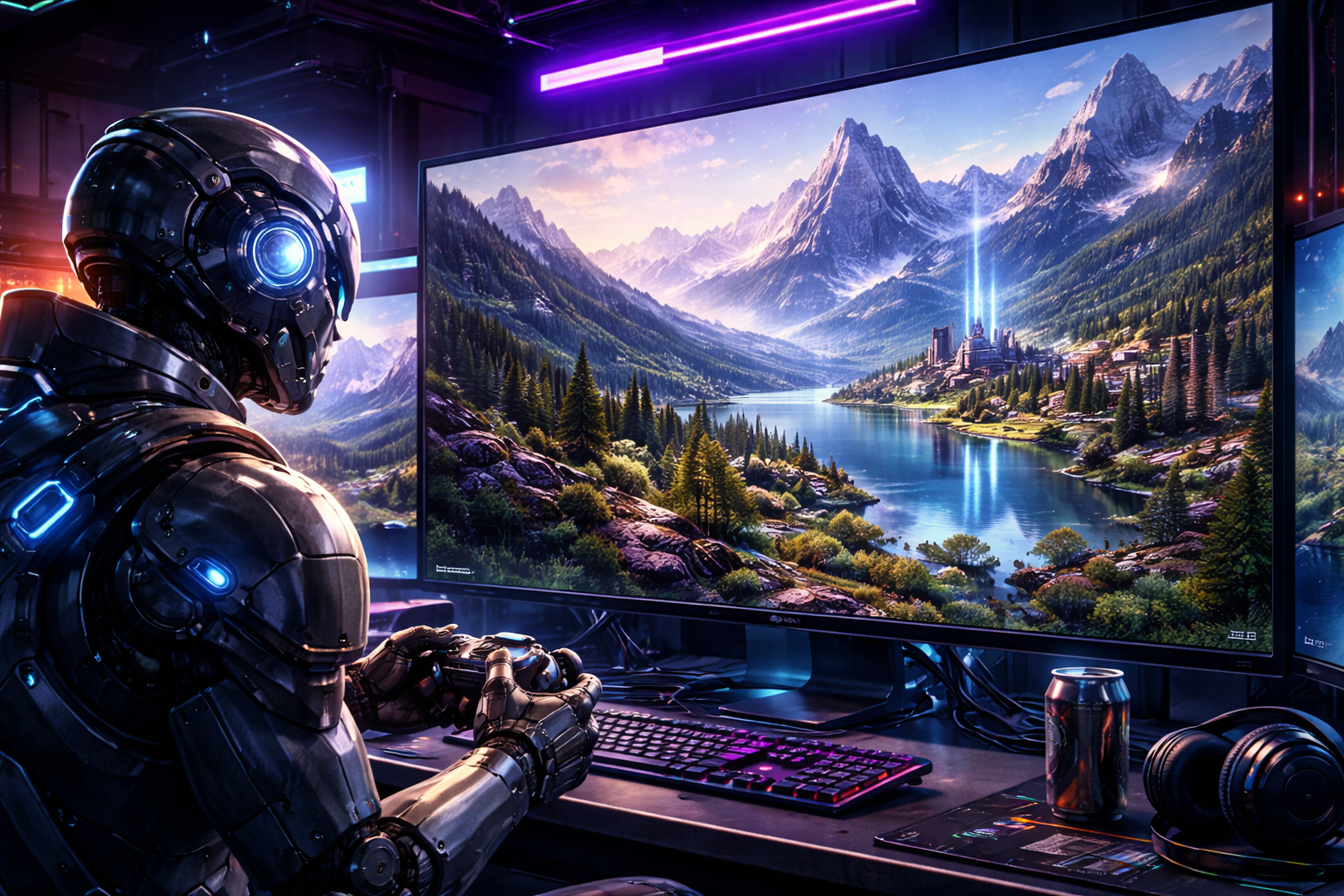
The gaming industry is entering a transformative phase where AI-powered visual technology is no longer just an experimental feature, but a core driver of how games are built, experienced, and evolved. In 2026, one of the biggest signals of this shift comes from Sony, a dominant force in the global gaming ecosystem, as it doubles down on artificial intelligence to redefine visual fidelity in games. This move is not just about sharper textures or better lighting—it’s about fundamentally changing how virtual worlds are created, rendered, and perceived by players.
Sony’s recent investment in a machine learning company focused on advanced rendering techniques and AI-driven visual enhancement is a strategic leap toward a future where game graphics blur the line between digital and reality. This decision reflects a broader industry trend where AI is becoming the backbone of creative production pipelines, especially in gaming, where realism and immersion are constantly pushed to new extremes.
The Rise of AI in Game Visual Development
The integration of AI into game development is not new, but its role has dramatically evolved. Previously, AI was mostly used for gameplay mechanics such as NPC behavior or procedural generation. Today, it is deeply embedded in visual production workflows, enabling developers to achieve results that were once impossible or too resource-intensive.
Sony’s investment highlights how machine learning algorithms can optimize rendering processes, making real-time graphics more efficient while significantly improving quality. AI can analyze massive datasets of real-world imagery and replicate lighting behavior, texture details, and environmental interactions with remarkable accuracy.
This means developers no longer have to manually craft every visual element. Instead, AI assists in generating realistic assets, enhancing lighting systems, and even predicting how scenes should look under different conditions. The result is a new generation of games where environments feel alive, responsive, and visually authentic.
Hyper-Realism: The New Standard in Gaming
One of the most exciting outcomes of Sony’s AI push is the acceleration toward hyper-realistic graphics. In the past, achieving photorealism required enormous computational power and long development cycles. With AI, this process becomes faster, smarter, and more scalable.
AI-driven rendering techniques can simulate natural phenomena such as light diffusion, reflections, shadows, and material textures with incredible precision. This leads to visuals that closely mimic real-world physics, making game environments more believable than ever before.
For players, this translates into experiences where:
- Characters exhibit lifelike facial expressions and micro-details
- Environments react dynamically to weather and lighting changes
- Textures maintain high fidelity even at large scales
- Motion and animation feel fluid and natural
Sony’s vision is clear: the future of gaming lies in creating worlds that players don’t just see, but feel immersed in.
AI and Real-Time Rendering Revolution
Real-time rendering has always been one of the biggest challenges in game development. Balancing performance and visual quality is a constant struggle, especially as player expectations continue to rise. Sony’s investment in AI aims to solve this problem by introducing intelligent rendering systems that adapt dynamically.
These systems use AI to:
- Optimize GPU workloads in real time
- Reduce unnecessary rendering processes
- Enhance image quality through upscaling and reconstruction
- Maintain high frame rates without sacrificing detail
Technologies like AI-based upscaling are already proving to be game changers. Instead of rendering every frame at full resolution, AI can reconstruct high-quality images from lower-resolution inputs, significantly improving performance while maintaining visual fidelity.
This approach allows developers to create visually stunning games that run smoothly across different hardware configurations, from high-end consoles to more accessible platforms.
Sony’s Strategic Position in the AI Gaming Race
Sony is not entering this space blindly. The company has a long history of pushing technological boundaries in gaming, from the early days of PlayStation to the current generation of consoles. However, the competition has never been more intense.
With companies like NVIDIA, Microsoft, and emerging AI startups investing heavily in similar technologies, Sony’s move is both strategic and necessary. By acquiring and integrating machine learning expertise, Sony ensures it remains at the forefront of innovation.
This investment also aligns with Sony’s broader ecosystem strategy, which includes:
- Enhancing PlayStation hardware capabilities
- Supporting game developers with advanced tools
- Expanding into cloud gaming and streaming services
- Integrating AI across multiple entertainment platforms
In this context, AI is not just a feature—it is a foundational technology that will shape the entire gaming experience.
Impact on Game Developers and Studios
For developers, Sony’s investment in AI visual technology represents both an opportunity and a challenge. On one hand, AI tools can significantly reduce production time and costs. Tasks that once required large teams and months of work can now be streamlined with automation and intelligent systems.
On the other hand, developers must adapt to new workflows and learn how to integrate AI effectively into their pipelines. This shift requires:
- Understanding machine learning models and their applications
- Balancing automation with creative control
- Ensuring that AI-generated content meets artistic standards
- Managing ethical considerations related to AI use
Studios that embrace these changes will likely gain a competitive edge, while those that resist may struggle to keep up with the rapidly evolving industry landscape.
The Player Experience: More Immersive Than Ever
From a player’s perspective, the benefits of Sony’s AI investment are immediately tangible. Games are becoming more immersive, responsive, and visually captivating. The line between cinematic storytelling and interactive gameplay continues to blur.
Players can expect:
- Richer environments with dynamic ecosystems
- More realistic character interactions
- Enhanced visual storytelling through detailed animations
- Seamless transitions between gameplay and cutscenes
This level of immersion transforms gaming from a passive activity into an interactive experience that feels almost real. It also opens the door to new genres and storytelling techniques that were previously impossible.
AI vs Human Creativity: Finding the Balance
While AI offers incredible advantages, it also raises important questions about the role of human creativity in game development. Some critics argue that over-reliance on AI could lead to homogenized visuals and a loss of artistic uniqueness.
However, the reality is more nuanced. AI is not replacing human creativity—it is augmenting it. Developers still play a crucial role in:
- Defining artistic direction
- Designing unique visual styles
- Crafting narratives and emotional experiences
- Making creative decisions that AI cannot replicate
The most successful games will likely be those that strike the right balance between AI efficiency and human creativity, using technology as a tool rather than a replacement.
Challenges and Ethical Considerations
As with any technological advancement, the rise of AI in gaming comes with its own set of challenges. These include:
Data Dependency
AI models require vast amounts of data to function effectively. Ensuring that this data is sourced ethically and responsibly is a major concern.
Job Displacement
Automation may reduce the need for certain roles in game development, raising questions about the future of creative jobs.
Creative Ownership
Who owns AI-generated content? This is an ongoing debate that the industry must address.
Bias and Accuracy
AI systems can inherit biases from their training data, potentially affecting visual representation and design choices.
Sony and other industry leaders will need to navigate these challenges carefully to ensure that AI is used responsibly and sustainably.
The Future of Gaming Graphics
Looking ahead, the impact of Sony’s investment in AI-driven visual technology is likely to extend far beyond current expectations. As AI continues to evolve, we can anticipate:
- Fully dynamic worlds generated in real time
- Personalized visual experiences tailored to individual players
- Integration of AI with VR and AR technologies
- New forms of interactive storytelling
The concept of “next-gen graphics” will no longer be defined solely by hardware capabilities, but by the intelligence and adaptability of the systems behind them.
Conclusion: A New Era Begins
Sony’s move to invest in AI visual technology marks a significant milestone in the evolution of gaming. It signals a shift toward a future where AI is at the heart of visual innovation, enabling experiences that are more realistic, immersive, and dynamic than ever before.
For the gaming industry, this is more than just a technological upgrade—it is a paradigm shift that redefines how games are created and experienced. For players, it promises a new level of engagement that goes beyond traditional boundaries.
As AI continues to shape the landscape of digital entertainment, one thing is clear: the future of gaming is not just about playing—it’s about experiencing worlds that feel real, alive, and endlessly evolving.