
Nvidia SIGGRAPH 2026 Turns AI Graphics Real
 Vortixel
16 minutes read
Vortixel
16 minutes read
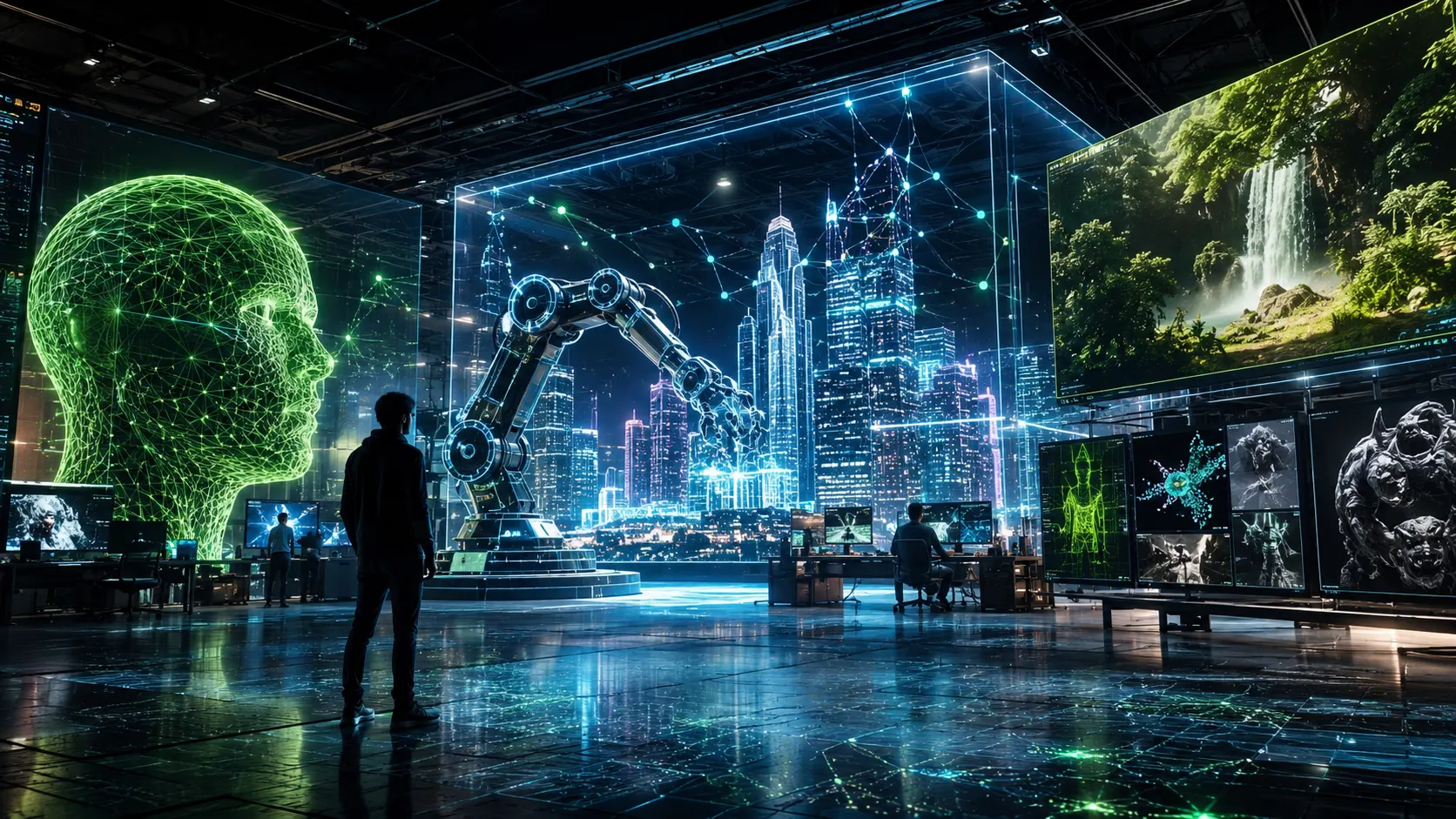
At a moment when every creative tool seems to be getting an AI button, Nvidia SIGGRAPH 2026 feels less like a normal tech showcase and more like a preview of how visual work may actually function next. The headline is not just that Nvidia showed up with faster chips, sharper demos, or another polished stage presence. The bigger story is that graphics, simulation, robotics, game development, design visualization, and generative tools are starting to collapse into one connected workflow. Instead of treating AI as a separate assistant sitting beside the artist, Nvidia is pushing it deeper into the engine room of visual creation itself. That is why this year’s SIGGRAPH conversation matters far beyond the convention floor in Los Angeles.
The phrase “AI graphics lab” sounds dramatic, but it fits the mood. SIGGRAPH has always been the place where future-facing visual technology gets its first serious audience, from rendering breakthroughs to animation pipelines that later become normal across film, games, and design. This year, Nvidia is framing that future around neural rendering, real-time simulation, agentic AI, and physical AI. Those terms can sound heavy at first, but the practical idea is pretty simple: computers are learning not only how to generate images, but how to understand scenes, predict motion, build worlds, optimize performance, and help creators move faster. For Visual Vortixel readers, this is where the future of AI and visual technology starts looking less theoretical and way more production-ready.
Why Nvidia SIGGRAPH 2026 Feels Different
For years, AI in the creative world was mostly discussed through the lens of image generators, text prompts, copyright fights, and the sudden flood of synthetic visuals online. That conversation still matters, but Nvidia SIGGRAPH 2026 points toward a wider shift. The focus is moving from “make me a picture” to “help me build, simulate, light, render, test, and deploy an entire visual system.” That difference is massive because it moves AI from the surface of creativity into the structure underneath it. In other words, the future is not only about generating the final frame; it is about redesigning the whole pipeline that creates the frame.
Nvidia’s presence at SIGGRAPH also lands at a time when visual industries are under pressure to produce more content, faster iterations, and higher realism without exploding budgets. Game studios need richer worlds, but players still expect smooth frame rates and believable physics. Film and animation teams want cinematic scale, but production timelines keep tightening. Architects, product designers, and industrial teams need simulations that behave closer to reality before anything gets built in the physical world. In that environment, AI becomes attractive not as a shortcut for lazy work, but as a way to make complex visual systems more manageable.
What makes Nvidia’s strategy interesting is how it blends hardware, software, research, and developer training into one story. The company is not only saying that AI will transform graphics someday. It is showing how GPUs, RTX workflows, Omniverse-style simulation environments, robotics tools, and neural techniques can be stitched together now. That makes the event feel like a working lab instead of a static showroom. The message is clear: the next era of computer graphics will not be separated from AI, because the two are becoming the same conversation.
From Better Pixels to Smarter Worlds
The old graphics race was easy to understand because it was mostly about more detail. Better textures, more realistic lighting, higher polygon counts, cleaner shadows, faster ray tracing, and smoother motion all pushed the image closer to reality. That race is not over, but the center of gravity is shifting. The new race is about whether a visual system can understand what it is showing and respond intelligently. A beautifully rendered scene is impressive, but a scene that can simulate physics, support AI agents, adapt to creator input, and train machines for real-world tasks is something else entirely.
This is where neural rendering becomes one of the most important ideas in the room. Traditional rendering calculates how light, materials, geometry, and cameras interact using established computer graphics methods. Neural rendering brings machine learning into that process, allowing systems to reconstruct, enhance, predict, or generate visual information with new efficiency. The result can be faster workflows, more realistic details, and new kinds of visual experiences that would be difficult to build with older techniques alone. For creators, the promise is not just prettier images, but more flexible control over how those images come together.
The same shift applies to simulation. A simulation used to be something artists and engineers ran after building a scene, often as a separate step that required time, tuning, and technical patience. Now, Nvidia’s vision is pushing simulation closer to real-time decision-making. That matters for robotics, autonomous systems, virtual production, digital twins, game worlds, and industrial design. If AI can help a simulated world behave more like the physical world, then creators can use that world as a training ground, a testing environment, and a storytelling canvas all at once.
Agentic AI Moves Into the Creative Pipeline
One of the most important phrases around this year’s conversation is agentic AI. In simple terms, agentic AI refers to systems that can plan, act, evaluate, and assist across multi-step tasks instead of waiting for one prompt at a time. For visual creators, that could mean an AI agent that helps diagnose why a scene is running slowly, suggests optimization steps, checks performance across CPU and GPU activity, or helps assemble a simulation tool from reusable components. It is not hard to see why Nvidia wants this idea connected to graphics development. Visual pipelines are complicated, and even experienced teams lose time solving invisible workflow problems.
This does not mean artists suddenly hand over the wheel to machines. The better interpretation is that creative teams get a smarter technical layer around them. A 3D artist might still shape the mood of a scene, a designer might still guide the product language, and a director might still decide what the audience should feel. But AI agents could increasingly handle the painful connective tissue between idea and execution. That includes testing, debugging, converting, optimizing, simulating, and documenting parts of the workflow that usually slow production down.
The most realistic near-term impact may be felt by smaller teams. Big studios already have pipeline engineers, technical artists, rendering specialists, and simulation experts. Indie teams, freelance designers, small animation houses, and experimental creators often do not. If agentic AI becomes useful inside mainstream visual software, it could give smaller teams access to production support that once required a much larger operation. That is the kind of shift that can quietly change the creative economy before the wider public even notices.
Physical AI Makes Graphics Matter Outside Screens
The phrase physical AI may sound like robotics branding, but it is deeply connected to visual technology. A robot, autonomous vehicle, warehouse system, or smart machine needs to understand space before it can act safely inside it. That requires perception, simulation, synthetic data, 3D environments, and realistic training scenarios. Nvidia’s SIGGRAPH focus suggests that graphics are no longer only about entertainment or visual design. They are becoming part of how machines learn the physical rules of the world.
This is a major reason simulation keeps appearing beside AI graphics. If a machine can practice in a simulated warehouse, street, factory, kitchen, or hospital room before entering the real one, developers can test edge cases without creating dangerous real-world situations. That simulation needs believable lighting, object behavior, camera movement, physics, and environmental variation. It also needs scale, because AI systems learn better when they experience many different scenarios. Visual computing becomes the bridge between digital imagination and physical deployment.
For creative professionals, this may open unexpected doors. The skills used to build game environments, digital sets, product visualizations, and animated worlds could become relevant to robotics and industrial AI. A designer who understands 3D scenes may one day help build training environments for machines. A technical artist who knows lighting and material behavior may contribute to synthetic datasets. The wall between entertainment graphics and real-world machine intelligence is starting to look thinner than it used to.
What This Means for Digital Artists
Digital artists have every reason to watch this shift closely, because AI graphics will reshape both the tools and the expectations around visual work. On one hand, better AI-assisted workflows can remove repetitive production pain. Tasks like cleanup, variation testing, scene optimization, material previews, lighting exploration, and animation assistance could become faster and more interactive. On the other hand, the speed of creation may raise the baseline for what clients, studios, and audiences expect. When tools become faster, deadlines do not always become kinder.
The healthiest way to read the trend is not as a replacement story, but as a leverage story. Artists who understand composition, mood, culture, pacing, taste, and visual emotion still bring the part of creativity that cannot be reduced to a benchmark. But artists who also understand AI-assisted workflows may gain a serious advantage. They will be able to move from concept to prototype faster, test more ideas, and speak the language of both art direction and technical execution. In a crowded visual market, that combination can become a career moat.
There is also a craft issue hiding underneath the hype. AI can produce options quickly, but options are not the same as vision. A creator still needs to know which frame feels alive, which scene supports the story, which design choice matches the brand, and which visual direction deserves more time. As AI tools get more powerful, judgment becomes even more valuable. The future digital artist may spend less time fighting software friction and more time curating, directing, refining, and making taste-driven decisions.
How Game Development Could Change Next
Game development may be one of the clearest places to see the Nvidia strategy play out. Modern games demand huge visual ambition, from realistic lighting and detailed worlds to expressive characters and dynamic physics. The problem is that every jump in visual quality creates more complexity for developers. AI graphics tools can help by supporting neural rendering, performance optimization, animation workflows, scene generation, and smarter testing. That does not magically make game development easy, but it can reduce the friction between imagination and playable reality.
Players may experience the shift as better realism, smoother performance, richer worlds, and more responsive environments. Developers may experience it as new workflows where AI helps build assets, optimize scenes, or identify bottlenecks before they become production nightmares. Technical artists may become even more central because they can translate between creative goals and AI-driven rendering systems. The biggest winners may be teams that learn how to use AI without letting it flatten their visual identity. A game still needs a soul, even when the pipeline gets smarter.
This matters because games are no longer isolated entertainment products. They influence virtual production, digital fashion, spatial computing, online identity, training simulation, and immersive commerce. A rendering technique developed for games can eventually affect film, design, architecture, or robotics. A simulation breakthrough built for industrial AI can feed back into richer interactive worlds. That loop is exactly why SIGGRAPH remains such an important event for anyone following Artificial Intelligence and visual culture.
The Visual Entertainment Industry Gets a New Engine
Film, streaming, animation, and virtual production are also watching the AI graphics wave with a mix of excitement and tension. The upside is obvious because AI-assisted tools can help teams experiment faster, extend environments, previsualize scenes, generate supporting assets, and manage complex post-production tasks. The tension comes from labor concerns, creative ownership, audience trust, and the fear that studios may use AI as a cost-cutting weapon instead of a creative amplifier. Nvidia’s SIGGRAPH direction does not solve those debates, but it does show why they are becoming unavoidable. When the core technology improves, the industry has to decide how it wants to use it.
The most interesting future may not be fully AI-generated movies, even though those grab the loudest headlines. A more realistic transformation is hybrid production, where humans direct the creative vision while AI systems accelerate the technical work around it. Virtual sets could become more flexible, animated characters could be tested faster, and visual effects teams could iterate through complex scenes without burning through endless manual cycles. That could make ambitious visuals more accessible to smaller studios and independent creators. It could also force major studios to rethink what premium visual craft means when more people can produce high-end-looking work.
Audience expectations will change too. Viewers are already becoming more sensitive to synthetic visuals, especially when a scene feels too smooth, too generic, or emotionally empty. That means visual entertainment will need more than technical spectacle. It will need strong art direction, believable performances, thoughtful editing, and a clear reason for using AI in the first place. The future will reward teams that treat AI as part of the creative language, not as a cheap mask over weak storytelling.
Design Visualization Becomes More Interactive
Beyond entertainment, AI graphics could reshape how products, buildings, interiors, vehicles, and branded spaces are designed. Designers already rely on visualization to sell ideas before anything physical exists. The next step is making those visualizations more interactive, simulated, and responsive. Instead of static renders, teams could explore how materials look under changing light, how a product behaves under stress, or how a space feels from multiple perspectives in near real time. That kind of workflow turns visualization from a presentation asset into a decision-making environment.
This is where Nvidia’s emphasis on simulation becomes especially relevant. A design is not only about how something looks in a perfect image. It is also about how it performs, how it moves, how it interacts with users, and how it responds to real constraints. AI-assisted simulation can help designers test more possibilities before committing to expensive physical prototypes. The result could be faster iteration and better communication between creative, engineering, and business teams. In practical terms, the design review of the future may feel closer to stepping inside a living model than scrolling through a deck of polished renders.
For brands, this could change the speed of visual experimentation. Campaign concepts, product launches, store layouts, and digital experiences could be tested with more realism before going public. Creative teams could compare multiple visual directions without rebuilding everything from scratch. Decision-makers could see not only what looks good, but what works under different scenarios. That is a big deal in a culture where visual identity has to move fast without losing coherence.
The Practical Takeaway for Creators
The practical takeaway from Nvidia SIGGRAPH 2026 is that creators should start thinking of AI as infrastructure, not just as a novelty feature. The easy version of AI is a prompt box that creates an image. The more important version is a connected layer that helps build, render, simulate, optimize, and understand visual worlds. That means creators should pay attention to workflows, not only outputs. The people who win the next phase will likely be the ones who understand how to combine artistic judgment with technical fluency.
For digital artists, that may mean learning the basics of neural rendering, real-time engines, scene optimization, and AI-assisted asset workflows. For designers, it may mean understanding simulation as part of the design process rather than a final technical check. For filmmakers and animators, it may mean developing a stronger opinion about when AI supports the story and when it distracts from it. For game developers, it may mean treating AI tools as collaborators in performance, testing, and world-building. None of these skills require abandoning creativity; they require expanding what creative literacy means.
There is also a strong business lesson here. Visual production is becoming more technical, but technical production is becoming more visual. That overlap creates space for new roles, new studios, new software categories, and new creative services. The person who can explain AI graphics to a brand team, guide an artist through a smarter workflow, and understand what a rendering engineer is building will be extremely valuable. The next visual industry may belong to hybrid thinkers who can move comfortably between taste, tools, and systems.
The Risks Behind the Hype
Still, it would be lazy to treat the AI graphics future as pure magic. The same tools that can empower creators can also flood the internet with low-effort visuals, blur ownership, pressure workers, and make authenticity harder to read. Visual industries are already dealing with questions about consent, training data, likeness rights, and the value of human labor. More powerful AI graphics systems will make those questions more urgent, not less. If the technology becomes part of core production, the rules around it need to mature quickly.
There is also the risk of creative sameness. AI systems often learn from existing visual patterns, which means they can easily reproduce familiar aesthetics unless guided with strong direction. If every team uses similar tools in similar ways, the visual internet could become smoother but less memorable. That is why taste, experimentation, and cultural awareness matter so much. Better technology does not automatically produce better art; it only increases the range of what can be made.
Another challenge is access. Advanced AI graphics workflows often depend on powerful hardware, specialized software, and technical knowledge. If only major studios and well-funded companies can fully use them, the creative gap may widen. But if tools become easier to access through cloud workflows, open standards, training labs, and affordable creator hardware, the opposite could happen. The direction is not guaranteed, which is why the industry’s next choices matter as much as the technology itself.
Why This Moment Matters for Visual Innovation
The deeper reason this moment matters is that visual technology is becoming a way to think, not just a way to display. A simulated world can train a robot, test a building, preview a film scene, prototype a game mechanic, or help a designer understand how an object behaves. That makes graphics a kind of intelligence layer for both humans and machines. Nvidia’s SIGGRAPH strategy points toward a world where seeing, simulating, and acting become connected processes. This is much bigger than a prettier render.
For Visual Vortixel, that is the core story. The future of AI and visual technology will not be defined only by viral images or flashy demos. It will be shaped by the invisible systems that make visual creation faster, smarter, more physical, and more interactive. The creative screen is becoming a lab, the lab is becoming a world, and the world is becoming something machines can learn from. That sounds futuristic, but the pieces are already moving into place.
The best way to understand Nvidia SIGGRAPH 2026 is not as one company trying to dominate a conference. It is a signal that the center of visual computing is moving again. AI is no longer standing outside the graphics pipeline, waiting to generate a final asset. It is entering the renderer, the simulator, the viewport, the robotics stack, the creative app, and the performance tool. That makes this year’s SIGGRAPH feel like a turning point for anyone who builds, studies, sells, or simply loves visual worlds.
Conclusion: AI Graphics Enters Its Production Era
The biggest takeaway from Nvidia SIGGRAPH 2026 is that AI graphics is leaving the demo era and moving into the production era. The conversation is no longer only about whether AI can generate a striking image in seconds. It is about whether AI can help build better worlds, simulate reality more accurately, support creators through complex workflows, and connect digital visuals to physical machines. That shift makes the technology more serious, more useful, and more disruptive. It also makes creative judgment more important, because powerful tools still need a human reason to exist.
For artists, designers, developers, filmmakers, and visual technologists, the message is clear. Learn the tools, but do not let the tools define your taste. Understand the systems, but keep asking what the image is supposed to make people feel. Use AI to remove friction, test ideas, and expand what is possible, but keep the creative direction human enough to matter. If Nvidia’s SIGGRAPH moment proves anything, it is that the next visual revolution will belong to people who can turn intelligent machines into meaningful visual experiences.