
AI Branding Flood Makes Visual Meaning Harder
 Vortixel
19 minutes read
Vortixel
19 minutes read
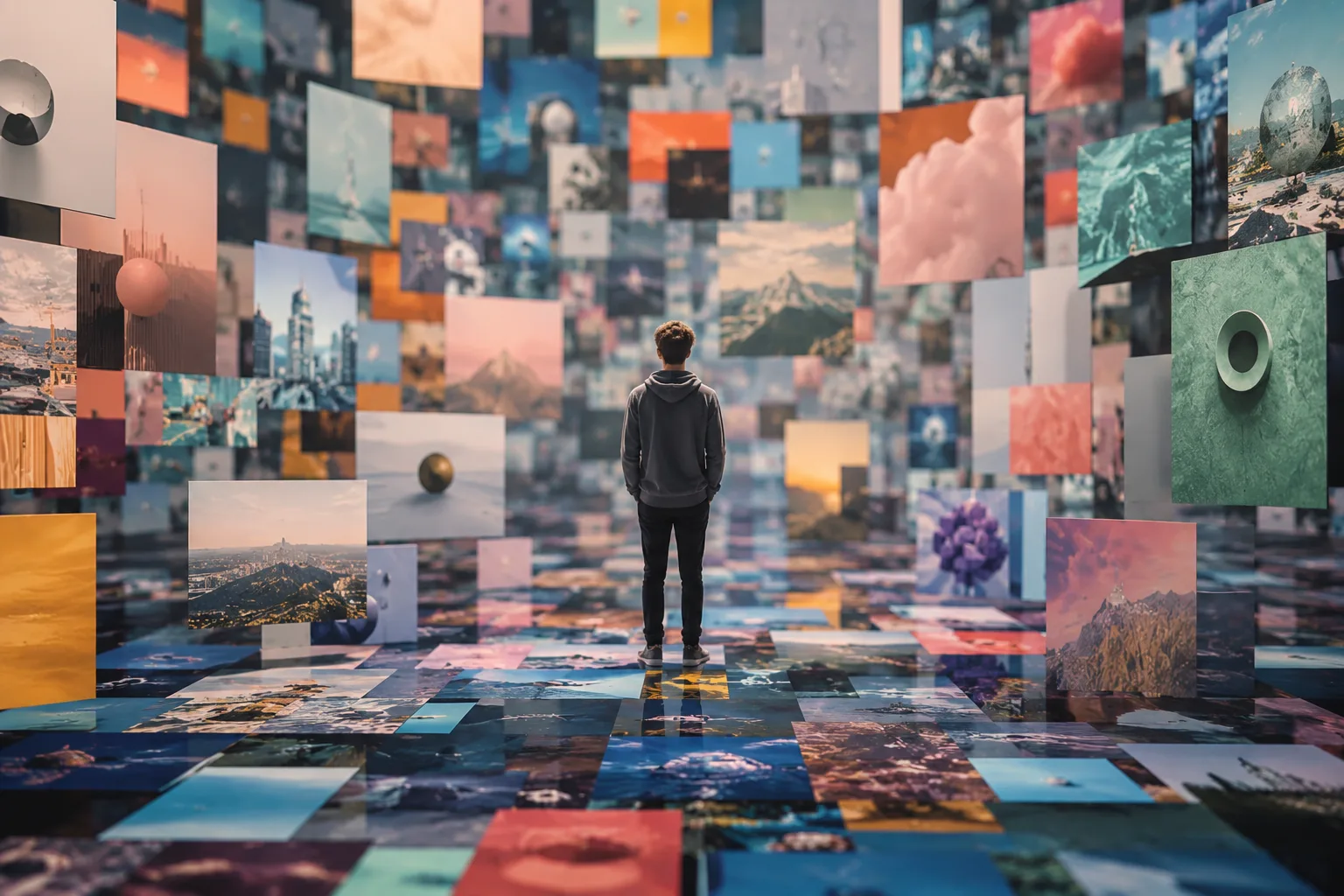
The internet used to make brands feel bigger, sharper, and more recognizable. Now, the rise of AI branding is making many of them feel strangely interchangeable. Scroll through a product launch, a startup landing page, a creator campaign, or a fashion mood board today, and the same polished visual language keeps appearing: glossy gradients, floating objects, cinematic lighting, surreal 3D shapes, plastic-smooth models, perfect compositions, and colors that look expensive but say almost nothing. At first glance, it all feels futuristic and premium. But after the tenth nearly identical image, the magic wears off, and what remains is a bigger question about whether visual identity can still carry meaning when everyone has access to the same machine-made aesthetic.
This is the new tension shaping modern design culture. AI branding has lowered the barrier to high-quality visuals, giving small teams, solo founders, artists, marketers, and agencies the power to create images that once required full production crews. That is a huge creative shift, and it should not be dismissed as a gimmick. But speed and abundance have a side effect: when visuals become easy to generate, they also become easier to forget. A brand can now produce a month of campaign assets in a few hours, yet still struggle to explain what it actually stands for. In that gap between visual volume and emotional clarity, the future of brand meaning is being rewritten.
Why AI Branding Is Everywhere Now
The explosion of AI branding did not happen because designers suddenly ran out of ideas. It happened because the economics of visual production changed almost overnight. A startup no longer needs a massive design budget to test a visual direction, build campaign mockups, or imagine a product in different worlds. A musician can create album rollout imagery before booking a photographer. A fashion label can experiment with digital mood boards before cutting fabric. A media brand can turn abstract editorial themes into polished visuals without waiting for a long production cycle.
That speed is addictive because branding has always been tied to momentum. Every launch needs social posts, website headers, paid ads, thumbnails, newsletters, pitch decks, product renders, event visuals, and platform-specific creative. Before generative tools became mainstream, producing all of that required coordination between designers, photographers, illustrators, 3D artists, art directors, copywriters, and editors. Now, a smaller team can move from idea to visual prototype in minutes. The workflow feels lighter, faster, and more flexible. The problem is that the same convenience also pushes teams to publish before they have fully decided what the work is supposed to mean.
In the old branding world, visual identity often developed through friction. A team had to make hard choices because time, money, and production limits forced focus. They had to decide what colors mattered, what references fit, what emotions to prioritize, and what kind of audience they wanted to speak to. With AI tools, those limits are softer, and the temptation is to explore endlessly. The result is a flood of beautiful but unresolved images. A brand can look premium, playful, futuristic, nostalgic, cinematic, and minimal all in the same week, which may seem versatile but can quietly weaken recognition.
This is why Visual Vortixel readers who follow AI branding should look beyond the surface of the trend. The real story is not only that AI makes brand visuals easier to produce. The deeper story is that AI forces brands to prove they have a point of view. When everyone can generate a glowing product render, a dreamlike campaign scene, or a hyper-polished editorial image, the advantage shifts away from technical polish. Meaning becomes the new scarcity. A visual identity is no longer impressive just because it looks expensive; it has to feel specific, intentional, and emotionally earned.
The Beauty Problem: When Everything Looks Good
For years, brands were told that better visuals would help them stand out. Cleaner design, sharper imagery, smoother animation, and more consistent art direction were treated as obvious upgrades. That advice still matters, but AI has complicated it because “good-looking” is no longer rare. A brand can now generate campaign imagery with dramatic lighting, perfect composition, and cinematic texture without building the traditional infrastructure behind it. The output may look polished enough to pass through a feed. But if the image does not carry a clear memory, attitude, or cultural signal, it becomes just another beautiful thing moving past the viewer’s thumb.
This creates what might be called the beauty problem. When every brand can look sleek, visual polish stops functioning as a strong differentiator. The same thing happened before with stock photography, flat illustration packs, minimalist templates, and startup gradients. At first, those styles felt modern and efficient. Then they became visual wallpaper. AI accelerates that cycle because it produces stylistic sameness at a much larger scale. A futuristic beverage brand, a wellness app, a fintech platform, and a music festival can all accidentally land in the same visual neighborhood, even if their audiences and values are completely different.
The most obvious sign of this sameness is the rise of images that feel emotionally vague. They are dramatic but not personal. They are colorful but not culturally rooted. They are polished but not memorable. A chrome object floats in a pastel desert. A model stands in an impossible room. A product glows in a digital landscape. Nothing is wrong with those images on their own, but when they appear everywhere, they stop saying “this brand has vision” and start saying “this brand has access to tools.” That distinction matters because audiences are becoming sharper at recognizing visual shortcuts.
There is also a trust issue hiding inside the beauty problem. People do not only judge visuals by whether they look impressive. They judge whether the image feels connected to the product, community, promise, or story behind it. When a brand uses AI imagery that feels too generic, too frictionless, or too disconnected from real experience, viewers may sense a gap between appearance and substance. They may not describe it in design language, but they feel it. The image looks cool, yet the brand feels hollow, and that hollowness is dangerous in a culture already overloaded with synthetic content.
Visual Meaning Is Harder Than Visual Output
The central challenge of AI branding is not image generation. It is meaning generation. A tool can produce a visual in seconds, but it cannot automatically decide why that visual should matter to a specific audience at a specific cultural moment. Meaning comes from context, memory, contrast, values, and repetition over time. It comes from knowing what a brand refuses to be, not just what it wants to look like. That is where many AI-heavy visual systems struggle, because they focus on output while skipping the slower work of identity.
Visual meaning depends on constraints. A strong brand usually has a recognizable pattern of decisions: certain colors are used with purpose, certain compositions repeat, certain textures feel native, and certain references are avoided because they belong to someone else’s world. These choices may seem small, but together they create memory. AI tools can imitate countless styles, which makes them powerful for exploration. Yet that same openness can weaken the discipline that branding needs. If a team keeps changing its visual personality because every prompt produces something exciting, the brand may never become familiar enough to be remembered.
This is especially important in Design, where the best work often looks simple only after many invisible decisions have been made. A strong identity system does not chase every aesthetic trend; it filters the world through a specific lens. That lens might be rebellious, calm, luxurious, playful, technical, handmade, nostalgic, or experimental. AI can help build images inside that lens, but it cannot replace the lens itself. Without a defined point of view, generative design becomes a slot machine for vibes, producing endless options without a strong reason to choose one.
The irony is that AI can make weak brand strategy more visible. In a traditional workflow, limited production capacity sometimes disguised unclear thinking because a team could only release a few visuals at a time. In an AI workflow, unclear thinking multiplies quickly. If the strategy is thin, the inconsistency spreads across every asset. One campaign looks like luxury skincare, another looks like a sci-fi film, another looks like a gaming poster, and another looks like a tech conference. The brand may appear active, but it does not become more meaningful. It becomes louder without becoming clearer.
The Feed Is Now a Visual Arms Race
Social platforms made brands compete for attention long before AI entered the room. But generative visuals have raised the speed of that competition. A single concept can be turned into multiple image variations for TikTok covers, Instagram carousels, YouTube thumbnails, LinkedIn banners, website hero sections, and paid campaign tests. This creates a visual arms race where the pressure is not only to be creative, but to be constantly creative. Teams feel pushed to publish more, test more, refresh more, and make every asset look like a mini-campaign.
That pressure can be productive when it helps teams experiment. It can also be exhausting when it turns identity into a content treadmill. The brand becomes less like a stable visual world and more like a stream of disconnected moments. Audiences may enjoy individual posts, but they may not remember who made them. That is one of the most overlooked risks in AI-powered marketing. A post can perform well as content while failing as branding. It can earn likes, saves, and shares without making the brand more recognizable or more trusted.
The feed also rewards novelty in a way that can punish consistency. AI tools are excellent at novelty because they can remix references, styles, moods, and formats with ease. But branding requires a balance between surprise and recognition. Too much repetition becomes boring, while too much novelty becomes forgettable. The strongest brands know how to evolve without losing their center. They can experiment with new visual tools while still sounding and looking like themselves. In the AI era, that balance becomes harder because every new visual possibility feels like a potential shortcut to attention.
This is why the most future-facing brands will not simply generate more. They will edit better. They will treat visual abundance as raw material, not finished identity. They will ask whether an image strengthens memory, clarifies the brand promise, and adds something specific to the audience’s understanding. If it does not, they will have the discipline to leave it unused, even if it looks stunning. That editorial restraint may become one of the defining skills of modern creative direction.
How AI Changes the Role of Designers
The rise of AI branding does not make designers irrelevant. It changes what makes them valuable. In a world where many people can generate decent visuals, the designer’s role moves further into judgment, systems thinking, cultural interpretation, and emotional precision. Designers are no longer only making the asset; they are shaping the rules that decide which assets deserve to exist. They become translators between brand strategy and visual expression. They are the people who can tell the difference between an image that looks cool and an image that actually belongs.
This shift can be uncomfortable because some parts of production are becoming faster and more automated. Tasks that once required manual exploration may now begin with prompts, references, and rapid iteration. But speed does not remove the need for taste. In fact, it increases it. When a tool gives a team hundreds of options, someone has to decide what is right. That decision requires more than technical skill. It requires an understanding of audience psychology, market context, visual history, brand voice, accessibility, and the subtle emotional signals that make design feel alive.
Designers also become more important as guardians of consistency. AI-generated images can drift easily because each prompt carries new possibilities. A designer can build guardrails: approved palettes, forbidden clichés, composition rules, texture references, lighting principles, typography pairings, and motion behaviors. These guardrails do not kill creativity. They give creativity a recognizable home. The best AI-assisted branding systems will likely feel less like random prompt collections and more like living style guides that combine human intent with machine flexibility.
There is also a deeper ethical layer. Designers will increasingly need to think about disclosure, originality, cultural borrowing, and the difference between inspiration and imitation. AI tools can absorb visual languages from countless communities, artists, and subcultures, then return them as frictionless outputs. A brand may unintentionally borrow the look of a marginalized scene, an independent artist, or a cultural tradition without understanding its meaning. Human creative direction is essential because branding is not only about aesthetics. It is also about responsibility, context, and respect.
The Impact on Brand Trust
Trust is becoming one of the biggest questions in AI-driven visual culture. As synthetic images become more common, audiences are learning to question what they see. This does not mean people automatically reject AI visuals. Many viewers enjoy surreal, experimental, and digitally enhanced imagery. But they do care when visuals feel misleading, manipulative, or disconnected from the truth of a product. If a restaurant uses AI-generated food images that do not match what it serves, trust erodes. If a travel brand creates dreamlike destinations that do not exist, the fantasy can quickly become frustration.
For brands, the issue is not whether AI should be used at all. The issue is whether the use is honest, relevant, and aligned with the audience’s expectations. A gaming studio, digital art platform, or futuristic tech company may have more freedom to lean into synthetic visuals because the medium matches the message. A skincare company, real estate brand, hospitality business, or fashion retailer may need to be more careful when visuals imply physical qualities, real spaces, or human experiences. Context determines whether AI imagery feels imaginative or deceptive.
Brand trust also depends on consistency between image and action. If a company talks about craftsmanship but fills its identity with generic machine-made visuals, the message may feel conflicted. If a brand claims to support artists but replaces every illustrated asset with anonymous synthetic images, audiences may notice the contradiction. If a company uses AI to extend a creative system built by real artists and credits that process clearly, the reaction may be different. The same tool can support trust or weaken it depending on how thoughtfully it is used.
This is where visual innovation must mature. The future will not belong to brands that use AI simply because it is available. It will belong to brands that can explain why AI belongs in their creative language. They will use it where it expands imagination, improves accessibility, speeds experimentation, or makes impossible scenes possible. They will avoid it where real photography, human illustration, documentary texture, or handmade imperfection carries more emotional weight. Trust will come from choosing the right medium for the message, not from forcing every message through the newest tool.
Why Human Imperfection Is Becoming Premium
As AI visuals become smoother, human imperfection is starting to feel more valuable. This is not nostalgia for messy design. It is a reaction to sameness. A slightly uneven photograph, a hand-drawn mark, a real texture, a candid behind-the-scenes frame, or a design choice that feels oddly specific can cut through the synthetic blur. These elements remind viewers that someone was there. They carry the friction of real decisions, real environments, and real people. In a feed full of perfect images, imperfection can become a signal of presence.
This does not mean brands should abandon polished design. It means polish needs contrast. A brand world that is entirely smooth can feel sterile, especially when many competitors use the same AI-enhanced finish. Human details create anchors. They make a visual system feel lived-in rather than generated. A product photographed in a real studio, a founder’s rough sketch, a customer’s actual space, or an artist’s visible process can give AI-assisted branding the grounding it needs. The future may not be fully synthetic or fully handmade. It may be a hybrid where machine speed and human texture support each other.
In that hybrid future, brands will need to decide which parts of their identity should be automated and which should remain deeply human. Background concepts, early mockups, spatial experiments, and campaign variations may benefit from AI. Core symbols, brand narratives, key art direction, and culturally sensitive imagery may require more human authorship. The dividing line will not be the same for every company. A digital-first entertainment brand may use AI as part of its identity, while a heritage craft brand may use it only behind the scenes. The smartest approach is not anti-AI or blindly pro-AI; it is strategically selective.
Human imperfection also matters because audiences want proof of reality. They want to know that a brand has people behind it, not only prompts. They want to see process, effort, and accountability. In a visual culture where almost anything can be simulated, the evidence of real work becomes a competitive advantage. That evidence might appear through documentary content, transparent creative credits, artist collaborations, production notes, or simply a more grounded visual style. The goal is not to reject the future. The goal is to make sure the future still feels connected to human experience.
Practical Insight: How Brands Can Avoid the AI Blur
The first step for any brand using AI visuals is to define its visual point of view before generating assets. This sounds obvious, but it is often skipped because the tools make experimentation feel so easy. A team should know what the brand wants people to feel, what cultural world it belongs to, what it should never look like, and which visual signals are non-negotiable. Without that foundation, every generated image becomes a possible direction. With that foundation, AI becomes a faster way to explore within a meaningful frame rather than a machine for producing random aesthetics.
- Start with strategy before prompts. A prompt should express a brand idea, not replace one.
- Create visual guardrails. Define color behavior, lighting, texture, composition, and emotional tone before scaling output.
- Use AI for exploration, not automatic approval. Generated visuals should pass through human judgment before publication.
- Protect what makes the brand specific. Avoid generic futuristic clichés unless they genuinely belong to the story.
- Mix synthetic and real assets carefully. Human texture can make AI-assisted systems feel more grounded and trustworthy.
Another practical move is to build a rejection list. Brands often create mood boards of what they like, but in the AI era, it is equally important to define what they will not use. That might include overused chrome objects, faceless avatars, generic neon cities, unrealistic body types, empty luxury interiors, or dreamlike landscapes that do not connect to the product. A rejection list helps teams avoid the most common visual traps. It also gives designers and marketers permission to say no when an image looks impressive but feels off-brand.
Brands should also test for memory, not only engagement. A campaign asset may get attention because it is visually striking, but the stronger question is whether people remember who made it. Teams can review their visuals in a simple way: remove the logo and ask whether the image still feels identifiable. If the answer is no, the system may be too generic. This test is not perfect, but it is useful because real branding lives beyond the logo. The visual world should carry enough personality that audiences can recognize the brand even before the name appears.
Finally, brands need a clearer relationship between AI visuals and storytelling. An image should not only decorate a message; it should deepen it. If a brand is talking about speed, the visual system might use motion, sequencing, and sharp spatial tension. If it is talking about calm, the system might use restraint, negative space, and tactile atmosphere. If it is talking about creative rebellion, the imagery should feel less predictable than a default futuristic render. The best use of AI is not to make branding look more like AI. It is to make the brand’s own story easier to see.
The Next Stage of Digital Creativity
The current flood of AI branding may feel chaotic, but it is also a transition period. Every major creative technology goes through a phase where people overuse the obvious effects. Early digital design had its own clichés. Early social media branding had its own clichés. Early 3D product visuals had their own clichés. AI is now moving through a similar phase, where the first wave of outputs often looks impressive but familiar. Over time, the strongest creators will move past the default look and use the tools with more subtlety.
That next stage will likely be less about single images and more about visual systems. Instead of generating one-off campaign assets, brands will build adaptive identity engines that can create consistent variations across formats, audiences, seasons, and experiences. A brand may have visual rules that adjust for motion, personalization, accessibility, localization, and platform behavior. AI could help those systems respond faster while staying coherent. But coherence will only happen if the human strategy is strong enough to guide the machine. Without that strategy, adaptive identity becomes adaptive confusion.
The future may also bring more collaboration between designers, AI specialists, filmmakers, game artists, typographers, motion designers, and creative technologists. Brand identity will become more spatial, interactive, and cinematic. Visuals will not only sit on a page; they will move across mixed reality, digital products, virtual events, personalized feeds, and immersive entertainment environments. That expansion makes meaning even more important. A weak identity may survive on a static poster, but it will collapse across a complex visual ecosystem. Strong brands will need deeper creative architecture, not just prettier assets.
This is why the conversation around AI and branding should not be reduced to fear or hype. The tools are powerful, and they are already changing how visual culture is made. But they do not remove the need for taste, ethics, originality, and strategy. If anything, they make those qualities more visible. The brands that win will not be the ones that generate the most. They will be the ones that understand what should be generated, what should remain human, and what visual meaning their audience is actually hungry for.
Conclusion: Meaning Is the New Visual Luxury
The flood of AI branding is making visual meaning harder because beauty has become easier. That is the paradox at the center of the moment. Brands can now create polished visuals faster than ever, but audiences are also more aware of sameness, simulation, and empty aesthetics. A glossy image may win a second of attention, but it will not build long-term memory unless it connects to something deeper. Meaning comes from clarity, restraint, consistency, and a real point of view. Those things cannot be generated automatically.
For creative teams, the opportunity is still massive. AI can help brands explore faster, visualize ideas earlier, and build richer visual worlds with fewer barriers. It can support small teams, expand experimentation, and make ambitious design more accessible. But the tool should serve the identity, not become the identity. When brands let AI decide their look without a strong strategy behind it, they risk blending into the same beautiful blur. When they use AI with intention, they can create visual systems that feel both modern and meaningful.
The next era of visual branding will reward brands that know themselves. It will reward creative leaders who can say no to generic perfection and yes to images that carry memory. It will reward designers who treat AI as a collaborator, not a substitute for judgment. Most of all, it will reward brands that understand a simple truth: in a world overflowing with images, the rarest thing is not another stunning visual. The rarest thing is a visual that actually means something.