
Netflix AI Film Strategy Shakes Hollywood
 Vortixel
13 minutes read
Vortixel
13 minutes read
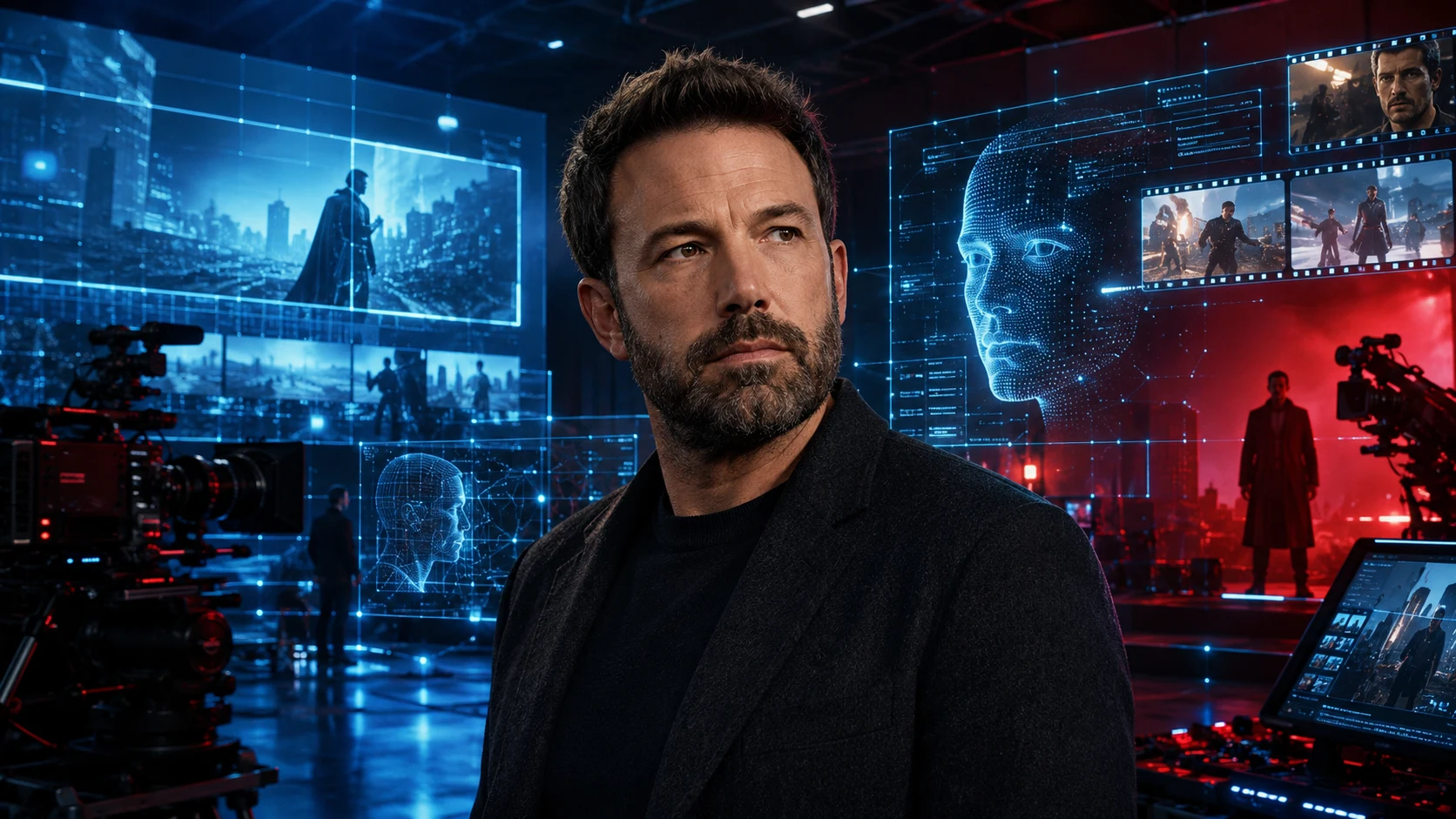
Netflix AI film strategy is no longer some distant industry rumor whispered between studio executives, software founders, and nervous creatives scrolling through production news at midnight. It is starting to feel like the next major plot twist in Hollywood’s relationship with technology, especially as names like Ben Affleck enter conversations about how artificial intelligence could reshape filmmaking from the inside. For years, AI in entertainment sounded like a side tool, something used quietly for subtitles, recommendations, cleanup, or marketing experiments. Now the discussion has moved closer to the center of the frame, where scripts, performances, visual effects, editing workflows, and production budgets all collide. That shift is exactly why this moment feels bigger than one film, one actor, or one streaming platform.
The headline sounds almost engineered to stop the scroll: AI, Netflix, Ben Affleck, and the future of film all packed into one cultural pressure point. It has the kind of energy that makes people immediately pick a side, either cheering for faster creative tools or worrying that cinema is becoming another software pipeline. But the smarter read sits somewhere in the middle, because Netflix is not simply chasing a gimmick here. The company is reading the room, watching how production costs, audience behavior, and visual technology are changing at the same time. In that landscape, an AI-powered film connected to a high-profile Hollywood figure becomes less like a stunt and more like a signal.
Why Netflix AI Film Strategy Matters Now
The reason Netflix AI film strategy matters is that streaming has entered a more disciplined era after years of chaotic expansion. Platforms can no longer throw unlimited money at every glossy project and hope subscription growth covers the bill. Viewers are more selective, investors are more demanding, and original films have to work harder to justify their budgets. AI enters this picture as a tool that promises speed, flexibility, and new visual possibilities, but also brings a wave of creative anxiety. For Netflix, the question is not whether AI can make something look impressive, but whether it can help create films that feel fresh, scalable, and emotionally convincing.
Ben Affleck’s name adds weight because he represents a bridge between old Hollywood credibility and the new business reality of entertainment. He is not just a recognizable actor; he is also associated with directing, producing, and understanding the machinery behind film culture. When someone with that kind of profile appears in the orbit of AI-driven cinema, the conversation instantly becomes more serious. It suggests that artificial intelligence is moving beyond experimental shorts, online demos, and strange viral clips into projects that mainstream audiences may actually watch. That is why this story feels like a marker of where visual entertainment is heading next.
From Streaming Wars to AI Production Wars
The streaming wars were once about who could build the biggest library, sign the loudest talent deals, and dominate the weekend watchlist. That era produced massive shows, blockbuster films, and a constant race for global attention. But the next phase may be less about volume and more about production intelligence. Netflix has already mastered distribution at scale, recommendation systems, global dubbing, and data-driven audience targeting. If AI can now influence the production side, the platform gains another layer of control over how stories are made, refined, localized, and delivered.
This is where AI becomes more than a creative toy. It can help visualize scenes earlier, test alternate looks, accelerate post-production, improve localization, support concept design, and reduce certain technical bottlenecks. For a platform that releases content across different countries and cultures, those advantages are not small. A single film can require huge coordination across visual effects teams, editors, marketers, subtitle teams, dubbing studios, and regional campaigns. AI tools can potentially connect those moving parts faster, even if human judgment still decides what actually feels cinematic.
The Ben Affleck Factor in an AI Film Era
Ben Affleck brings a specific kind of cultural texture to this conversation because his career has always moved between star power and behind-the-camera control. He understands what it means to be the face of a movie, but also what it means to shape tone, pacing, and audience trust. In an AI film context, that dual identity matters. The public is more likely to take the project seriously if it does not feel like a faceless tech experiment pretending to be art. A familiar Hollywood name can make AI filmmaking feel less abstract and more connected to the industry people already know.
At the same time, celebrity involvement does not automatically solve the trust problem around AI. Audiences are becoming sharper at detecting when something feels synthetic, hollow, or visually over-processed. They may forgive AI-assisted production if the story lands, the performances feel real, and the visual style supports the emotion instead of replacing it. But they will push back if the final result feels like a tech demo wearing the mask of cinema. That is the delicate challenge facing any AI-linked project with a major Hollywood name attached.
AI as a Visual Tool, Not a Magic Director
The most grounded way to understand Netflix AI film strategy is to avoid the fantasy that AI suddenly becomes the director, writer, cinematographer, editor, and actor all at once. In real production environments, AI usually works best as a layer inside a bigger human-led workflow. It can generate visual references, suggest edits, clean up footage, extend sets, support previs, create alternate compositions, or help teams iterate faster. Those are meaningful changes, but they still depend on taste, direction, and storytelling discipline. A bad scene does not become powerful just because a model renders it beautifully.
This distinction matters because the internet tends to flatten every AI conversation into either hype or panic. In film, the more interesting reality is messy and practical. Directors may use AI to explore looks before committing to expensive builds. Editors may use AI-supported tools to test rhythm or organize footage more efficiently. Visual teams may use generative systems to speed up background concepts or environmental variations. But the emotional core of a film still comes from choices, tension, performance, silence, timing, and the strange human instinct of knowing when a moment feels true.
Why Netflix Wants Visual Flexibility
Netflix operates at a global scale, and that scale changes how visual innovation is valued. A traditional studio might think about one theatrical release window, one marketing rhythm, and one cultural launch moment. Netflix thinks in languages, territories, thumbnails, recommendation rows, trailers, dubbed versions, social clips, and endless viewing contexts. AI can support that ecosystem by making visual assets more adaptable across markets. A film does not only need to exist as a two-hour story; it also needs to travel through dozens of digital surfaces before someone presses play.
That is why the platform’s interest in AI cannot be separated from its larger content machine. The same film might need different promotional cuts for different countries, multiple artwork tests, localized visuals, and fast campaign adjustments based on viewer response. AI tools could make that process more responsive without requiring every asset to be rebuilt from scratch. For a company chasing attention in a crowded entertainment feed, that kind of flexibility has real business value. The creative question is whether this flexibility can enhance a film’s identity instead of diluting it into endless algorithmic variations.
The Creative Anxiety Behind the Hype
Every major AI film conversation carries a shadow, and that shadow is labor. Writers, actors, editors, animators, visual effects artists, production designers, and illustrators are all watching carefully. They know that technology can begin as a helper and slowly become a cost-cutting argument in the hands of executives. That fear is not random, because entertainment history is full of tools that changed workflows while also changing who gets hired, credited, and paid. An AI-connected Netflix project will naturally raise questions about transparency, consent, compensation, and the future value of human craft.
This is especially intense in visual entertainment, where generative tools can imitate styles, faces, environments, and cinematic textures with alarming speed. A production team may see faster concept art, cheaper background extensions, or easier visual experimentation. An artist may see years of training being compressed into prompts and model outputs. Both perspectives can be true at the same time, which is why the debate is so charged. The industry needs clearer boundaries before AI becomes a normal part of the production stack, not after everyone has already adapted under pressure.
The New Look of AI-Driven Cinema
Visually, AI cinema is beginning to develop its own strange signature. Sometimes it looks hyper-polished, with lighting that feels too perfect and surfaces that seem slightly unreal. Sometimes it produces dreamlike environments that would be expensive or impossible to build traditionally. Other times, it creates an uncanny smoothness that viewers can sense even if they cannot explain it. For a site focused on visual entertainment, this is where the trend becomes especially interesting, because AI is not only changing how films are produced but also how audiences read images.
The next generation of viewers may become visually bilingual in a new way. They will recognize the grammar of live-action cinematography, animation, CGI, game engines, and AI-generated imagery all at once. They may not care which tool made a shot if the feeling works, but they will care when the image feels empty. This creates pressure for filmmakers to use AI with intention rather than novelty. The strongest AI-assisted films will probably be the ones where the technology disappears into the story instead of constantly announcing itself.
How This Could Change Film Budgets
Budget pressure is one of the biggest reasons AI has become attractive to streaming platforms. Modern films can become extremely expensive before audiences even see a trailer, especially when visual effects, reshoots, global marketing, and post-production delays stack up. AI tools promise to reduce friction in some of those areas, particularly during planning and post-production. If a director can preview complex scenes earlier, producers can make decisions before money is burned on the wrong approach. If visual teams can iterate faster, smaller films may attempt bigger worlds without needing blockbuster-level resources.
However, cheaper does not automatically mean better. Film history is full of expensive failures and low-budget masterpieces, which proves that money has never been the only measure of cinematic power. AI may help certain productions stretch their resources, but it can also tempt studios into overproducing content with less care. The danger is not that every film suddenly becomes AI-made. The danger is that speed becomes the main creative value, pushing the industry toward more output and less patience.
What Audiences Actually Want From AI Films
Audiences are not as anti-technology as the loudest debates make them seem. They already watch films filled with CGI, digital doubles, virtual production, de-aging, motion capture, and invisible post-production tricks. What they reject is the feeling of being tricked, replaced, or sold a hollow spectacle. If Netflix uses AI to support better pacing, sharper visuals, richer worlds, or more daring concepts, many viewers may accept it without much drama. But if AI becomes the main selling point while the story feels thin, the backlash will arrive fast.
This is why the Ben Affleck connection is useful from a branding perspective but not enough by itself. A recognizable actor can open the door, but the film still has to earn attention scene by scene. Viewers want conflict, style, emotional stakes, and characters who feel like they have a pulse. They want visuals that surprise them without making them feel trapped inside an expensive filter. AI can help build the stage, but the drama still has to breathe.
The Bigger Trend Across Visual Technology
The Netflix conversation sits inside a much bigger wave of visual technology changing creative industries at once. AI image generators, video models, design assistants, editing software, virtual production tools, and synthetic media platforms are all evolving quickly. The line between filmmaker, designer, animator, editor, and prompt-driven visual director is becoming more fluid. Young creators are already experimenting with workflows that would have looked impossible a few years ago. They can build pitch decks, mood reels, character tests, and surreal video concepts with fewer barriers than previous generations faced.
For Hollywood, that democratization is both exciting and threatening. Smaller creators may use AI to compete visually with bigger studios, at least at the concept stage. Studios may use AI to speed up development and test ideas before committing huge budgets. Software companies may become more influential inside creative decisions because their tools shape what is possible and what becomes normal. In this new landscape, the future of film may be shaped as much by interface design and model ethics as by cameras and soundstages.
Practical Insight for Creators Watching Netflix
For creators, the smart move is not to ignore AI or worship it. The smart move is to study where it fits into a real workflow. Filmmakers can use AI for early visual exploration, but they should still develop taste through photography, editing, writing, performance, and cinema history. Designers can use AI for iteration, but they still need a point of view that makes their work recognizable. Writers can use AI to pressure-test ideas, but they should not outsource the emotional logic of a story.
The Netflix and Ben Affleck moment is a reminder that mainstream entertainment is paying attention to these tools, which means creative professionals should learn the language before it becomes mandatory. That does not mean every artist has to become a machine-learning expert. It means understanding what AI can do, what it cannot do, and where human judgment creates the difference between content and cinema. The most valuable creators in the next era may be those who can direct both people and tools with clarity. They will know when to prompt, when to reject, when to refine, and when to turn the machine off.
What Netflix Risks by Moving Too Fast
Netflix has built its reputation on being early, aggressive, and willing to challenge traditional entertainment rules. That same instinct helped the company transform television habits, global content discovery, and streaming economics. But AI brings a different kind of risk because it touches identity, labor, authorship, and audience trust all at once. If the platform moves too fast without clear creative standards, it could make viewers suspicious of its most ambitious projects. A film that should feel innovative could instead become a symbol of everything people fear about automated entertainment.
The best version of this strategy would be transparent without turning every release into a technical lecture. Netflix does not need to explain every tool used in every frame, but it does need to protect the sense that real artists are still leading the process. Creative credits, performer consent, ethical data practices, and fair collaboration will matter more as AI becomes more visible. The companies that handle those issues well may gain trust while still moving quickly. The companies that treat them as boring details may face cultural pushback that no algorithm can solve.
Conclusion: AI Is Netflix’s New Visual Bet
Netflix AI film strategy feels like a turning point because it captures the exact tension defining visual entertainment right now. The industry wants faster production, bolder worlds, smarter workflows, and content that can travel globally without losing impact. At the same time, audiences and artists want proof that cinema is not being flattened into automated output. A Ben Affleck-linked AI film becomes powerful as a symbol because it places old Hollywood recognition next to the newest creative technology. That combination is messy, fascinating, and impossible to ignore.
The future will probably not be a clean battle between human filmmakers and artificial intelligence. It will be a complicated collaboration shaped by money, taste, ethics, software, and audience emotion. Netflix may use AI as a new weapon in the streaming race, but the winner will not be the company with the flashiest model or the fastest pipeline. The winner will be the one that makes technology feel invisible when the story needs intimacy and spectacular when the moment demands wonder. In that sense, the real test of AI cinema is not whether it can generate images, but whether it can help humans make films that still feel alive.