
AI Image Generation in Google Images Arrives
 Vortixel
18 minutes read
Vortixel
18 minutes read
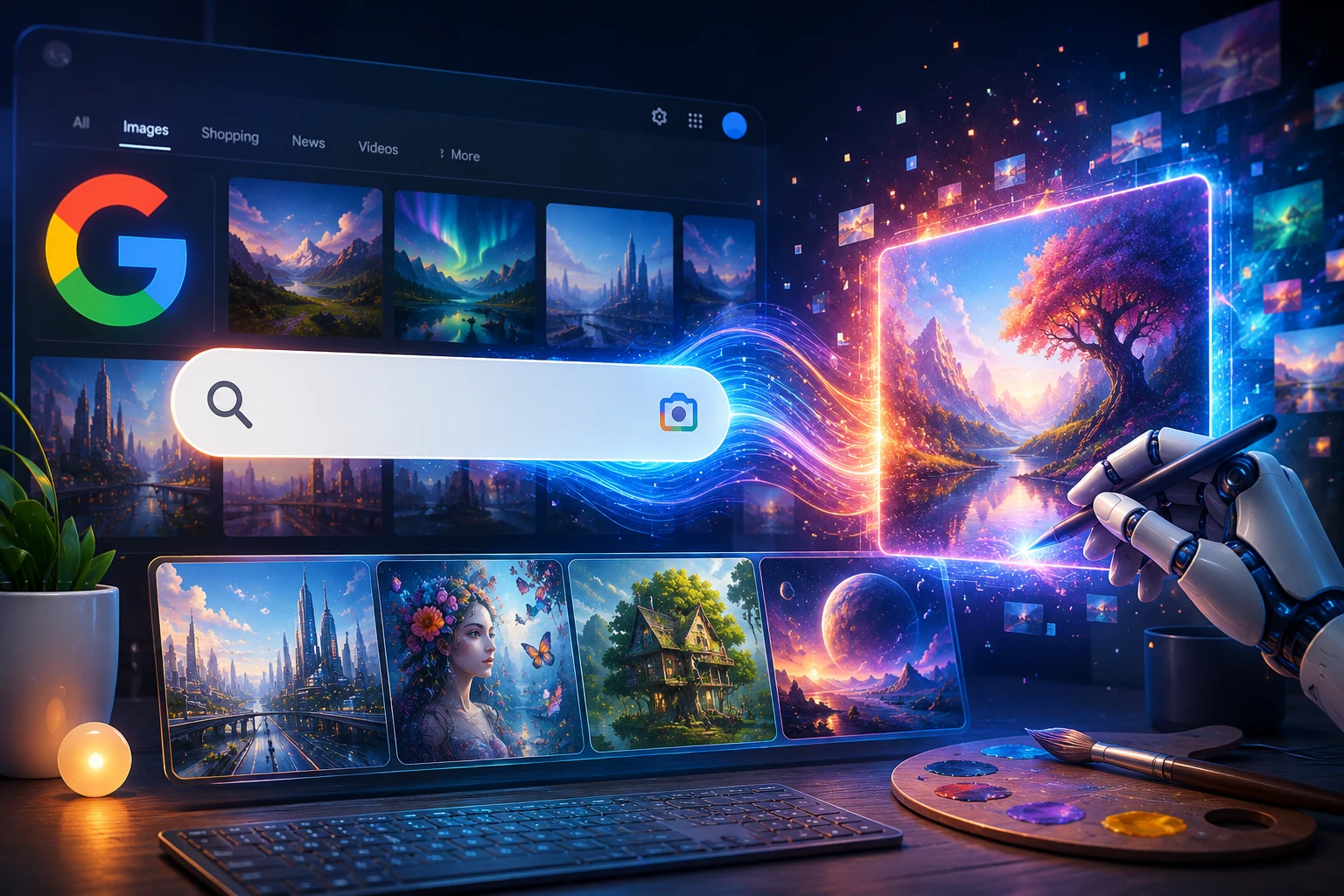
Search used to be the quiet starting point of the internet, the place people visited when they had a question, a vague idea, or a visual reference they could not fully describe. Now, AI image generation in Google Images is pushing that familiar experience into a new era where search no longer just finds pictures, but helps create them. The shift feels subtle at first, because the search bar still looks like a search bar and the results page still carries the rhythm people already know. But underneath that simple interface, a bigger change is happening: visual discovery is becoming interactive, generative, and much more personal. For creators, designers, marketers, students, and everyday users, Google Images is starting to feel less like a gallery and more like a visual studio built into the web itself.
This matters because Google Images has never been just another search feature. For years, it has shaped how people build mood boards, choose design references, understand visual trends, compare products, explore aesthetics, and translate abstract ideas into something they can actually see. When that same space begins to include AI-powered creation, the line between looking for an image and making one starts to blur. A user searching for a futuristic bedroom, a surreal city skyline, or a campaign concept may no longer need to jump between multiple tools before landing on something useful. Instead, the process can begin inside the search experience itself, with AI image generation in Google Images turning curiosity into visual output almost instantly.
Why AI Image Generation in Google Images Feels Like a Big Shift
The biggest reason this feels important is not simply that Google is adding another AI feature. The real story is that one of the most mainstream visual search tools on the internet is moving closer to becoming a creative engine. Many AI image tools have already been popular among designers, tech fans, and social media creators, but they often require people to visit a separate platform, learn a new interface, and understand prompting as its own skill. Google Images, by contrast, already sits inside a daily habit that millions of people understand. By bringing generative tools into that environment, Google lowers the friction between having an idea and producing a visual draft.
This shift also changes the role of search itself. Traditional image search depends on what already exists online, which means users are limited by uploaded photos, illustrations, stock assets, screenshots, product pages, and visual archives. AI creation expands that model by letting users ask for images that may not exist yet in exactly the form they imagine. A designer might want a coffee shop interior with soft neon lighting and mid-century furniture, while a blogger might need a conceptual image about remote work culture in 2030. Instead of hunting through hundreds of imperfect results, users can begin shaping the image closer to their intent from the first step.
For a platform like Visual Vortixel, this is the kind of visual technology trend that sits right at the intersection of artificial intelligence, design, and digital creativity. It is not just about making pretty images faster. It is about changing who gets to participate in visual production and how early-stage ideas move from imagination to presentation. The feature signals that AI-generated visuals are no longer locked inside experimental tools or niche creative communities. They are becoming part of the everyday internet workflow, and that will affect how people search, design, publish, shop, learn, and tell stories online.
From Search Results to Creative Starting Points
Google Images has always been a starting point, but the starting point used to be passive. A person typed in a phrase, scanned the results, opened a few tabs, saved references, and then moved somewhere else to create. That workflow still exists, but AI image creation adds a new layer of action to the search journey. Instead of stopping at inspiration, users can test a concept, adjust a visual direction, and build a rough creative asset inside the same discovery loop. It turns search from a window into a workspace.
This change is especially powerful because most creative work begins with uncertainty. People rarely start with a perfect visual brief in their head. They begin with a feeling, a color palette, a theme, a half-formed phrase, or a messy screenshot folder full of references. A generative image tool inside Google Images can help translate those scattered ideas into something more concrete. The result may not be final, polished, or ready for publication, but it can become the spark that helps a project move forward.
That kind of speed matters in modern content culture. Social platforms move quickly, blog visuals need to match fast-changing topics, brand campaigns are tested in multiple versions, and creators are expected to produce more visual material than ever before. In that environment, an AI-assisted search experience can help people ideate faster without immediately committing to expensive software or complicated production. It gives the casual user a creative boost and gives the professional user another place to prototype. The value is not only in the finished image, but in the reduced distance between a question and a visual answer.
The Gen Z Logic Behind Visual Search
For younger internet users, search is increasingly visual, social, and vibe-driven. People do not always search in clean, formal phrases anymore. They search for aesthetics, outfit moods, bedroom setups, editing styles, travel looks, color combinations, tattoo ideas, game environments, and cinematic references. Many users think in images before they think in paragraphs. That makes Google Images a natural place for AI creation to grow, because the platform already understands that visual intent is often emotional and exploratory.
This is where the feature becomes culturally interesting. A user might not know the technical name for a design style, but they may know they want something that feels dreamy, chrome, retro-futuristic, cozy, brutalist, aquatic, or editorial. Generative tools can respond to those softer creative signals in a way traditional search sometimes struggles to do. Instead of forcing people to know the exact vocabulary of design, AI can help interpret the mood and produce a direction. For Gen Z creators who move between TikTok edits, digital art, mood boards, gaming visuals, and brand content, that flexibility feels native.
The rise of AI inside image search also reflects a broader shift in how people create online identities. Visuals are not just decoration anymore. They are part of how people express taste, build personal brands, promote small businesses, pitch ideas, and participate in culture. When image generation becomes more accessible, the ability to create a visual language becomes less dependent on traditional design training. That can be exciting, messy, and disruptive at the same time. It gives more people creative power while also raising new questions about quality, originality, and visual overload.
How Designers Could Use This Without Losing Their Edge
Designers are often the first group people think about when AI image tools enter mainstream platforms. Some worry that these tools will flatten creative work, flood the internet with generic visuals, or make clients underestimate the value of professional design. Those concerns are valid, especially when AI images are treated as finished creative strategy instead of early-stage material. But for designers who understand the tool clearly, AI image generation can also become a fast sketching partner. It can help explore directions before the real craft begins.
A designer working on a campaign could use AI-generated images to compare moods, test composition ideas, or show a client several visual directions before building the final artwork manually. A web designer could explore hero section concepts, background textures, visual metaphors, or product scene ideas before opening more advanced design software. A brand strategist could generate rough visual territories to explain whether a campaign should feel minimal, cinematic, futuristic, rebellious, or playful. In each case, the AI image is not replacing the designer’s judgment. It is speeding up the messy exploration stage that comes before the polished output.
The key is to avoid treating the first result as the final answer. AI images can look impressive at a glance while still missing brand consistency, emotional nuance, accessibility, cultural context, or production realism. A strong designer brings taste, restraint, editing, structure, and intention to the process. Google Images may make visual creation easier to access, but professional design still depends on knowing what to keep, what to reject, and why a visual choice works. The edge belongs to people who use AI as a tool, not as a substitute for thinking.
A New Playground for Digital Artists
Digital artists may experience this change differently from designers. For some, AI image generation inside search can feel like another wave of pressure on an already crowded creative field. For others, it can feel like an open sketchbook for visual experiments that would be difficult or time-consuming to stage from scratch. The tension comes from the fact that AI tools can imitate styles, remix visual conventions, and generate polished-looking scenes very quickly. That speed creates opportunity, but it also forces artists to think more deeply about voice, process, and originality.
Artists who use generative tools well tend to bring a strong point of view before the prompt is even written. They know what atmosphere they want, what references they are intentionally bending, what emotional tone they are chasing, and what details make the work feel personal. In that sense, Google Images becoming more generative could push casual users toward experimentation while pushing serious artists to sharpen their identity. When everyone can produce a futuristic landscape, the real distinction becomes composition, concept, story, and taste. The tool can generate an image, but it cannot automatically generate a meaningful artistic reason for that image to exist.
This is why the future of Artificial Intelligence in visual culture will not be defined only by technical capability. It will also be defined by how creators use those capabilities to build worlds, critique culture, express memory, or design experiences that feel emotionally specific. AI can help create visual volume, but artists still shape visual meaning. The best work will likely come from people who combine machine speed with human obsession. That combination could make digital art more experimental, more accessible, and more competitive all at once.
What This Means for Publishers and Bloggers
For publishers, bloggers, and SEO-focused websites, the arrival of AI creation inside Google Images could be extremely practical. Visual content has become a major part of how articles perform, especially when readers judge a page within seconds. A strong feature image can help communicate the angle of a story before the first paragraph is fully read. Smaller publishers often struggle with this because custom visuals take time, stock images can feel repetitive, and original photography is not always realistic. AI-generated visuals can help fill that gap when used responsibly and with editorial taste.
A technology blog covering future gadgets, creative software, or digital entertainment could use AI visuals to build conceptual images that match abstract topics. An article about AI in movie production might need a cinematic control room. A post about virtual fashion might need a surreal runway. A feature about smart homes could benefit from a futuristic interior that does not look like a generic stock photo. These kinds of visuals are hard to find through traditional image search because they are specific, conceptual, and tied to editorial framing.
Still, publishers need to be careful. AI images should not be used to mislead readers into thinking a fictional scene is real, especially when covering news, public figures, disasters, politics, health, finance, or legal topics. Clear editorial standards matter more as visual generation becomes easier. For evergreen explainers, conceptual thumbnails, design mood pieces, and creative trend coverage, AI imagery can be useful. For factual reporting, documentary imagery, and sensitive stories, publishers should apply stricter rules and avoid visuals that blur reality in harmful ways.
The Search Experience Becomes More Personal
One of the most underrated parts of this trend is personalization. Traditional image search shows users what the web has already made available, ranked through relevance, context, quality signals, and search behavior. Generative image search can move closer to what the user actually wants in the moment. That means two people searching for the same broad idea might end up with very different visual outputs based on their prompts, refinements, and creative goals. Search becomes less universal and more collaborative.
This could make visual exploration feel more natural. Instead of searching again and again with slightly different words, users can describe changes in plain language. They might ask for a warmer color palette, a wider angle, a cleaner background, a more cinematic mood, or a different type of lighting. Each change becomes part of a creative conversation between the user and the tool. For people who are not trained in design software, that conversational flow may feel easier than adjusting layers, masks, filters, and technical settings.
The downside is that personalization can also trap people inside visual comfort zones. If AI keeps producing exactly the kind of images users already prefer, discovery may become less surprising. One of the joys of traditional image search is stumbling across unexpected references, strange compositions, historical visuals, or niche creators. A strong future version of Google Images will need to balance generative convenience with real discovery. The best visual search experience should help users create what they imagine while still exposing them to what they did not know they needed.
The Copyright and Consent Conversation Will Get Louder
Any conversation about AI image creation eventually runs into copyright, consent, and creative ownership. When users generate images through a major search platform, they may not always think about where the model learned its visual knowledge or how similar an output might be to existing work. That lack of awareness can create tension between convenience and creative ethics. Artists, photographers, illustrators, and studios have already raised concerns about how AI systems are trained and how generated visuals might compete with human-made work. Bringing creation into a mainstream search environment will only make those debates more visible.
The challenge is that everyday users often approach AI tools casually. They may simply want a quick image for a school project, blog post, presentation, social update, or mood board. They are not necessarily thinking about intellectual property, likeness rights, dataset transparency, or commercial usage rules. But as AI-generated visuals become common, those details become harder to ignore. Platforms will need clearer guidance, and users will need better visual literacy around what can be used, where it can be used, and when extra caution is necessary.
Consent will be especially important when AI images involve realistic people, celebrity likenesses, brand marks, news-like scenes, or styles that closely echo living artists. Even if a tool prevents some risky outputs, the cultural pressure around synthetic media will keep growing. People want fast creative tools, but they also want trust. The companies that handle this balance well will not only offer impressive generation quality, but also responsible guardrails, labeling, and education. In the AI creation era, trust may become just as important as visual realism.
Impact on Stock Photography and Visual Marketplaces
Stock photography and visual marketplaces are also likely to feel the pressure. For years, stock libraries solved a simple problem: people needed usable images quickly, especially for websites, presentations, ads, and editorial layouts. AI image generation attacks that same problem from another direction by letting users create custom visuals instead of searching through existing catalogs. If someone can generate a specific office scene, product background, or abstract technology image in seconds, generic stock photos become less appealing. The value of stock imagery may shift toward authenticity, verified realism, premium production, and legally clear licensing.
That does not mean stock photography disappears. Real images of real places, events, people, products, and cultures still carry value that AI cannot fully replace. Editorial photography, documentary work, brand shoots, and authentic lifestyle images can communicate truth in a way synthetic visuals cannot. However, the middle layer of generic visual filler may become more vulnerable. The smiling office team, the abstract digital network, the futuristic city, and the perfect desk setup are all easy targets for AI generation.
Visual marketplaces may respond by integrating AI tools themselves, improving licensing clarity, and highlighting human-made collections with stronger identity. Some may offer hybrid workflows where users start with licensed assets and customize them through AI editing. Others may position themselves around trust, provenance, and commercial safety. The market will not simply split into human versus AI. It will become a layered ecosystem where authenticity, customization, speed, and legal confidence all compete for attention.
Practical Ways Creators Can Use It Today
For creators, the smartest approach is to treat AI image creation as part of the planning process rather than the entire creative process. It can help brainstorm ideas, build mood boards, explore visual angles, test thumbnail concepts, and communicate direction to collaborators. A YouTube creator might generate several thumbnail moods before designing the final version manually. A blogger might test different article image concepts before choosing one that matches the tone of the piece. A small business owner might explore campaign visuals before hiring a designer or photographer for the final execution.
- Use AI images for early concept exploration before committing to a final design direction.
- Write prompts that include mood, lighting, composition, color, format, and intended use.
- Avoid using realistic AI images for factual news unless they are clearly conceptual.
- Check whether the output matches your brand identity before publishing it.
- Refine generated visuals manually when quality, accuracy, or uniqueness matters.
Prompting also becomes more useful when creators think visually instead of vaguely. A weak prompt might ask for a “cool technology image,” but a stronger prompt might describe a clean editorial image of a laptop on a glass desk, soft blue lighting, futuristic UI reflections, and a minimal background for a tech blog header. The more context the user gives, the more useful the output becomes. Even then, creators should review details closely because AI-generated images can still produce strange hands, odd text, distorted objects, unrealistic interfaces, or confusing spatial logic. The best workflow is fast generation followed by human editing and selection.
Why This Could Reshape Visual SEO
Visual SEO may also change as AI-generated images become more integrated into search behavior. Websites have long optimized images through file names, alt text, captions, compression, structured data, and relevance to page content. But if users begin generating visuals directly inside search environments, publishers may need to think harder about originality and contextual value. A generic image may no longer be enough to stand out because users can produce similar visuals themselves. The images that matter most may be those connected to real expertise, unique data, original reporting, custom design, or strong editorial framing.
This does not make image SEO irrelevant. It may actually make it more important. As the web fills with AI-generated visuals, search systems will need to evaluate quality, usefulness, authenticity, and context more carefully. Pages that use visuals thoughtfully could have an advantage over pages that simply add synthetic images as decoration. For a site focused on design or visual technology, the image should support the story, not just fill space. It should help explain the concept, create atmosphere, or make the article more memorable.
Publishers should also pay attention to image metadata and accessibility. Alt text should describe the actual image and its role in the content, not just stuff keywords. File names should be clean and relevant. Captions can add context when an image is conceptual or AI-generated. Visual SEO in the AI era will reward websites that understand images as editorial assets rather than disposable decoration. That mindset is especially important for websites covering visual innovation, because the visual experience is part of the brand promise.
The Bigger Trend: Creation Is Moving Into Everyday Tools
Google Images entering the AI creation era is part of a larger pattern across technology. Creative features that once belonged to specialized software are moving into everyday tools. Writing assistance appears in email and documents. Image editing appears in phones and social apps. Video generation appears in creator platforms. Design suggestions appear in presentation tools and website builders. The direction is clear: creation is becoming ambient, always available, and built into the places people already work.
This changes expectations. Users increasingly expect software to understand intent, suggest options, and help produce results without requiring expert-level technical skills. That does not eliminate professional tools, but it changes who can participate at the entry level. A student can make a more polished presentation. A small brand can create a better campaign mockup. A blogger can generate a more relevant header image. A designer can move faster through the first messy stage of ideation.
The risk is that convenience can make everything look the same. When millions of people use similar tools, similar prompts, and similar visual defaults, the internet can quickly fill with glossy but forgettable images. The creators who stand out will be the ones who use AI to accelerate their process while still bringing taste, research, cultural awareness, and personal style. In other words, the tool may become mainstream, but originality will still be rare. That is where the real creative competition begins.
What Google’s Move Says About the Future of Visual Technology
Google’s move into AI-powered image creation shows that visual technology is no longer just about better cameras, sharper screens, or more advanced editing tools. It is about interfaces that understand imagination. The next phase of visual technology will be shaped by systems that can interpret language, style, mood, context, and intent. That means the creative process becomes more conversational and less tied to traditional production steps. People will not only search for visuals; they will negotiate with machines to produce them.
This could influence everything from entertainment to education. Students could generate historical scene concepts for class projects. Game developers could explore environment ideas faster. Interior design fans could visualize rooms before buying furniture. Filmmakers could draft production moods without expensive concept art at the earliest stage. Marketing teams could test visual directions before committing budget. In each case, AI image generation becomes less of a novelty and more of a practical layer in visual planning.
At the same time, society will need stronger visual literacy. People must learn how to question what they see, identify synthetic media, understand when an image is illustrative rather than factual, and respect the difference between inspiration and imitation. The more powerful image generation becomes, the more important context becomes. A beautiful AI image can inspire, but it can also confuse if it is presented without clarity. The future of visual technology will depend not only on what machines can create, but also on how responsibly people use what they create.
Conclusion: Google Images Is Becoming a Visual Studio
The arrival of AI image generation in Google Images marks a major shift in how people move from curiosity to creation. What used to be a search destination is becoming a creative starting point, giving users a faster way to explore ideas, test styles, and shape visuals around their own intent. For designers, artists, bloggers, publishers, and everyday creators, the opportunity is huge, but it comes with responsibilities around accuracy, consent, originality, and trust. The feature will not replace human creativity, but it will change the speed and accessibility of visual production. In the new era of Google Images, the question is no longer just “What can I find?” but “What can I imagine next?”