
June Art Exhibitions Heat Up Global Design
 Vortixel
16 minutes read
Vortixel
16 minutes read
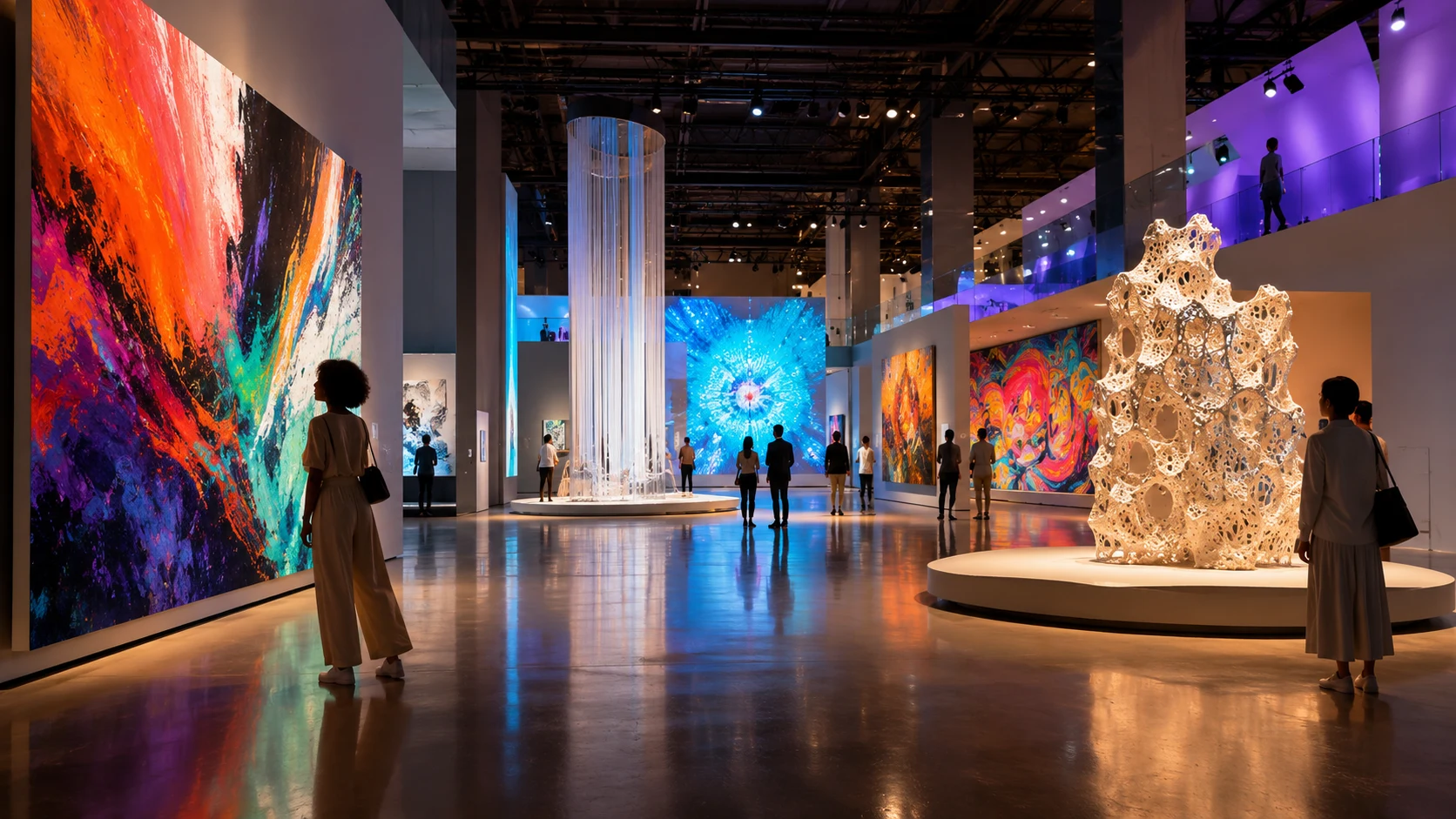
June art exhibitions are turning the global creative calendar into something bigger than a neat list of museum openings. This month feels like a pressure point, the kind of moment when galleries, museums, architecture spaces, design festivals, and experimental art platforms all start talking at once. From Los Angeles to London, from European museum districts to design-forward city programs, the visual world is moving with unusual confidence. The mood is not just about beautiful objects on white walls, but about how art responds to travel, identity, climate, technology, memory, and the way people now consume culture through both physical rooms and digital feeds. For Visual Vortixel readers, this is exactly where June art exhibitions become more than an agenda, because they show how global visual culture is heating up in real time.
The first thing that makes June feel different is its rhythm. The art world has always loved seasonal momentum, but June sits in a unique space between spring launches and summer travel. Audiences are more mobile, cities are more active, and major institutions know that a strong June exhibition can shape the conversation for the rest of the year. That is why many curators use this window to present shows that are visually bold, easy to travel for, and strong enough to circulate across social media without losing their museum-level depth. In a cultural landscape where attention is fragmented, June becomes a stage where exhibitions have to be both intellectually rich and visually unforgettable.
Why June Art Exhibitions Matter Now
June art exhibitions matter because they arrive at a time when the creative industry is no longer separated into clean categories. A painting show can become a design conversation, an architecture installation can feel like cinema, and a photography exhibition can behave like a public archive. Visitors no longer enter exhibitions as passive viewers who simply read wall labels and move on. They arrive with cameras, references, online discourse, and personal expectations shaped by visual platforms. This forces museums and galleries to think about experience, pacing, lighting, spatial storytelling, and emotional impact as carefully as they think about the art itself.
That shift is why June has become such a powerful month for global art visibility. Exhibitions opening around this period are often designed to capture both local audiences and international cultural travelers. A visitor might plan a trip around a museum retrospective, a design week, a photography biennial, or an architecture festival. At the same time, someone who never enters the physical space may still encounter the exhibition through images, reviews, reels, newsletters, and editorial roundups. The result is a two-layer cultural event, where the gallery room matters, but the visual afterlife online matters almost as much.
This does not mean exhibitions are becoming shallow or purely promotional. In fact, the strongest shows of this season prove the opposite. They use strong visuals to pull audiences in, then reward them with deeper questions about history, authorship, public space, material culture, and social change. The best exhibition agenda is no longer just a list of things to see, but a map of what the creative world is currently worried about, excited about, and willing to challenge. That is why June feels hot: it is not only busy, it is meaningfully busy.
The Global Exhibition Calendar Feels More Connected
One of the clearest patterns in the current exhibition landscape is how connected everything feels. A show in Los Angeles can speak to a design conversation in Copenhagen, while a museum opening in Europe can overlap with debates happening in digital art communities. This does not happen by accident. Curators, artists, architects, and designers are watching the same global pressures unfold, from urban housing and climate anxiety to artificial intelligence and cultural memory. As a result, the global exhibition calendar now feels less like scattered events and more like a shared conversation happening across multiple cities.
That connection is especially visible in exhibitions that blend art, design, and architecture. Instead of treating these disciplines as separate lanes, many shows now present them as overlapping tools for understanding modern life. A chair can become a political object, a building model can become a story about public access, and an installation can become a way to question how people live together. This is why design-focused exhibitions are becoming more important to art audiences. They offer a practical doorway into bigger cultural debates without losing the beauty and sensory pull that make exhibitions memorable.
For Visual Vortixel, this trend is highly relevant because the site sits naturally inside the world of Digital Art, design culture, creative software, and visual innovation. Readers are not only looking for art history, but also for how images, spaces, tools, and interfaces shape the way people understand the present. June’s exhibition agenda gives that audience a wide lens. It shows how museums are becoming more immersive, how design events are becoming more socially aware, and how visual storytelling is now central to almost every creative industry.
Los Angeles Shows How a City Becomes a Canvas
Los Angeles is one of the strongest examples of how June exhibitions can turn a whole city into a visual system. The city already has a special relationship with light, surface, image-making, architecture, entertainment, and public spectacle. When galleries and institutions across Los Angeles activate at the same time, the result feels less like a traditional museum month and more like a citywide mood board. This is especially powerful because Los Angeles does not experience art in a single district or formal corridor. It spreads across neighborhoods, commercial galleries, public spaces, artist-run rooms, and institutions that each carry their own visual identity.
The Los Angeles exhibition scene also reflects a bigger global shift toward place-based storytelling. Audiences are increasingly interested in how a city shapes the art that comes out of it. In Los Angeles, that means conversations about cinematic light, architecture, migration, music, performance, activism, and the culture of image production. A show about abstraction can still feel tied to the freeway, the studio, the beach, or the city’s layered histories. This makes June exhibitions in Los Angeles feel especially alive, because they do not simply display art inside the city; they let the city become part of the artwork’s meaning.
This approach has practical value for other creative cities as well. When exhibitions connect to local identity, they become easier for audiences to remember and discuss. A generic white-cube presentation may still be elegant, but a show that understands its city can create deeper emotional traction. That is important in a crowded cultural market where every exhibition competes with streaming platforms, live events, travel content, and short-form visual media. The strongest June shows understand that the physical location is not just a backdrop, but a storytelling engine.
Design Festivals Are Becoming Cultural Forecasts
June is also a major month for design, and that matters because design festivals now operate almost like cultural forecasts. They reveal what materials, colors, interfaces, layouts, furniture forms, and spatial ideas are gaining momentum before they reach mainstream audiences. Unlike traditional exhibitions that may focus on completed works, design events often show a world still in progress. They let visitors see prototypes, experimental spaces, new collaborations, and early signals from studios that are testing how people might live, work, decorate, and interact in the near future. That makes the design side of June’s calendar especially valuable for anyone tracking visual innovation.
The most interesting design exhibitions are not simply selling taste. They are asking what kind of visual environment people want to inhabit next. This includes questions about sustainable materials, modular living, affordable housing, digital interfaces, craft revival, and the emotional role of objects in a fast-moving world. A lamp is no longer just a lamp when it carries conversations about energy, mood, material sourcing, and domestic ritual. A chair is not just a chair when it reflects changing ideas about comfort, work-from-home culture, and the aesthetics of small-space living.
This is where design exhibitions become especially important for digital creatives. Even if a designer works mostly on screens, physical exhibitions can sharpen visual thinking. The way a room guides movement can inspire website structure, the way an installation handles contrast can influence interface hierarchy, and the way a product display uses negative space can improve digital composition. Good exhibitions train the eye. They remind creative workers that visual culture is not limited to pixels, but exists in scale, texture, lighting, rhythm, and human movement.
Architecture Exhibitions Are Pulling Bigger Crowds
Architecture has become one of the most exciting parts of the June exhibition wave because it speaks directly to everyday life. People may not always visit contemporary art galleries, but everyone understands streets, homes, parks, offices, transit, and public space. When architecture exhibitions are presented well, they help audiences see the built environment as something designed, debated, and changeable. That awareness is powerful because it turns passive city life into active visual literacy. Visitors begin to notice facades, shadows, circulation, materials, and the emotional impact of space in a new way.
Many architecture-focused events this season are also tied to urgent global issues. Affordable housing, climate adaptation, urban density, preservation, accessibility, and community planning are not abstract themes anymore. They are daily realities in cities around the world. Exhibitions give these issues a visual language, making them easier to understand than policy documents or technical reports. Through models, drawings, films, installations, and immersive environments, architecture shows can turn complicated systems into experiences that feel immediate and human.
This is why architecture exhibitions are increasingly relevant to broader visual culture. They do not only speak to architects, developers, or urban planners. They speak to photographers, digital artists, game designers, filmmakers, and content creators who build worlds through images. A strong architecture exhibition can teach scale, atmosphere, framing, and environmental storytelling. Those lessons travel far beyond the museum, shaping how visual creators imagine cities, interiors, virtual worlds, and future landscapes.
Photography Is Carrying Memory Into the Present
Photography remains one of the most emotionally direct forces in the June exhibition calendar. In a world overloaded with images, curated photography exhibitions offer something that social feeds often cannot: context, sequence, silence, and time. A photograph inside an exhibition does not behave like a post that disappears under the next swipe. It asks the viewer to slow down, notice details, and connect personal feeling with historical or political meaning. That slower rhythm is part of why photography shows continue to feel essential, even when everyone carries a camera in their pocket.
The current photography agenda also reflects a broader interest in archives, diaspora, identity, and underrepresented histories. Many exhibitions are not just presenting images as aesthetic objects, but as evidence of lives, communities, and memories that deserve visibility. This gives photography a double role. It can be visually beautiful, but it can also repair gaps in public memory. For younger audiences, especially those used to discovering history through visual platforms, photography exhibitions can become a bridge between emotional recognition and serious cultural learning.
At the same time, photography is being reshaped by digital tools and artificial intelligence. The rise of image generation, editing software, and synthetic visuals has made audiences more aware of authenticity and manipulation. That does not weaken photography exhibitions; it makes them more urgent. Viewers are now asking sharper questions about who made the image, what was edited, what was staged, and what kind of truth the photograph claims to hold. In this environment, a strong photography show is not nostalgic, but deeply contemporary.
Digital Art Is No Longer a Side Category
One of the biggest changes in the exhibition world is that digital art no longer feels like a side room for experimental audiences. It has moved closer to the center of visual culture because digital tools now shape nearly every creative discipline. Artists use software, sensors, projection, data, machine learning, 3D environments, and interactive systems not as gimmicks, but as serious artistic materials. Audiences are also more comfortable reading digital experiences as art because their daily lives already happen through screens, interfaces, and algorithmic environments. The museum is simply catching up with the way people already see.
June exhibitions that include digital or technologically mediated work are especially interesting because they reveal how institutions are adapting. A museum must think differently when a work moves, listens, updates, responds, or depends on software. Conservation becomes more complicated, installation teams become more technical, and audiences may interact with the piece instead of only looking at it. This changes the social contract of the exhibition. Viewers are no longer just observers; they may become participants, data points, performers, or co-creators inside the experience.
This is where Artificial Intelligence and creative software enter the conversation. AI is not only changing how images are produced, but also how exhibitions are imagined, documented, promoted, and interpreted. Curators may use digital tools to model space, artists may build works from datasets, and audiences may encounter installations that respond to behavior in real time. The important question is not whether technology belongs in art spaces. It clearly does. The real question is how artists can use it with enough depth, ethics, and originality to avoid becoming trapped by novelty.
The Visual Economy Around Exhibitions Is Expanding
Another reason June feels so intense is that exhibitions now create a much larger visual economy around themselves. A major show can generate editorial coverage, travel plans, design collaborations, merchandise, social content, video essays, newsletters, podcasts, and brand partnerships. This does not mean the art becomes less serious. It means the exhibition now exists across multiple formats, each with its own audience. A person might first discover a show through a single installation photo, then read about the artist, then visit the museum, then share their own experience online.
This expanded economy creates opportunities and risks. On the positive side, exhibitions can reach people who might never read traditional art criticism or visit a major museum. They can inspire students, designers, independent artists, and casual viewers across countries. On the risky side, a visually dramatic show can be reduced to one photogenic corner, while quieter works get ignored. The challenge for curators is to design exhibitions that are visually shareable without becoming visually shallow.
For artists and creative professionals, this environment requires a more strategic understanding of visibility. A strong artwork still matters most, but presentation now shapes how that artwork travels. Lighting, installation design, title language, wall text, press imagery, and digital documentation all affect public perception. The modern exhibition is a media object as well as a physical event. Anyone working in visual culture needs to understand both sides.
What Creatives Can Learn From the June Agenda
The practical lesson from June’s exhibition momentum is simple: visual culture rewards people who can connect disciplines. A graphic designer who studies architecture will build stronger layouts. A digital artist who studies photography will understand composition and memory more deeply. A content creator who follows museum exhibitions will gain sharper references than someone who only watches platform trends. The best creative work often comes from crossing borders between art, design, technology, entertainment, and everyday life.
Creatives should also pay attention to how exhibitions build narrative. A strong show rarely throws objects into a room randomly. It guides the visitor through tension, contrast, pause, surprise, and resolution. That structure can be applied to websites, brand campaigns, video edits, digital galleries, social storytelling, and editorial design. In other words, exhibitions are not only things to visit; they are templates for how visual attention can be shaped.
Another important insight is that audiences want meaning, not just aesthetics. Beautiful visuals still matter, but people increasingly respond to work that carries context, vulnerability, identity, experimentation, or a sense of urgency. This is why exhibitions dealing with memory, housing, climate, technology, and public space feel especially relevant. They prove that visual culture can be attractive without being empty. For creators, the challenge is to make work that looks strong at first glance and becomes stronger the longer someone stays with it.
How Museums Are Competing With Digital Attention
Museums and galleries are not competing only with each other anymore. They are competing with streaming shows, games, short videos, online shopping, live sports, music festivals, and the endless scroll of social media. This has pushed exhibition design into a more experience-driven phase. Institutions now think carefully about entry moments, dramatic sightlines, sound, seating, pacing, and the emotional arc of a visit. The goal is not to turn every museum into a theme park, but to make the exhibition feel worth leaving the house for.
The most successful exhibitions understand that physical presence is still powerful. Standing in front of a large painting, walking through an installation, or seeing a model from multiple angles creates a kind of attention that screens struggle to reproduce. That embodied experience is one of the museum’s strongest advantages. It gives art scale, texture, atmosphere, and social energy. When paired with smart digital communication, the physical exhibition can become even more meaningful rather than less relevant.
This is why the June agenda matters beyond the art industry. It shows that people still want shared cultural experiences, especially when those experiences feel visually fresh and emotionally grounded. Digital media may shape discovery, but it has not killed the desire to stand inside a room with other people and feel something unfold. The future of exhibitions will likely be hybrid, but not because physical spaces are disappearing. It will be hybrid because strong visual culture now moves between rooms, screens, cities, and communities.
The Bigger Impact on Visual Entertainment
The influence of June’s exhibitions will also reach visual entertainment. Film, gaming, animation, streaming design, stage production, and immersive media often borrow from the exhibition world more than casual viewers realize. A museum installation can influence a music video, a design festival can inspire a game environment, and an architecture show can reshape the visual language of futuristic cinema. Creative industries are constantly watching each other, and exhibitions often provide early signals before trends become mainstream entertainment aesthetics. This makes the global exhibition calendar valuable even for people outside the traditional art scene.
Entertainment companies are also learning from museums when it comes to world-building. A strong exhibition creates a controlled universe with its own mood, logic, rhythm, and visual identity. That is similar to what successful films, games, and branded experiences try to do. The difference is that exhibitions often work with slower attention and more open interpretation. When entertainment borrows from that approach, it can become more layered and less disposable.
At the same time, museums are borrowing from entertainment. They are using cinematic lighting, immersive sound, interactive media, and narrative pacing to make exhibitions more accessible. This exchange can be healthy when it respects the art instead of overwhelming it. The best results happen when spectacle supports meaning. June’s busy exhibition calendar shows that the border between art and entertainment is not collapsing into chaos, but becoming a productive zone for experimentation.
Conclusion: June Is a Signal, Not Just a Schedule
June art exhibitions are not just filling calendars; they are revealing where global visual culture is headed. The month brings together museum retrospectives, citywide design programs, architecture conversations, photography showcases, digital experiments, and immersive installations that all point toward a more connected creative world. What makes this moment feel hot is not only the number of events, but the intensity of the ideas moving through them. Art is speaking to design, design is speaking to technology, technology is speaking to memory, and audiences are learning to read all of it through a sharper visual lens. For anyone watching the future of creativity, June is not background noise; it is a signal worth following closely.
The bigger takeaway is that exhibitions remain powerful because they offer something rare in modern culture: focused attention. They invite people to slow down inside a world built from images, objects, spaces, and ideas. In an era where so much visual content is consumed quickly and forgotten instantly, that kind of attention has real value. The strongest exhibitions of June prove that art can still surprise, design can still challenge, and visual culture can still change how people understand the world around them. That is why the global agenda feels hot, and why the conversation around June art exhibitions is only getting bigger.