
AI at Cannes Rewrites Global Cinema Visuals
 Vortixel
16 minutes read
Vortixel
16 minutes read
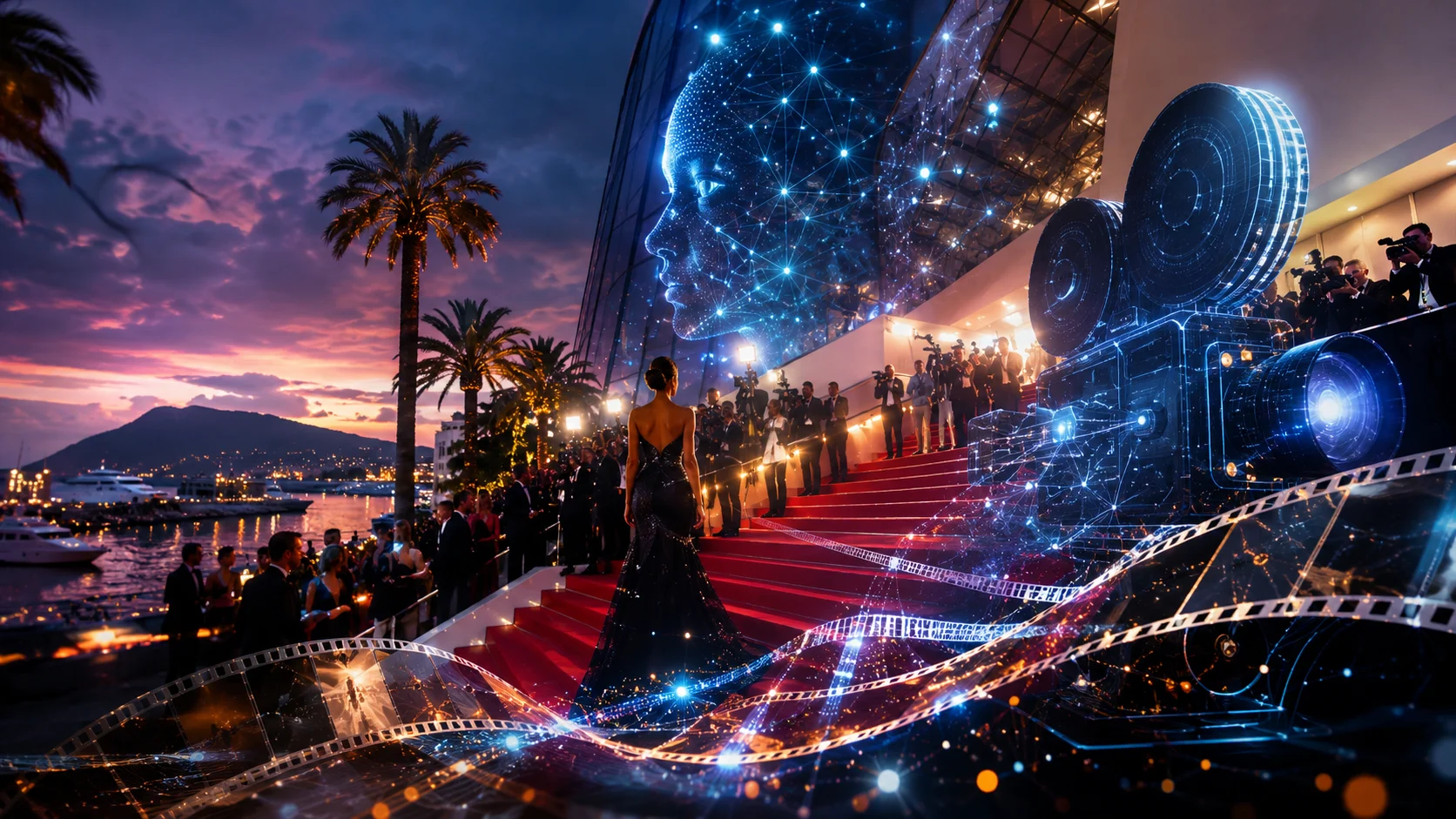
AI at Cannes is no longer just a side conversation whispered between tech panels, postproduction teams, and experimental filmmakers trying to look ahead of the curve. It has moved into the center of cinema’s visual identity, reshaping how directors imagine frames, how studios test ideas, and how audiences read the future of moving images. For decades, Cannes has been treated as a sacred stage for auteurs, red carpets, prestige premieres, and the kind of visual language that makes cinema feel bigger than entertainment. Now, artificial intelligence is entering that stage with a strange mix of excitement, caution, and creative pressure. The shift does not mean cinema is losing its soul, but it does mean the grammar of global filmmaking is being rewritten in real time.
The reason this moment feels bigger than another tech trend is simple: Cannes has always been a mirror for where cinema wants to go next. When handheld realism gained power, festivals gave it legitimacy. When digital cameras started replacing film stock, elite filmmakers argued, resisted, adapted, and eventually used the new tools to create fresh visual worlds. The same pattern is now happening with AI filmmaking, but the speed feels different because the technology is not only changing the camera or the editing room. It is touching concept art, storyboarding, color grading, visual effects, restoration, dubbing, trailer testing, and even the way filmmakers think before they shoot a single scene.
For Visual Vortixel readers, this is where the topic becomes especially important. The rise of AI at Cannes is not only a film industry update, but a visual culture signal that reaches design, photography, advertising, gaming, music videos, and digital storytelling. What happens on festival screens often filters into brand campaigns, creator workflows, and the look of everyday media within a few years. A visual style that begins as an experimental Cannes conversation can later become the aesthetic language of social feeds, streaming thumbnails, fashion films, and immersive installations. That is why the Cannes AI debate is less about whether machines can “make art” and more about who controls the next chapter of cinematic vision.
Why AI at Cannes Feels Like a Turning Point
AI at Cannes feels like a turning point because the discussion has matured beyond fear, hype, and easy slogans. A few years ago, artificial intelligence in cinema was often framed as either a miracle tool or a threat to human creativity. Now the tone is more layered because filmmakers are seeing practical uses while still worrying about ownership, labor, taste, and artistic control. Directors are not simply asking whether AI can generate images, because that answer is already obvious. They are asking whether AI can support a human vision without flattening the personal texture that makes cinema feel alive.
This change matters because Cannes is not usually impressed by technology for its own sake. The festival’s cultural identity is built around authorship, risk, politics, visual daring, and emotional intensity. If AI tools are being discussed seriously in that environment, it shows that the technology is becoming part of cinema’s serious creative vocabulary. The conversation is not about replacing directors with prompts, but about how prompts, models, and automated systems can become part of the director’s toolkit. In that sense, AI is being treated less like a novelty and more like a new layer in the long history of cinematic craft.
The most interesting part is that this shift does not look clean or settled. Some filmmakers see AI as a way to unlock visual ideas that were once too expensive, too slow, or too technically difficult. Others worry that the same tools could lead to generic images, recycled aesthetics, and a flood of synthetic content designed more for algorithms than audiences. Both sides have a point, and that tension is exactly why Cannes is the right place for the debate. Cinema has always grown through conflict between purity and experimentation, and AI is simply the newest pressure point in that old creative struggle.
The New Visual Grammar of AI Filmmaking
The visual grammar of AI filmmaking begins long before a film reaches the screen. In traditional production, directors might develop mood boards, reference images, location photos, sketches, and test footage to shape the look of a project. With AI tools, that early stage becomes faster, wider, and sometimes more surreal because a filmmaker can generate dozens of visual directions in minutes. A noir city can become a rain-soaked cybernetic dream, then shift into a sun-burned desert dystopia, then transform again into a soft pastel memory world. The creative process becomes less linear, and that changes how visual ideas are discovered.
This does not automatically make the work better, but it does make the imagination more searchable. A director who once needed a concept artist, a long brief, and several revision cycles can now test visual atmospheres almost instantly. Production designers can explore color palettes, textures, architecture, costume tones, and lighting references with new speed. Cinematographers can use AI-generated references to discuss lens mood, contrast, shadow behavior, and emotional temperature before arriving on set. The result is a more fluid previsualization culture where the look of a film can be shaped through constant iteration.
At the same time, visual speed creates a new creative problem. When everything can be generated quickly, taste becomes more valuable than output. The filmmaker’s role shifts from simply imagining images to choosing, rejecting, refining, and protecting a coherent visual identity. Without a strong point of view, AI can produce beautiful surfaces that feel strangely empty. That is why the best AI-assisted cinema will likely come from artists who already understand composition, rhythm, color, emotion, and the invisible tension between what is shown and what is withheld.
How Cannes Reflects the Industry’s Cautious Acceptance
The mood around AI in film is not pure celebration, and that caution is healthy. Cannes represents a global industry that has already watched streaming disrupt distribution, social media reshape attention, and franchise economics pressure original storytelling. Filmmakers have reasons to be careful when another technology arrives promising efficiency, scale, and creative liberation. They know that tools marketed as empowering can also be used to cut budgets, reduce jobs, and standardize risk. That is why the acceptance of AI feels cautious rather than reckless.
Still, resistance alone cannot stop a tool that is already entering workflows across the industry. Smaller teams can use AI to visualize ambitious ideas without needing studio-level resources. Independent filmmakers can create pitch materials that look more polished and emotionally specific. Editors and postproduction artists can experiment with restoration, cleanup, translation, and visual references in ways that save time. The technology is becoming part of the room, even when people disagree about how much power it should have inside that room.
This cautious acceptance is especially visible in the gap between using AI as assistance and using it as authorship. Many artists are more comfortable with AI when it helps prepare, enhance, or streamline a human-led project. They are less comfortable when AI becomes the central generator of images without transparent creative accountability. The distinction matters because cinema is not only judged by what appears on screen, but by the human choices behind the image. Cannes, with its deep attachment to authorship, naturally pushes the industry to ask where assistance ends and authorship begins.
Why Visual Identity Matters More in the AI Era
As AI image tools become more accessible, visual identity becomes harder and more important at the same time. Anyone can generate something cinematic, glossy, moody, or surreal with the right prompt and model. That means the old barrier of technical access is falling, but the new barrier is distinctiveness. Audiences may soon see more synthetic-looking visuals than they can emotionally process. In that crowded environment, films with a clear visual soul will stand out more sharply than films that only look expensive.
This is where Cannes culture offers a useful lesson. The most memorable festival films are rarely remembered only because they looked polished. They are remembered because their images carried a worldview, whether through a face held too long in silence, a city framed like a psychological trap, or a color palette that made grief feel physical. AI can help generate visual options, but it cannot automatically create visual necessity. The image still needs a reason to exist inside the story.
For creators, this means the future belongs to people who can combine technical fluency with emotional discipline. It is not enough to know how to prompt a stunning landscape or build a dramatic shot list. The real skill is knowing why one image belongs and another does not. A film’s visual language must still serve character, pace, theme, atmosphere, and memory. That remains true whether the frame is built with natural light, digital compositing, practical sets, or AI-assisted design.
The Impact on Directors and Cinematographers
Directors may feel the AI shift most intensely because their role sits between imagination and execution. With AI, they can explore visual ideas faster, but they also face new pressure to define their taste more clearly. A director who cannot communicate mood, texture, and intention may be overwhelmed by endless generated possibilities. A director with a strong visual instinct, however, can use AI as a sketchbook that expands the early creative process. The tool becomes powerful only when it is guided by a human who knows what the story is trying to feel like.
Cinematographers also face a complicated transformation. On one hand, AI-generated references can make conversations about lighting, color, and tone more precise before production begins. On the other hand, cinematography is not merely image design; it is the art of responding to bodies, spaces, time, weather, movement, and performance. A generated frame can inspire, but it cannot replace the living problem-solving that happens when an actor shifts slightly, a cloud changes the light, or a handheld camera catches something unplanned. The future cinematographer may need to speak both the language of physical capture and the language of algorithmic imagination.
This hybrid future could create some of the most exciting cinema of the next decade. Imagine filmmakers using AI to plan impossible visual transitions, then grounding them with real performances and tactile production design. Imagine documentary teams using careful AI restoration to make damaged archives feel newly present while keeping historical integrity intact. Imagine low-budget filmmakers creating richer fantasy worlds without losing the rough human energy that makes independent cinema special. The opportunity is real, but only if filmmakers treat AI as a collaborator under direction, not as a shortcut around vision.
The Risk of Generic Beauty
One of the biggest risks in AI-assisted cinema is the rise of generic beauty. Many AI-generated images are immediately impressive because they are smooth, dramatic, balanced, and visually dense. They often look like concept art, premium advertising, or high-end streaming fantasy. But beauty without friction can become forgettable very quickly. Cinema needs imperfection, specificity, and visual surprise to stay emotionally believable.
This is already visible across digital culture, where AI images often share a recognizable glow, symmetry, and hyper-polished texture. The problem is not that these images are ugly; the problem is that too many of them feel related to each other. If cinema leans too heavily on that default aesthetic, audiences may start to feel visual fatigue. A frame can look expensive and still feel anonymous. That is a serious danger for an art form built on memory.
The antidote is not rejecting AI, but refusing to let it dictate taste. Filmmakers need to push tools toward stranger, messier, more personal outcomes. They need to bring regional culture, physical textures, real locations, human faces, and unpredictable choices into the process. The strongest films will probably be those that use AI without looking like they were swallowed by it. In that sense, the future of cinema may depend less on how advanced the tools become and more on how stubbornly human the artists remain.
Labor, Credit, and the Ethics Behind the Image
The visual debate around AI cannot be separated from labor. Cinema is made by teams, and every image carries the invisible work of artists, technicians, designers, editors, assistants, and specialists. If AI tools are used to speed up or replace parts of that labor, the industry has to address credit, compensation, consent, and transparency. These are not small concerns hidden behind the glamour of festival premieres. They are central questions about who gets to participate in the future of filmmaking.
There is also the issue of training data and artistic influence. AI systems often learn from massive collections of existing images, styles, and visual patterns. That creates discomfort when artists feel their work has been absorbed into tools without meaningful permission or payment. In cinema, where style can be deeply personal, this becomes even more sensitive. A filmmaker may use AI to generate a look inspired by decades of visual culture, but the ethical line becomes blurry when that inspiration feels too close to extraction.
Cannes cannot solve all of these problems alone, but its cultural weight can push the conversation forward. The festival environment gives filmmakers, producers, critics, and audiences a place to debate not only what looks impressive, but what feels fair. Transparent workflows may become more important as AI becomes more common in production. Viewers may start asking whether a film used AI, how it was used, and whether human artists were properly credited. The future visual language of cinema will be judged not only by beauty, but also by trust.
How AI Changes Global Cinema Access
One of the most hopeful parts of the AI conversation is access. Cinema has always been expensive, and visual ambition often costs more than small teams can afford. AI tools may help filmmakers from underfunded regions build stronger pitch decks, test visual worlds, translate material, and create proof-of-concept scenes that attract support. This could open doors for stories that were previously blocked by budget limitations. If used responsibly, AI may help more voices enter the global cinema conversation.
This matters because global cinema is not only shaped by the countries with the biggest production infrastructure. Some of the most powerful films come from places where artists work with limited resources but deep cultural perspective. AI could help those artists compete visually without forcing them to imitate Hollywood’s industrial style. A filmmaker could use AI to develop a visual universe rooted in local architecture, mythology, landscapes, fashion, and memory. That possibility makes the technology more than a production hack; it becomes a tool for visual independence.
However, access also depends on who owns the tools and whose cultures are represented inside them. If the strongest AI systems are controlled by a few major companies, creative access may come with new forms of dependency. If models misunderstand or flatten non-Western visual traditions, they may reproduce stereotypes instead of expanding representation. That is why global filmmakers need not only access to AI tools, but also the power to shape how those tools understand visual culture. A more democratic cinema future requires more than software availability; it requires cultural agency.
What This Means for Visual Culture Beyond Film
The impact of AI at Cannes will not stay inside film festivals. Cinema has always influenced how brands, photographers, designers, musicians, and digital artists create visual worlds. When a new cinematic style becomes prestigious, it often travels into fashion editorials, album visuals, advertising campaigns, game trailers, and social media aesthetics. AI-assisted cinema will likely accelerate that movement because the same tools used in film development are already available to creators outside the studio system. The border between cinema and broader visual culture is becoming thinner.
For brands, this means cinematic storytelling can become more affordable and more experimental. A small creative team can create mood films, visual campaigns, and speculative worlds that once required much larger budgets. For photographers, AI can become a planning tool, a restoration tool, or a way to explore impossible visual concepts before deciding what should be captured in real life. For digital artists, the Cannes conversation adds cultural legitimacy to workflows that have already been evolving online. The festival stage makes the visual shift feel official.
That is why this topic belongs naturally in visual culture. AI is not simply changing film production; it is changing how society imagines images. It is changing what people expect a frame to do, how quickly aesthetics move, and how creators define originality in a world of infinite variations. The Cannes debate gives us a high-profile snapshot of a much wider transformation. The same questions facing filmmakers will soon face designers, editors, illustrators, content creators, and anyone building visual meaning in public.
Practical Insights for Creators Watching This Shift
For creators, the practical lesson is not to panic and not to blindly chase every new tool. The smarter move is to understand where AI can strengthen the workflow without weakening the point of view. Use it to explore ideas, build references, test visual tones, and communicate concepts more clearly. But do not let the tool make every aesthetic decision. The creator’s job is to protect meaning from becoming noise.
A useful approach is to treat AI like a fast visual assistant, not a final authority. Start with a clear creative brief, including mood, emotional tension, color logic, cultural references, and narrative purpose. Generate options, then critique them with the same seriousness you would bring to a rough cut, a contact sheet, or a design mockup. Ask whether the image feels specific, whether it supports the story, and whether it carries any emotional pressure. If it only looks impressive, it may not be enough.
Creators should also build stronger visual literacy. As AI makes image generation easier, the ability to read images becomes more valuable. Study composition, film history, photography, painting, architecture, fashion, and regional design languages. Learn why certain frames stay in memory while others disappear after a scroll. The future will reward creators who can combine new tools with deep taste, because technology can generate options, but only trained judgment can turn options into art.
The Future of Cinema Will Be Hybrid
The most realistic future is not fully human-made cinema versus fully AI-made cinema. It is a hybrid field where different films use different levels of machine assistance depending on budget, genre, ethics, and creative need. Some directors will avoid AI almost completely as part of their artistic identity. Others will use it quietly in development and postproduction. A smaller group will push it aggressively into the center of visual experimentation.
This hybrid future will likely create new categories of craft. We may see AI visual supervisors, prompt-based concept artists, synthetic environment designers, and ethical workflow consultants become more common in production teams. Traditional roles will not disappear overnight, but they will evolve as the pipeline changes. Film schools may begin teaching AI literacy alongside directing, cinematography, editing, and production design. The next generation of filmmakers will probably see these tools as normal, even if they continue debating how far they should go.
What matters most is that cinema does not confuse technical novelty with emotional progress. A film can use the newest tools and still say nothing. Another film can use simple images and completely change how an audience sees the world. AI may expand what cinema can show, but the deeper question is what cinema can make us feel, question, and remember. Cannes remains important because it keeps that question alive in a glamorous but serious global arena.
Conclusion: AI at Cannes Is a Visual Wake-Up Call
AI at Cannes is a visual wake-up call for anyone who cares about the future of cinema, design, and image culture. The technology is not arriving as a distant possibility anymore; it is already shaping how films are imagined, prepared, discussed, and judged. Its influence can be exciting, especially for creators who need faster ways to explore ambitious ideas. Its risks are also real, especially when it threatens labor, originality, credit, and the fragile human weirdness that gives cinema its power. The smartest response is not fear or blind adoption, but a sharper creative standard.
The Cannes conversation shows that AI is becoming part of global cinema’s visual language, but it has not replaced the need for authorship. If anything, it makes authorship more important because endless image generation demands stronger taste, clearer ethics, and deeper intention. The future of film will belong to artists who can use powerful tools without becoming controlled by them. It will belong to creators who understand that a beautiful image is not the same as a meaningful one. In the end, AI may rewrite the visual grammar of cinema, but humans still have to decide what the story is trying to say.