
Netflix AI Animation Studio Quietly Takes Shape
 Vortixel
18 minutes read
Vortixel
18 minutes read
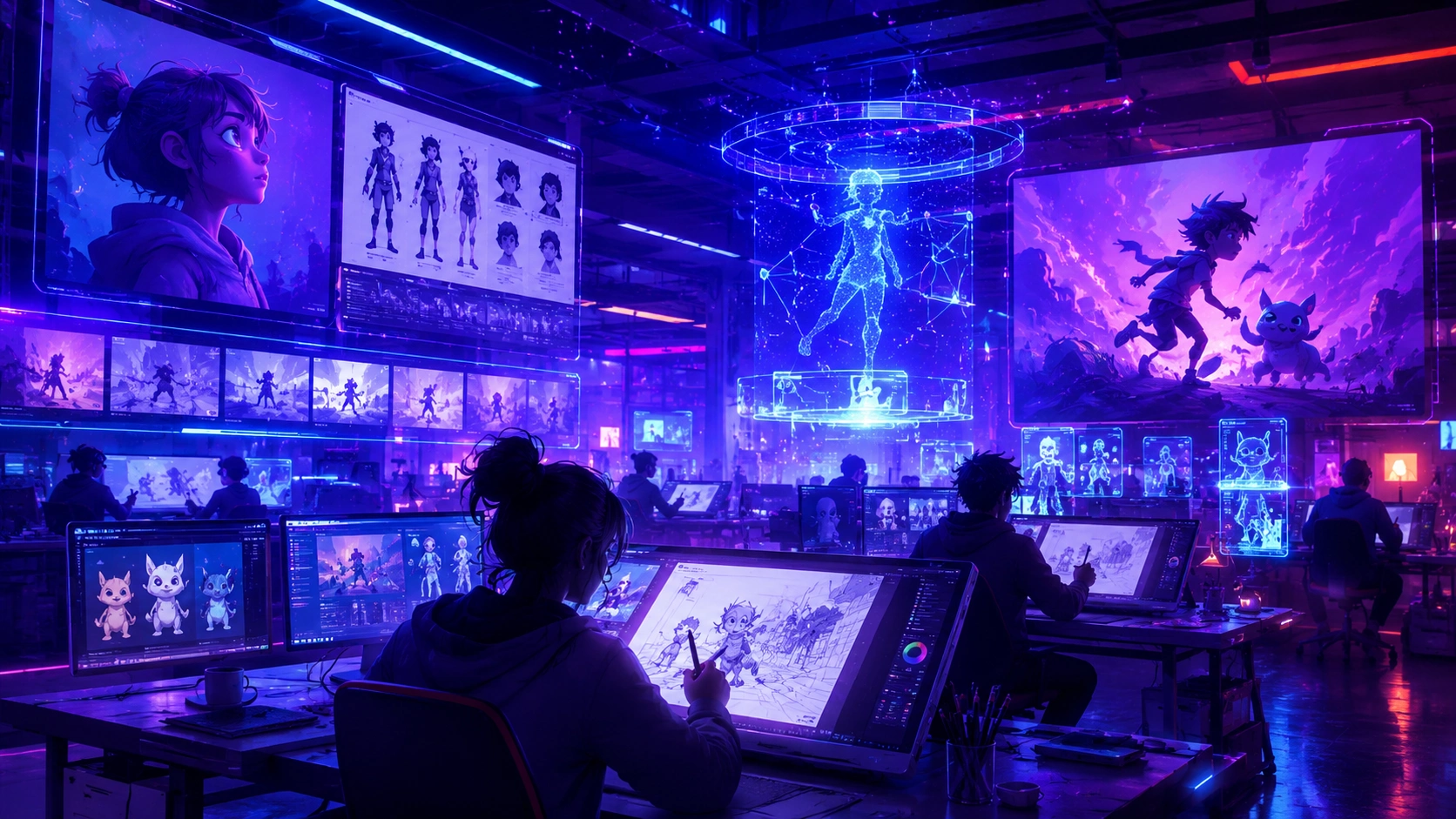
Netflix AI animation studio is starting to sound less like a distant prediction and more like the quiet next chapter of streaming entertainment. For years, the conversation around artificial intelligence in Hollywood has been loud, messy, and full of dramatic claims about what machines might replace. But the more interesting story is happening behind the curtain, where studios are experimenting with new workflows before the audience even notices the shift. Netflix, with its global scale and deep interest in animation, sits right at the center of that tension between creative ambition and production efficiency. The idea of a Netflix AI animation studio matters because it is not just about making cartoons faster; it is about redefining how visual stories are developed, tested, localized, and delivered to a world that constantly wants more content.
The streaming era has trained audiences to expect fresh visuals almost nonstop, from anime-inspired fantasy series to family films, adult animation, experimental shorts, and stylized global originals. That demand has created a production environment where traditional animation pipelines often feel too slow, too expensive, and too dependent on stretched creative teams. At the same time, generative AI tools have become more capable at producing concept art, moodboards, visual references, background ideas, character variations, and even early motion tests. A platform like Netflix does not need AI to replace every animator for the technology to become important. It only needs AI to remove enough friction from the creative process that entire teams can move from idea to screen with more speed, more options, and more visual range.
Why a Netflix AI Animation Studio Makes Sense
The rise of a Netflix AI animation studio makes sense because Netflix has always been a company built around scale. Its business depends on keeping viewers engaged across countries, languages, age groups, and tastes that rarely overlap neatly. Animation is one of the few formats that can travel globally when the story, design, and emotional rhythm are strong enough. It also allows creators to build worlds that live beyond the limits of live-action budgets, locations, sets, and physical effects. When AI enters that process, the studio gains a new layer of creative infrastructure that can help teams explore more visual directions before making expensive production decisions.
Animation has always required patience, coordination, and thousands of small artistic choices that viewers often never think about. A single scene may involve character design, background layout, color scripting, lighting references, storyboarding, animatics, cleanup, compositing, sound alignment, and final polish. Every one of those steps requires human taste, but many also include repetitive technical tasks that slow teams down. AI tools can help generate early options, fill visual gaps, automate rough passes, and support artists who need to test ideas quickly. That does not make the final result automatic, but it can make the earliest stage of production feel less like pushing a boulder uphill.
Netflix also has another advantage that makes this move especially strategic: it understands audience behavior at a massive level. The company has years of viewing data that can inform what types of visuals, formats, genres, and storytelling rhythms resonate in different markets. AI-assisted animation does not have to be limited to production tools; it can also support development, trend analysis, visual positioning, and localization. A studio can test whether a darker fantasy look feels stronger than a bright adventure style before fully committing resources. In that sense, the Netflix AI animation studio concept is not only about making images, but also about building a smarter creative feedback loop.
The Quiet Shift Behind Streaming Animation
The most important creative shifts rarely arrive with a giant announcement. They usually begin as small experiments inside teams that are trying to solve real production problems. Someone tests AI for background concepts, another team uses it for pitch visuals, and another group explores how it can speed up storyboarding without flattening the director’s voice. Over time, those experiments become repeatable workflows, and repeatable workflows become a studio strategy. That is why the phrase AI animation studio feels powerful, because it suggests a system rather than a single tool or one flashy demo.
For Netflix, animation has never been just one category. It includes adult animated series, kids’ programming, anime partnerships, prestige animated features, game-inspired adaptations, comedy formats, and global originals that use animation as a cultural bridge. Each format has different creative needs, but they all share a pressure to stand out visually in a crowded streaming menu. The thumbnail has to catch attention, the first minutes have to establish mood quickly, and the overall style has to feel memorable enough to survive social media discussion. AI can help teams generate, compare, and refine those early visual languages faster than a purely manual pipeline. That speed can matter when studios are deciding which projects deserve full investment.
Still, the word “quietly” matters because entertainment companies know AI remains sensitive. Artists worry about job displacement, audiences worry about soulless content, and unions worry about how creative labor is protected. A company building AI into animation cannot simply say it is pursuing efficiency and expect everyone to cheer. It has to prove that the technology supports artists rather than draining the human voice from the work. The future of a Netflix AI animation studio will depend less on whether the software is impressive and more on whether the final stories still feel alive.
How AI Could Change the Animation Pipeline
One of the clearest uses of AI in animation is early concept development. Before a project becomes a full production, creative teams need to explore characters, environments, color moods, camera language, costume references, creature designs, and visual tone. Traditionally, this phase can take weeks or months because every direction requires artists to build enough material for executives, directors, and producers to understand the vision. AI can speed up that first wave by helping teams create rough visual options that later become refined by professional artists. The strongest value is not replacing concept artists, but giving them a broader starting field and more time to focus on originality.
Storyboarding is another area where AI could become useful, especially for teams working under tight deadlines. A storyboard is not just a sketch sequence; it is the visual grammar of a scene, showing pacing, emotion, movement, and camera intention. AI-assisted tools can help generate rough panels from scripts, create alternate shot ideas, or convert written beats into early visual layouts. Human directors and storyboard artists would still need to shape the rhythm, comedy timing, emotional pauses, and dramatic reveals. But even a rough AI-assisted first pass can help a team see problems earlier and avoid wasting time on directions that do not work.
Backgrounds and environment design could also become a major part of the Netflix AI animation studio workflow. Animated worlds require depth, consistency, and atmosphere, whether the setting is a neon city, a haunted forest, a futuristic school, or a soft pastel neighborhood for younger viewers. AI can help create visual references for these spaces, suggest lighting variations, or build early environment concepts based on a defined style guide. The real challenge is maintaining consistency across episodes, seasons, and multiple teams. That is where AI becomes less of a random image generator and more of a controlled production assistant trained around a specific visual bible.
Another important use case is localization, which is especially relevant for a global streaming company. Animation travels well, but different markets may respond differently to jokes, symbols, cultural details, pacing, and even color choices. AI tools can help teams adapt promotional visuals, explore alternate graphic treatments, and support region-specific marketing assets without rebuilding everything from scratch. This does not mean changing a story’s identity for every country, but it does mean making global distribution smarter and faster. For a platform with worldwide reach, that kind of creative flexibility can become a serious advantage.
The Creative Promise and the Creative Risk
The promise of a Netflix AI animation studio is easy to understand. More projects could move from idea to prototype, smaller teams could pitch with stronger visuals, and experimental stories might get a better chance because the early development cost becomes less intimidating. AI could help creators visualize worlds that would have been too expensive to explore in the past. It could also reduce the gap between independent imagination and studio-level presentation. In the best version of this future, AI becomes a creative amplifier for artists who already have something meaningful to say.
The risk is just as real, and it cannot be ignored. If AI becomes a shortcut for executives who want content without creative depth, animation could become visually polished but emotionally hollow. Viewers may get endless streams of content that look expensive at first glance but feel strangely empty after a few minutes. Animation works because of timing, personality, imperfection, and tiny human choices that make a character feel real. If the process becomes too automated, the industry could trade artistic identity for visual volume. That is why the best AI animation strategy has to protect human direction at every stage.
There is also the question of visual sameness. Many generative tools are trained on large patterns, and those patterns can create images that feel familiar even when they are technically new. If too many studios use similar tools without strong art direction, audiences may start seeing the same glossy lighting, the same character proportions, the same fantasy landscapes, and the same cinematic mood. For Netflix, this would be a problem because streaming success depends on differentiation. A strong AI animation studio cannot simply chase efficiency; it has to build distinctive visual systems that make each project feel ownable.
What This Means for Artists and Animators
For artists, the rise of AI in animation creates both anxiety and opportunity. The anxiety comes from a very reasonable place, because creative workers have watched technology repeatedly reshape industries while companies promise that everything will be fine. Animators, designers, storyboard artists, background painters, and compositors want assurance that their work will not be reduced to prompt cleanup or endless machine correction. They also want clarity around training data, credit, compensation, and ownership. Any serious Netflix AI animation studio model would need to address those concerns with transparent standards, not vague optimism.
The opportunity is that artists who learn to direct AI tools may gain more control over the early creative process. Instead of spending hours building rough versions of ideas that might be rejected instantly, they could use AI to quickly compare directions and then spend their best energy refining the strongest path. A background artist might explore twenty lighting moods before choosing one. A character designer might test silhouette variations faster before drawing the final model sheet. A director might use AI-assisted previsualization to communicate tone more clearly to producers before the project enters expensive production.
The most valuable creative skill may become taste. AI can produce options, but it cannot fully understand why one expression feels sincere, why one color palette makes a scene emotionally heavier, or why one awkward pause makes a character more lovable. Human artists bring memory, humor, cultural context, emotional intelligence, and lived experience into visual storytelling. Those qualities are not small details; they are the reason audiences connect with animation in the first place. The future belongs to creators who can combine technical fluency with a strong point of view.
Why Netflix Could Use AI Without Making It Obvious
One reason this story feels important is that audiences may not always know when AI has influenced a project. A finished animated series could still be directed, written, performed, and polished by humans while using AI somewhere in development. The technology might appear in concept art exploration, asset organization, cleanup support, color testing, or marketing adaptation rather than in the final character animation itself. That makes the conversation more complicated than simply asking whether a movie was made by AI. The reality is likely to be hybrid, with human teams using AI at different levels depending on the project.
This quiet integration could actually be the most realistic path for major studios. Instead of presenting AI as the star of the show, companies may treat it like production software, cloud rendering, editing tools, or digital compositing. Viewers do not usually ask which software shaped a background, which tool helped organize assets, or which system supported localization. They care whether the story works, whether the characters land, and whether the world feels worth entering. If Netflix uses AI well, the audience may feel the effect as faster variety and stronger visual experimentation rather than as an obvious machine-made aesthetic.
However, hidden AI use can also create trust issues if companies are not careful. Viewers and artists increasingly want to know how creative work is made, especially when ethical questions are involved. A platform does not need to reveal every production detail, but it should avoid pretending that AI plays no role if it becomes deeply embedded. Transparency can help reduce suspicion and set expectations around what the technology is actually doing. For a brand as visible as Netflix, building trust around AI may be just as important as building the tools themselves.
The Bigger Trend: AI Becomes Creative Infrastructure
The story of a Netflix AI animation studio fits into a bigger shift across entertainment, design, advertising, gaming, and digital media. AI is moving from novelty to infrastructure, which means it is becoming part of the basic toolkit behind visual production. Studios are not only asking whether AI can generate a cool image anymore. They are asking how it can reduce bottlenecks, support collaboration, organize assets, personalize marketing, and help teams make faster decisions. This is the phase where AI stops being a viral demo and starts becoming part of the workflow.
Gaming has already shown what this future might look like. Game studios use procedural systems, motion tools, automated testing, and increasingly AI-assisted workflows to build massive worlds that would be impossible through manual labor alone. Animation could move in a similar direction, especially as streaming platforms look for serialized worlds that can expand over multiple seasons, spin-offs, shorts, and interactive extensions. A strong visual universe needs consistency, and AI can help manage that consistency when used responsibly. The line between animation, gaming, and interactive storytelling may also become thinner as these tools mature.
Advertising and social video are pushing the same trend from another direction. Brands already want fast visual content for different platforms, aspect ratios, languages, and audience segments. That demand has made AI-generated visuals attractive because they can support rapid iteration. Streaming platforms face a similar challenge when promoting one title across dozens of countries and digital spaces. For Visual Vortixel readers following AI visual tools, this trend shows why creative technology is becoming central to the business of entertainment, not just the aesthetics of it.
What Viewers Might Notice First
Viewers probably will not notice the internal workflow changes first. They may notice that animated projects arrive with more unusual visual styles, more experimental short formats, or faster movement from teaser to release. They may see more global animation that feels visually ambitious even when it comes from smaller teams or newer creative markets. They may also notice more targeted promotional visuals that seem designed for specific fandoms, genres, and cultural moods. The impact of AI may show up less as one obvious revolution and more as a steady increase in visual variety.
Another visible change could be in pitch-to-screen diversity. If AI lowers early development barriers, more creators may be able to present bold ideas with enough visual clarity to get attention. That does not guarantee more risk-taking, because studios still make business decisions based on audience potential. But it could expand the range of projects that get serious consideration before being filtered out. For animation fans, that could mean more strange, niche, stylized, or culturally specific stories finding a path to production.
There may also be a rise in projects that mix animation styles more fluidly. AI-assisted workflows can make it easier to test combinations of 2D, 3D, painterly textures, graphic novel looks, anime-inspired action, clay-like surfaces, and cinematic lighting. Human artists still have to make those combinations coherent, but the exploration process becomes faster. This could encourage visual risk when handled by talented teams. The danger, of course, is that style-mixing becomes a gimmick if it is not connected to story, character, and emotional tone.
Practical Lessons for Creators Watching Netflix
Independent creators, small studios, and visual storytellers can learn a lot from the direction implied by a Netflix AI animation studio. The first lesson is that AI should not be treated as a magic replacement for craft. It works best when it is used to expand exploration, speed up rough development, and support decisions that still depend on human judgment. Creators who rely on AI without building a clear visual identity will likely produce work that feels generic. Creators who combine AI with strong taste, clear storytelling, and consistent art direction will have a much better chance of standing out.
The second lesson is that workflows matter as much as tools. Many people focus on which AI model is trending, but professional production depends on repeatability, organization, version control, and creative alignment. A good animation pipeline needs style guides, asset rules, revision systems, and clear communication between writers, directors, designers, and editors. AI can create chaos if every person uses it differently without a shared standard. The real competitive edge comes from building a system where AI supports the team instead of flooding it with random options.
The third lesson is that ethical clarity will become a creative advantage. Audiences are becoming more aware of how visual content is produced, and artists are becoming more vocal about ownership and consent. Smaller creators who use clean workflows, original references, licensed assets, and transparent practices can build trust early. Larger companies will face even more scrutiny because their decisions influence industry norms. In the long run, responsible AI use may become part of a studio’s brand identity, especially in animation where artistic labor is deeply valued.
Could AI Help Netflix Compete in Global Animation?
Netflix competes in a global animation market that is more intense than it looks from the outside. Japan remains a major force in anime, American studios still dominate many family and franchise categories, and emerging markets are developing stronger animation voices. At the same time, social platforms have changed how audiences discover visual stories, making short clips, edits, memes, and fan art part of the cultural life of a show. A Netflix AI animation studio could help the company move faster in this environment. It could also help identify which visual ideas are strong enough to travel across borders before production budgets become too heavy.
Global competition also makes localization more important than ever. A series might need different trailers, posters, thumbnails, and social assets for audiences with different genre expectations. AI can help generate early marketing variations while keeping the core identity consistent. This is especially useful for animation because visual tone communicates instantly, often before viewers read a description or recognize a title. If Netflix can use AI to sharpen that first impression, it gains another tool in the battle for attention.
But global success still depends on storytelling that feels specific, not algorithmically smoothed out. The most memorable animated works often come from strong cultural details, personal obsessions, unusual humor, and emotional honesty. AI can help present those ideas, but it cannot invent the lived experience behind them. That is why Netflix’s biggest challenge will be balancing scalable production with creative specificity. The platform does not need more content that feels assembled; it needs animated worlds that feel discovered.
The Future of AI Animation Will Be Hybrid
The most realistic future is not fully human versus fully automated. It is hybrid, layered, and constantly changing as tools become more powerful and creative teams become more experienced. Writers may use AI to test visual descriptions, artists may use it to build mood explorations, directors may use it for fast previsualization, and editors may use it to compare pacing options. None of that automatically removes the need for human creativity. Instead, it changes where human attention is most valuable inside the production process.
This hybrid model could also create new job categories. Studios may need AI art directors, dataset supervisors, ethical workflow managers, synthetic media producers, prompt pipeline designers, and visual consistency specialists. These roles would not replace traditional animation skills entirely, but they would sit beside them. The people who understand both storytelling and systems will become especially valuable. A Netflix AI animation studio could become a blueprint for how large entertainment companies organize those new roles inside real productions.
There is a chance that the phrase “AI animation” eventually fades into the background. Just as digital animation became normal after once feeling revolutionary, AI-assisted animation may become another invisible layer of modern production. The important question will not be whether AI was involved, but whether the creative result feels meaningful, original, and worth watching. Audiences forgive technology when the story moves them. They reject it when the technology feels like the only reason the work exists.
Conclusion: Netflix Is Testing the Next Visual Era
The idea of a Netflix AI animation studio captures a bigger moment in entertainment, where visual storytelling is being rebuilt quietly from the inside. Netflix is not just chasing a trend; it is responding to a production reality where audiences want more stories, more styles, and more global variety than traditional pipelines can easily deliver. AI can help with that pressure by accelerating concept development, supporting visual experimentation, improving localization, and giving teams new ways to prototype ambitious ideas. But the technology only becomes powerful when it is guided by artists with taste, ethics, and emotional intelligence. The future of animation will not be defined by machines replacing imagination, but by whether studios can use machines to protect, expand, and sharpen the human imagination behind every frame.
For viewers, this shift may arrive subtly through richer visual variety, faster project development, and animated worlds that feel more experimental than the safest streaming formulas. For creators, it is a signal to learn the tools without surrendering the craft that makes animation matter. For the industry, it is a reminder that production technology always changes the business model before the audience fully sees the transformation. The Netflix AI animation studio concept is important because it sits at the intersection of art, labor, software, and global entertainment strategy. If Netflix gets the balance right, it could help define a new era where AI does not flatten animation, but opens more doors for visual stories that once felt too risky, too expensive, or too difficult to bring to life.