
Human Creativity vs AI Sparks Global Debate
 Vortixel
12 minutes read
Vortixel
12 minutes read
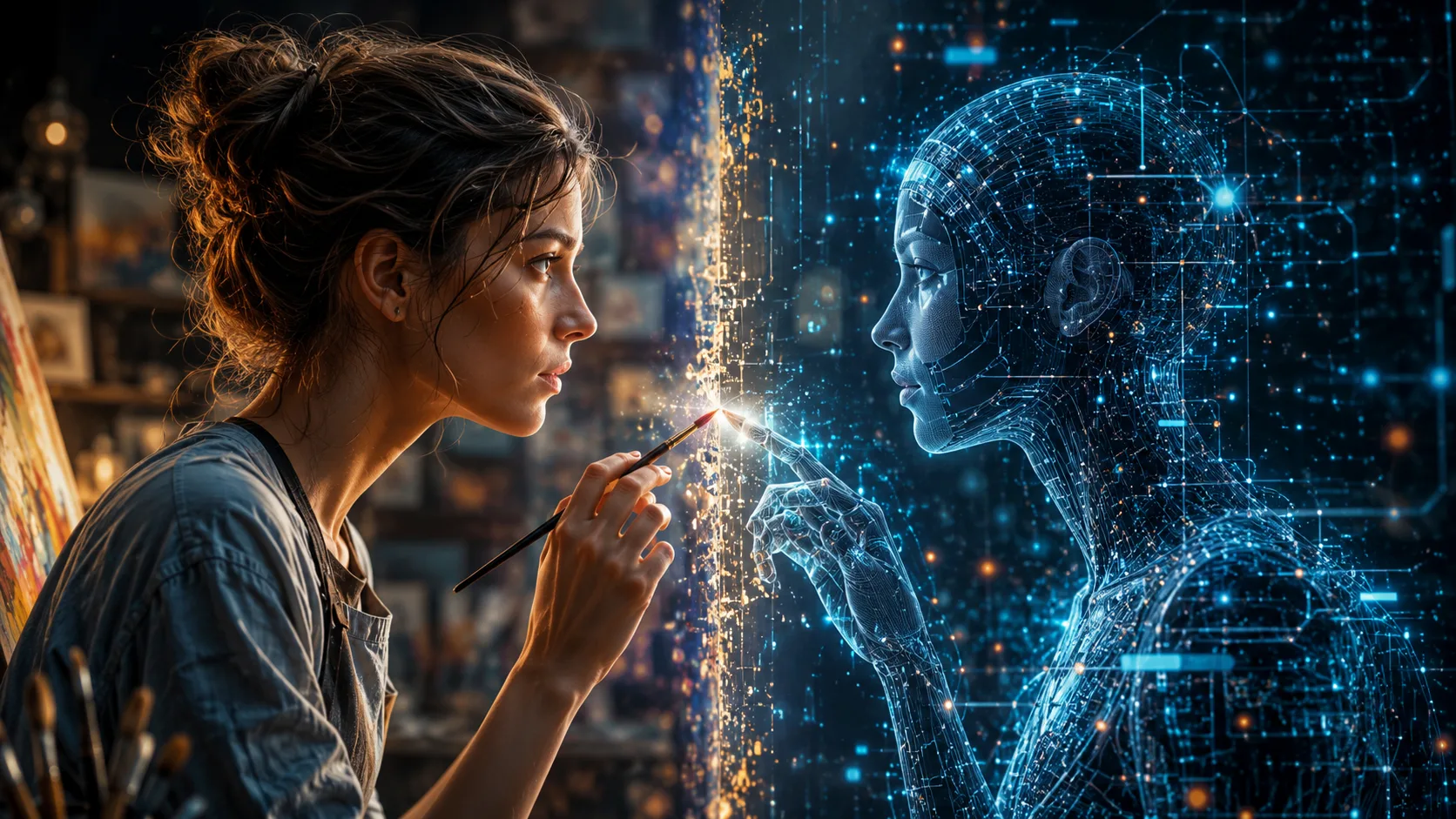
The conversation around Human Creativity vs AI is no longer limited to tech conferences, underground internet forums, or late-night debates between designers on social media. It has become one of the biggest cultural discussions of 2026. Everywhere people look, artificial intelligence is creating paintings, writing music, generating films, designing logos, and even producing entire marketing campaigns in seconds. What used to take a creative team several days can now happen almost instantly with a single prompt. That shift feels exciting for some people, but deeply uncomfortable for others who built their careers around imagination, originality, and emotional storytelling.
The reason this topic feels so intense is because creativity has always been considered one of the most human things imaginable. For decades, society believed machines could automate repetitive labor, but art, emotion, and self-expression would remain untouched. Then generative AI arrived and completely changed the conversation. Suddenly, people started seeing AI-generated fashion editorials, cinematic concept art, photorealistic videos, and even songs that sounded emotionally real. Many creatives began asking the same question: if machines can imitate creativity this well, what makes human creativity special anymore?
At the same time, AI supporters argue that this fear is exaggerated. They believe AI is simply another tool, similar to cameras replacing traditional painting in the past or digital editing software transforming photography. According to this perspective, technology does not kill creativity. Instead, it expands what creators can do. The debate has become emotional because both sides have valid arguments, and neither side seems ready to back down anytime soon.
Why the Human Creativity vs AI Debate Exploded
The reason Human Creativity vs AI became such a massive global conversation is tied directly to how fast generative technology evolved. Just a few years ago, AI-generated visuals looked strange, distorted, and obviously fake. Faces were inconsistent, hands looked broken, and artistic styles lacked personality. In 2026, things are completely different. AI image models can now create magazine-quality visuals, realistic cinematic environments, and detailed artistic concepts almost instantly. Video generation tools are also reaching a point where casual audiences sometimes struggle to distinguish synthetic content from real footage.
This acceleration shocked creative industries harder than many people expected. Graphic designers, photographers, illustrators, filmmakers, writers, and musicians suddenly found themselves competing against software capable of producing content at an unbelievable speed. Some companies immediately embraced AI because it dramatically reduced production costs. Others became more cautious because audiences started questioning authenticity. Consumers now want to know whether a piece of art was crafted by a human mind or assembled through machine learning systems trained on billions of existing works.
The tension became even stronger when social media platforms started rewarding speed over depth. Viral culture moves extremely fast, and brands constantly need fresh content to survive online. AI tools perfectly fit this environment because they allow creators to produce visuals, captions, videos, and campaigns within minutes. Human artists often cannot compete with that speed without sacrificing quality or mental health. This imbalance is one of the biggest reasons the debate feels so personal to creative workers around the world.
The Emotional Side of Human Creativity
One of the strongest arguments in favor of human-made art is emotional authenticity. Human beings create from experience, memory, trauma, joy, relationships, and personal perspective. When a musician writes a heartbreaking song after losing someone important, audiences connect to that emotional reality. When a filmmaker captures loneliness, ambition, or anxiety on screen, viewers recognize something deeply human inside the work. That emotional resonance cannot easily be replicated through algorithms alone.
Supporters of human creativity believe AI only imitates patterns instead of genuinely understanding emotion. Machines can study millions of artworks and reproduce similar aesthetics, but they do not experience heartbreak, fear, hope, or nostalgia. Because of that, many artists argue that AI-generated work often feels visually impressive yet emotionally hollow. It may look beautiful at first glance, but after a while, people notice the absence of genuine human struggle behind the creation.
There is also the issue of artistic intention. Human creators usually have reasons behind every decision they make. A filmmaker chooses a certain lighting style to express isolation. A photographer captures shadows to communicate uncertainty. A writer carefully selects words to create tension or vulnerability. AI systems can replicate these techniques statistically, but critics argue they lack true intent because the machine itself does not care about meaning. That distinction matters deeply to people who see art as more than just content.
Interestingly, younger audiences are becoming more aware of this emotional difference. Gen Z consumers, despite growing up in digital environments, are increasingly interested in authenticity. Many online communities now celebrate raw, imperfect, human-made work precisely because AI-generated content feels too polished or synthetic. This cultural reaction suggests that human creativity may become even more valuable in an AI-dominated future.
How AI Is Reshaping Creative Industries
Despite the criticism, there is no denying that AI has completely transformed creative workflows. In many industries, artificial intelligence is no longer viewed as experimental technology. It has become part of everyday production pipelines. Marketing agencies use AI to brainstorm campaigns. Fashion brands generate visual concepts before photoshoots begin. Independent filmmakers create cinematic storyboards without large budgets. Musicians experiment with AI-assisted sound design and vocal generation.
For small creators, AI can actually feel empowering. A solo content creator who previously struggled to afford editors, designers, or production teams can now produce high-quality work independently. This democratization of creativity is one of the biggest reasons many people support AI adoption. Technology allows individuals with limited resources to compete in industries that were once dominated by massive corporations.
At the same time, professional creatives worry about long-term consequences. If companies can generate acceptable content instantly and cheaply, many traditional creative jobs may disappear or become undervalued. Designers fear clients may stop paying premium prices for original work. Writers worry about automated content flooding the internet. Voice actors fear AI voice cloning replacing human performances. These concerns are not hypothetical anymore because many industries are already experimenting with automation to cut costs.
The entertainment world has become one of the biggest battlegrounds in this discussion. Film studios increasingly rely on AI for visual effects, background generation, and even script development assistance. Some audiences accept these innovations, while others believe excessive AI usage removes artistic soul from filmmaking. The debate becomes especially heated when companies use AI to replicate human styles without permission or compensation.
The Rise of AI-Assisted Artists
An interesting shift happening in 2026 is the emergence of hybrid creators. These are artists who fully embrace AI tools while still maintaining strong personal creative direction. Instead of viewing AI as a replacement, they see it as an extension of imagination. Many digital creators now describe themselves less as traditional artists and more as creative directors guiding intelligent systems toward specific visions.
This hybrid approach is becoming extremely popular because it combines speed with human storytelling. Artists can rapidly generate ideas, experiment with styles, and iterate concepts while still injecting personal emotion into the final product. In many ways, the role of the artist is evolving rather than disappearing. Creative work is shifting from manual production toward conceptual leadership and emotional curation.
Some of the most successful visual creators today are those who understand both art fundamentals and AI workflows. They know how to write prompts effectively, refine outputs, and combine machine-generated elements with human editing. These creators often produce visually stunning projects at a pace that would have seemed impossible only a few years ago. As a result, the definition of artistic skill is starting to change dramatically.
However, critics argue that this evolution may create a future where technical prompting matters more than traditional artistic discipline. Young creators may rely heavily on AI instead of developing drawing skills, photography techniques, or storytelling foundations. This concern raises important questions about the future of creative education and whether artistic craftsmanship will slowly disappear over time.
Why Audiences Still Crave Human Stories
Even though AI-generated content is becoming more advanced, audiences still show strong emotional attachment to human stories. People love hearing about an artist’s journey, struggles, inspirations, and personal experiences behind a project. That connection creates meaning beyond the visual result itself. Human storytelling gives audiences someone to root for, relate to, and emotionally invest in.
This is one reason independent artists continue building loyal communities online despite the explosion of AI-generated media. Fans often support creators not only because of the final artwork but because of the personality behind it. Livestreams, behind-the-scenes content, personal updates, and creative struggles all contribute to emotional engagement. AI cannot naturally replicate that human connection because audiences know there is no real lived experience behind the machine.
Interestingly, many consumers are already developing AI fatigue. Social feeds are increasingly filled with hyper-polished AI visuals that all start looking strangely similar after a while. The novelty remains impressive, but repetition reduces emotional impact. As more people encounter synthetic content daily, imperfections and human unpredictability may actually become more attractive.
There is also growing appreciation for craftsmanship again. Handmade illustration, practical filmmaking effects, analog photography, and live performance art are experiencing renewed interest because they feel tangible and real in a world overflowing with digital automation. This suggests the future may not belong entirely to AI-generated creativity but rather to creators who successfully balance technology with authentic human perspective.
Ethical Questions Around AI Creativity
The ethical side of the Human Creativity vs AI discussion is another major reason the debate feels so heated. Many AI systems are trained on massive datasets containing artwork, writing, music, and photography created by real people. Critics argue that these systems effectively learn by consuming human labor without proper consent or compensation. Artists around the world have expressed frustration after discovering AI-generated images mimicking their personal styles.
This issue becomes especially complicated because artistic style itself is difficult to legally protect. Companies developing generative models often argue that AI training resembles human inspiration. After all, human artists also study previous art movements and learn from existing work. Opponents disagree because AI can reproduce stylistic similarities at a scale and speed impossible for humans.
Copyright law is struggling to keep up with these technological changes. Governments and legal systems across multiple countries are still debating who owns AI-generated content, whether datasets require licensing, and how creators should be compensated. Until clearer regulations emerge, tensions between artists and AI companies will likely continue growing.
Another ethical concern involves misinformation and authenticity. AI-generated visuals and videos are becoming so realistic that distinguishing truth from fabrication is increasingly difficult. This creates dangerous possibilities for manipulated media, fake celebrity content, and synthetic political propaganda. The conversation about creativity is therefore connected to broader concerns about trust, reality, and digital identity.
The Future of Human Creativity in an AI World
The future of creativity probably will not be a simple battle where humans either defeat AI or get replaced by it. Reality is usually more complicated than internet debates suggest. Technology historically changes creative industries, but human expression consistently adapts rather than disappears. Photography did not eliminate painting. Streaming platforms did not kill music. Digital art did not erase traditional illustration. Instead, creative ecosystems evolved.
What seems more likely is that human creativity will become more valuable precisely because AI-generated content becomes so common. Original perspective, emotional honesty, and personal storytelling may become the qualities audiences seek most. In a digital world flooded with instant synthetic media, genuine human experience could become the ultimate luxury.
Creative education may also transform significantly. Future artists will probably need to understand both artistic fundamentals and AI collaboration tools. Knowing how to direct AI systems effectively could become as important as mastering software like Photoshop or Premiere Pro. The creators who succeed will likely be those who blend technical adaptability with emotional intelligence.
There is also a possibility that society develops clearer cultural labels around AI-generated content. Audiences may begin distinguishing between “AI-assisted” and “human-crafted” media in the same way people differentiate handmade products from factory-produced goods. Instead of replacing human creativity entirely, AI could create new creative categories and redefine what originality means in the modern era.
Human Creativity vs AI Is Really About Identity
At its core, the Human Creativity vs AI debate is not only about technology or business. It is about identity. Creativity has always been deeply connected to how humans understand themselves. Art represents emotion, memory, culture, imagination, and individuality. When machines start performing tasks once considered uniquely human, people naturally question what makes humanity special.
That fear explains why discussions about AI creativity often become emotional so quickly. Artists are not simply defending careers or industries. Many are defending the idea that human imagination carries something irreplaceable. On the other side, AI advocates believe resisting technological progress is unrealistic and potentially limiting. They see AI as an opportunity to unlock new forms of expression rather than destroy old ones.
The truth probably exists somewhere between those extremes. AI is undeniably changing creative culture forever, but human beings remain the ones assigning meaning to art. A machine can generate infinite images, songs, and videos, but audiences still decide what resonates emotionally. Human connection remains at the center of storytelling, even in increasingly automated environments.
As the creative world moves deeper into the AI era, one thing becomes clear: the debate is far from over. Every new technological breakthrough reignites discussions about originality, authenticity, ethics, and artistic value. The future of creativity will likely involve constant negotiation between machine efficiency and human emotion. That tension may feel uncomfortable right now, but it is also shaping one of the most fascinating cultural shifts of this generation.
Conclusion
The rise of artificial intelligence has permanently transformed the global creative landscape. The conversation surrounding Human Creativity vs AI continues growing because it touches something deeply personal for artists, creators, and audiences alike. AI tools can generate stunning visuals, produce music, and automate workflows at extraordinary speed, but many people still believe genuine human emotion cannot be replicated through algorithms alone.
At the same time, ignoring AI completely is no longer realistic. Technology is already embedded inside creative industries, and its influence will only continue expanding. The future will likely belong to creators who understand how to balance innovation with authenticity. Human imagination, emotional storytelling, and lived experience still matter enormously, even inside a world increasingly shaped by machines.
Rather than ending creativity, AI may actually force humanity to redefine what creativity means. In a future filled with endless synthetic content, authentic human perspective could become more important than ever before.