
Canva AI 2.0 Redefines Global Visual Design Era
 Vortixel
7 minutes read
Vortixel
7 minutes read
Introduction: The Rise of AI-Powered Creativity
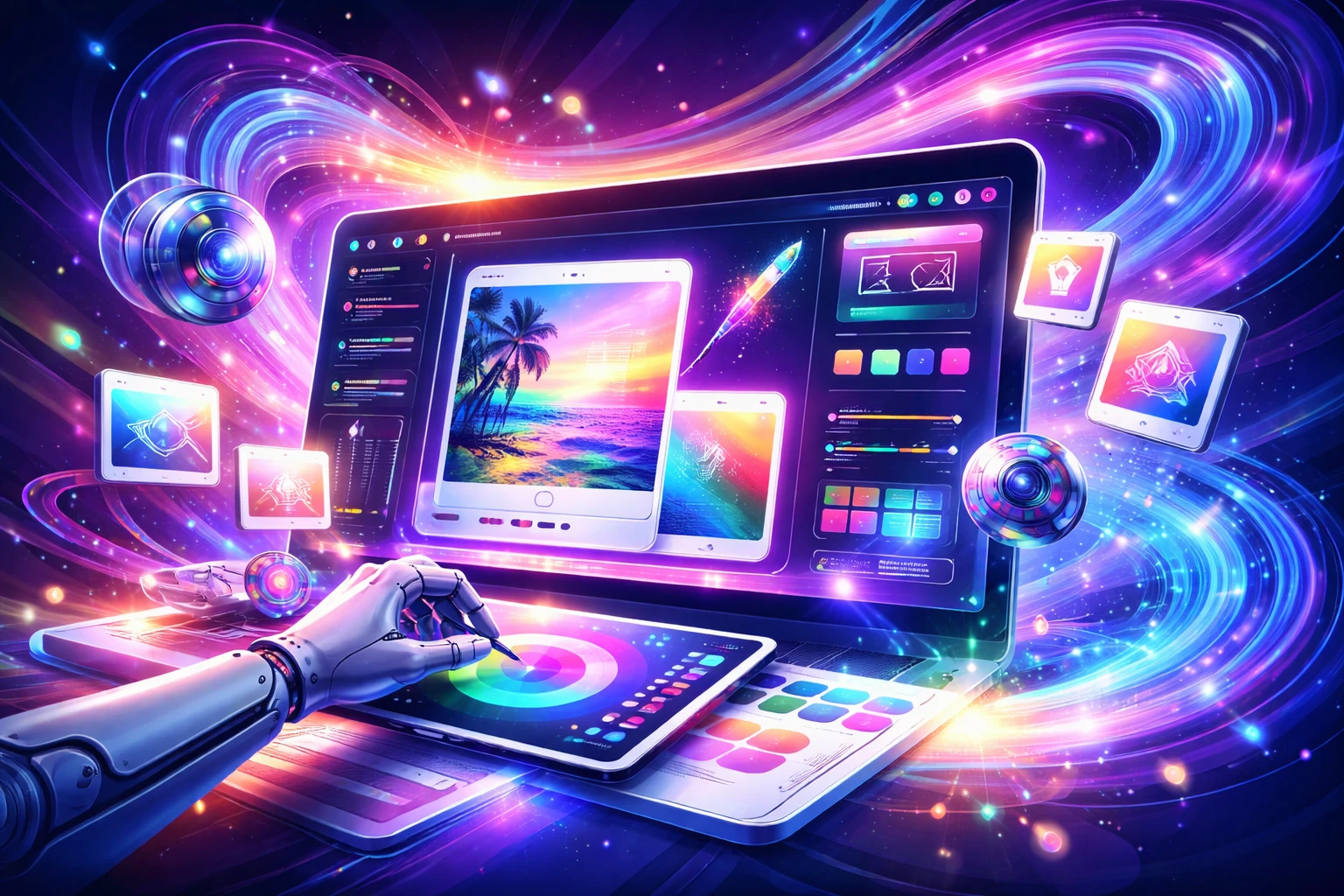
The creative industry is entering a new phase, and at the center of this transformation stands Canva AI 2.0, a major leap forward in how visual content is created, edited, and distributed across the globe. What was once a simple drag-and-drop design platform has now evolved into a fully integrated AI-powered creative ecosystem. With the introduction of advanced automation, generative design, and agentic workflows, Canva is no longer just a tool—it’s becoming a creative partner.
In today’s fast-paced digital landscape, where content demand is skyrocketing, the need for speed, efficiency, and originality has never been greater. This is where AI-powered design platforms like Canva AI 2.0 step in, bridging the gap between professional-grade output and everyday accessibility. From marketers and content creators to educators and startups, the impact of this evolution is being felt across industries.
The launch of Canva AI 2.0 signals a broader shift in the creative economy. It reflects how artificial intelligence is not only enhancing productivity but also redefining what it means to be creative. Instead of replacing designers, AI is augmenting their capabilities, enabling them to think bigger, move faster, and produce more impactful visuals.
What Is Canva AI 2.0 and Why It Matters
At its core, Canva AI 2.0 represents a transition from static design tools to dynamic, intelligent systems. Unlike earlier versions that relied heavily on manual input, this new iteration integrates generative AI, predictive design assistance, and automated workflows into a seamless experience.
This matters because design is no longer a standalone activity. It’s now part of a larger content pipeline that includes ideation, production, distribution, and optimization. Canva AI 2.0 addresses all these stages, making it a comprehensive solution for modern creators.
One of the key highlights is its ability to understand user intent. Instead of simply offering templates, the platform can now generate entire design concepts based on prompts. This shift from “designing manually” to “directing creatively” is what sets Canva apart in the evolving AI landscape.
Key Features That Define Canva AI 2.0
1. Generative Design Engine
The generative AI engine is arguably the most groundbreaking feature in Canva AI 2.0. Users can input simple text prompts, and the system will generate fully-realized designs, including layouts, color schemes, typography, and imagery.
This feature significantly reduces the time required to create high-quality visuals. What used to take hours can now be accomplished in minutes, without compromising on quality or creativity. For businesses, this means faster campaign launches. For individuals, it means more freedom to experiment and innovate.
2. AI-Powered Content Suggestions
Another standout feature is the platform’s ability to provide real-time content suggestions. Whether it’s recommending better font pairings, optimizing color contrast, or suggesting layout improvements, Canva AI 2.0 acts as an intelligent design assistant.
This is particularly useful for users who may not have a strong background in design. By guiding them through best practices, the platform ensures that the final output is both visually appealing and professionally polished.
3. Automated Workflow Integration
Canva AI 2.0 goes beyond design by integrating with broader workflows. It allows users to create, edit, and publish content directly from the platform. This includes social media scheduling, team collaboration, and even performance tracking.
The result is a more streamlined process where creators can focus on storytelling rather than technical execution. This level of integration is what makes Canva a true end-to-end creative platform.
4. Agentic AI Capabilities
Perhaps the most futuristic aspect of Canva AI 2.0 is its agentic AI system. This means the platform can perform multi-step tasks autonomously. For example, it can generate a marketing campaign, design assets for multiple platforms, and adapt content for different audiences—all with minimal input.
This transforms the role of the user from a designer to a creative director. Instead of manually executing every step, users can now oversee and refine AI-generated outputs.
How Canva AI 2.0 Is Changing the Creative Industry
Democratizing Design at Scale
One of the most significant impacts of Canva AI 2.0 is the democratization of design. By lowering the barrier to entry, the platform empowers anyone to create professional-quality visuals. This is especially important in regions where access to design education and resources may be limited.
As a result, we’re seeing a surge in content creation from diverse voices around the world. This not only enriches the digital landscape but also challenges traditional notions of who gets to be a “designer.”
Accelerating Content Production
In the age of social media, speed is everything. Brands need to produce content at an unprecedented pace to stay relevant. Canva AI 2.0 addresses this challenge by enabling rapid content generation without sacrificing quality.
This acceleration is not just about quantity. It’s also about adaptability. With AI, creators can quickly modify designs to suit different platforms, audiences, and trends.
Redefining Creative Roles
The introduction of AI into design workflows is also reshaping job roles within the creative industry. Designers are no longer just executors; they are becoming strategists and curators of AI-generated content.
This shift requires a new set of skills, including prompt engineering, creative direction, and critical evaluation. While some may see this as a threat, it actually opens up new opportunities for growth and innovation.
The Gen Z Perspective: Creativity Meets Technology
For Gen Z creators, Canva AI 2.0 feels like a natural evolution. This generation has grown up with digital tools and is highly adaptable to new technologies. They value speed, authenticity, and experimentation—all of which are supported by AI-driven platforms.
What makes Canva particularly appealing to Gen Z is its ability to turn ideas into visuals almost instantly. This aligns perfectly with the fast-paced nature of platforms like TikTok, Instagram, and YouTube, where trends can change overnight.
Moreover, Gen Z tends to embrace collaborative and community-driven approaches. Canva’s cloud-based system and team features make it easy to co-create, share, and iterate in real time.
Challenges and Controversies Around AI Design
Despite its many advantages, Canva AI 2.0 is not without its challenges. One of the main concerns is the issue of originality and ownership. When designs are generated by AI, questions arise about who owns the final output.
There is also the risk of homogenization. If many users rely on the same AI models, there’s a possibility that designs could start to look similar. This makes it even more important for creators to inject their own unique perspectives into AI-generated content.
Another concern is the impact on traditional design jobs. While AI can enhance productivity, it may also lead to a reduction in demand for certain roles. However, history has shown that technological advancements often create new opportunities even as they disrupt existing ones.
The Future of Visual Technology with AI
Looking ahead, the evolution of platforms like Canva AI 2.0 suggests a future where visual creation becomes increasingly intuitive and intelligent. We can expect even more advanced features, such as real-time collaboration with AI agents, deeper personalization, and integration with emerging technologies like augmented reality and virtual reality.
The concept of “designing” may eventually shift to “guiding” AI systems. This doesn’t diminish the role of human creativity; rather, it amplifies it by removing technical barriers and enabling more focus on ideas and storytelling.
Why Canva AI 2.0 Matters for Businesses
For businesses, the implications of Canva AI 2.0 are profound. It enables faster campaign execution, reduces reliance on external agencies, and allows for greater consistency in branding.
Small businesses, in particular, stand to benefit the most. With limited resources, they can now compete with larger organizations by leveraging AI-powered tools to create high-quality visuals.
Additionally, the ability to analyze and optimize content within the same platform provides valuable insights that can drive better decision-making.
Conclusion: A New Era of Creative Empowerment
The launch of Canva AI 2.0 marks a turning point in the world of visual design. It represents the convergence of creativity and technology, where artificial intelligence acts as both a tool and a collaborator.
As the platform continues to evolve, it will likely play a central role in shaping the future of content creation. Whether you’re a professional designer, a business owner, or a casual creator, the opportunities offered by Canva AI 2.0 are too significant to ignore.
In this new era, creativity is no longer limited by skill level or resources. With AI as a partner, anyone can bring their ideas to life—and that’s what makes this moment truly transformative.