
Netflix Tests AI That Can Change Movie Stories
 Vortixel
8 minutes read
Vortixel
8 minutes read
The Rise of AI-Driven Storytelling in Streaming
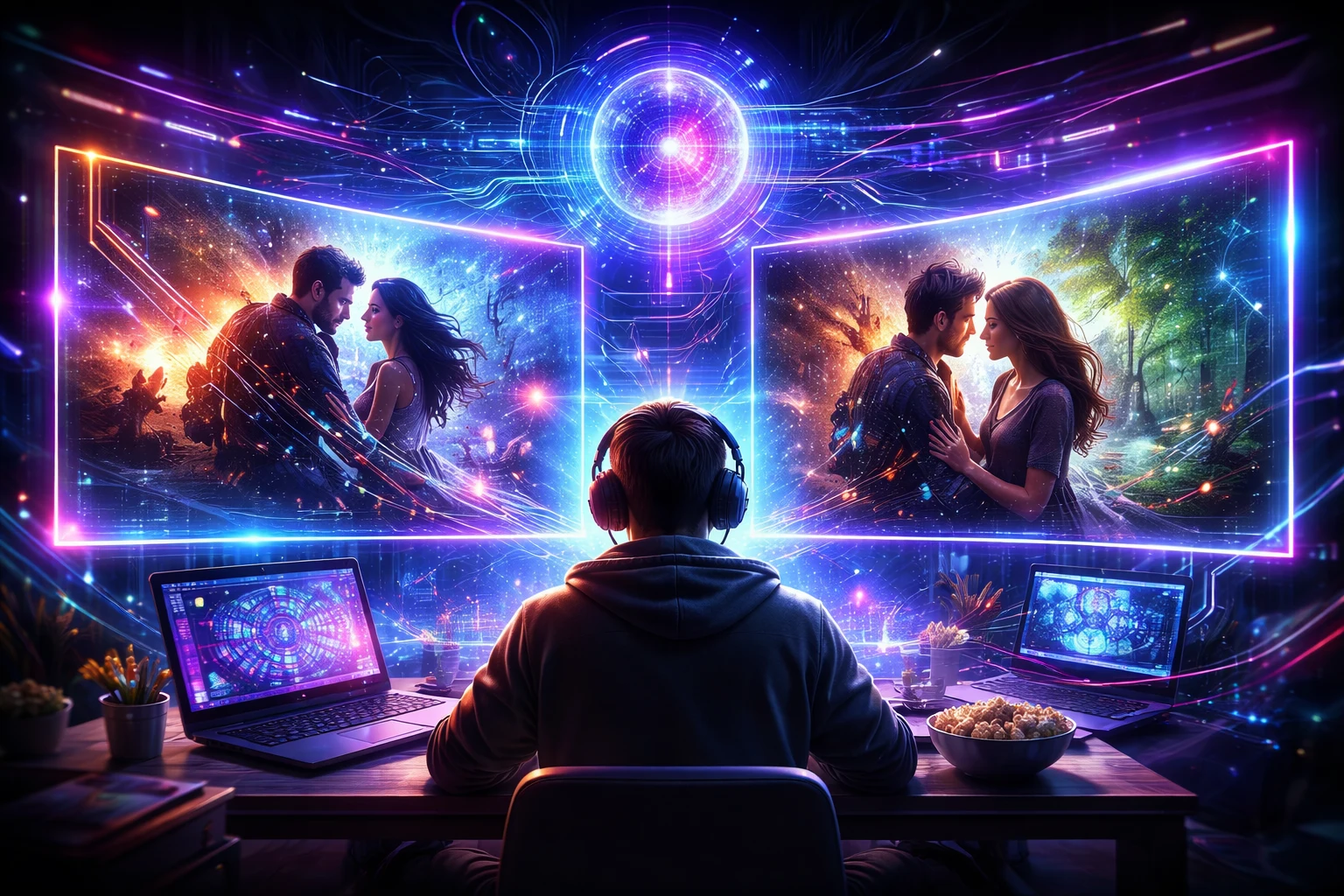
The entertainment industry is entering a new phase where AI-powered storytelling is no longer just an experimental concept but a real, evolving technology shaping how audiences consume content. One of the biggest signals of this shift comes from Netflix, which is reportedly testing an advanced artificial intelligence system capable of altering movie plots dynamically. This innovation is not just another feature update; it represents a potential transformation in how narratives are created, distributed, and experienced.
For years, streaming platforms have competed on content quantity and recommendation algorithms, but now the focus is shifting toward personalization at the narrative level. With Netflix exploring AI-generated story variations, the idea of a single, fixed storyline may soon become outdated. Instead, viewers could experience films that adapt based on preferences, behavior, or even emotional responses.
This move reflects a broader trend in AI in entertainment, where machine learning is increasingly integrated into creative workflows. From scriptwriting to visual effects, AI has already been influencing production pipelines. However, Netflix’s latest experiment pushes the boundary further by placing AI directly into the storytelling core, allowing content to evolve in real time.
What Is Netflix’s AI Storytelling Technology
At the center of this development is a system often referred to as AI narrative engines, designed to analyze story structures and generate alternate plotlines. Netflix’s internal project, reportedly named VOID, is built to modify story arcs without compromising narrative coherence. Unlike traditional editing or alternate endings, this technology aims to create multiple story pathways within a single film or series.
The concept is similar to interactive storytelling seen in earlier Netflix experiments like “Bandersnatch,” but with a significant upgrade. Instead of viewers manually choosing outcomes, the AI system could automatically adjust the narrative based on user data. This includes watch history, genre preferences, and possibly even real-time engagement metrics such as pause behavior or rewatch patterns.
This means a single movie could have countless variations, each tailored to different audience segments. One viewer might see a darker, more dramatic storyline, while another experiences a lighter, more optimistic version of the same film. The goal is to enhance engagement by aligning storytelling with individual tastes.
From a technical perspective, the system likely relies on a combination of large language models, scene generation algorithms, and predictive analytics. These components work together to maintain narrative continuity while introducing dynamic changes. It is a complex challenge, as storytelling requires not just logical consistency but emotional resonance.
Why Netflix Is Investing in AI Storytelling
The streaming market has become highly competitive, with platforms constantly seeking ways to retain subscribers and increase viewing time. By investing in AI-driven content personalization, Netflix is positioning itself ahead of rivals in the next wave of digital entertainment.
One of the key motivations is user retention. Personalized recommendations have already proven effective, but they are limited to suggesting existing content. AI storytelling takes personalization a step further by transforming the content itself. This could significantly increase user engagement, as viewers are more likely to stay on a platform that offers unique, customized experiences.
Another factor is production efficiency. Creating multiple versions of a story manually would be time-consuming and expensive. AI can automate parts of this process, enabling studios to generate variations at scale. This could reduce production costs while expanding creative possibilities.
There is also a strategic advantage in data utilization. Netflix has access to vast amounts of viewer data, and AI storytelling allows the company to leverage this data in new ways. By understanding audience preferences at a deeper level, Netflix can refine its content strategy and deliver more targeted experiences.
How AI Could Change the Way We Watch Movies
The introduction of AI-generated narratives could fundamentally alter the viewing experience. Traditionally, films are designed as linear stories with a fixed beginning, middle, and end. With AI, this structure becomes more fluid, allowing for branching paths and adaptive storytelling.
One potential outcome is the rise of personalized cinema. Instead of discussing a single version of a movie, viewers might compare different storylines they experienced. This could create a new form of social interaction around content, where discussions focus on variations rather than a shared narrative.
Another possibility is increased immersion. By tailoring stories to individual preferences, AI could make content more emotionally engaging. For example, a viewer who prefers character-driven drama might see deeper character development, while another who enjoys action could experience more intense sequences.
However, this shift also raises questions about artistic integrity. Filmmakers traditionally have full control over their narratives, crafting stories with specific themes and messages. With AI altering these elements, there is a risk of diluting the original vision. Balancing creative control with personalization will be a key challenge for the industry.
The Impact on Filmmakers and Creators
For creators, the rise of AI in film production presents both opportunities and challenges. On one hand, AI can serve as a powerful tool for experimentation, allowing filmmakers to explore multiple storylines and test different narrative approaches. This could lead to more innovative and diverse content.
On the other hand, there is concern about the role of human creativity. If AI begins to take over aspects of storytelling, it could change the nature of creative work. Writers and directors may need to adapt, focusing more on guiding AI systems rather than crafting every detail manually.
Collaboration between humans and AI is likely to become the new norm. Instead of replacing creators, AI could act as a co-creator, generating ideas and variations that humans refine and curate. This hybrid approach could enhance creativity while maintaining artistic quality.
There are also implications for intellectual property. If AI generates multiple versions of a story, questions arise about ownership and authorship. Clear guidelines will be needed to ensure that creators are properly credited and compensated.
Challenges and Ethical Considerations
The development of AI storytelling technology is not without challenges. One of the biggest concerns is data privacy. Personalized storytelling relies on user data, and ensuring that this data is used responsibly is critical. Transparency and user consent will play a major role in building trust.
Another issue is algorithmic bias. AI systems learn from existing data, which can contain biases. If not properly managed, this could lead to skewed narratives or reinforce stereotypes. Developers must ensure that AI-generated content is inclusive and fair.
There is also the question of content authenticity. As AI becomes more capable of generating realistic narratives, distinguishing between human-created and AI-generated content may become difficult. This could impact how audiences perceive and value storytelling.
Finally, there is the risk of over-personalization. While tailored content can enhance engagement, it may also limit exposure to diverse perspectives. Balancing personalization with variety will be important to maintain a rich and inclusive entertainment ecosystem.
What This Means for the Future of Streaming
Netflix’s experiment with AI-powered narrative systems signals a broader shift in the streaming industry. As technology continues to evolve, we can expect more platforms to explore similar innovations. This could lead to a new era of interactive and adaptive entertainment.
In the future, streaming services may offer fully customizable viewing experiences, where users can influence not just what they watch but how the story unfolds. This could blur the line between movies, games, and interactive media, creating a new category of content.
The integration of AI could also impact content distribution. Instead of releasing a single version of a film globally, platforms could deploy multiple versions tailored to different regions or demographics. This could enhance cultural relevance and audience engagement.
However, the success of this approach will depend on execution. The technology must be seamless and intuitive, enhancing the viewing experience without disrupting it. If done right, AI storytelling could become a defining feature of next-generation streaming platforms.
Industry Reactions and Early Feedback
The announcement of Netflix’s AI storytelling initiative has sparked significant discussion within the industry. Some experts see it as a natural evolution of digital entertainment, while others are more cautious about its implications.
Supporters argue that AI in storytelling opens up new creative possibilities and aligns with the growing demand for personalized experiences. They believe it could lead to more engaging and innovative content, attracting a wider audience.
Critics, however, worry about the potential loss of artistic control and the homogenization of narratives. They argue that storytelling is fundamentally a human art form, and excessive reliance on AI could undermine its authenticity.
Early feedback from test audiences will be crucial in determining the viability of this technology. If viewers respond positively to personalized narratives, it could accelerate adoption across the industry. Conversely, negative reactions could slow down development and prompt a reevaluation of the approach.
Conclusion: A Turning Point for Digital Storytelling
Netflix’s exploration of AI that can change movie stories represents a significant milestone in the evolution of entertainment. It highlights the growing role of artificial intelligence in shaping not just how content is produced, but how it is experienced.
While there are challenges and uncertainties, the potential benefits are substantial. Personalized storytelling could redefine audience engagement, offering unique and immersive experiences that were previously impossible. At the same time, it raises important questions about creativity, ethics, and the future of storytelling.
As the technology continues to develop, one thing is clear: the boundaries of storytelling are expanding. Whether this leads to a new golden age of innovation or a complex landscape of ethical dilemmas will depend on how the industry navigates this transformation. For now, Netflix’s AI experiment stands as a bold step into the future of visual technology and digital creativity.