

Kainoa Studio Bets on Human-Centered AI Design
 Vortixel
14 minutes read
Vortixel
14 minutes read
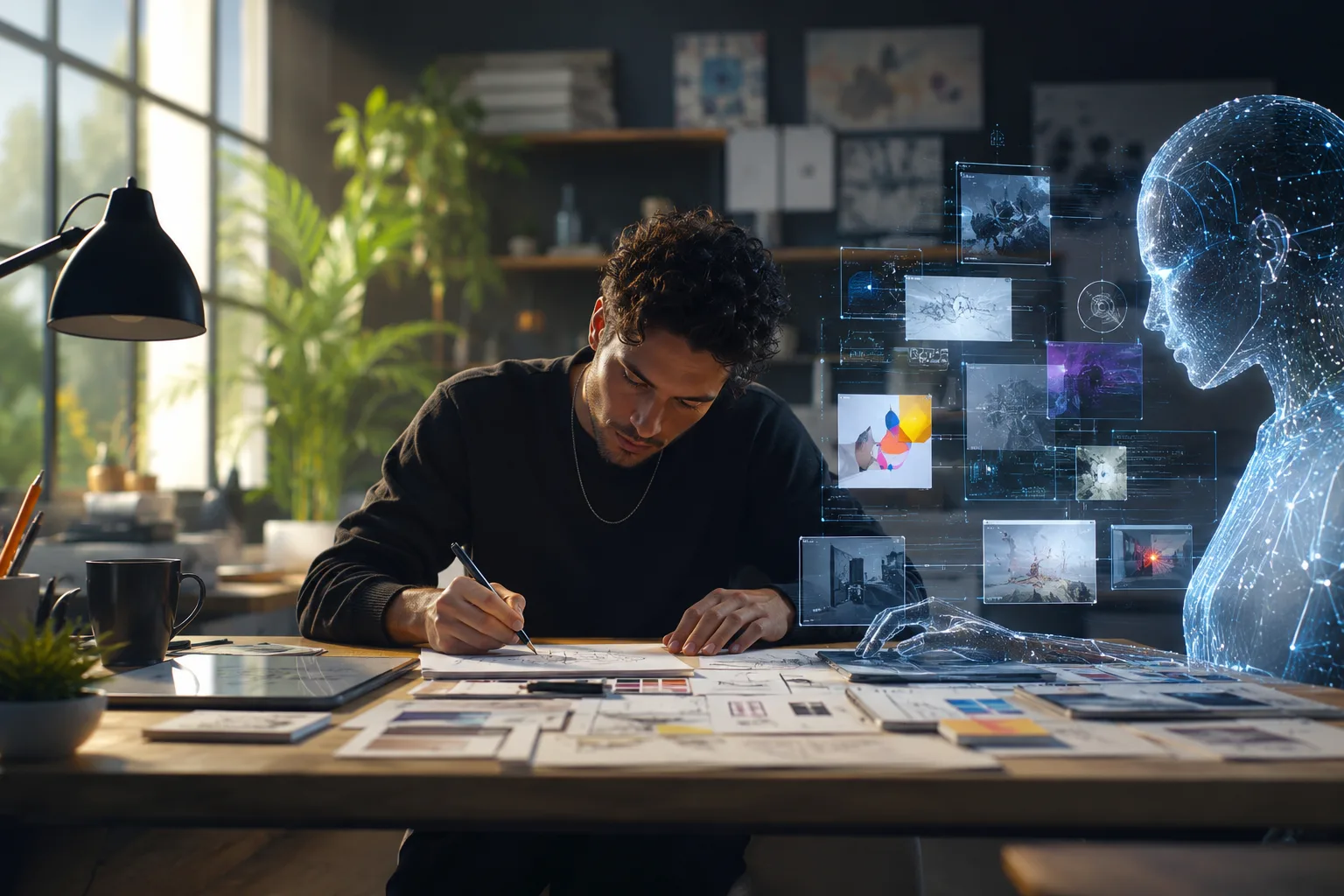
Kainoa Studio is arriving at a strange, electric moment for human-centered AI design. The creative world is flooded with tools that can generate interfaces, mockups, logos, layouts, scripts, images, and product concepts before a team has even finished its first coffee. That speed is impressive, but it also creates a new problem: when almost anyone can make something look polished, taste becomes harder to fake. Kainoa Studio, launched by designer and creative director Brandon Kainoa Jacoby, is built around the idea that AI does not erase the value of human judgment; it makes judgment more visible. In the AI era, the strongest visual work may not come from teams that generate the most options, but from people who know which options should survive.
The timing matters because design is no longer sitting quietly at the end of the production line. For years, visual teams were asked to make products look better after business strategy, engineering, and marketing had already decided the shape of the thing. Now, generative tools can turn rough ideas into clickable visuals, mood boards, campaign drafts, and cinematic prototypes at ridiculous speed. That means design taste is being pulled closer to the beginning of decision-making, where a single creative call can shape how a brand feels, how a product behaves, and how users decide whether to trust it. Kainoa Studio’s bet is simple but sharp: in a world where AI makes execution cheaper, creative taste becomes one of the most expensive advantages left.
Why Human-Centered AI Design Suddenly Matters
Human-centered AI design matters because the visual internet is entering a sameness crisis. A huge amount of AI-assisted work already has the same glassy lighting, the same over-smoothed details, the same futuristic gradients, and the same generic sense of “innovation” without a clear emotional point of view. It is not always bad, but it often feels detached from the people it is supposed to reach. That is where human taste becomes more than decoration; it becomes a filter for meaning, context, restraint, timing, and cultural fit. Kainoa Studio’s positioning reflects a larger shift in Artificial Intelligence, where the question is moving from “Can the machine create?” to “Who is guiding what the machine creates?”
AI can produce hundreds of directions, but it cannot automatically understand why one direction feels right for a specific brand at a specific cultural moment. It can imitate visual styles, remix familiar patterns, and optimize for prompts, but it does not carry lived memory, personal friction, or the instinct that tells a designer when something is technically correct but emotionally dead. A strong designer sees what is missing in the room, not just what is visible on the screen. That skill becomes more valuable when the screen fills up faster than ever. Kainoa Studio is stepping into that gap with a model that treats AI as acceleration, not authority.
This is also why the word “taste” keeps coming back in conversations about modern design. Taste is not just liking cool things or collecting references from the right accounts. It is the ability to recognize tension, choose hierarchy, understand mood, and know when an idea needs to be louder or quieter. It is also the discipline to delete a good-looking output because it does not serve the brief. In an era when AI can make almost every direction look finished, taste becomes the difference between a visual that performs and a visual that merely exists.
Kainoa Studio and the New Independent Creative Model
Kainoa Studio also signals a bigger change in how creative work may be organized. Instead of following the classic agency structure with layers of account management, hierarchy, and production handoffs, the studio points toward a more networked model. In that model, independent designers, creative directors, motion artists, strategists, and technologists can come together around a project without pretending to be a massive legacy shop. This matters because AI is compressing production timelines while clients still want work that feels specific, elevated, and culturally aware. A smaller studio with strong taste can move quickly without giving up the human friction that makes creative work distinctive.
That independent model feels especially relevant for senior designers who have spent years inside major tech companies. Many of them know how to build systems, ship products, protect brand coherence, and survive the chaos of high-pressure teams. But they are also seeing how automation can flatten the role of designers inside large organizations. When companies believe AI can handle more of the output, creative professionals may have to prove their value through direction, not volume. Kainoa Studio represents one possible response: leave the traditional seat, build a sharper practice, and sell judgment as the core product.
This does not mean the old agency model is dead. Big teams still matter for global campaigns, complex product ecosystems, and long-term brand operations. But the center of gravity is shifting toward leaner creative groups that can bring high-level taste without forcing clients through slow systems. For startups, AI-native companies, consumer brands, and cultural projects, that speed can be a major advantage. Kainoa Studio’s model fits the mood of the moment because it understands that the future of design may be less about headcount and more about precision.
The Taste Economy Is Rewriting Visual Technology
The rise of Kainoa Studio sits inside what could be called the taste economy. In this economy, visual tools are widely available, but the ability to create a memorable point of view is rare. AI can help brands make more content, test more directions, and move faster across platforms. Yet speed alone does not build desire, trust, or loyalty. The brands that win will be the ones that use visual technology to sharpen their identity rather than drown it in endless output.
This is already obvious across digital products, entertainment, advertising, and social platforms. Users are surrounded by polished images, short videos, avatars, synthetic voices, AI-generated campaigns, and interface experiments that all compete for attention at the same time. The visual bar has risen, but so has the audience’s ability to detect emptiness. People may not always know how something was made, but they can feel when it has no taste behind it. That is why human-led creative direction is becoming a serious business advantage, not just an aesthetic preference.
For Visual Vortixel’s world of Digital Creativity, this is one of the most important trends to watch. AI is not just changing how visuals are produced; it is changing what visual leadership means. A designer used to be judged partly by craft and partly by output, but now the evaluation is moving toward curation, systems thinking, and emotional accuracy. The best designers are becoming editors of possibility. They are not competing with the machine at making variations; they are deciding which variation deserves to become culture.
AI Makes Execution Easier, Not Direction Easier
One of the biggest misconceptions about AI design tools is that easier execution automatically means easier design. In reality, easier execution can make the design process more confusing because teams suddenly have too many directions to evaluate. When a model can generate twenty landing page concepts, twelve logo treatments, and a full product mood board in minutes, the hard part becomes deciding what matters. That decision cannot be outsourced entirely to the same system that created the options. This is where design judgment becomes the main event.
Strong creative direction starts before the prompt. It starts with understanding the audience, the brand’s emotional territory, the competitive landscape, and the cultural signals that make something feel fresh instead of forced. AI can assist with research, reference gathering, prototyping, and visual exploration, but it does not replace the need for a human to define the why. Without that why, teams risk mistaking abundance for progress. They may produce more assets while building less meaning.
Kainoa Studio’s relevance comes from recognizing that the next wave of design will reward people who know how to work with AI without becoming visually dependent on it. The strongest creative teams will not reject AI out of nostalgia, and they will not worship it out of hype. They will treat it like a powerful studio assistant that can sketch, remix, accelerate, and surprise. But the final taste call still belongs to people who understand context. That balance is what makes human-centered AI design feel practical rather than philosophical.
What Brands Can Learn From Kainoa Studio’s Bet
Brands watching Kainoa Studio should pay attention to the lesson underneath the launch. The message is not simply that every company needs a boutique design studio. The deeper lesson is that AI has made visual distinction more important, not less. If a brand uses the same tools, prompts, templates, and references as everyone else, it will eventually sound and look like everyone else. The only durable advantage is a clear point of view that guides how those tools are used.
That point of view should show up across product design, campaign imagery, typography, motion, interface behavior, and even the way a company explains itself. A brand cannot rely on a single beautiful launch deck if the product experience feels generic. It also cannot hide weak strategy behind hyper-polished AI visuals for long. Audiences move quickly, but they are not as easy to fool as some marketers imagine. They reward brands that feel intentional, consistent, and human.
For companies building with AI, the practical takeaway is to invest in taste as infrastructure. That means hiring or collaborating with people who can make judgment calls, not just operate tools. It means creating a creative standard before generating assets at scale. It also means accepting that fewer, sharper visuals may be more powerful than endless content volume. In a noisy feed, restraint can be a competitive strategy.
The Human Skills That Still Matter Most
The conversation around AI often turns into a battle between automation and labor, but the design reality is more layered. Some production tasks will absolutely become faster, cheaper, and more automated. Basic variations, draft layouts, image treatments, presentation visuals, and first-pass concepts will keep moving into AI-assisted workflows. But that does not remove the need for human skill. It changes which human skills rise to the top.
The first skill is taste, which is the ability to recognize quality beyond obvious polish. The second is strategic empathy, which helps designers understand how a visual will land with real people, not just internal stakeholders. The third is narrative thinking, because every strong brand system tells a story even when it is not using words. The fourth is restraint, which may be the most underrated skill in the AI era. When tools can create endlessly, the ability to stop becomes powerful.
These skills are difficult to measure because they do not always fit neatly into dashboards. A model can score prompt alignment, image clarity, or engagement metrics, but it struggles to understand why a strange choice feels memorable or why an imperfect detail makes a visual more believable. Human designers often work in that space between logic and feeling. They sense when a design needs roughness, silence, weight, humor, or contradiction. That is why the future of Design will likely belong to people who can combine machine fluency with cultural instinct.
Why AI Slop Makes Good Taste More Valuable
The phrase “AI slop” has become popular because people are tired of visual content that looks expensive but feels empty. It usually describes synthetic media that is overproduced, under-directed, and disconnected from any real point of view. The problem is not that AI made it. The problem is that nobody with taste stopped it from being published. Kainoa Studio’s bet feels timely because the market is beginning to separate AI-assisted creativity from AI-generated clutter.
This distinction is important for anyone working in Digital Art or visual media. AI-assisted creativity can be expressive, personal, and surprising when it is guided by clear intent. It can help artists explore forms that would be too slow or expensive to build manually. It can open doors for small teams, independent creators, and experimental studios. But without human direction, the same tools can flood platforms with visuals that are technically impressive and emotionally forgettable.
Good taste acts like a quality firewall. It blocks the obvious, the lazy, the derivative, and the visually loud ideas that do not actually say anything. It also protects brands from chasing every shiny style that appears in the feed. In the AI era, this firewall has to be stronger because the volume of possible work is much higher. The creative teams that understand this will use AI to deepen their identity, not dilute it.
How Creative Teams Should Work With AI Now
Creative teams do not need to choose between old-school craft and AI-native workflows. The better approach is to build a process where AI handles exploration while humans control the brief, the taste standard, and the final direction. That means starting each project with a clear creative point of view before opening any generation tool. Teams should define what the work should feel like, what it should avoid, and what emotional response it needs to create. Without those guardrails, AI becomes a slot machine instead of a studio partner.
- Start with strategy: define the audience, tone, tension, and brand role before generating visual concepts.
- Use AI for range: explore directions quickly, but do not confuse quantity with quality.
- Curate aggressively: remove outputs that look polished but lack emotional or strategic purpose.
- Protect originality: avoid default aesthetics, overused prompts, and visual trends that already feel exhausted.
- Keep humans accountable: make sure a real creative lead owns the final decision and its consequences.
This process is not anti-technology. It is the most realistic way to use technology well. AI works best when it is surrounded by people who know what they are trying to say. The more advanced the tools become, the more important that surrounding judgment becomes. Kainoa Studio’s approach fits this reality because it positions human taste as the control layer over machine speed.
The Impact on Visual Entertainment and Product Design
The same shift is happening in Visual Entertainment, where AI can now help create concept art, storyboards, character explorations, title sequences, promotional assets, and world-building references. Studios can move faster, but they also risk creating entertainment that looks visually rich and spiritually thin. The audience does not only want spectacle; it wants taste, tension, identity, and surprise. A world built by AI still needs a human reason to exist. Without that reason, even the most detailed fantasy city can feel like a screensaver.
Product design faces a similar challenge. AI can generate interface ideas, design systems, icons, onboarding flows, and landing pages with impressive speed. But products are not judged only by surface beauty. They are judged by clarity, trust, timing, usefulness, and the small emotional cues that make a user feel oriented instead of manipulated. A button, animation, or empty state can carry a brand’s personality when it is designed with care. That kind of care still depends on human attention.
This is why the Kainoa Studio story is bigger than one studio launch. It reflects a wider revaluation of creative leadership across the visual technology stack. As software gets better at producing, people get more important as directors, editors, and meaning-makers. The work of the future may involve fewer blank canvases and more intelligent collaboration with machines. But the core question remains deeply human: what is worth making, and why should anyone care?
A New Standard for Visual Innovation
Visual Innovation used to be associated with new tools, new formats, and new technical capabilities. Those things still matter, but they are no longer enough. A brand can use the latest model, the sharpest rendering engine, or the most advanced creative software and still produce work that feels hollow. Innovation now has to include the quality of the human decisions behind the output. The future belongs to teams that can combine technical fluency with emotional intelligence.
Kainoa Studio’s bet is compelling because it does not treat AI as a threat to creativity or a magic shortcut around it. It treats AI as a force that raises the stakes for taste. When production becomes easier, the cost of bad judgment becomes more visible. When everyone has access to powerful tools, the real differentiator becomes how those tools are directed. That is a much more interesting future than the simple story of machines replacing artists.
The studio also points toward a healthier creative conversation. Instead of asking whether AI will destroy design, the better question is what kind of design culture survives when production is automated. If the answer is shallow optimization, then the future will be louder and less meaningful. If the answer is stronger human direction, then AI could help designers explore more deeply, move more freely, and make better work faster. The difference depends on whether creative teams protect taste as a serious discipline.
Conclusion: Human Taste Is the Real Interface
Kainoa Studio’s launch lands because it captures the mood of a creative industry in transition. AI is changing how visuals are made, but it is also exposing how much great design depends on judgment that cannot be reduced to output speed. The future of human-centered AI design will not be defined by who can generate the most images, decks, layouts, or prototypes. It will be defined by who can make those outputs feel coherent, memorable, and alive. In that sense, human taste is becoming the real interface between technology and culture.
For designers, the message is both challenging and encouraging. The easy parts of production may keep getting automated, but the deeper parts of creative leadership are becoming more valuable. For brands, the message is even clearer: AI can give you more options, but it cannot give you a soul by default. Kainoa Studio is betting that people will still pay for taste, especially when the visual world becomes crowded with machine-made sameness. That bet feels less like nostalgia and more like a blueprint for the next era of design.