
AI Photo Editing Speeds Up With Adobe Topaz Deal
 Vortixel
17 minutes read
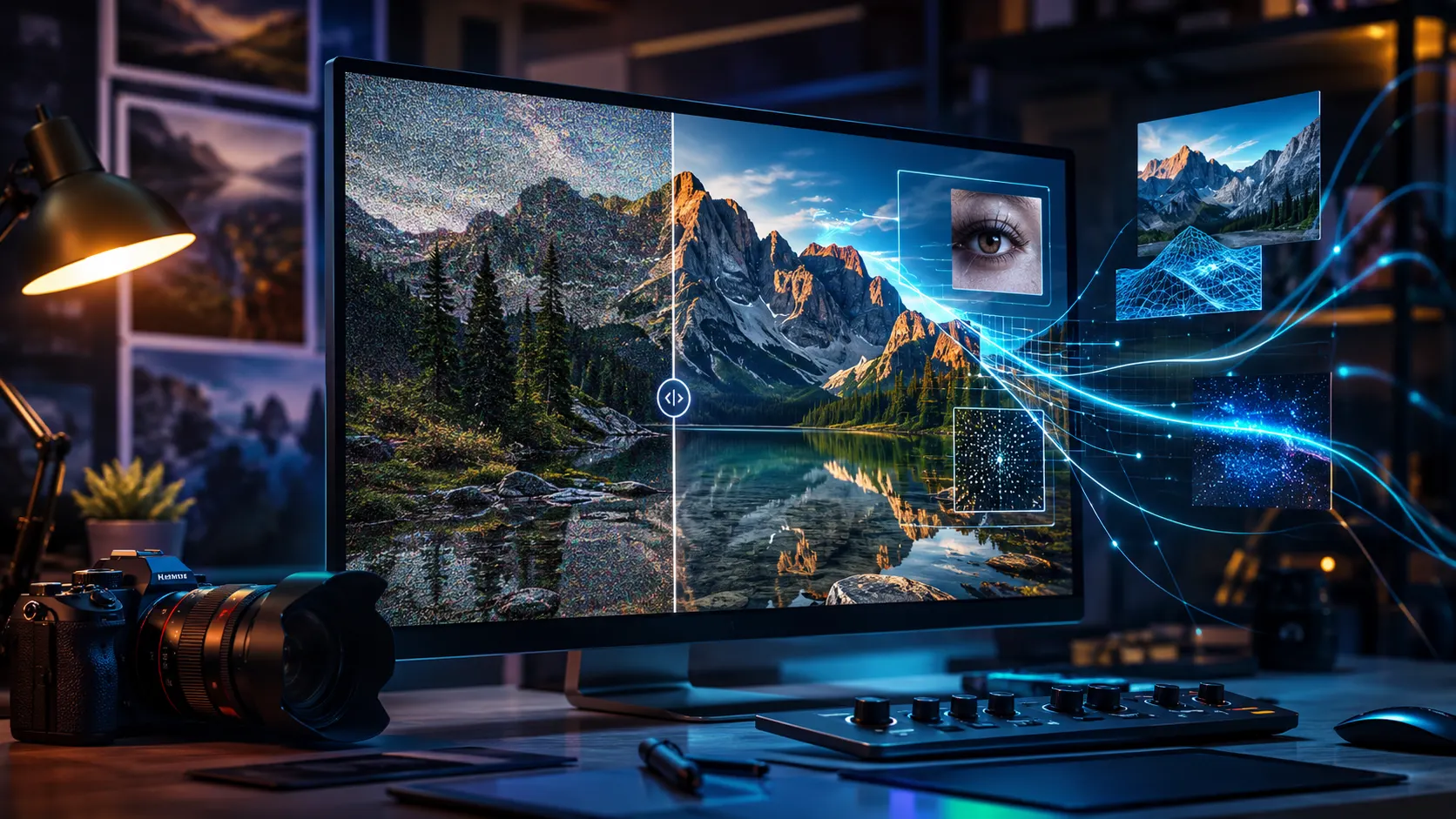
The camera roll has never felt heavier, and that is exactly why AI photo editing is having its biggest moment yet. Every photographer, designer, creator, brand team, and weekend visual obsessive is sitting on more images than they can realistically polish by hand. The Adobe-Topaz deal lands right in the middle of that pressure, where speed is no longer a luxury but part of the creative workflow itself. Topaz Labs built its reputation around sharpening, denoising, upscaling, and rescuing visuals that once looked too soft, too grainy, or too limited for serious use. Now that its enhancement technology is moving into Adobe’s orbit, the future of photo editing looks less like slow retouching and more like instant visual recovery.
For years, Adobe has owned the professional creative desk through Photoshop, Lightroom, Premiere Pro, and the wider Creative Cloud ecosystem. Topaz Labs, meanwhile, became the favorite side tool for creators who wanted one thing done extremely well: make imperfect images and videos look cleaner, sharper, and more usable. The interesting part is not just that Adobe is buying another AI company. The bigger story is that Adobe is pulling specialist enhancement technology closer to the core of mainstream creative production. That shift says a lot about where AI photo editing is heading next, especially as creators expect software to fix technical flaws before they even start making artistic decisions.
Why AI Photo Editing Is Moving So Fast
AI photo editing used to feel like a bonus feature tucked inside traditional software. A few years ago, creators still expected to spend time adjusting masks, cleaning noise, recovering details, and making small corrections one step at a time. Today, the baseline has changed completely because AI is no longer sitting at the edge of the interface. It is becoming the engine underneath the creative process. The Adobe-Topaz move matters because it shows that the next phase of visual technology is not only about generating new images, but also about making existing images dramatically better with less friction.
This matters most for photographers who deal with messy reality rather than perfect studio conditions. A wedding photographer might have a beautiful emotional shot ruined by low light and motion blur. A wildlife photographer might capture a rare moment from too far away, leaving the subject small and soft in the frame. A content creator might have vertical video that looks decent on a phone but falls apart when reused for a larger screen. In each case, AI enhancement can turn a technically weak file into something that has a real second chance.
Topaz Labs became popular because it understood that creators do not always need a full creative suite to solve one painful problem. Sometimes they just need a noisy photo cleaned up without destroying skin texture. Sometimes they need an old image enlarged without turning it into a melted mess. Sometimes they need footage sharpened enough to survive a professional edit. Adobe, on the other hand, understands scale, distribution, and how creative tools become daily habits. Together, this combination points toward a future where enhancement becomes a normal step inside the creative pipeline instead of a separate rescue mission.
The Deal Is Bigger Than a Photo Tool
At first glance, the acquisition looks like a simple software industry headline. A major creative platform sees a fast-moving AI company and brings it inside the house. But the deeper signal is about control over the visual workflow from capture to final delivery. Adobe already has editing, design, publishing, video, marketing, and enterprise distribution locked into one ecosystem. By adding Topaz-style enhancement technology, Adobe can strengthen the earliest stage of that workflow, where raw visual material gets cleaned, sharpened, enlarged, and prepared for everything that comes after.
That is a huge deal because modern visual content rarely lives in just one place. A single photo might become a website hero image, an Instagram carousel, a newsletter header, a product page asset, a YouTube thumbnail, and a paid ad. Each destination has different size, clarity, and quality expectations. Old editing workflows forced creators to manually adapt assets over and over. AI enhancement changes that by making it easier to stretch, repair, and repurpose visual material without rebuilding everything from scratch.
The move also fits the way Adobe has been positioning Firefly and Creative Cloud as more than classic editing tools. The company is building toward a creative operating system where generative AI, editing AI, brand workflows, and production automation all sit closer together. Topaz brings credibility in practical enhancement, not just flashy image creation. That distinction matters because many working creators are less worried about fantasy prompts and more focused on whether their real files can be saved, improved, or delivered faster. In that world, better enhancement can be just as valuable as better generation.
Why Topaz Became So Valuable
Topaz Labs did not become important by trying to replace the entire editing process. It became important by solving specific pain points that photographers and video creators face every day. Noise reduction, sharpening, upscaling, stabilization, and detail recovery may not sound glamorous at first. But anyone who works with images knows these are the problems that decide whether a file is usable or gets buried forever. Topaz built tools that made creators feel like they could rescue work that would have been rejected in a traditional workflow.
That emotional value is easy to underestimate. A blurry image is not just a technical flaw; sometimes it is the only shot of a meaningful moment. A grainy concert photo is not just a noisy file; it might be the one frame where the lighting, expression, and timing all landed perfectly. A low-resolution archive image is not just small; it may carry history that deserves to be seen clearly on modern screens. When AI can improve those files, the software is not only saving time. It is protecting visual memory and creative opportunity.
This is why the acquisition feels especially relevant for digital artists and visual storytellers. The creative industry is flooded with talk about AI replacing human imagination, but enhancement tools tell a more grounded story. They are not always about inventing something from nothing. Often, they are about helping creators push real material closer to what they saw, felt, or intended in the first place. That makes AI image enhancement one of the most practical and less abstract parts of the AI revolution.
On-Device AI Could Change the Workflow
One of the most interesting parts of the Adobe-Topaz story is the focus on running powerful AI models locally on consumer devices. Cloud AI has become the default mental model for many people, where every heavy task feels like it must travel to remote servers before coming back as a result. That can work well, but it also creates concerns around speed, cost, privacy, and internet dependence. If advanced AI photo editing can happen directly on a laptop or desktop, the creative experience starts to feel much more immediate. For professionals, that difference can reshape the rhythm of an entire workday.
Local AI matters because creative work is full of tiny decisions that build on one another. A photographer may test a denoise setting, compare it against the original, adjust detail strength, crop, upscale, and then send the image into a larger edit. If every step feels slow, the creator becomes cautious and edits less freely. If every step responds quickly, experimentation becomes natural. That is where on-device AI could make enhancement feel less like a heavy processing task and more like a live creative conversation.
There is also a practical business angle here. Cloud-based AI can become expensive when millions of creators are processing high-resolution images and videos every day. Running more work locally could reduce the pressure on remote infrastructure while giving users faster results. It could also make advanced enhancement more accessible to creators who do not always have perfect internet connections. For the future of Artificial Intelligence in visual software, that balance between cloud power and local performance may become one of the most important battlegrounds.
What This Means for Photoshop and Lightroom
Photoshop and Lightroom are already packed with AI-assisted tools, but the Topaz deal suggests that image enhancement could become deeper and more automatic across both products. Lightroom is where many photographers organize, batch edit, color correct, and prepare large collections. Photoshop is where complex compositing, retouching, masking, and advanced manipulation happen. Topaz-style technology could sit naturally in both spaces because enhancement is needed before and after creative edits. A cleaner, sharper, more flexible source image gives every later decision more room to breathe.
Imagine opening a batch of event photos and having the software quietly detect which images need denoising, which frames can benefit from sharpening, and which crops could survive an upscale. That kind of workflow would not remove the photographer from the process. Instead, it would clear away the boring technical cleanup so the human can focus on mood, story, sequence, and delivery. This is the version of AI that many creators actually want. Less magic trick, more production assistant.
The same logic applies to Photoshop, especially for designers who constantly work with mixed-quality assets. Not every project begins with perfect source material. A client might send a tiny logo, an old product photo, a compressed social image, or a screenshot that has to be rebuilt into something usable. Stronger AI upscaling and detail recovery inside Photoshop could reduce the amount of manual repair work needed before the actual design even begins. That would make creative software feel less like a toolbox and more like a smart studio assistant.
The Video Side May Be Even Bigger
Although the headline sounds photo-focused, the video side of the deal may become just as important. Video files are heavier, slower to process, and harder to fix manually than still images. A single clip can contain thousands of frames, each carrying noise, compression, blur, or low-resolution detail. If Adobe can bring stronger AI enhancement into tools like Premiere Pro or After Effects, creators could gain a faster way to rescue footage that would normally demand expensive plugins or specialized workflows. That could be a major upgrade for filmmakers, editors, YouTubers, streamers, and social teams.
Video enhancement also connects directly to the rise of short-form content. Brands and creators are constantly repurposing old footage for TikTok, Reels, Shorts, vertical ads, product demos, and campaign teasers. The problem is that older footage often was not shot for today’s formats or quality standards. AI upscaling and cleanup can help bridge that gap by making older or lower-quality material feel more current. In a content economy that rewards speed, being able to reuse existing footage without making it look cheap is a serious advantage.
This is where the story becomes bigger than photographers and designers alone. Visual entertainment is now shaped by constant remixing, resizing, localization, and platform adaptation. A campaign may need dozens of versions for different markets and screens. A creator may need to turn one shoot into a week of posts. A studio may need to enhance archival footage for a modern audience. AI enhancement sits at the center of that pressure because it helps old and imperfect visuals keep moving through new formats.
Why Creators Are Excited and Nervous
The reaction to a deal like this is never just excitement. Creators have complicated feelings about Adobe because the company is deeply trusted, widely used, and often criticized at the same time. Many professionals rely on Adobe tools every day, but they also worry about subscriptions, pricing changes, feature bundling, and whether favorite independent tools will lose their original personality after acquisition. Topaz has a loyal user base because it feels focused and specialized. When a niche tool enters a massive ecosystem, users naturally ask what will stay the same and what will change.
Those concerns are fair because creative tools are not just software products. They become muscle memory. Photographers build habits around certain sliders, previews, export settings, and batch workflows. Editors learn where tools behave well and where they need manual correction. Designers develop trust in the small details of how an app handles edges, texture, and resolution. If those details change too aggressively, even powerful upgrades can feel disruptive.
At the same time, Adobe can give Topaz technology something independent tools often struggle to achieve at scale. It can put enhancement features directly in front of millions of users who may never install a separate app. It can connect AI cleanup to asset libraries, cloud workflows, enterprise systems, mobile apps, and generative tools. It can make enhancement part of the default creative experience instead of a niche add-on. That reach is why the deal could accelerate the entire category of visual innovation.
The Bigger Trend: AI as Creative Infrastructure
The Adobe-Topaz deal fits a larger trend where AI is moving from feature status to infrastructure status. In the early hype cycle, AI tools were often presented as separate products that could generate dramatic results from a text prompt. Now, the more important shift is quieter but more powerful. AI is being embedded into the ordinary steps of creative work, from selecting the best image to removing noise, extending backgrounds, matching color, resizing assets, creating variations, and preparing files for delivery. That is how AI becomes less of a novelty and more of a standard layer in production.
This infrastructure shift is especially important for businesses that need large volumes of content. Marketing teams do not just need one perfect image; they need campaigns that can adapt across channels, audiences, seasons, and formats. E-commerce teams need product visuals that look clean, consistent, and scalable. Media teams need faster ways to edit, approve, and distribute visual assets. When AI enhancement becomes reliable, it can reduce bottlenecks across all of those workflows.
For independent creators, the same trend has a different kind of value. A solo photographer or digital artist may not have a production team, assistant editor, retoucher, or technical specialist. Better AI tools can act like a silent support crew, handling repetitive cleanup while leaving creative judgment in human hands. That does not make craft irrelevant. It raises the expectation that craft should start from a stronger technical baseline.
Practical Takeaways for Photographers
Photographers should read this moment as a sign to update their workflow mindset, not panic about replacement. The smartest approach is to treat AI photo editing as a technical amplifier rather than a creative shortcut. Strong composition, timing, lighting, subject direction, and taste still matter because AI cannot fully repair weak intention. What it can do is reduce the penalty for difficult shooting conditions. That means photographers who combine strong capture skills with smart enhancement habits will likely gain the most.
It is also a good time to build a more organized archive. As AI upscaling and restoration improve, older images may become more useful than they looked when first captured. A photo that once felt too small for print might become usable for a large digital feature. A noisy event shot might become strong enough for a portfolio story. A forgotten travel image might turn into a high-quality editorial asset. The value of your archive increases when software gets better at recovering detail from it.
Photographers should also become more careful about when to use enhancement and when to leave texture alone. Over-sharpened images can look artificial, and aggressive denoising can erase the natural character of a scene. The best AI-enhanced images do not scream that they were processed. They simply look like the camera performed better under pressure. That level of restraint will become a key skill as enhancement tools become more powerful and easier to overuse.
Practical Takeaways for Designers and Artists
Designers should pay attention because this deal could make low-quality source material less of a creative dead end. In real projects, designers often receive assets that are too small, too compressed, poorly lit, or not aligned with the final format. AI enhancement can help turn those imperfect inputs into usable building blocks. That could speed up mood boards, social graphics, web layouts, product visuals, and campaign mockups. It also gives designers more room to experiment before requesting a costly reshoot or asset replacement.
Digital artists may find the shift even more interesting because AI enhancement can support hybrid workflows. An artist might start with photography, generate elements, paint over details, upscale the final composition, and then refine it again for print or motion. In that kind of process, enhancement is not just correction. It becomes part of the art-making chain. Better tools can help artists move between sketch, photo, render, and finished image with fewer quality breaks along the way.
Still, artists should protect their visual identity as tools become more automated. If every creator uses the same one-click enhancement settings, images can start to share the same polished look. The goal should not be to let AI flatten every file into a generic glossy finish. The goal should be to use AI to support style, not replace it. Taste, restraint, and intentional imperfection will become more valuable as technical polish becomes easier to achieve.
What It Means for the Creative Software Market
The acquisition also sends a message to the rest of the creative software market. Specialized AI tools can still grow fast by solving narrow problems better than giant platforms. But once a narrow solution becomes essential enough, the platform companies will want it inside their own ecosystems. That creates both opportunity and pressure for independent developers. They can innovate quickly, but they may also find themselves competing against integrated AI features inside the apps creators already pay for.
For users, this could be good and frustrating at the same time. Integrated features are convenient because they reduce app switching and make workflows smoother. But consolidation can also limit choice if beloved independent tools become absorbed, changed, or tied to broader subscription systems. The best outcome would be a market where Adobe improves native enhancement while independent tools continue pushing the edges of what AI can do. Competition matters because creative professionals benefit when software companies have to keep earning trust.
This is especially true as AI visual technology becomes a core business layer rather than a trendy category. Companies are no longer just selling filters or plugins. They are selling speed, quality control, production efficiency, and creative confidence. The winners will be the tools that help creators move faster without making their work feel generic. That is a much harder challenge than simply adding AI buttons to an interface.
The Trust Question Will Not Go Away
Every major AI move in the creative space comes with a trust question. Creators want to know how models are trained, how their work is protected, how much control they keep, and whether AI features will change pricing or access. They also want to know whether enhanced images will remain clearly connected to the original file or drift into synthetic territory. These questions are not side issues. They are central to whether photographers, artists, and brands feel safe building long-term workflows around AI.
The Adobe-Topaz deal will likely be judged not only by how powerful the tools become, but by how transparent and respectful the integration feels. Creators are more willing to accept AI when it solves real workflow problems and gives them control. They are less willing to accept it when it feels forced, hidden, or disconnected from creative ethics. As enhancement becomes stronger, the line between improving an image and changing its truth can get blurry. Good software will need to make that line easier to manage, not harder to see.
This is especially important for journalism, documentary work, product photography, and any field where visual accuracy matters. Removing noise is one thing. Inventing missing details that change the meaning of an image is another. Upscaling a photo for clarity can be useful, but creators need to understand what the AI is actually adding. The future of AI photo editing will depend on both technical quality and honest creative control.
Conclusion: Faster Editing, Bigger Questions
The Adobe-Topaz deal feels like a turning point because it brings specialist enhancement deeper into the center of mainstream creative work. AI photo editing is no longer just about quick fixes or experimental features. It is becoming part of how visual culture gets produced, repaired, scaled, and distributed. For creators, the upside is clear: faster cleanup, better upscaling, stronger rescue options, and smoother workflows inside the tools they already use. For the industry, the bigger question is how to keep that power useful, transparent, affordable, and creatively human.
The most exciting future is not one where AI makes every image look the same. It is one where creators can spend less time fighting technical limits and more time shaping stories, moods, identities, and ideas. Adobe buying Topaz does not end the conversation around creative AI; it makes the conversation more urgent. The next wave of visual technology will be judged by whether it helps people create better work without erasing the human decisions behind it. If Adobe gets the integration right, this could be the moment when AI enhancement stops feeling like a side tool and becomes a normal part of visual creativity.