

Obama Center Becomes Chicago’s New Visual Icon
 Vortixel
13 minutes read
Vortixel
13 minutes read
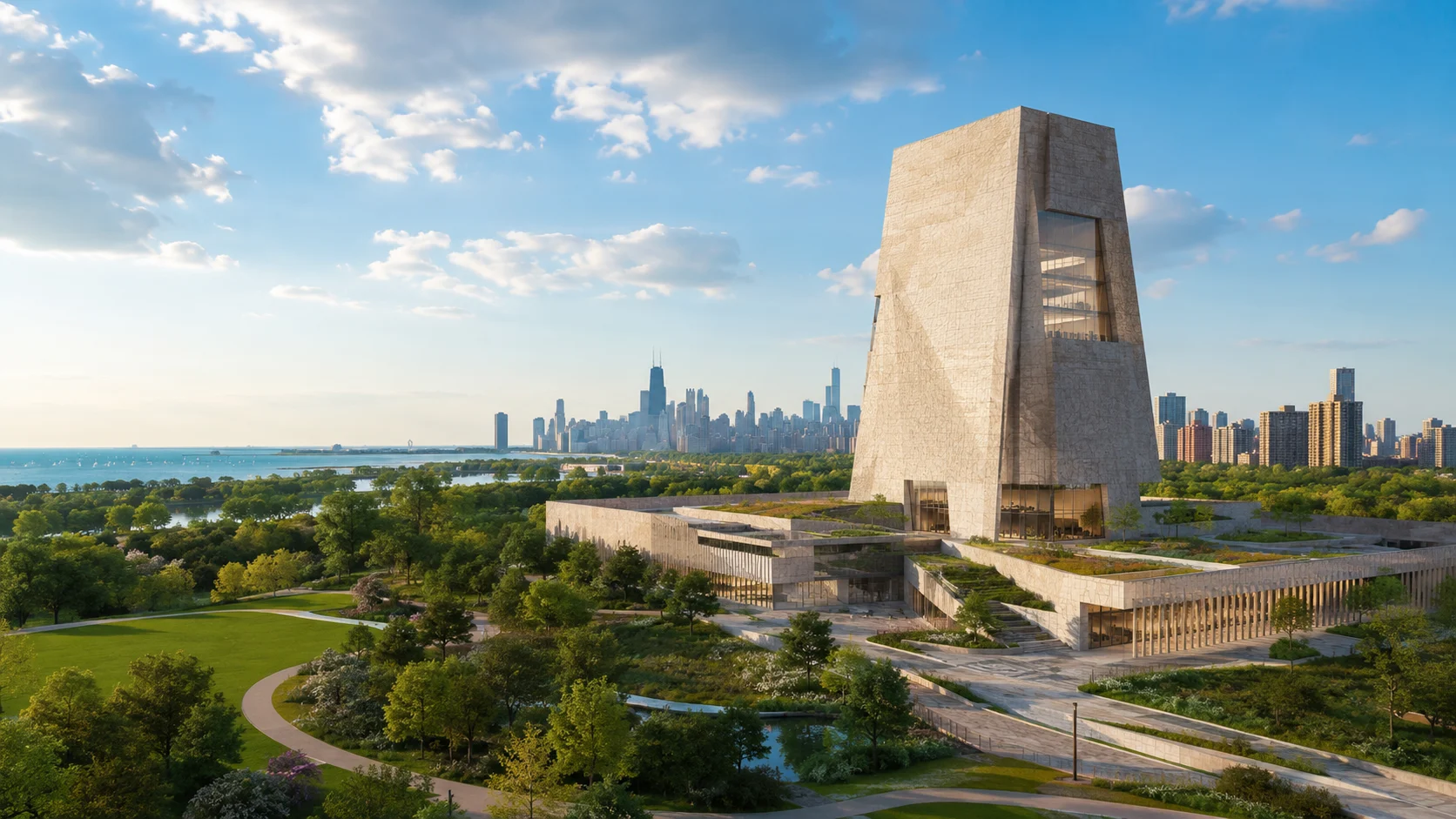
Obama Center is stepping into Chicago’s skyline as more than another presidential landmark, and that is exactly why the city is talking. In a place already famous for architectural flexes, from steel-frame towers to lakefront museums, this new campus in Jackson Park arrives with the confidence of a visual statement. It is not trying to disappear quietly into the South Side landscape, and it is not built only for people who already follow politics. The center feels designed for movement, memory, public gathering, and the kind of civic storytelling that can turn a building into a shared cultural image. For Chicago, the arrival of the Obama Center is not just about honoring a former president; it is about redefining what a public landmark can look and feel like in 2026.
The timing also makes the moment feel bigger than a standard ribbon-cutting. The campus opens as cities around the world are rethinking how museums, parks, libraries, and public spaces should function after years of social, political, and cultural disruption. People want places that are not frozen behind glass, places where history can be touched through design, sound, landscape, and everyday use. That is where the Obama Center becomes interesting for a visual culture website, because its impact is not only architectural. It is a new image system for Chicago, built from stone, trees, civic memory, neighborhood energy, and the legacy of the country’s first Black president.
Why the Obama Center Feels Like a New Chicago Landmark
Chicago has always understood the power of a building that people argue about before they accept it. The city’s most recognizable spaces often started as bold ideas that looked unusual, oversized, or too ambitious for their moment. The Obama Center fits into that tradition because its museum tower is not subtle, and it was never meant to be. Rising from Jackson Park with a monumental presence, it gives the South Side a new vertical marker that immediately changes how the area is photographed, visited, and discussed. That visibility matters because landmarks are not only about height or cost; they are about whether a place can hold public imagination long enough to become part of the city’s identity.
The campus stretches across nearly twenty acres, which means the experience is not limited to one dramatic structure. Visitors are meant to move between indoor and outdoor environments, passing through gardens, public gathering areas, sports spaces, cultural programming zones, and museum galleries. That kind of layout signals a shift away from the old presidential-library model, where history often feels archived instead of activated. Here, the idea is closer to a civic neighborhood inside a park, where learning, recreation, and visual storytelling overlap. It makes the center feel less like a monument to the past and more like a place built to keep generating public life.
The visual identity of the center also lands differently because of its location. Jackson Park is not a blank development site waiting for a shiny object; it is a historic landscape connected to the 1893 World’s Columbian Exposition, the South Side’s cultural geography, and generations of neighborhood memory. Placing a presidential center there adds layers of meaning that would not exist in a downtown business district. The design has to negotiate between global attention and local accountability, between tourism and everyday use, between legacy and community pressure. That tension is part of what makes the project visually and culturally powerful, because the building is never just a building when the site already carries so much history.
A Campus Built for Civic Storytelling, Not Just Display
The most compelling thing about the Obama Center is how it treats storytelling as a spatial experience. Instead of asking visitors to simply read a timeline, the campus uses architecture, landscape, public programs, and gathering spaces to create a broader narrative about democracy and participation. That approach feels very current because younger audiences often connect with history through immersion, atmosphere, and interaction rather than static presentation. A museum still matters, but the emotional entry point can be a plaza, a basketball court, a garden, a performance space, or a public library branch. In that sense, the center understands that civic memory is strongest when people can live inside it for an afternoon.
The design choices also reflect how public institutions are trying to compete with the speed of digital culture. Online, people process stories through images, short videos, maps, reels, and fast emotional cues. A modern civic space has to offer something different, but it cannot ignore how visual attention works now. The Obama Center answers that challenge by creating a campus with many possible frames: the stone tower against the sky, the green space from above, visitors gathering on the plaza, kids moving through public areas, and the South Side positioned as a destination rather than a backdrop. These are not accidental visuals; they are part of how the center will circulate in the public imagination.
For a generation raised on screens, the center’s physical presence may actually be its strongest media strategy. It gives people a reason to step away from endless feeds and encounter history at human scale. At the same time, its bold shape and layered programming make it highly shareable, which means the campus will inevitably live online through photos, travel videos, design commentary, and cultural debate. That hybrid identity is now essential for major public architecture. A landmark must work in person, but it also has to survive the visual pressure of digital platforms where a single angle can define how millions of people understand a place.
How Design Turns Legacy Into a Living Experience
Presidential centers often carry the risk of becoming polished memorials, but the Obama Center is trying to avoid that static feeling. Its strongest idea is that legacy should not sit still. The campus connects Barack Obama’s personal story with broader themes of organizing, civic engagement, community, democracy, and public imagination. That matters because Obama’s political rise was deeply tied to Chicago, especially the South Side, where community work shaped the early stages of his public life. By placing the center there, the project turns biography into geography, making the story feel rooted rather than abstract.
The museum component gives the center its formal historical anchor, but the surrounding amenities help loosen the atmosphere. A public library, gardens, recreation areas, and community-focused spaces create a more flexible rhythm than a traditional museum visit. People may come for the presidential story, but they might return for the public realm. That is a powerful design move because repeat use is what turns architecture into community infrastructure. A building can be admired once, but a campus becomes meaningful when it becomes part of someone’s ordinary route, weekend plan, creative habit, or family tradition.
This is where the center aligns strongly with the future of Design. The best civic projects today are not only evaluated by how they look in official photos. They are judged by how they behave over time, how they welcome different publics, how they support culture, and whether they can adapt to new forms of gathering. The Obama Center is designed to be seen, but it is also designed to be used. That difference is important, because visual innovation feels empty when it does not create a real public experience behind the image.
The South Side as a Global Visual Destination
One of the biggest cultural shifts around the Obama Center is the way it redirects attention toward Chicago’s South Side. For decades, mainstream tourism has often framed Chicago through downtown skyscrapers, the lakefront, Millennium Park, and the North Side’s cultural corridors. The new center expands that mental map. It tells visitors that the South Side is not a side note to the city’s story, but a place where national memory, neighborhood identity, and architectural ambition can meet. That symbolic repositioning may become one of the center’s most lasting visual impacts.
Of course, that kind of attention comes with responsibility. Major cultural projects can bring investment, jobs, and tourism, but they can also raise questions about displacement, affordability, and who benefits from a new landmark. The Obama Center enters a neighborhood context where visual beauty cannot be separated from economic reality. If the campus becomes a global attraction while remaining genuinely connected to local residents, it could become a model for civic development. If it feels too detached from the people around it, the same visuals that make it iconic could become symbols of distance.
That is why the center’s public-facing features are so important. Free and accessible spaces can help the campus feel less like a gated cultural object and more like a shared urban resource. Gardens, plazas, library access, sports facilities, and community programming can widen the definition of who the center is for. A tourist might arrive for the museum tower, but a local family might experience the place through everyday use. When both experiences can coexist, architecture becomes more democratic in practice, not just in messaging.
The Visual Trend Behind Modern Civic Architecture
The Obama Center arrives during a broader trend in which civic architecture is becoming more experiential and image-conscious. Museums, libraries, memorials, and cultural campuses are no longer expected to simply store knowledge. They are expected to create atmospheres, encourage participation, support public programming, and become recognizable across digital platforms. This shift does not mean architecture has become shallow or overly obsessed with aesthetics. It means design has to communicate quickly while still offering depth for people who stay longer.
That balance is difficult, and the Obama Center is likely to be debated because of it. Some people will see the tower as powerful, while others may find it too heavy or too symbolic. Some will focus on the public amenities, while others will question the project’s cost, scale, and neighborhood effects. That debate is not a weakness for a landmark. In many cases, controversy is part of how major architecture enters public memory, because people need time to decide whether a bold form belongs to them.
For designers, urbanists, and visual culture observers, the project offers a clear lesson. A contemporary landmark cannot rely on beauty alone. It has to tell a story, create a strong silhouette, support social life, and respond to the politics of place. The Obama Center attempts all of those things at once, which is why it feels bigger than a museum opening. It is a case study in how public architecture now has to operate as image, infrastructure, cultural platform, and civic invitation.
What Visitors May Notice First
For first-time visitors, the obvious starting point will be the museum tower. Its height, stone surface, and vertical presence make it the campus’s most immediate visual anchor. People will likely photograph it from multiple angles before they even understand the full layout. That is how landmarks often begin their relationship with the public: through curiosity, scale, and the desire to capture proof of being there. The tower gives the center a strong identity from the first glance, which is essential in a city already packed with memorable architecture.
After that first impression, the softer details may become more important. The landscape design, new trees, walking paths, and public spaces are likely to shape how long people want to stay. A dramatic building can pull visitors in, but a generous campus keeps them moving, resting, talking, and returning. That rhythm matters because the center is not trying to be a single-photo destination. It wants to function like a layered environment where the visual experience changes depending on season, time of day, event schedule, and personal reason for visiting.
Visitors may also notice how many different versions of the center exist at once. For one person, it may be a presidential museum. For another, it may be a public park experience. For a student, it could be a library or learning space, while for a designer it may be a new case study in monumental civic architecture. That multiplicity is one of the project’s strongest assets. A landmark becomes more durable when people can attach different meanings to it without erasing its core identity.
Practical Insights for Creators, Designers, and Brands
The Obama Center offers practical lessons for anyone working in design, digital creativity, branding, or visual storytelling. The first lesson is that a strong visual identity needs a clear emotional idea behind it. The center is not memorable only because it is large or expensive. It is memorable because its form connects to themes of legacy, civic participation, public access, and Chicago’s evolving identity. In branding terms, the architecture has a narrative spine, and that gives the visuals more staying power.
The second lesson is that physical spaces now need to be designed for both presence and circulation. People experience architecture in person, but they also discover it through images long before they visit. That means every major public project has to think about how the space reads from the ground, from the air, in a news photograph, in a tourist video, and in a casual phone snapshot. The Obama Center is built for that multi-angle reality. Its tower gives the project a recognizable silhouette, while the campus gives visitors enough variety to create different visual stories around it.
The third lesson is that community context cannot be treated like a background layer. In modern civic design, the surrounding neighborhood is part of the story whether planners want it to be or not. The Obama Center’s success will depend partly on whether its public promise feels real to the people closest to it. That is a useful reminder for creators and brands chasing cultural relevance. A polished visual identity may attract attention, but long-term trust comes from how the project behaves in the world.
Why This Moment Matters for Visual Culture
The arrival of the Obama Center matters because it shows how visual culture now shapes civic memory. In earlier eras, monuments often told people what to remember through statues, plaques, and formal symbolism. Today, memory is built through a wider set of experiences, including public programs, landscape design, interactive exhibits, social media images, community events, and everyday use. The center reflects that shift by creating a place where national history can be encountered through multiple senses and activities. It is less about standing silently before a monument and more about moving through a living system of meaning.
That approach feels especially relevant in a polarized public moment. Civic spaces can still create common ground, but only if they feel open enough for different people to enter the conversation. The Obama Center carries political history, but its broader ambition is cultural and democratic. It asks whether a presidential legacy can become a public tool rather than only a preserved record. That question gives the project weight beyond architecture, because it touches the way societies choose to remember leadership, struggle, progress, and unfinished work.
For Chicago, the center also adds a new layer to the city’s visual identity. The skyline will always matter, but the most interesting urban images are not always downtown. They emerge when a neighborhood becomes part of a larger cultural map without losing its own texture. The Obama Center has the potential to create that kind of shift for Jackson Park and the South Side. If it succeeds, future images of Chicago may include not only towers by the river, but also this new civic campus where architecture, landscape, and legacy meet.
Conclusion: The Obama Center Is More Than a Monument
The Obama Center is becoming Chicago’s new visual icon because it understands that modern landmarks must do more than stand still. They have to gather people, carry stories, create memorable images, and offer public value beyond their opening weekend. Its museum tower gives the campus an unmistakable presence, but the deeper impact may come from how the surrounding spaces are used over time. If residents, visitors, students, artists, families, and civic groups all find reasons to return, the center can become part of Chicago’s living rhythm rather than just its tourist checklist. That is the real test of a landmark in 2026: not whether people photograph it once, but whether it keeps making the city feel more visible, more connected, and more alive.